Side-by-Side Cognitive Profiles
The Cosmic Pet Pet IQ Lab assesses canine intelligence across five critical dimensions, each rated on a 1-5 scale. Interestingly, both the Boerboel and Dogo Argentino score a consistent 3/5 across all five metrics, indicating a solid, capable intellect for working breeds. However, the *nature* of this intelligence, rather than just the score, provides the most insightful comparison.
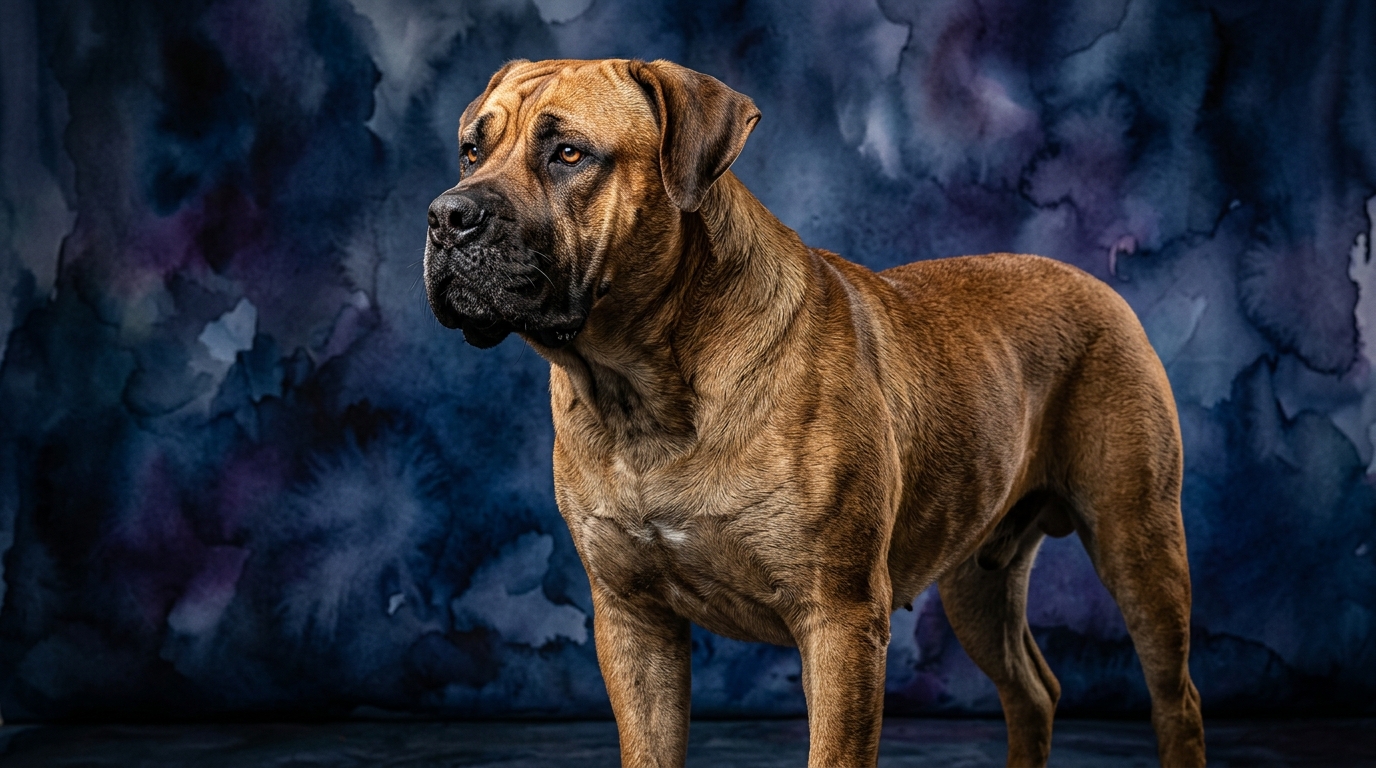
For the **Boerboel**, its cognitive profile highlights a practical and grounded approach to its environment. Its **Problem Solving (3/5)** leans towards methodical analysis, preferring to understand and navigate complex household mechanics or established routines rather than impulsive experimentation. **Training Speed (3/5)** is capable, yet requires clear, consistent communication from a respected leader; this breed responds best to routine-based rewards that align with its sense of purpose. Its **Social Intelligence (3/5)** is characterized by deep discernment of family dynamics and human emotional states, forming strong, protective bonds while intuitively assessing external social cues. The Boerboel's **Instinctive Drive (3/5)** is primarily geared towards territorial protection and watchful guardianship, maintaining order through steady vigilance. Finally, its **Memory (3/5)** is robust for established routines, commands, and long-term associations, contributing to a predictable and stable presence.
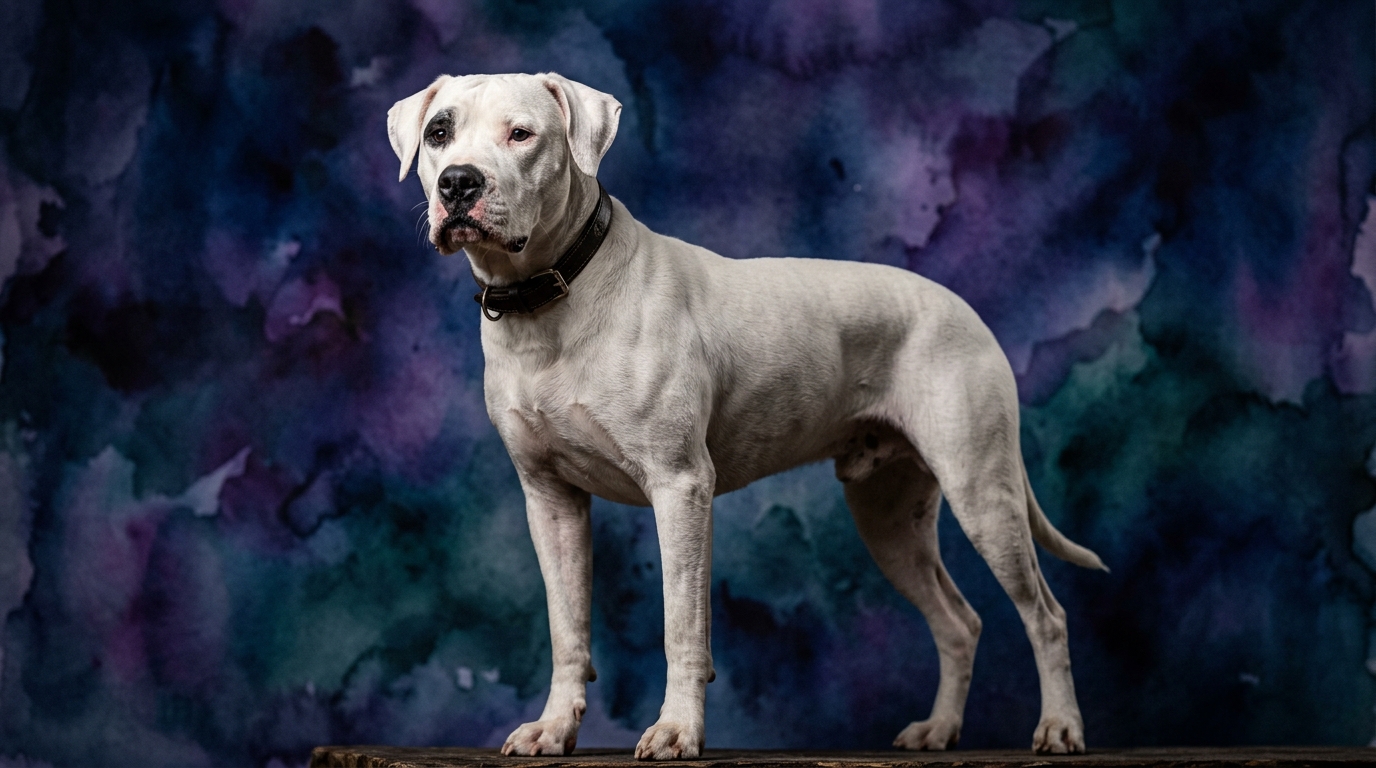
The **Dogo Argentino**, while sharing the same overall scores, exhibits a more dynamic and adaptable cognitive style. Its **Problem Solving (3/5)** is often resourceful and quick, allowing it to think on its feet in novel or changing situations, frequently experimenting with solutions, especially when driven by a task or strong interest. **Training Speed (3/5)** shows responsiveness to a trusted handler, but its powerful prey drive can be a significant distraction, demanding high-value motivators and unwavering focus from the trainer. The Dogo's **Social Intelligence (3/5)** is marked by intense loyalty and a deep attunement to its human family's emotional states, desiring active participation in pack activities, though it is socially selective. Its **Instinctive Drive (3/5)** is powerfully expressed through a strong prey drive, bred for tracking and engaging large game, which fuels an urge for pursuit and active intervention. The Dogo Argentino's **Memory (3/5)** is good for complex sequences related to tracking, hunting patterns, and dynamic training drills involving movement and engagement, influencing its future responsiveness.
Where the Boerboel Wins Cognitively
The Boerboel often demonstrates a subtle advantage in methodical problem-solving within its established environment. Its cognitive approach tends to be more analytical and less impulsive, allowing it to navigate complex household layouts or understand intricate daily routines with a quiet efficiency. This manifests in a consistent ability to learn and adhere to boundaries, such as not entering certain rooms or understanding specific cues for different activities.
Furthermore, its social intelligence often presents as a deep, discerning understanding of its immediate family's social dynamics, allowing it to act as a watchful guardian who can differentiate between a genuine threat and an innocent visitor based on subtle shifts in human behavior and context. Its memory for structured routines and established household rules is particularly strong, contributing to a predictable and stable presence.
Where the Dogo Argentino Wins Cognitively
Conversely, the Dogo Argentino often exhibits a cognitive edge in adaptability and resourceful problem-solving, particularly in dynamic or novel environments. Bred for tracking and engaging large game, it possesses a mental agility that allows it to react swiftly and experiment with solutions when confronted with unexpected challenges, rather than relying solely on pre-learned patterns.
This breed's instinctive drive is channeled into a focused determination, making it exceptionally adept at tasks requiring sustained pursuit or engagement, such as advanced scent work or agility courses where quick, independent decisions are rewarded. Its social intelligence, while deeply loyal, often manifests as an intense sensitivity to its handler's emotional state, driving it to respond proactively to perceived needs or changes in mood, fostering a highly responsive partnership.
Which is Easier to Train and Why
When considering ease of training, both breeds present unique considerations despite their identical 3/5 training speed rating. The Boerboel, with its more independent streak, often requires a handler who can establish clear, consistent leadership and communicate expectations without ambiguity. While capable of learning quickly, it may occasionally test boundaries, demanding patience and a motivation system that resonates with its practical, routine-oriented mind. Training success hinges on building mutual respect and demonstrating that following commands aligns with its own sense of order and security. In contrast, the Dogo Argentino, often eager to please its trusted human companion, can be a highly responsive student. However, its powerful instinctive drive, particularly its strong prey drive, presents a significant training challenge. Early, intensive socialization and dedicated impulse control training are paramount to channel this drive appropriately. Without careful management, the Dogo's focus can quickly shift from the task at hand to an enticing scent or movement, requiring a handler who can maintain its attention and provide engaging, high-value rewards.
Suitability for Active vs. Relaxed Owners
For owners seeking a companion, the distinction between active and relaxed lifestyles significantly influences suitability. The Boerboel, while possessing substantial physical capabilities and a need for regular exercise to maintain its physique and mental well-being, often thrives with owners who can provide structured routines and a clear sense of purpose within the home environment. They are not necessarily a 'relaxed' dog in terms of size and presence, but their cognitive preference for order and their role as guardians mean they appreciate predictable schedules and consistent mental engagement that taps into their analytical nature. They can adapt to a moderately active household that prioritizes regular walks, training sessions, and boundary work over constant, high-intensity exertion, provided their guarding instincts are appropriately managed and channeled. The Dogo Argentino, on the other hand, is unequivocally suited for highly active owners. Its powerful instinctive drive and robust physique demand extensive daily physical exercise, beyond simple walks, to prevent boredom and destructive behaviors. Activities like running, hiking, advanced obedience, or dog sports that engage its prey drive and problem-solving skills are essential. A truly 'relaxed' owner who cannot commit to significant daily physical and mental stimulation will likely find the Dogo challenging, as its cognitive and physical needs are deeply intertwined with its history as a big-game hunter requiring constant engagement and purposeful activity.
The Verdict
Choose the Boerboel if you are an owner who values a discerning, methodical guardian, capable of understanding complex household routines, and are prepared to offer consistent leadership and a structured, predictable environment. This breed thrives with an owner who appreciates its analytical approach to family dynamics and its steadfast loyalty within a well-defined role.
Opt for the Dogo Argentino if you are a highly active, experienced owner eager to engage in extensive physical activities and provide constant mental stimulation to channel its powerful instinctive drives. This breed excels with a handler who can provide purposeful work, advanced training, and is prepared for a dynamic partnership built on responsiveness and shared adventure.
🧠 Find Your Pet's IQ Score
Our Pet IQ Lab assessment covers 25+ tests across 5 cognitive dimensions — personalized to your breed.
Take the Full IQ Test →Frequently Asked Questions
Do both breeds require extensive socialization?
Yes, both the Boerboel and Dogo Argentino require extensive, early, and ongoing socialization. Given their strong protective instincts and formidable presence, proper exposure to various people, places, and situations from a young age is crucial to ensure they develop into well-adjusted, confident adults who can discern appropriate social cues and react calmly.
Which breed is more prone to independent thinking during training?
While both breeds exhibit independence, the Boerboel often displays a more deliberate, independent thought process during training, sometimes testing boundaries to understand the 'why' behind a command. The Dogo Argentino, while capable of independent action, tends to be more handler-focused, with its independence often manifesting as a strong drive to pursue its own interests (like prey) if not actively engaged.
How do their protective instincts differ cognitively?
Cognitively, the Boerboel's protective instinct is often expressed through watchful discernment and methodical assessment of its environment, acting as a steadfast, watchful guardian. The Dogo Argentino's protective instinct, while equally strong, is frequently intertwined with its active engagement and pursuit drive, leading to a more proactive and physically assertive response when it perceives a threat to its family or territory.