
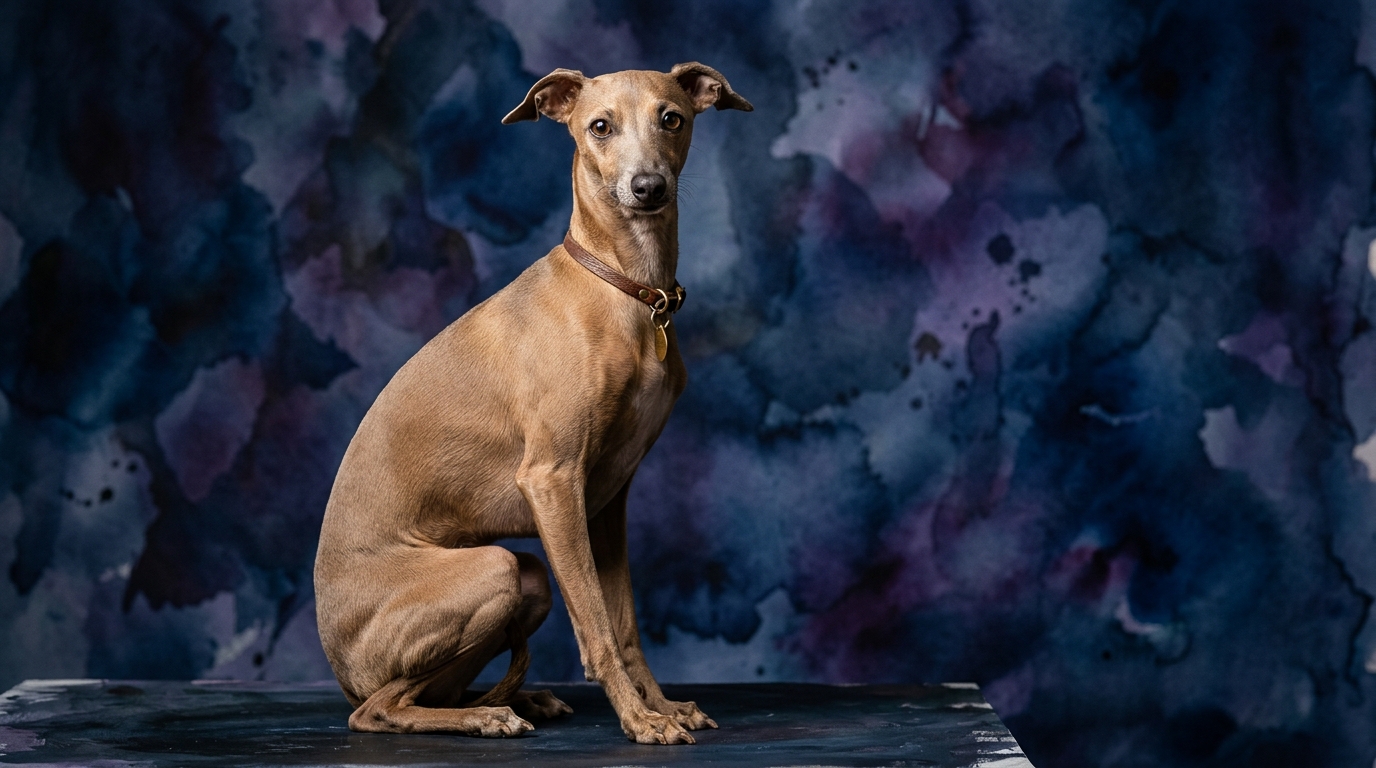
Side-by-Side Pet IQ Lab Profile
While both the Brussels Griffon and the Italian Greyhound score 3/5 across all five Pet IQ Lab dimensions, the expression of these moderate cognitive abilities varies significantly, shaped by their distinct temperaments and historical roles.
**Problem Solving (3/5):** The Brussels Griffon’s problem-solving often manifests as a clever, sometimes mischievous, approach to achieving desires, using charm or persistent manipulation. They moderately strategize around obstacles with a touch of stubborn tenacity. An Italian Greyhound’s problem-solving leans towards adapting to their environment with elegant efficiency, finding comfort or navigating spaces. They demonstrate moderate spatial reasoning and learn through observation for practical gains.
**Training Speed (3/5):** For the Brussels Griffon, a 3/5 indicates a moderate pace of learning commands, often tempered by independence. They grasp concepts but may choose compliance, requiring consistent, engaging, positive reinforcement to maintain focus. The Italian Greyhound also shows moderate learning speed, but is highly sensitive. They grasp concepts but can easily become overwhelmed by harshness, needing gentle, reward-based training that builds confidence.
**Social Intelligence (3/5):** With a 3/5, the Brussels Griffon displays a moderate capacity to understand and respond to human emotions, often leveraging this to forge deep bonds. They seek interaction, demonstrating clear awareness of moods, sometimes demanding affection. The Italian Greyhound forms a deep, often reserved, connection with chosen family, acutely sensitive to their owner's emotional state. They offer quiet comfort, expressing understanding through subtle body language within their intimate circle.
**Instinctive Drive (3/5):** The Brussels Griffon's 3/5 in instinctive drive is rooted in vermin-hunting, appearing as a moderate curiosity and readiness to investigate small movements. This translates into playful tenacity and focused pursuit when attention is captured. The Italian Greyhound’s 3/5 instinctive drive is distinctly sighthound, a moderate urge to chase anything moving quickly. This manifests as bursts of speed and intense focus on distant objects, requiring secure environments.
**Memory (3/5):** A Brussels Griffon moderately retains commands, routines, and experiences. They remember what works to achieve goals, recalling past successes to inform future actions, especially if rewards were involved. The Italian Greyhound recalls training cues and routines, particularly positive ones. They also remember negative encounters, making positive reinforcement crucial, and form strong memories of safe spaces and companions.
Where the Brussels Griffon Wins Cognitively
Despite sharing identical numerical scores, the Brussels Griffon often demonstrates a nuanced cognitive edge in situations requiring creative persistence and a touch of charming manipulation. Their 3/5 in Problem Solving, for instance, is frequently expressed through a more proactive and sometimes mischievous approach. A Griffon might, for example, systematically push objects off a table to gauge a human's reaction, or strategically position themselves for maximum attention. This isn't about raw intellectual superiority, but rather a distinct style of applying their moderate cognitive abilities: they are more inclined to experiment with their environment and their human companions to achieve desired outcomes, often using their expressive faces and vocalizations as part of their 'strategy.' Their 3/5 in Social Intelligence often allows them to 'read the room' with a more outgoing and attention-seeking flair, making them adept at inserting themselves into social interactions and ensuring they are the focal point, a subtle but effective cognitive 'win' in a domestic setting.
Where the Italian Greyhound Wins Cognitively
The Italian Greyhound, while matching the Griffon numerically, excels cognitively in areas demanding refined sensitivity and graceful environmental navigation. Their 3/5 in Problem Solving often manifests as a quiet, observant intelligence focused on comfort and efficiency. An Iggy might meticulously scout the softest blanket or the warmest sunbeam, demonstrating a keen spatial awareness and a pragmatic approach to optimizing their immediate surroundings for well-being. This isn't about overt display, but rather a subtle application of their moderate cognitive skills towards personal comfort and security. Furthermore, their 3/5 in Instinctive Drive, specifically their sighthound nature, gives them a unique cognitive advantage in tasks requiring rapid visual processing and burst execution. They can process fast-moving stimuli and react with incredible precision, a cognitive strength distinct from the Griffon's more ground-level investigative drive. Their Social Intelligence, also 3/5, shines in their profound, often understated, attunement to their primary caregiver's emotional state, offering a quiet, empathetic presence that requires a deep, intuitive understanding of human non-verbal cues.
Which Is Easier to Train and Why?
Both breeds hold a 3/5 rating for Training Speed, yet their individual temperaments dictate vastly different training experiences. The Brussels Griffon, with its terrier-like tenacity and independent streak, can be a moderately quick learner but also quite opinionated. They might understand a command perfectly well but choose to 'negotiate' compliance, especially if a more appealing distraction is present or if they perceive an opportunity to get their own way. Training a Griffon requires creativity, consistency, and a sense of humor, turning sessions into engaging games to prevent boredom and harness their charming stubbornness. They respond best to positive reinforcement that makes them feel like they're 'winning.'
The Italian Greyhound, by contrast, also learns at a moderate pace but is profoundly sensitive. While they grasp concepts, they can easily become overwhelmed by harsh tones, excessive repetition, or perceived pressure, leading to them shutting down or becoming anxious. Their delicate nature means training must be gentle, calm, and highly rewarding, focusing on building confidence rather than demanding obedience. They are less inclined to overtly 'defy' but might become hesitant or withdrawn if training isn't a positive experience. Therefore, neither is inherently 'easier' in a universal sense; rather, the 'ease' of training is entirely dependent on the trainer's ability to adapt to each breed's distinct psychological profile. The Griffon demands a firm but playful hand, while the Iggy thrives under a patient, reassuring, and confidence-building approach.
Which Suits Active Owners vs. Relaxed Owners?
When considering lifestyle compatibility, the nuances of their 3/5 Instinctive Drive and Social Intelligence become key differentiators. The Brussels Griffon, despite its toy size, possesses a moderate energy level and a 'big dog' personality. Their instinctive drive, rooted in their past as stable dogs, translates into a moderate need for mental engagement and varied activities. They enjoy brisk walks, exploring new environments, and participating in dog sports like agility or obedience, making them a suitable companion for moderately active owners who appreciate a dog with a spirited, engaged presence. Their outgoing social intelligence means they thrive on interaction and can become bored or mischievous if under-stimulated. They are not content to be mere lap warmers for extended periods.
The Italian Greyhound, conversely, while capable of bursts of incredible speed due to their sighthound instincts, is generally content with moderate exercise followed by extensive periods of rest. Their 3/5 instinctive drive manifests as a strong urge to chase, but once that urge is satisfied (often with a good sprint in a secure area), they are typically ready to curl up. Their sensitive social intelligence makes them ideal for relaxed owners who cherish quiet companionship and close physical contact. They are less demanding of constant activity and more content to be a warm, comforting presence on the sofa, making them a better fit for owners whose lifestyle leans towards calm domesticity, provided they have opportunities for safe, off-leash running.
The Verdict
The Brussels Griffon is ideal for owners who appreciate a confident, spirited companion with a moderate need for engagement, a playful stubborn streak, and an active social presence.
The Italian Greyhound is better suited for individuals or families seeking a gentle, deeply affectionate companion who thrives on quiet companionship, requires careful handling due to their sensitivity, and enjoys short bursts of energy followed by extensive lounging.
🧠 Find Your Pet's IQ Score
Our Pet IQ Lab assessment covers 25+ tests across 5 cognitive dimensions — personalized to your breed.
Take the Full IQ Test →Frequently Asked Questions
Are Brussels Griffons good with children?
Brussels Griffons can be good with older, respectful children who understand how to interact gently with small dogs. Their sometimes sensitive and independent nature means they may not tolerate rough play or constant handling, making supervision essential.
Do Italian Greyhounds need a lot of exercise?
Italian Greyhounds require moderate exercise, including daily walks and opportunities for safe, off-leash running in a securely fenced area to satisfy their sighthound instincts. However, they are also prone to napping and enjoy extensive periods of rest indoors.
Are Brussels Griffons prone to separation anxiety?
Brussels Griffons can develop separation anxiety if left alone for extended periods, as they thrive on human companionship and interaction. Early training and gradual acclimation to solitude are important to prevent this.
How well do Italian Greyhounds tolerate cold weather?
Italian Greyhounds have very little body fat and thin coats, making them highly susceptible to cold weather. They require sweaters or coats in cooler temperatures and prefer warm, indoor environments.