
Side-by-Side Cognitive Profiles
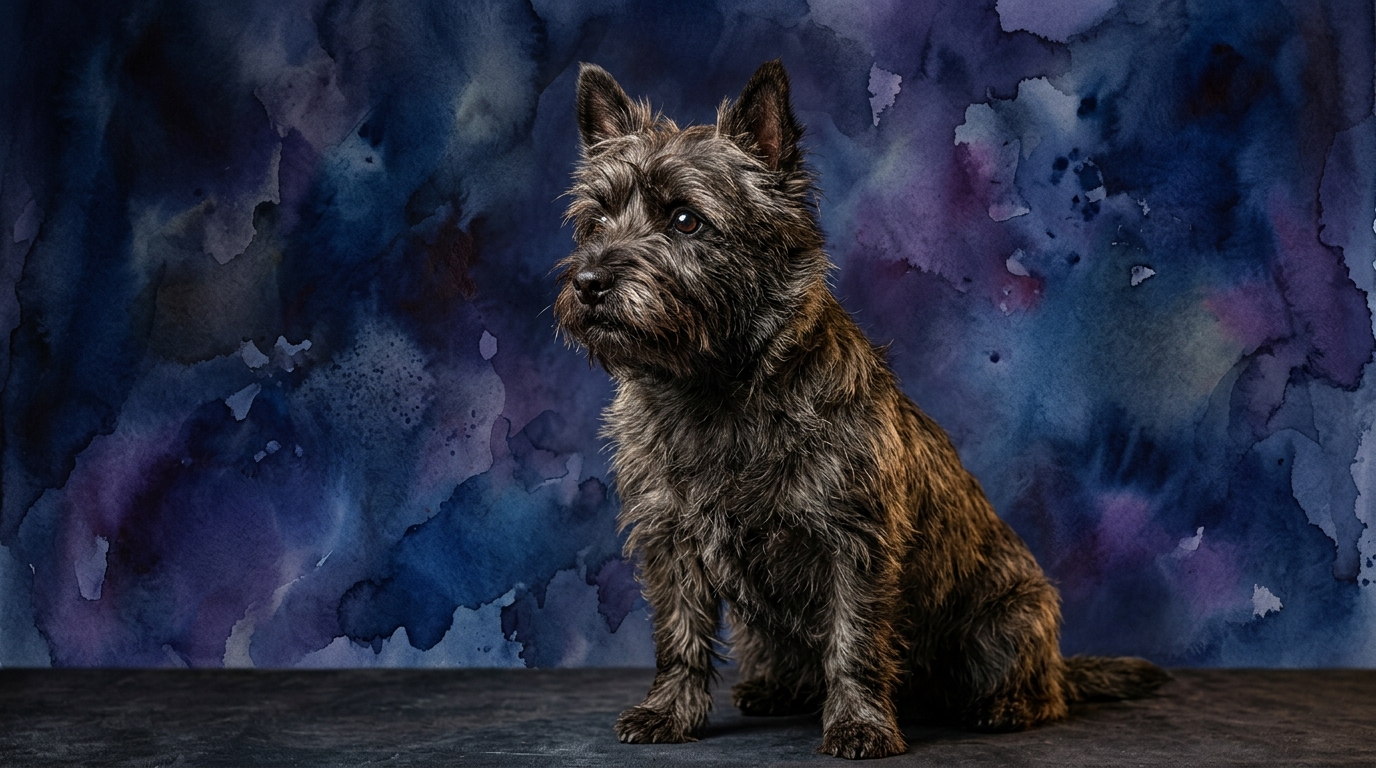
Our Pet IQ Lab evaluates canine cognition across five critical dimensions: Problem Solving, Training Speed, Social Intelligence, Instinctive Drive, and Memory. These metrics provide a nuanced view beyond general perceptions, highlighting how a dog processes information and interacts with its environment. The Cairn Terrier, recognized by Coren with a rank of #35, presents a robust cognitive profile.
The Cairn Terrier excels with a Problem Solving score of 4/5, indicating a strong capacity to independently figure out novel situations and overcome obstacles. Its Training Speed also stands at 4/5, suggesting a quick grasp of new commands and routines. Social Intelligence is rated 3/5, meaning it capably navigates interactions with others, while its Instinctive Drive is 3/5, pointing to a moderate manifestation of natural terrier behaviors like digging or chasing. Finally, its Memory is a solid 4/5, allowing for excellent retention of learned behaviors and experiences.
The Kerry Blue Terrier, while not included in Coren's traditional rankings, offers a consistent and capable cognitive blueprint according to our Pet IQ Lab data. It holds a Problem Solving score of 3/5, signifying a good ability to tackle challenges, though perhaps with a bit more deliberation than the Cairn. Its Training Speed is 3/5, indicating a steady learning pace that requires consistent reinforcement.
In terms of Social Intelligence, the Kerry Blue Terrier matches the Cairn at 3/5, demonstrating competent social interaction. Its Instinctive Drive is also 3/5, reflecting a similar moderate inclination towards innate terrier behaviors. The Kerry Blue Terrier's Memory score is 3/5, suggesting it retains information effectively, but might benefit from more frequent refreshers compared to a breed with a higher memory score. This side-by-side view immediately highlights some key distinctions in their mental processing.
Where the Cairn Terrier Wins Cognitively
The Cairn Terrier demonstrates clear cognitive advantages, particularly in areas demanding quick uptake and independent thought. Its superior Problem Solving score of 4/5 means a Cairn is more likely to creatively overcome environmental challenges, such as figuring out how to access a coveted toy or navigate a complex puzzle feeder. This aptitude translates into a dog that enjoys mental stimulation and can be quite resourceful.
The Cairn's Training Speed, also at 4/5, positions it as a swifter learner than the Kerry Blue. Owners will likely find Cairn Terriers pick up new commands and cues with fewer repetitions, making training sessions more efficient and potentially less frustrating. This cognitive agility allows for a broader range of complex behaviors to be taught effectively. Furthermore, its 4/5 Memory score means that once a Cairn learns something, it tends to stick, requiring less frequent review to maintain proficiency.
Where the Kerry Blue Terrier's Cognitive Profile Offers Distinct Advantages
While the Kerry Blue Terrier's individual cognitive scores do not numerically surpass the Cairn's in any single dimension, its distinct profile offers particular advantages for certain lifestyles. Its consistent 3/5 scores across Problem Solving, Training Speed, and Memory suggest a more measured and predictable cognitive engagement. This means a Kerry Blue is less likely to independently 'outsmart' its environment in ways that might lead to mischief, such as figuring out how to open specific latches or escape secured areas with complex methods.
The Kerry Blue's moderate Problem Solving (3/5) and Training Speed (3/5) can translate to a steadier, less intense learning curve, which might be preferable for owners who value consistency over rapid acquisition or who are new to dog training. Its consistent cognitive output means fewer surprises and a more predictable response to challenges, making it a reliable companion without the higher cognitive demands of a faster-thinking breed. Owners seeking a dog with capable but not overly demanding mental engagement might find this a significant advantage.
Which is Easier to Train and Why
Based on our Pet IQ Lab data, the Cairn Terrier is generally easier to train due to its higher Training Speed (4/5) compared to the Kerry Blue Terrier's 3/5. A Cairn will typically grasp new commands and behavioral expectations more quickly, requiring fewer repetitions during initial learning phases. This quicker processing speed means training sessions can be more dynamic and move at a faster pace, making it rewarding for both dog and owner.
The Cairn's superior Memory (4/5 versus 3/5) also contributes significantly to its trainability. Once a Cairn learns a behavior, it is likely to retain that knowledge over longer periods, reducing the need for constant review. In contrast, while the Kerry Blue Terrier is certainly trainable, its 3/5 Training Speed and Memory indicate that it will benefit from more patience, consistency, and potentially more frequent refresher sessions to solidify learned behaviors. It might require a more structured, methodical approach, whereas a Cairn can sometimes thrive with more varied and spontaneous training methods.
Which Suits Active Owners vs. Relaxed Owners
The cognitive profiles of both breeds offer insights into their suitability for different owner lifestyles. The Cairn Terrier, with its 4/5 Problem Solving and 4/5 Training Speed, thrives with active owners who enjoy engaging in regular, stimulating activities. This breed benefits immensely from puzzle toys, agility training, and opportunities to learn new tricks, which cater to its sharp mind and quick learning ability. An owner who can provide consistent mental challenges will find the Cairn a delightful and responsive companion.
For owners with a more relaxed pace, the Kerry Blue Terrier, with its consistent 3/5 scores across most cognitive dimensions, can be an excellent fit. While still requiring mental engagement, its slightly more moderate cognitive intensity means it may be less prone to creating its own 'entertainment' if under-stimulated, compared to the more creatively problem-solving Cairn. Both breeds share a 3/5 Instinctive Drive, meaning neither is overwhelmingly driven by primal urges, but both will appreciate opportunities for sniffing, exploring, and engaging in appropriate terrier activities, making regular walks and controlled outdoor time essential, regardless of the owner's overall activity level.
The Verdict
Choose the Cairn Terrier if you are an owner eager for a mentally agile companion who learns quickly, enjoys solving puzzles, and thrives on consistent, varied intellectual engagement.
Opt for the Kerry Blue Terrier if you prefer a steady, predictable companion whose capable but moderate cognitive profile offers a consistent and manageable learning experience.
🧠 Find Your Pet's IQ Score
Our Pet IQ Lab assessment covers 25+ tests across 5 cognitive dimensions — personalized to your breed.
Take the Full IQ Test →Frequently Asked Questions
Is a Cairn Terrier harder to manage due to its higher problem-solving score?
A Cairn Terrier's 4/5 problem-solving ability means it can be more resourceful in figuring things out, which can lead to clever escapades or outsmarting owners if not properly stimulated. Consistent mental engagement and clear boundaries are key to channeling this cognitive strength positively.
Does a Kerry Blue Terrier require less mental stimulation than a Cairn Terrier?
While the Kerry Blue Terrier has slightly lower scores in problem-solving and training speed, it still requires regular mental stimulation to remain content and well-behaved. Its 3/5 instinctive drive means it appreciates activities that engage its natural terrier instincts, such as scent work or structured play, just at a slightly different cognitive pace than a Cairn.
How do their social intelligence scores impact household dynamics?
Both breeds share a 3/5 Social Intelligence score, indicating they are generally capable of navigating social interactions within a household. This suggests they can integrate well into family life and interact appropriately with familiar people and pets, provided they receive proper socialization from a young age.