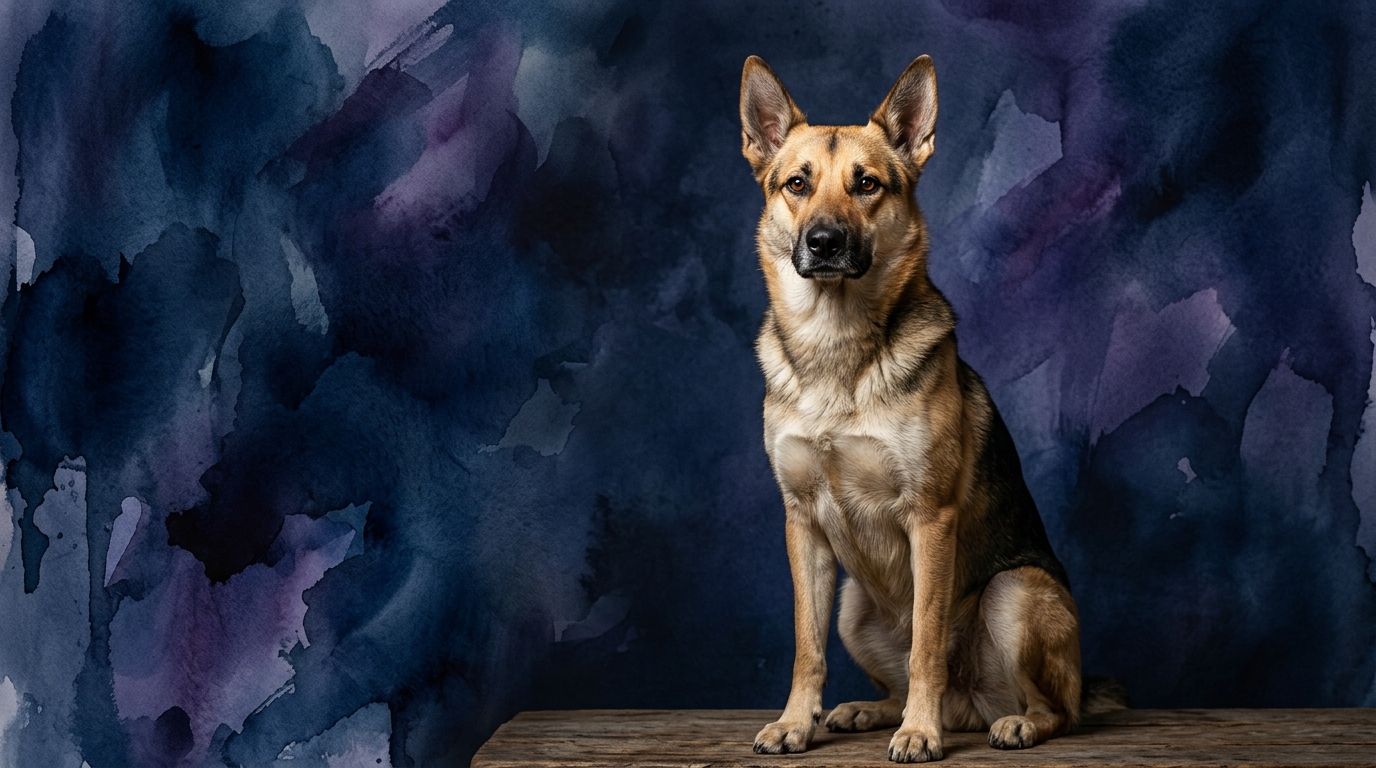
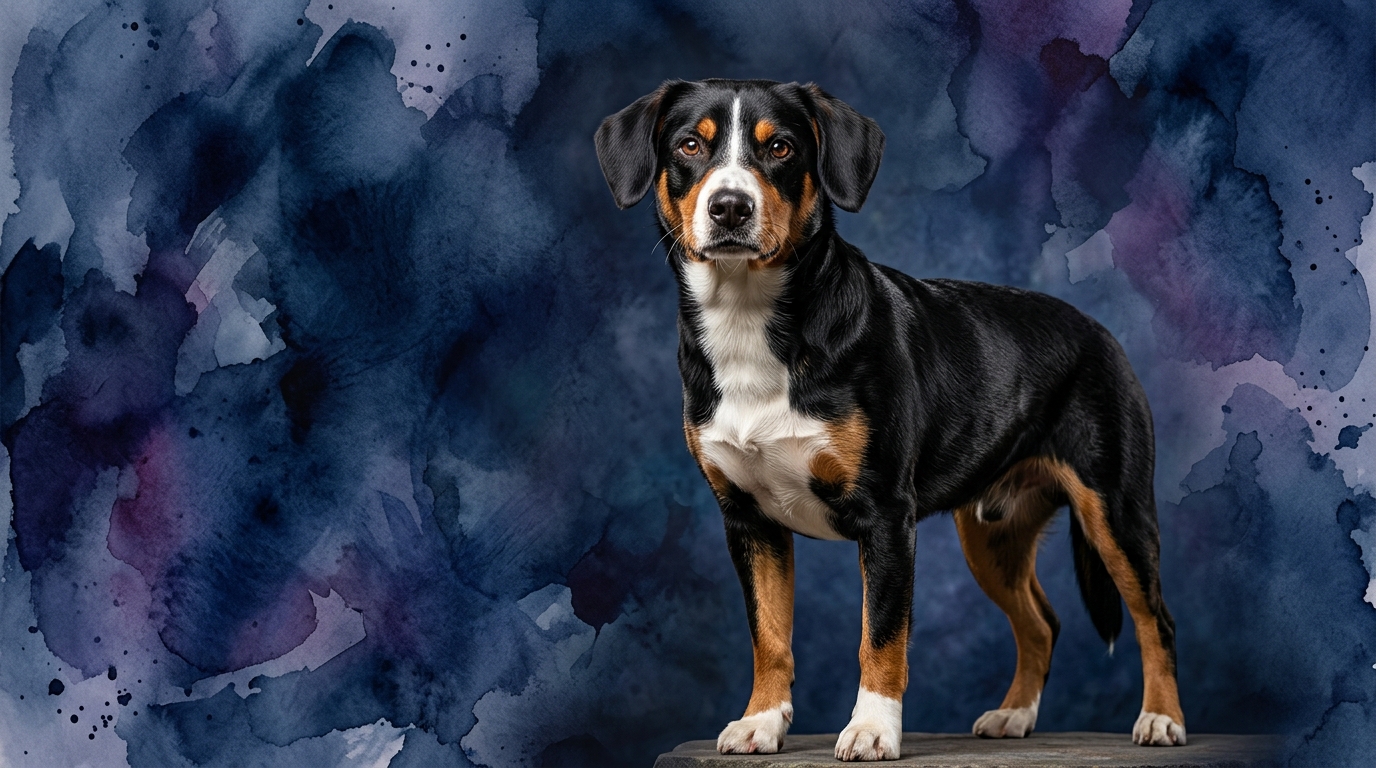
Side-by-side IQ profile
Originating from the desert, the Canaan Dog's problem-solving ability (3/5) reflects an independent, resourceful mind, adept at navigating complex environments and making decisions without constant human direction. Their training speed (3/5) indicates they learn new commands and tasks effectively, but their self-reliant nature means engagement and motivation are key. Social intelligence (3/5) manifests as a keen observer of their surroundings and family dynamics, forming deep, discerning bonds rather than immediate universal friendliness. Instinctive drive (3/5) is rooted in their ancient herding and guarding roles, expressing itself as territoriality and a watchful nature. A standout trait is their memory (4/5), allowing them to retain training, experiences, and spatial information with impressive longevity, often recalling past events or commands after long periods.
Hailing from the Swiss Alps, the Entlebucher Mountain Dog also scores 3/5 in problem-solving, indicating a clever approach to challenges, often seeking solutions with determination and a strong work ethic. Their training speed (3/5) suggests they are capable learners, often eager to please their handlers, but their inherent stubbornness can emerge if they perceive training as inconsistent or unrewarding. Social intelligence (3/5) for an Entlebucher centers on profound loyalty to their immediate family, exhibiting a watchful and protective demeanor towards strangers, a hallmark of their guarding heritage. Their instinctive drive (3/5) is potent, encompassing strong herding, droving, and guarding tendencies, making them highly driven to work and protect their 'flock.' Their memory (3/5) is solid, allowing them to retain learned behaviors and routines, contributing to their reliability in structured environments, though perhaps not with the same depth of detail or recall as the Canaan Dog.
Where Canaan Dog wins cognitively
The Canaan Dog notably distinguishes itself through its superior memory (4/5 compared to the Entlebucher's 3/5). This enhanced recall means they can retain complex sequences of commands, remember past training sessions with greater clarity, and adapt learned behaviors to new situations more effectively over time. This cognitive edge in memory contributes significantly to their adaptability and independent problem-solving, allowing them to draw upon a richer internal database of experiences. Furthermore, the Canaan Dog holds a Coren rank of #43, placing it within the “Above Average Working Dog” category, a recognition the Entlebucher Mountain Dog does not currently share. This ranking, while a broad measure, reflects a consistent ability to learn and perform tasks, often with fewer repetitions than breeds outside this tier. Their desert origins fostered a self-sufficient intelligence, where survival depended on independent decision-making and keen environmental awareness, rather than constant human direction. This historical context suggests a breed whose cognitive strengths lie in resourceful autonomy and a deep understanding of their surroundings, leveraging their strong memory to navigate and adapt.
Where Entlebucher Mountain Dog wins cognitively
While the Entlebucher Mountain Dog shares many cognitive scores with the Canaan Dog, its strengths lie in the application of these traits, particularly within a structured, task-oriented framework. Their problem-solving (3/5) is often coupled with an unwavering persistence and a strong desire to complete a job, making them exceptionally focused on tasks once engaged. This persistence, combined with their instinctive drive (3/5) for herding and guarding, translates into a dog that excels in roles requiring sustained effort and mental stamina, such as agility, obedience, or protection work. Their social intelligence (3/5), while not universally outgoing, manifests as an intense, unwavering loyalty and protectiveness towards their family. This deep bond allows for precise communication and a strong partnership in activities, where the Entlebucher is highly attuned to their handler’s cues and intentions, often anticipating tasks. This dedicated focus and eagerness to engage in 'work' alongside their human partners, driven by their robust physical and mental fortitude, gives them an edge in sustained, collaborative cognitive challenges. Their intelligence is deeply intertwined with their strong work ethic and devotion to their family unit.
Which is easier to train and why
Both breeds score 3/5 in training speed, suggesting they are capable learners, but their approaches to training differ significantly, impacting the ease of the process. The Canaan Dog's semi-feral history and strong independent streak mean they require a patient, consistent, and reward-based approach that respects their self-reliant nature. They are not inherently eager to please in the same way some traditional working breeds are; instead, they need to understand the value of the command and often prefer to “negotiate” rather than blindly obey. Early socialization and positive reinforcement are crucial to channel their natural wariness and territorial instincts positively. Their excellent memory (4/5) can be a double-edged sword: they remember lessons well, but also remember negative experiences or inconsistencies. Conversely, the Entlebucher Mountain Dog, while also scoring 3/5 for training speed, often approaches training with an eager-to-please attitude, especially when working with their beloved family. This inherent willingness can make initial training phases feel more straightforward and rewarding. However, Entlebuchers can exhibit a stubborn streak, particularly if they become bored, tired, or if training lacks variety and fairness. Their strong working drive means they thrive on purpose and consistent mental engagement, making them less forgiving of a handler who isn't equally committed. Therefore, while the Entlebucher might offer a more enthusiastic start, both breeds demand a knowledgeable, patient, and consistent trainer to truly flourish.
Which suits active owners vs relaxed owners
Neither the Canaan Dog nor the Entlebucher Mountain Dog is well-suited for a truly relaxed, sedentary owner, given their heritage as active Herding breeds. Both require significant daily mental and physical stimulation to prevent boredom and destructive behaviors. The Canaan Dog, with its background of free-ranging existence, needs ample space to explore and engage its senses. While adaptable, they thrive when given a 'job' or opportunities for independent thought, such as scent work, exploring new trails, or advanced obedience. They might tolerate a slightly less structured activity schedule if they have a large, secure yard to patrol and investigate, but mental engagement remains paramount. For truly active owners, their intelligence and memory make them excellent candidates for dog sports. The Entlebucher Mountain Dog, however, is arguably even less suited for a relaxed owner. Their intense working drive, strong herding instincts, and robust physical stamina demand daily, vigorous exercise and consistent mental challenges. They are happiest when actively involved in family activities, whether it's hiking, running, or participating in dog sports like agility, flyball, or herding trials. An Entlebucher without sufficient outlets for its energy and intelligence can become frustrated, vocal, and potentially destructive. Therefore, active owners who are prepared to integrate their dog into a busy, stimulating lifestyle will find a more harmonious match with an Entlebucher, while Canaan owners need to ensure their dog's independent mind is always constructively occupied.
The Verdict: Choosing Your Companion
Deciding between a Canaan Dog and an Entlebucher Mountain Dog ultimately hinges on understanding their distinct cognitive styles and how they align with your lifestyle. Both are intelligent, capable herding breeds that demand engagement and thoughtful ownership. The subtle differences in their cognitive profiles, particularly memory and how their instincts translate into daily behavior, are key. Recognizing these nuances will guide you towards a companion whose intellectual and physical needs you are best equipped to meet, ensuring a fulfilling partnership for both human and canine.
The Verdict
Choose the Canaan Dog if you appreciate an independent thinker with exceptional memory, valuing a companion who thrives on resourceful problem-solving and adaptable learning, even if it means a less overtly 'eager to please' training dynamic.
Opt for the Entlebucher Mountain Dog if you seek a highly driven, loyal partner for active pursuits, valuing their unwavering dedication to tasks and family, and are prepared to provide consistent, stimulating engagement to channel their robust working instincts.
🧠 Find Your Pet's IQ Score
Our Pet IQ Lab assessment covers 25+ tests across 5 cognitive dimensions — personalized to your breed.
Take the Full IQ Test →Frequently Asked Questions
Are Canaan Dogs difficult to train due to their independence?
Canaan Dogs are not difficult, but they require a consistent, patient, and positive reinforcement approach. Their independence means they respond best when they understand the purpose of a command and are motivated, rather than simply obeying. Their excellent memory means they learn well, but also remember inconsistencies.
How much exercise does an Entlebucher Mountain Dog need daily?
Entlebucher Mountain Dogs are high-energy working breeds requiring significant daily exercise, typically 60-90 minutes of vigorous activity. This should include structured walks, runs, hikes, and mental challenges like training sessions or dog sports to satisfy their strong drive.
Which breed is better for a first-time dog owner?
Neither breed is generally recommended for a first-time dog owner due to their strong herding instincts, independent natures, and high energy levels. Both require experienced handling, consistent training, and significant commitment to socialization and exercise to thrive.