
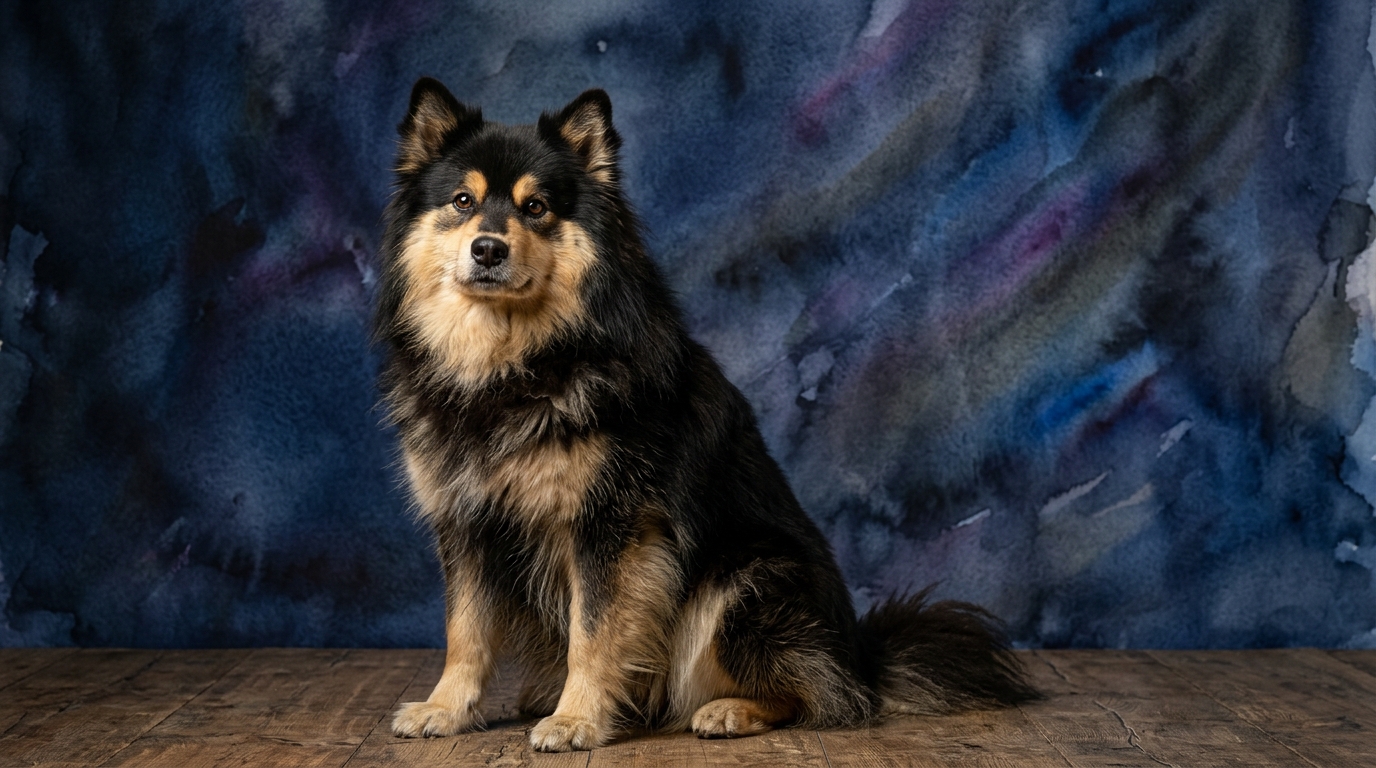
Side-by-Side IQ Profile: Canaan Dog vs. Finnish Lapphund
At The Cosmic Pet Pet IQ Lab, we evaluate canine intelligence across five key dimensions to provide a nuanced understanding of each breed's cognitive strengths. For both the Canaan Dog and the Finnish Lapphund, their profiles offer intriguing parallels and one notable divergence.
Problem Solving (Canaan Dog 3/5, Finnish Lapphund 3/5): Both breeds demonstrate a moderate capacity for navigating novel situations and devising solutions. This score indicates they can independently assess environmental challenges, such as finding a way around an obstacle or figuring out how to access a desired item. Their herding background means they possess practical reasoning skills, capable of making on-the-spot decisions relevant to managing livestock or adapting to changing conditions, without constant human intervention.
Training Speed (Canaan Dog 3/5, Finnish Lapphund 3/5): Owners of both the Canaan Dog and Finnish Lapphund can expect an average pace for learning new commands and behaviors. This isn't a lightning-fast acquisition, nor is it particularly slow; consistent, patient training methods yield steady progress. They will grasp concepts and associate actions with verbal cues at a typical rate, requiring regular, focused sessions for mastery.
Social Intelligence (Canaan Dog 3/5, Finnish Lapphund 3/5): Both breeds exhibit a balanced ability to interpret and respond to human social cues, such as tone of voice, body language, and gestures. They are attuned to their household environment and can adjust their behavior in social settings. This score reflects their capacity to form bonds, understand social hierarchies, and interact appropriately within their family unit and with familiar individuals, demonstrating a solid understanding of their place in the social landscape.
Instinctive Drive (Canaan Dog 3/5, Finnish Lapphund 3/5): As herding dogs, it's no surprise that both breeds score 3/5 in instinctive drive. This signifies a pronounced, innate motivation to perform tasks rooted in their ancestral roles, whether it’s gathering, moving, or protecting groups. This drive is a fundamental aspect of their temperament, influencing their need for purposeful activity and often manifesting as a strong desire to patrol, manage, or organize their environment, even in a non-herding home.
Memory (Canaan Dog 4/5, Finnish Lapphund 3/5): Here lies the most significant quantitative difference. The Canaan Dog boasts a 4/5 memory score, indicating a superior ability to retain information over extended periods. This includes remembering complex command sequences, the layout of their territory, and past experiences with remarkable clarity. In contrast, the Finnish Lapphund scores 3/5, suggesting a solid, functional memory, but one that might require slightly more consistent reinforcement of learned behaviors to maintain proficiency compared to the Canaan Dog.
Where the Canaan Dog Wins Cognitively
The Canaan Dog's cognitive edge is most apparent in its robust memory, rated 4/5 compared to the Finnish Lapphund's 3/5. This enhanced recall means a Canaan Dog is more likely to remember complex sequences of commands over time, retain the layout of its territory, and recall specific past interactions or training sessions with greater clarity. This superior memory likely contributes to its Coren ranking (#43), as the ability to consistently remember and apply learned information is crucial in many working dog contexts and enables them to excel in tasks requiring retention of intricate patterns or long-term routines. For an owner, this translates to less frequent re-teaching of established behaviors and a dog that remembers boundaries or specific task sequences with remarkable precision.
Beyond pure recall, the Canaan Dog's problem-solving skills, while rated the same as the Lapphund's, might be more independently applied due to their ancient, primitive heritage. They often use their memory to build upon past solutions, allowing them to adapt and strategize in a self-reliant manner. This independence, combined with strong memory, fosters a dog that can operate effectively even without direct human oversight, relying on its retained knowledge of the environment and prior experiences.
Where the Finnish Lapphund Wins Cognitively
While the Finnish Lapphund's individual IQ scores are largely on par with or slightly below the Canaan Dog's, its cognitive strength lies in its balanced and practical application of these abilities within its historical context. The Lapphund's slightly lower memory (3/5) is often balanced by its inherent biddability and eagerness to please, traits not directly measured by these IQ dimensions but crucial for cooperative work. Its consistent 3/5 across problem-solving, training speed, social intelligence, and instinctive drive, combined with its historical role in harsh Arctic conditions, suggests a resilient and adaptable mind that prioritizes practical cooperation.
This breed excels at pragmatic, on-the-spot decision-making within its herding tasks, often relying on instinct and a willingness to work collaboratively rather than a deeply analytical, memory-driven approach. The Lapphund's social intelligence, while rated similarly, manifests as a strong desire to connect and engage with its human partners, making it highly responsive to social cues. Its cognitive profile supports a dog that is consistently reliable and responsive in a working partnership, valuing shared effort and communication over independent strategizing, which can be a significant advantage in many domestic and sporting environments.
Which Is Easier to Train and Why
Both breeds share a 3/5 rating for training speed, indicating an average pace for learning new commands. However, the practical experience of training them can differ significantly due to other cognitive and behavioral traits. The Canaan Dog's 4/5 memory score suggests that once a command is learned, it is retained exceptionally well, requiring less reinforcement over the long term. Yet, their independent and sometimes primitive nature, typical of a breed shaped by minimal human intervention, means they can be more challenging to initially motivate and gain compliance from. They may question commands or prefer to work on their own terms, making the initial stages of training require immense patience, consistency, and a deep understanding of their psychology.
Conversely, the Finnish Lapphund, despite its 3/5 memory, is often described as more biddable and eager to please. This inherent desire to cooperate with humans can make the initial training process feel smoother, as they are more inclined to respond positively to direction and praise. While they might require slightly more consistent refreshing of commands due to their average memory, their cooperative spirit and willingness to engage with their owner can make them appear 'easier' to train for individuals seeking a responsive and amenable partner, even if the pure learning speed is quantitatively similar. Owners willing to invest in positive reinforcement will likely find the Lapphund a more straightforward training companion.
Which Suits Active Owners vs. Relaxed Owners
Neither the Canaan Dog nor the Finnish Lapphund are suitable companions for truly relaxed, sedentary owners; both are herding breeds with a 3/5 instinctive drive, signifying a pronounced need for purposeful activity and mental engagement. The Canaan Dog, with its independent nature and exceptional memory, thrives with owners who can provide consistent mental challenges and physical exercise that respects its self-reliant character. They need structured engagement and clear leadership, but also space to think and act on their own, making them ideal for active owners who appreciate a dog with a strong will and a watchful disposition. They are not dogs content to simply exist; they need a 'job' or engaging activities to prevent boredom and potential behavioral issues.
The Finnish Lapphund, equally active and driven by its herding instincts, also requires significant daily exercise and mental stimulation. However, their more biddable and social nature means they often prefer to engage in activities *with* their owners, such as hiking, agility, or herding trials. They are well-suited for active owners who enjoy a highly interactive and cooperative canine partner for outdoor adventures or dog sports. While both demand an active lifestyle, the Canaan Dog's activity often involves more independent patrolling and problem-solving, requiring an owner who can channel that autonomy, whereas the Lapphund's activity is frequently a shared endeavor, thriving on companionship during their tasks.
The Verdict
Opt for a Canaan Dog if you are an experienced owner seeking a highly independent, watchful companion with an exceptional memory, prepared to invest in consistent, nuanced training that respects their ancient lineage and strong will.
Select a Finnish Lapphund if you desire an active, biddable, and cooperative partner for outdoor adventures and dog sports, valuing a dog that is eager to please and thrives on shared activities, even if it requires slightly more consistent reinforcement of learned behaviors.
🧠 Find Your Pet's IQ Score
Our Pet IQ Lab assessment covers 25+ tests across 5 cognitive dimensions — personalized to your breed.
Take the Full IQ Test →Frequently Asked Questions
Does the Canaan Dog's higher Coren ranking mean it's definitively 'smarter' than the Finnish Lapphund?
Not necessarily in every aspect. Coren's ranking primarily assesses 'working intelligence' or obedience and adaptive intelligence, which aligns with the Canaan Dog's excellent memory and ability to retain complex commands. The Finnish Lapphund's lack of ranking doesn't imply lower intelligence, but rather that it hasn't been as extensively studied or ranked within that specific framework, or its intelligence manifests differently through its cooperative nature.
How does the memory difference impact daily life for owners?
A Canaan Dog's superior memory (4/5) means it will likely remember routines, boundaries, and commands with remarkable consistency over long periods, potentially requiring less frequent refreshing. A Finnish Lapphund's 3/5 memory is still good, but owners might find they need to reinforce commands or routines a bit more regularly to maintain proficiency, balancing this with its eagerness to please.
Are either of these breeds suitable for first-time dog owners?
Generally, neither breed is recommended for first-time dog owners due to their strong herding instincts, need for consistent training, and significant exercise requirements. The Canaan Dog's independence can be particularly challenging, while the Finnish Lapphund, though more biddable, still requires an owner committed to their specific needs and active engagement.