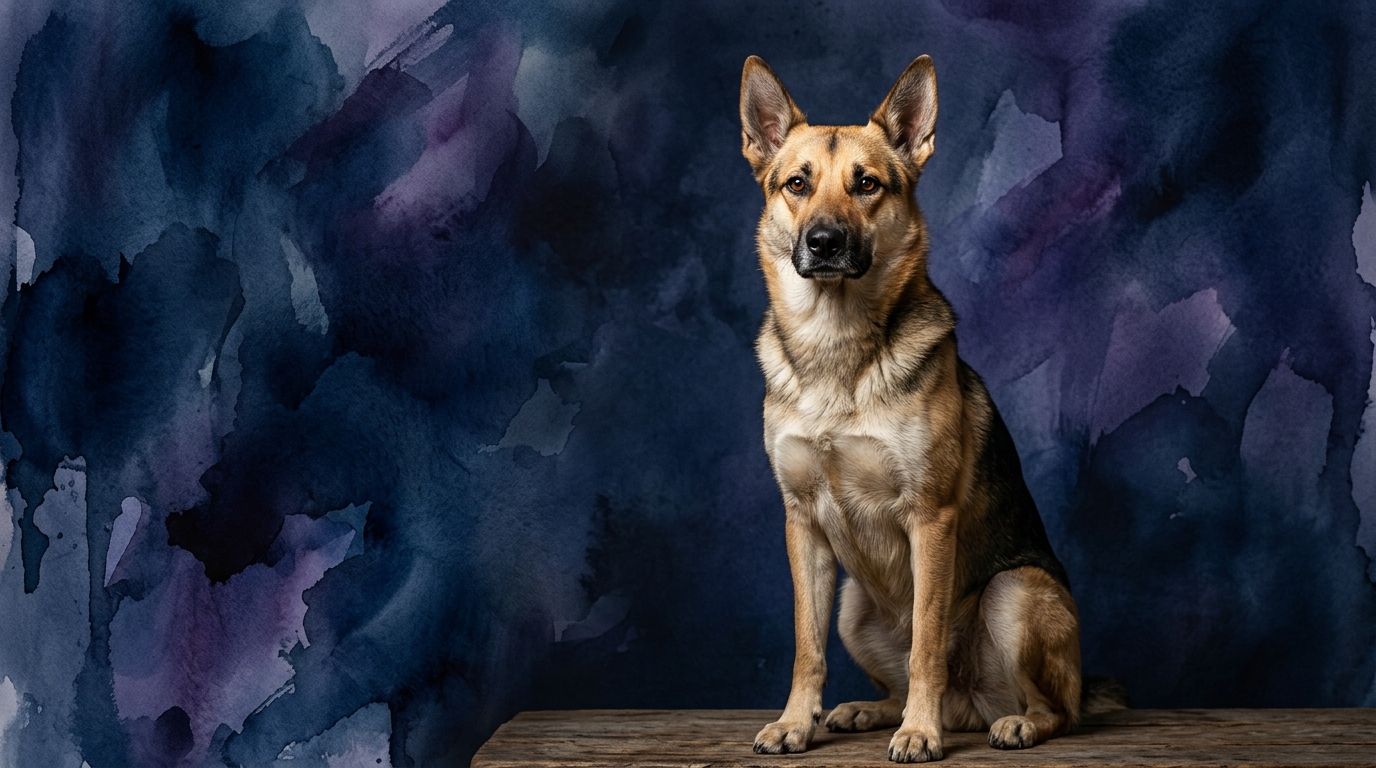
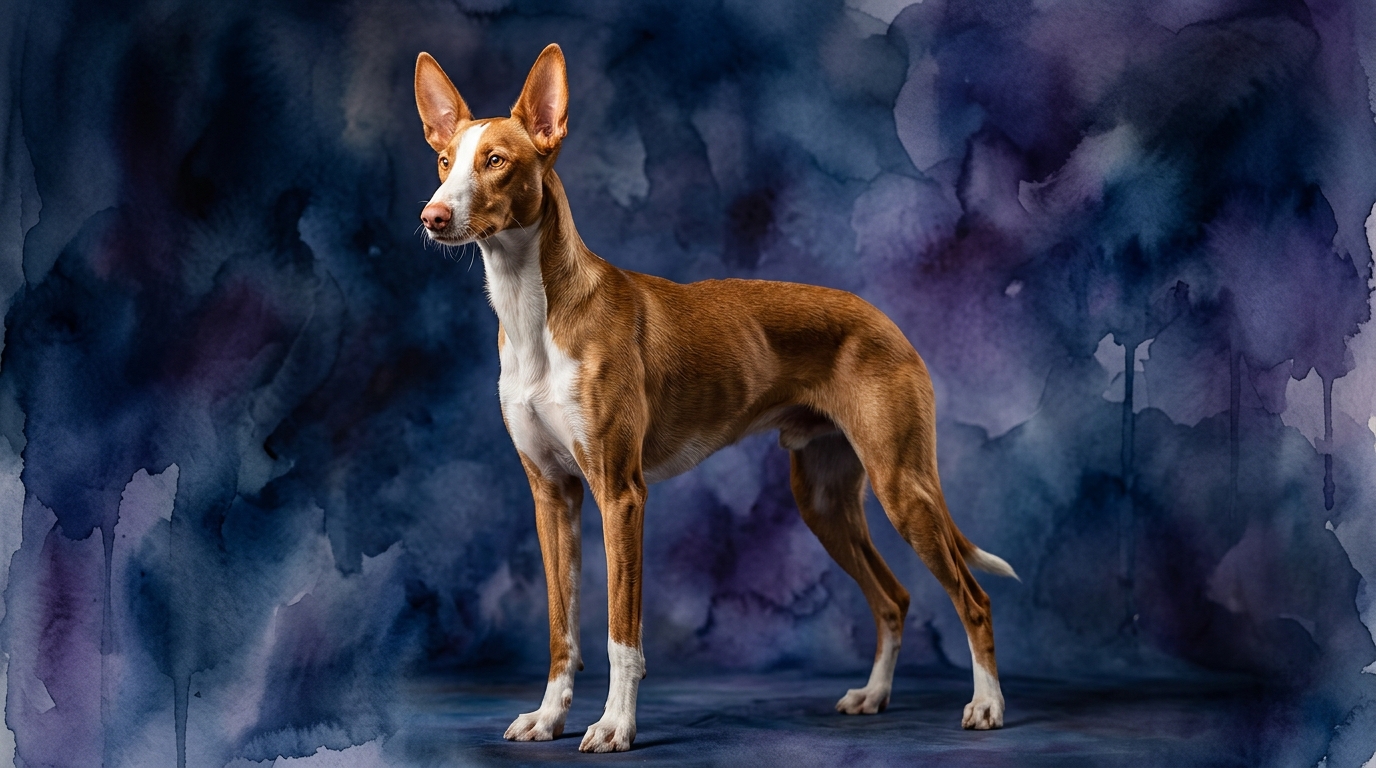
The Cosmic Pet Pet IQ Lab: Canaan Dog vs. Ibizan Hound at a Glance
In the intricate world of canine cognition, surface-level similarities can often mask profound underlying differences. Both the Canaan Dog, a Herding group member ranked #43 by Coren, and the Ibizan Hound, a Sighthound ranked #53, present unique intellectual profiles that warrant a closer look beyond their numerical scores. Our exploration will illuminate how their distinct ancestries shape their approach to learning, problem-solving, and social interaction.
The Canaan Dog's IQ profile reveals a practical mind: Problem Solving (3/5) indicates an ability to navigate challenges resourcefully, often relying on established patterns. Their Training Speed (3/5) suggests they learn effectively but need consistency and engagement due to an independent streak. Social Intelligence (3/5) highlights their awareness of human cues, though they can be reserved with strangers. Instictive Drive (3/5) is rooted in vigilance and protection, while their Memory (4/5) stands out as exceptional, retaining complex information over time.
The Ibizan Hound, conversely, demonstrates a different cognitive emphasis: Problem Solving (3/5) is geared towards dynamic, real-time scenarios, particularly those involving pursuit and navigation. Training Speed (3/5) shows they are capable learners, but their sighthound independence and prey drive require highly motivating approaches. Social Intelligence (3/5) means they are affectionate with family but often reserved with outsiders. Instictive Drive (3/5) is dominated by a powerful prey drive and independent hunting, and their Memory (3/5) is solid for learned tasks and routes, though perhaps less profound than the Canaan's.
Despite sharing several identical scores, the *application* and *nature* of their intelligence diverges significantly, reflecting their thousands of years of distinct evolutionary paths and working roles.
Canaan Dog's Cognitive Strengths
The Canaan Dog's primary cognitive advantage undeniably lies in its superior Memory, scoring 4/5 compared to the Ibizan Hound's 3/5. This isn't merely about remembering basic commands; it encompasses a profound capacity for recalling complex sequences of actions, nuances of past social interactions, and the intricacies of established routines. This robust retention means that once a Canaan Dog internalizes a lesson or a household rule, it tends to stick with remarkable tenacity, making advanced, multi-layered training more cumulative and consistent over their lifetime. Their herding heritage also subtly shapes their problem-solving, even with an identical score to the Ibizan. While the Ibizan excels in dynamic pursuit, the Canaan often applies its intellect to understanding and managing group dynamics, observing subtle shifts in environment or behavior to maintain order, a different facet of practical intelligence that emphasizes strategic oversight rather than rapid individual action.
This deep memory, coupled with their inherent discernment, allows Canaan Dogs to build a comprehensive mental map of their world, remembering who is trustworthy, which situations are safe, and what behaviors are expected. This leads to a thoughtful approach to new stimuli; they analyze and compare new information against their vast internal database of experiences. Their cognitive strengths make them adept at tasks requiring long-term recall and a nuanced understanding of their environment, positioning them as highly observant and adaptable companions for owners willing to engage their minds.
Ibizan Hound's Distinctive Intellect
The Ibizan Hound’s cognitive strengths are distinctly shaped by its sighthound lineage, manifesting as exceptional capabilities in dynamic, visual processing and independent decision-making during pursuit. While both breeds share a 3/5 problem-solving score, the Ibizan's intelligence is particularly geared towards swift analysis of movement, spatial reasoning, and optimizing chase trajectories. They exhibit a remarkable ability to process visual stimuli at high speeds, quickly assessing distances, obstacles, and the escape routes of potential prey. This translates to an unparalleled agility of thought when engaged in their primary instinctive drive, making them masters of their specialized hunting craft.
Furthermore, their ancient hunting role demanded considerable independent problem-solving in the field, often far from human direction. This means they are adept at making quick, autonomous choices based on sensory input, rather than waiting for a command. Their understanding of cause and effect in a physical, moving environment is highly refined, allowing them to anticipate and react with precision during high-speed activities. This independent, visually driven problem-solving is a hallmark of their intellect, making them incredibly effective and self-reliant when their sighthound instincts are engaged.
Training Dynamics: Canaan Dog vs. Ibizan Hound
Comparing the training ease of the Canaan Dog and the Ibizan Hound reveals fascinating differences, despite both scoring 3/5 for training speed. The Canaan Dog, with its herding background, often seeks to understand its role within the family structure and, once it respects its handler, can be a willing partner. Their exceptional memory (4/5) means that once a concept is grasped, it's rarely forgotten, making advanced training and consistency over time a distinct advantage. However, their independent and discerning nature means they can be selective about who they listen to and may 'question' commands if they perceive them as illogical or arbitrary. Training requires patience, consistency, and a clear, confident leader who fosters a partnership.
In contrast, the Ibizan Hound's 3/5 training speed is heavily influenced by its powerful sighthound instincts. They are responsive to positive reinforcement and learn quickly, but their formidable prey drive and independent spirit mean they can be easily distracted by visual stimuli or the urge to chase. Training must be highly engaging, fun, and consistently reinforced to maintain their focus. While they aren't stubborn, their priorities are often aligned with their natural instincts, making off-leash reliability in open, unsecured areas particularly challenging. Neither breed is inherently 'easier'; the Canaan benefits from its memory for retention but requires a strong partnership, while the Ibizan needs its training to effectively compete with its innate, powerful drive.
Lifestyle Compatibility: Active vs. Relaxed Owners
The Canaan Dog, originating from a semi-feral existence, thrives with active owners who can provide both physical exercise and mental engagement. While they can adapt to various living situations, they are not suited for entirely relaxed owners. They require daily walks, opportunities for exploration, and consistent training or 'jobs' to fulfill their need for purpose and vigilance. Their protective instincts mean they benefit from extensive socialization and an owner who understands how to channel their natural wariness into appropriate behavior. An owner who enjoys dog sports like agility, obedience, or scent work would find a fulfilling partner in a Canaan Dog, as these activities engage both their body and their sharp mind.
The Ibizan Hound, conversely, is a breed built for explosive speed and endurance, making them ideal for exceptionally active owners. They need ample opportunity to run at full gallop in a securely fenced area daily to truly thrive. While they are often calm and graceful indoors, their outdoor exercise requirements are non-negotiable. Relaxed owners who cannot commit to significant, high-intensity physical activity will find the Ibizan Hound's needs challenging. Owners who enjoy running, hiking, or secure dog parks where their hound can stretch their legs freely will be best suited to this breed. Both breeds demand commitment to activity, but the *type* of activity differs: the Canaan needs purpose and varied mental/physical tasks, while the Ibizan needs intense bursts of physical speed to satisfy its sighthound nature.
The Verdict
Choose the Canaan Dog if you seek a discerning, protective companion with an exceptional memory, willing to partner with a confident leader on consistent training and varied mental challenges.
Opt for the Ibizan Hound if you are an exceptionally active owner who values an independent spirit and can provide ample opportunities for high-speed, secure running to satisfy their powerful sighthound instincts.
🧠 Find Your Pet's IQ Score
Our Pet IQ Lab assessment covers 25+ tests across 5 cognitive dimensions — personalized to your breed.
Take the Full IQ Test →Frequently Asked Questions
Are Canaan Dogs good family pets?
Canaan Dogs can be wonderful family pets, known for their loyalty and protective nature towards their immediate family. However, their discerning temperament means they require early and consistent socialization to ensure they are comfortable with strangers and new situations. They thrive in homes with clear boundaries and a confident leader.
Do Ibizan Hounds need a lot of grooming?
Ibizan Hounds are relatively low-maintenance when it comes to grooming. Their short, smooth coat or wire coat requires minimal brushing, usually once a week, to remove loose hair and keep it healthy. They are generally clean dogs with little to no doggy odor, making them a good choice for those seeking a low-grooming companion.
How do their protective instincts differ?
The Canaan Dog's protective instinct stems from its herding and guardian background, making them vigilant watchdogs who are wary of strangers and will alert to perceived threats with a strong bark. The Ibizan Hound, while reserved with strangers, has a protective instinct more rooted in its loyalty to its family rather than general territorial guarding, and its primary drive is prey pursuit, not confrontation.