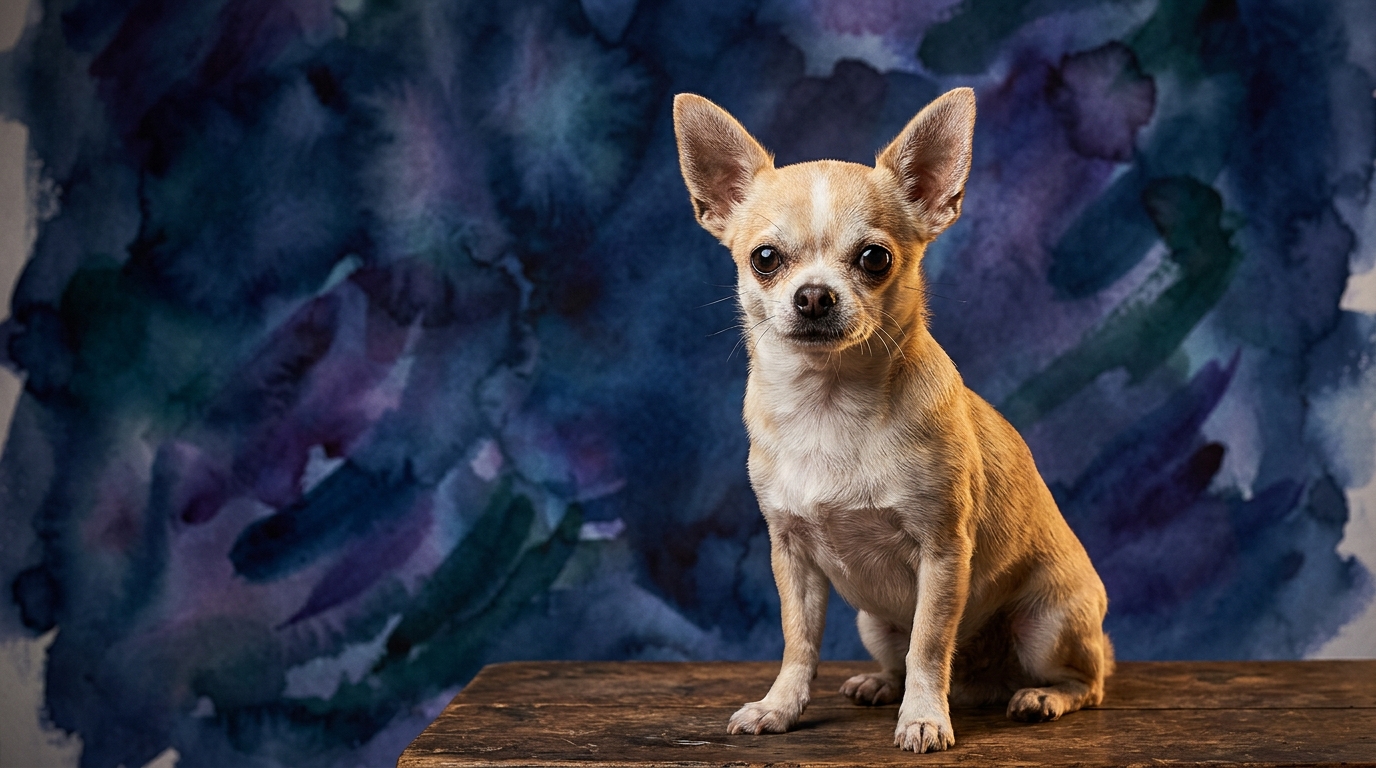
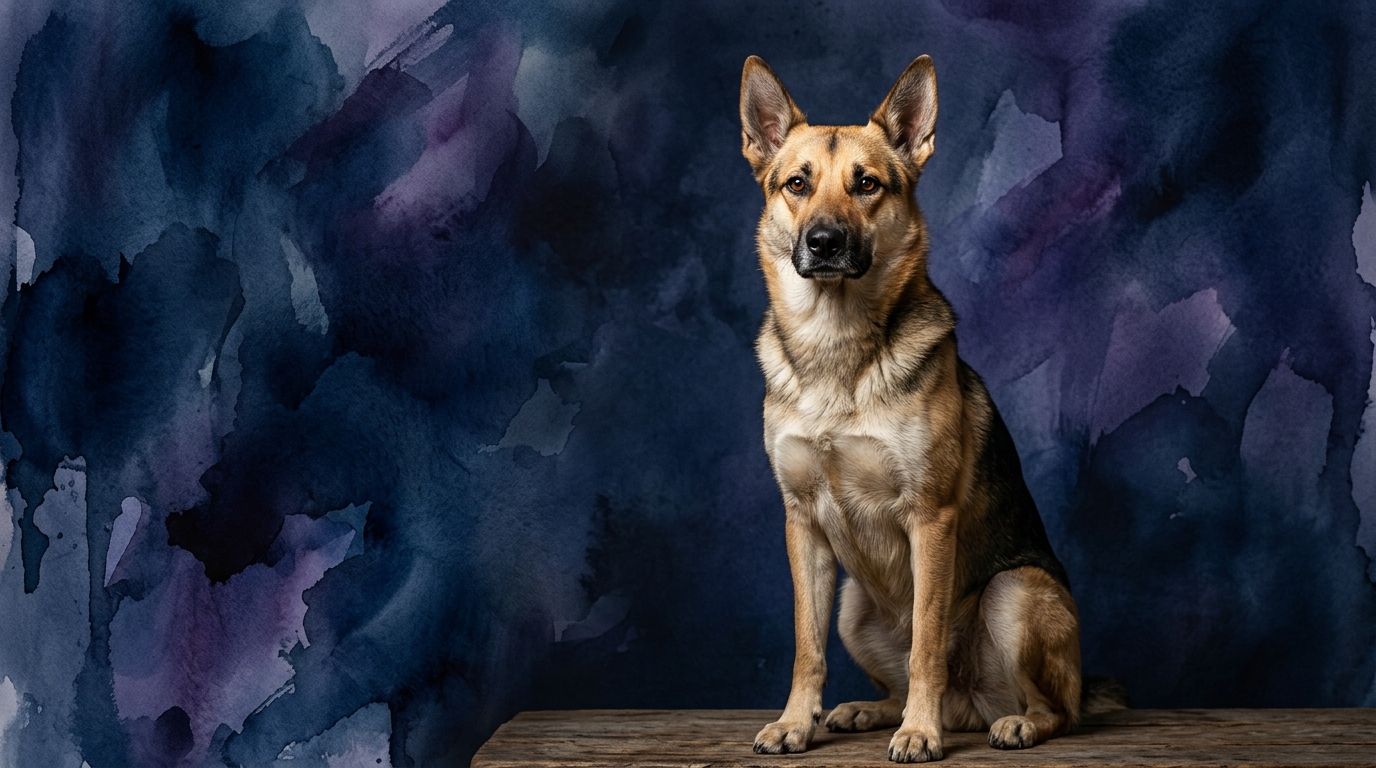
Side-by-Side Cognitive Profiles: Chihuahua vs. Canaan Dog
The Cosmic Pet Pet IQ Lab employs a five-dimensional framework to assess canine cognition, offering a granular view beyond traditional obedience rankings. These dimensions — problem solving, training speed, social intelligence, instinctive drive, and memory — reveal the nuanced mental landscape of each breed.
The Chihuahua, a Toy group member with a Coren rank of #67, exhibits a cognitive profile tailored for companionship. Its problem-solving ability scores 3 out of 5, indicating a moderate capacity to navigate new challenges, often through learned patterns. Training speed is also 3 out of 5, requiring consistent positive reinforcement and repetitions for mastery. The Chihuahua's clear strength lies in social intelligence, earning a 4 out of 5, demonstrating an exceptional aptitude for reading human emotions and subtle cues, fostering deep, empathetic bonds. Instinctive drive is a moderate 3 out of 5, typically seen in territorial protection and a strong desire for closeness. With a memory score of 4 out of 5, Chihuahuas effectively retain commands, routines, and past social interactions, making them responsive companions.
The Canaan Dog, a Herding breed with a Coren rank of #43, possesses a cognitive blueprint rooted in its ancient, self-sufficient desert origins. Its problem-solving ability rates 3 out of 5, reflecting a cautious yet effective approach to novel situations, often through observation. Training speed is 3 out of 5; they learn steadily with patient, consistent methods, though their independent nature can affect immediate compliance. Social intelligence is 3 out of 5; while observant, they tend to maintain emotional reserve, forming strong but independent bonds. Instinctive drive, at 3 out of 5, is pronounced in vigilance, territoriality, and herding, reflecting historical guardian roles. Their memory is strong, scoring 4 out of 5, enabling effective retention of training and environmental information, crucial for a breed that historically relied on its own wits.
Where the Chihuahua Cognitively Excels
The Chihuahua's clear cognitive advantage lies in its profound social intelligence, scoring an impressive 4 out of 5 compared to the Canaan Dog's 3 out of 5. This diminutive companion demonstrates an exceptional aptitude for reading and responding to human emotional states and subtle cues. Chihuahuas often seem to anticipate their owner's moods, offering comfort or seeking interaction with a precise timing that suggests a deep understanding of interpersonal dynamics. This skill allows them to integrate seamlessly into human family structures, becoming highly attuned companions who navigate complex social environments with remarkable finesse. Their ability to form strong, empathetic bonds is a testament to this elevated social cognition, making them masters of emotional connection within their chosen human pack.
Where the Canaan Dog Cognitively Excels
While both breeds share similar scores in problem-solving and training speed within our lab environment, the Canaan Dog's higher Coren rank (#43 vs #67) hints at a more robust overall operational intelligence, particularly in its original context. Its historical role as a free-ranging pariah dog and later as a herder in harsh environments demanded a self-sufficient cognitive approach. This manifests as a cautious yet effective approach to novel situations, where observation and independent decision-making often take precedence over immediate reliance on human direction. While not necessarily quicker to learn a specific trick than a Chihuahua, the Canaan Dog's cognitive strength lies in its ability to assess and react to its environment with a degree of independence and resilience, a legacy of its survival instincts. This breed's cognitive wiring prioritizes situational awareness and self-preservation, aspects not always captured fully by a lab-setting problem-solving score but crucial for its historical function.
Training Dynamics: Which Breed is Easier to Guide?
When considering ease of training, both the Chihuahua and the Canaan Dog score a 3 out of 5 for training speed, indicating they learn at a moderate pace. However, their inherent behavioral differences create distinct training experiences. The Chihuahua's elevated social intelligence (4/5) often translates into a keen desire to please its primary human. This social attunement means Chihuahuas are frequently motivated by praise, affection, and the opportunity to be close to their people. While they still require consistent positive reinforcement and patience to master commands, their inherent drive for social connection can make them more amenable to structured lessons and eager to comply. Their small size also contributes to a perception of easier management during training sessions.
In contrast, the Canaan Dog, with its 3/5 social intelligence and historical independence, approaches training with a more self-reliant mindset. This breed, historically tasked with guarding and surviving without constant human direction, developed a discerning and sometimes wary disposition. While certainly capable of learning and retaining commands (memory 4/5), their independence means they require a trainer who understands how to motivate a dog that prioritizes its own assessment of a situation. They are less likely to perform simply to please and more likely to comply if they perceive value or logic in the command, or if the reward is sufficiently enticing. Training a Canaan Dog demands patience, creativity, and a consistent, firm yet fair approach that respects their inherent autonomy. Therefore, while both learn at a similar *rate*, the Chihuahua's social drive often makes the *process* of training feel more straightforward and less challenging for the average owner due to its inherent compliance and desire for connection, whereas the Canaan Dog requires a more nuanced and persistent approach to harness its independent spirit effectively.
Matching Canine Cognition to Owner Lifestyle
Choosing between these breeds based on owner lifestyle reveals distinct suitability. The Chihuahua, despite its small stature, possesses a surprising zest for life, but its exercise needs are generally moderate. A relaxed owner who enjoys short walks, indoor play, and ample cuddle time will find a Chihuahua a perfectly content companion. Their high social intelligence and strong memory mean they thrive on consistent interaction and routine, making them ideal for individuals or families who can offer a predictable, affectionate environment. They excel as lap dogs but also enjoy accompanying their owners on errands or adventures, provided they feel secure and included. Their adaptability allows them to fit into quieter, home-centric lifestyles as well as moderately active ones, as long as their need for social connection is consistently met.
The Canaan Dog, however, is unequivocally suited for active owners. Originating from desert environments and serving as a herder and guardian, this breed possesses a significant need for physical exercise and mental engagement. Their instinctive drive (3/5) and independent nature mean they require purposeful activities that challenge both their bodies and minds. Long walks, hikes, agility training, or dog sports like scent work can channel their energy constructively. A relaxed owner unable to commit to daily, stimulating outings will likely find a Canaan Dog restless, potentially leading to undesirable behaviors stemming from boredom or unfulfilled instincts. They thrive with owners who understand their need for a 'job' and can provide consistent training, exploration, and opportunities to utilize their observational and problem-solving skills in real-world scenarios. Their self-reliant character demands space and purpose, making them a poor fit for a purely sedentary existence.
The Verdict
Choose Chihuahua if you seek a highly socially attuned companion who thrives on close connection, fits into a more relaxed to moderately active lifestyle, and offers a manageable size for various living situations.
Choose Canaan Dog if you are an active owner prepared to provide extensive physical and mental stimulation for an independent, discerning companion with strong guardian instincts.
🧠 Find Your Pet's IQ Score
Our Pet IQ Lab assessment covers 25+ tests across 5 cognitive dimensions — personalized to your breed.
Take the Full IQ Test →Frequently Asked Questions
Do Chihuahuas learn tricks quickly?
Chihuahuas score 3/5 in training speed, meaning they learn at a moderate pace. Their strong social intelligence and desire to please their owners can make the training process feel more engaging and rewarding, but consistent repetition is still key for mastery.
Is the Canaan Dog a good family pet for children?
Canaan Dogs possess moderate social intelligence (3/5) and a discerning nature. They can be good family pets with proper socialization and training from a young age, but their independent spirit means they may prefer older, respectful children who understand how to interact with a dog that values its space.
How does a dog's Coren rank relate to its individual IQ scores?
Coren rank reflects a breed's overall working and obedience intelligence based on training ease and command understanding. While individual IQ scores break down specific cognitive dimensions like problem-solving and memory, the Coren rank provides a broader indicator of trainability and functional intelligence in a human-centric context.