Side-by-Side IQ Profile: Interpreting the 3/5 Score
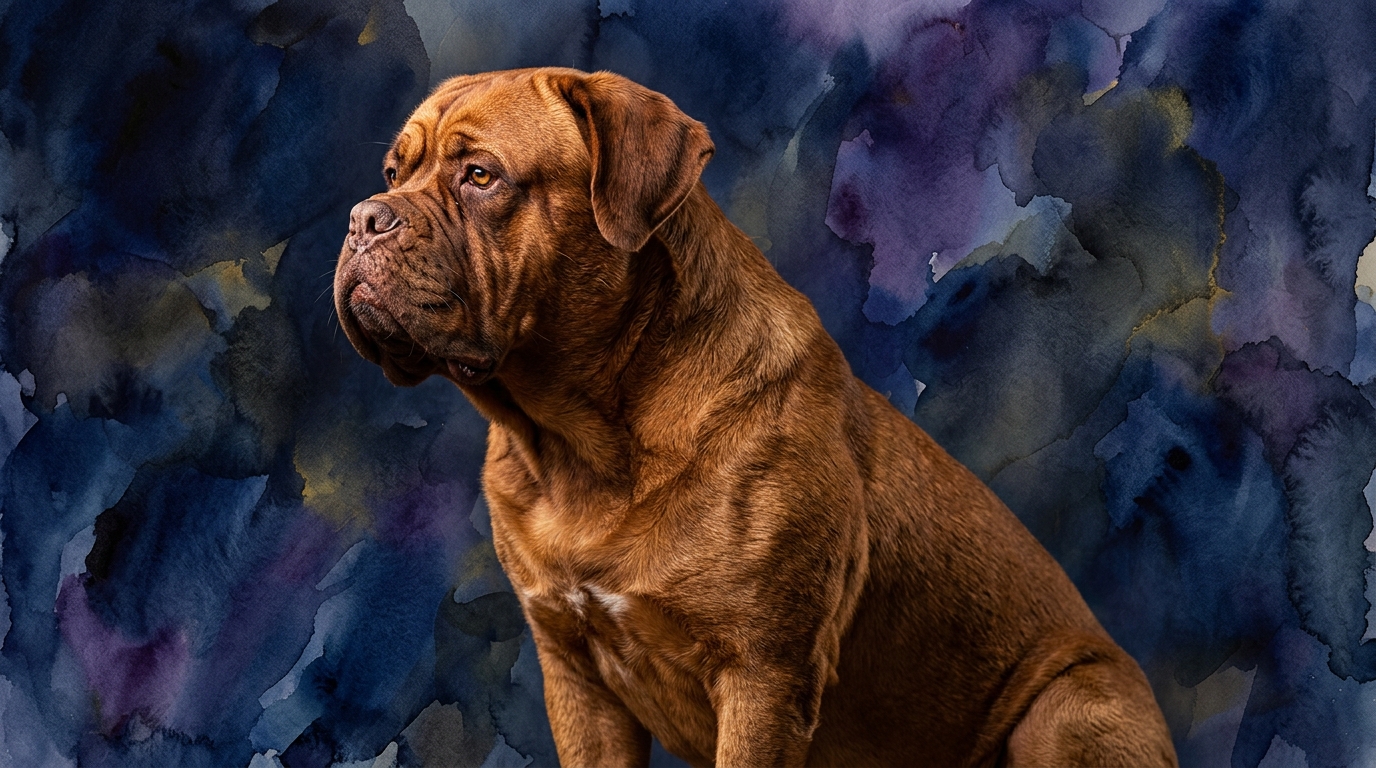
When examining the Dogue de Bordeaux, a working breed, their consistent 3/5 score across the board speaks to a balanced, practical intelligence. Their Problem Solving at 3/5 manifests as a capacity to understand household routines and react appropriately to environmental changes, often leveraging their physical presence to achieve a desired outcome, such as moving an obstacle to reach their favorite human. Their Training Speed, also 3/5, indicates they grasp commands at a moderate pace, but their large size and sometimes deliberate nature mean consistency and clear communication are paramount; they learn best when they perceive a clear purpose or reward tied to their family's approval. Social Intelligence at 3/5 means they are highly perceptive of human emotions and family dynamics, making them excellent, watchful companions who understand social cues within their immediate circle. Their Instinctive Drive, a 3/5, is centered on protection and companionship, a strong, calm vigilance over their home and people rather than a high-energy chase. Finally, their Memory at 3/5 allows them to retain complex learned behaviors and recall specific individuals or past interactions with commendable accuracy, especially concerning their perceived 'inner circle'.
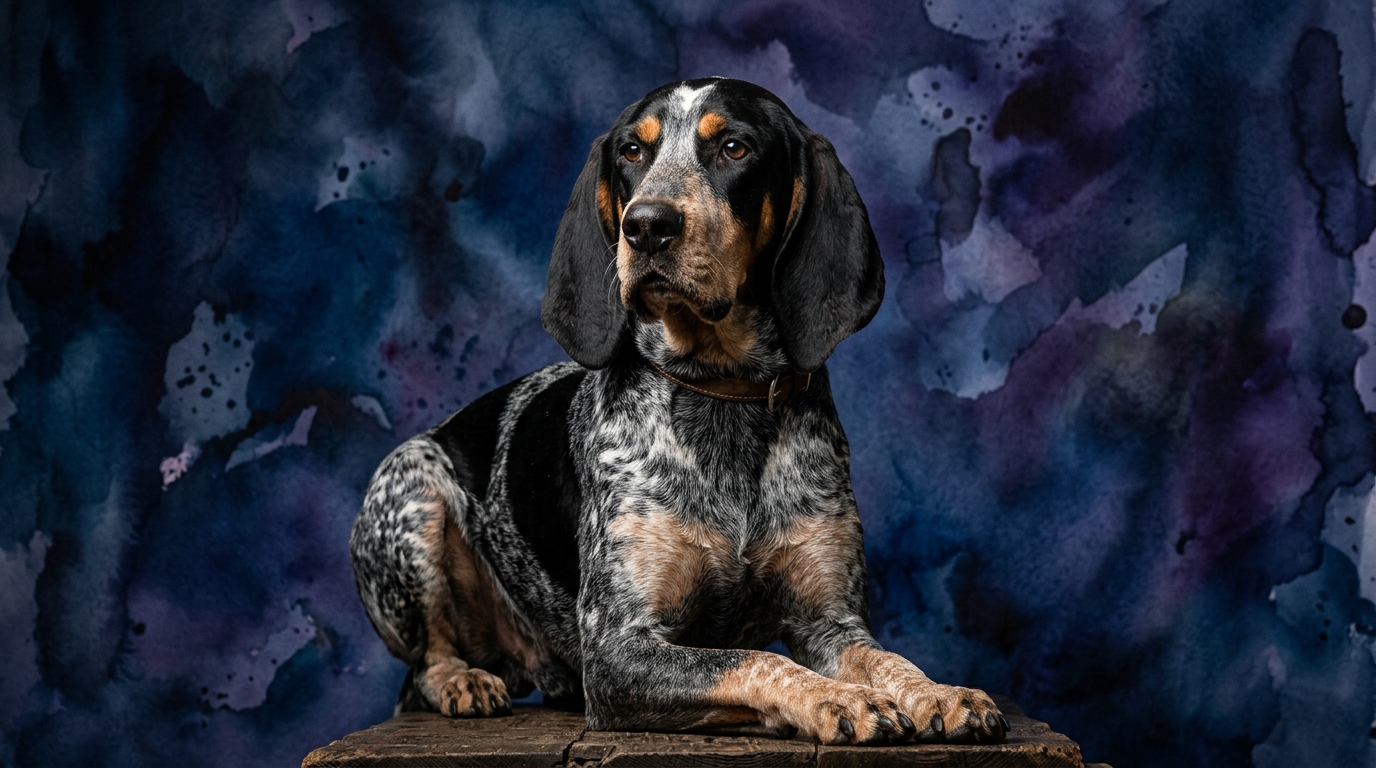
The Bluetick Coonhound, a hound breed, also scores 3/5 in every cognitive dimension, yet their intelligence is specialized through the lens of their primary purpose: tracking. Their Problem Solving at 3/5 is exceptionally tailored to navigating complex scent trails, demonstrating remarkable ingenuity in discerning and following faint odors across varied and challenging terrains. This isn't about opening a cabinet, but about piecing together an invisible puzzle across miles. Training Speed, rated 3/5, indicates they can learn commands, but their powerful olfactory focus often means their attention is split between human instruction and an irresistible scent; they learn quickly when the task aligns with their natural inclination. Their Social Intelligence, also 3/5, allows them to be amiable and capable of integrating into a family, but their primary social drive is often directed towards their 'pack' in the field or a singular focus on a scent, sometimes appearing less attuned to subtle human social cues than a working breed. The Bluetick's Instinctive Drive, a robust 3/5, is almost entirely dedicated to scent work and pursuit, a relentless and independent drive to follow a trail to its conclusion. Lastly, their Memory, also 3/5, is particularly impressive for recalling complex scent patterns, specific hunting grounds, and the locations of past successes, demonstrating a remarkable ability to store and retrieve environmental data relevant to their purpose.
Where Dogue de Bordeaux Wins Cognitively
The Dogue de Bordeaux shines in cognitive domains related to nuanced social interaction and protective strategy within a domestic setting. Their 3/5 Social Intelligence, combined with their 3/5 Memory, allows them to excel at understanding the subtle emotional states of their family members, often anticipating needs or reacting to distress with a comforting presence. This breed's protective instincts are not merely physical; they involve a careful assessment of perceived threats and a calibrated response, demonstrating a sophisticated form of social problem-solving. They remember who belongs and who doesn't, processing social cues to determine appropriate actions. For instance, a Dogue de Bordeaux might independently decide to position itself between a child and an unfamiliar visitor, not out of aggression, but out of a thoughtful interpretation of social dynamics and a desire to guard. Their problem-solving often involves observing human behavior and adapting their own to maintain harmony or security within the home, a cognitive strength rooted in their close bond with their human family.
Where Bluetick Coonhound Wins Cognitively
The Bluetick Coonhound's cognitive strengths are undeniably rooted in their specialized hunting prowess. Their 3/5 Problem Solving and 3/5 Instinctive Drive converge to create an unparalleled ability to interpret and follow complex scent trails. This isn't just about smelling; it's about discriminating between countless odors, understanding the age and direction of a trail, and navigating challenging environments—like dense undergrowth or rocky terrain—to stay on target. They demonstrate remarkable independence in their decision-making during a hunt, often needing to solve environmental puzzles on their own without direct human intervention. For example, when a scent trail appears to vanish, a Bluetick will employ sophisticated cognitive mapping and memory to circle back, cast wider, or even anticipate where the quarry might have gone, showcasing a highly specialized form of spatial and olfactory intelligence. Their memory for specific terrain and successful hunting spots is also a testament to their cognitive strength, allowing them to learn and adapt their tracking strategies over time.
Which is Easier to Train and Why
When considering ease of training, the Dogue de Bordeaux generally presents a more straightforward path for the average owner, primarily due to their intrinsic motivation to please their family, which aligns with their 3/5 Social Intelligence. While their 3/5 Training Speed means they learn at a moderate pace, their desire for companionship and approval can be leveraged effectively with positive reinforcement. They grasp the *concept* of obedience and understand what is expected, though their independent streak means consistency and a firm, fair hand are necessary to ensure compliance, especially given their formidable size. They respond well to routines and thrive on knowing their place within the family structure, making them receptive to structured training sessions.
The Bluetick Coonhound, despite also having a 3/5 Training Speed, often proves more challenging to train, particularly regarding recall and off-leash obedience. This difficulty stems directly from their powerful 3/5 Instinctive Drive, which is dominated by their nose. A Bluetick will learn commands, but the allure of a captivating scent can easily override any learned behavior, causing them to become singularly focused on the trail. Their independent nature, honed by generations of working alone on a hunt, means they are less inherently inclined to look to a human for direction once a scent is caught. Training a Bluetick requires immense patience, creativity in making training more rewarding than a scent, and often specialized techniques to manage their strong prey drive, making their '3/5' training speed feel much slower in practical application when competing with their instincts.
Which Suits Active Owners vs Relaxed Owners
For owners seeking a more relaxed companion, the Dogue de Bordeaux is generally a better fit. While they are large and require regular, moderate exercise to maintain their health and prevent boredom—think 30-60 minutes of structured walks or play daily—they are typically calm and content indoors, especially when they have had their physical and mental needs met. They thrive on close proximity to their family and are often described as 'velcro dogs,' happy to lounge near their people. Their contentment comes from social engagement and predictable routines, making them suitable for owners who enjoy a relaxed home life but are committed to consistent, moderate activity and mental stimulation.
Conversely, the Bluetick Coonhound is definitively suited for highly active owners. Their 3/5 Instinctive Drive demands significant outlets for their boundless energy and tracking abilities. These dogs are built for endurance and require rigorous daily exercise, ideally incorporating long runs, extensive walks, or dedicated scent work. A bored or under-exercised Bluetick can become destructive or vocal, channeling their unspent energy into undesirable behaviors. They thrive with owners who enjoy outdoor adventures, hunting, or dog sports that engage their powerful nose and tireless body. Their independence on the trail means they aren't always looking to their owner for guidance, making them a companion for those who appreciate a dog with a strong, self-directed purpose, requiring an owner with the energy and dedication to match.
The Verdict
Choose the Dogue de Bordeaux if you seek a devoted, watchful companion who thrives on close family bonds and a predictable home life, offering a calm presence once their moderate exercise needs are met.
Opt for the Bluetick Coonhound if you are a highly active owner who can provide ample opportunities for rigorous exercise, scent work, and appreciates a dog with an independent, relentless spirit on the trail.
🧠 Find Your Pet's IQ Score
Our Pet IQ Lab assessment covers 25+ tests across 5 cognitive dimensions — personalized to your breed.
Take the Full IQ Test →Frequently Asked Questions
Are Dogue de Bordeaux good family dogs?
Yes, Dogue de Bordeaux are typically very devoted and protective of their families, making them excellent companions. They require early socialization and consistent training due to their size and guarding instincts to ensure they are well-mannered around others.
Do Bluetick Coonhounds bark a lot?
Bluetick Coonhounds are hounds, and they are known for their distinctive baying and vocalizations. They will use their voice extensively, especially when on a scent trail, excited, or bored, so prospective owners should be prepared for a vocal companion.
How much exercise does a Dogue de Bordeaux need?
A Dogue de Bordeaux requires moderate exercise, typically around 30-60 minutes daily, which can include brisk walks or gentle play. They benefit more from consistent, structured activity and mental stimulation rather than intense, prolonged exertion.