
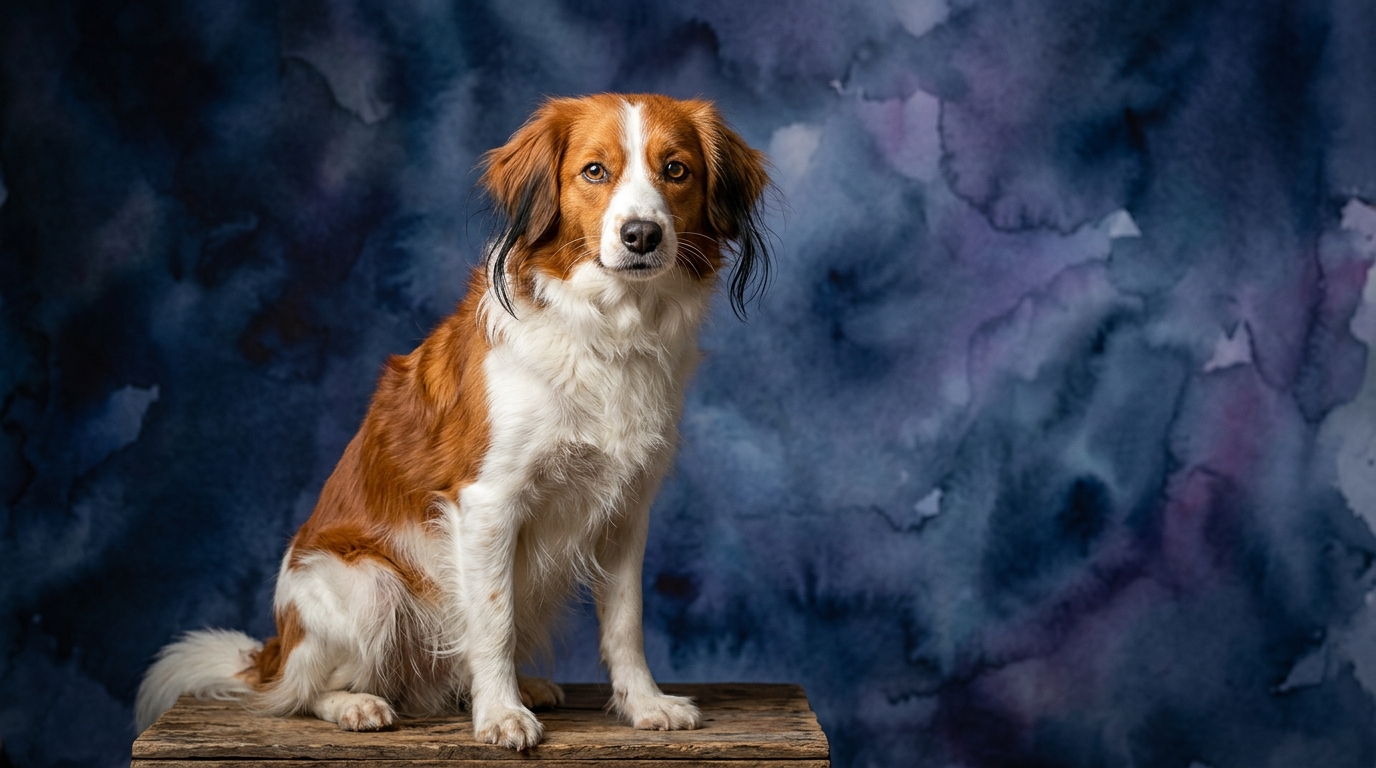
Side-by-Side IQ Profile: Dogue de Bordeaux vs. Kooikerhondje
Delving into The Cosmic Pet Pet IQ Lab's assessment reveals both the Dogue de Bordeaux and the Kooikerhondje share a consistent 3/5 rating across all cognitive dimensions. However, the *application* of these capabilities is profoundly shaped by their breed-specific roles and temperaments.
For the Dogue de Bordeaux, a Working dog, their Problem Solving (3/5) often manifests in independent threat assessment and territorial navigation, requiring robust decision-making in a protective context rather than intricate manipulation. Training Speed (3/5) for this breed is a deliberate process, demanding consistent, patient reinforcement to ingrain commands and routines effectively. Their Social Intelligence (3/5) centers on discerning familiar individuals from strangers, understanding household dynamics, and forming deep, loyal bonds within their immediate family. The Instinctive Drive (3/5) is profoundly expressed through strong protective instincts and territorial awareness, reflecting their historical guardian role. Finally, their Memory (3/5) is solid for people, places, and established routines, contributing to their reliability and consistency in familiar settings.
The Kooikerhondje, a Sporting dog, applies its Problem Solving (3/5) in agile, strategic ways, particularly in tasks requiring sequential thought and adaptability, such as luring ducks or navigating complex agility courses. Their Training Speed (3/5) is efficient and eager, supported by a biddable nature that makes them responsive to positive reinforcement and keen to engage. Social Intelligence (3/5) for the Kooikerhondje shines in cooperative interactions, demonstrating a strong desire to work in tandem with handlers and a sensitivity to human cues. Their Instinctive Drive (3/5) is rooted in their sporting heritage, manifesting as a natural inclination for retrieving and an energetic enthusiasm for active pursuits. Their Memory (3/5) is excellent for complex sequences, multi-step commands, and environmental details, crucial for precise performance in various activities.
Where the Dogue de Bordeaux Wins Cognitively
Despite identical scores, the Dogue de Bordeaux often demonstrates a unique cognitive strength in situations demanding steadfast presence and autonomous judgment for security. Their 3/5 in problem-solving frequently translates into a robust ability to assess and react to novel or potentially threatening situations within their perceived territory, without immediate human instruction. This manifests as a nuanced protective decision, such as positioning themselves between a perceived threat and their family, a choice stemming from deep-rooted guardian instincts. Their social intelligence, while numerically equal, often expresses as an unwavering loyalty and a profound capacity to discern subtle shifts in the emotional states of their trusted humans, acting as a calm, reassuring anchor. This depth of emotional attunement within their specific social structure, combined with their imposing physical presence, gives them an edge in providing a tangible sense of security and a quietly confident guardianship.
Where the Kooikerhondje Wins Cognitively
Conversely, the Kooikerhondje exhibits a distinct cognitive advantage in tasks requiring agility of thought, adaptability, and intricate cooperation. Their 3/5 in problem-solving excels in scenarios demanding creative solutions and sequential thinking, often seen in dog sports or complex trick training where they must string together multiple actions. For instance, a Kooikerhondje might quickly devise a novel approach to retrieve a toy from an awkward spot, showcasing a flexible and inventive mind. Their social intelligence, also 3/5, is expressed through exceptional biddability and a keen desire to work in tandem with their handler, making them highly responsive to subtle cues and capable of forming intricate working partnerships. This translates into a superior capacity for understanding and executing multi-stage commands, adapting their performance based on handler feedback, and maintaining focus in dynamic, stimulating environments. Their memory, while numerically equal, is often leveraged for recalling complex routines and intricate patterns, giving them an advantage in activities that demand precision and recall over extended sequences.
Which is Easier to Train and Why
Determining which breed is 'easier' to train, despite their identical 3/5 Training Speed scores, hinges significantly on their inherent breed characteristics and the owner's training goals. The Kooikerhondje, with its Sporting group background, typically exhibits a higher intrinsic motivation to please and greater natural biddability. They often respond more readily to positive reinforcement, eager to engage in interactive training sessions, and are quicker to offer behaviors. Their agility and focus on partnership make them excellent candidates for advanced obedience, agility, and rally, where precise execution and sustained concentration are key. Owners often find the Kooikerhondje's zest for learning and cooperative spirit make the training process feel more fluid and rewarding, as they are generally less prone to independent decision-making when given clear direction.
In contrast, the Dogue de Bordeaux, originating from the Working group, possesses a more independent and sometimes stubborn streak, typical of guardian breeds. While they certainly learn, their 3/5 Training Speed requires an owner who is exceptionally consistent, patient, and able to provide firm, clear leadership. They might question commands or display a more deliberate pace in learning, especially if they perceive a command as unnecessary or conflicting with their protective instincts. Training a Dogue de Bordeaux is more about building a respectful relationship and clear communication, where the dog chooses to comply out of loyalty and understanding, rather than an inherent eagerness to perform for performance's sake. Therefore, for most owners seeking a responsive, eager-to-please companion for diverse activities, the Kooikerhondje will likely *feel* easier to train due to its inherent cooperative drive. For those who appreciate a dog with a strong will and are prepared to invest significant, consistent effort into building a strong, respectful bond, the Dogue de Bordeaux's training journey can be equally fulfilling, albeit requiring a different approach.
Which Suits Active Owners vs. Relaxed Owners
The energy levels and inherent drives of these two breeds offer clear distinctions for different lifestyle preferences. The Kooikerhondje, as a Sporting dog, is unequivocally better suited for active owners. They possess a vibrant energy level and a keen mind that thrives on consistent physical activity and mental engagement. Daily vigorous walks, runs, hikes, or participation in dog sports like agility, flyball, or obedience are essential for their well-being. A Kooiker left without sufficient outlets for their energy and intelligence can become bored, potentially leading to undesirable behaviors. They are the ideal companion for individuals or families who enjoy an active outdoor lifestyle and want a dog to share in their adventures, always ready for the next challenge.
The Dogue de Bordeaux, while powerful and requiring regular exercise for health, generally fits more comfortably with relaxed owners who appreciate a calmer, more deliberate pace. While they benefit from daily walks and structured playtime, their energy requirements are typically lower than those of a Kooikerhondje. They are content with lounging indoors, observing their surroundings, and being a steady presence by their owner's side, provided their basic exercise needs are met. Owners looking for a loyal, watchful companion who is less demanding in terms of constant high-intensity activity, but who can still enjoy a good stroll or quiet companionship, would find the Dogue de Bordeaux to be a suitable match. They require space and a comfortable environment more than endless hours of strenuous activity.
The Verdict
If you seek a steadfast, protective, and calm companion who offers deep loyalty and a quiet, watchful presence, and are prepared to provide consistent, patient leadership for a dog with independent thought, the Dogue de Bordeaux is an excellent choice.
Conversely, if your life involves significant outdoor activity, a desire for an agile and cooperative partner for dog sports or adventurous outings, and you thrive on interactive training with a biddable, energetic companion, the Kooikerhondje will undoubtedly bring immense joy and fulfillment.
🧠 Find Your Pet's IQ Score
Our Pet IQ Lab assessment covers 25+ tests across 5 cognitive dimensions — personalized to your breed.
Take the Full IQ Test →Frequently Asked Questions
Do Dogue de Bordeaux dogs require a lot of grooming?
Dogue de Bordeaux dogs have a short, low-maintenance coat that requires minimal grooming, typically just weekly brushing to remove loose hair and maintain skin health. Their large size means routine care like nail trims and ear cleaning should be consistent.
Are Kooikerhondjes good family dogs?
Kooikerhondjes can be excellent family dogs, especially for active families who understand their need for mental and physical stimulation. They are generally good with respectful children and other pets, thriving on inclusion in family activities and requiring consistent engagement.
What are the common health concerns for these breeds?
Dogue de Bordeaux dogs are prone to issues like hip and elbow dysplasia, heart conditions, and bloat due to their large size and deep chests. Kooikerhondjes can be susceptible to hereditary diseases such as Von Willebrand's disease, patellar luxation, and eye conditions, making responsible breeding crucial.