
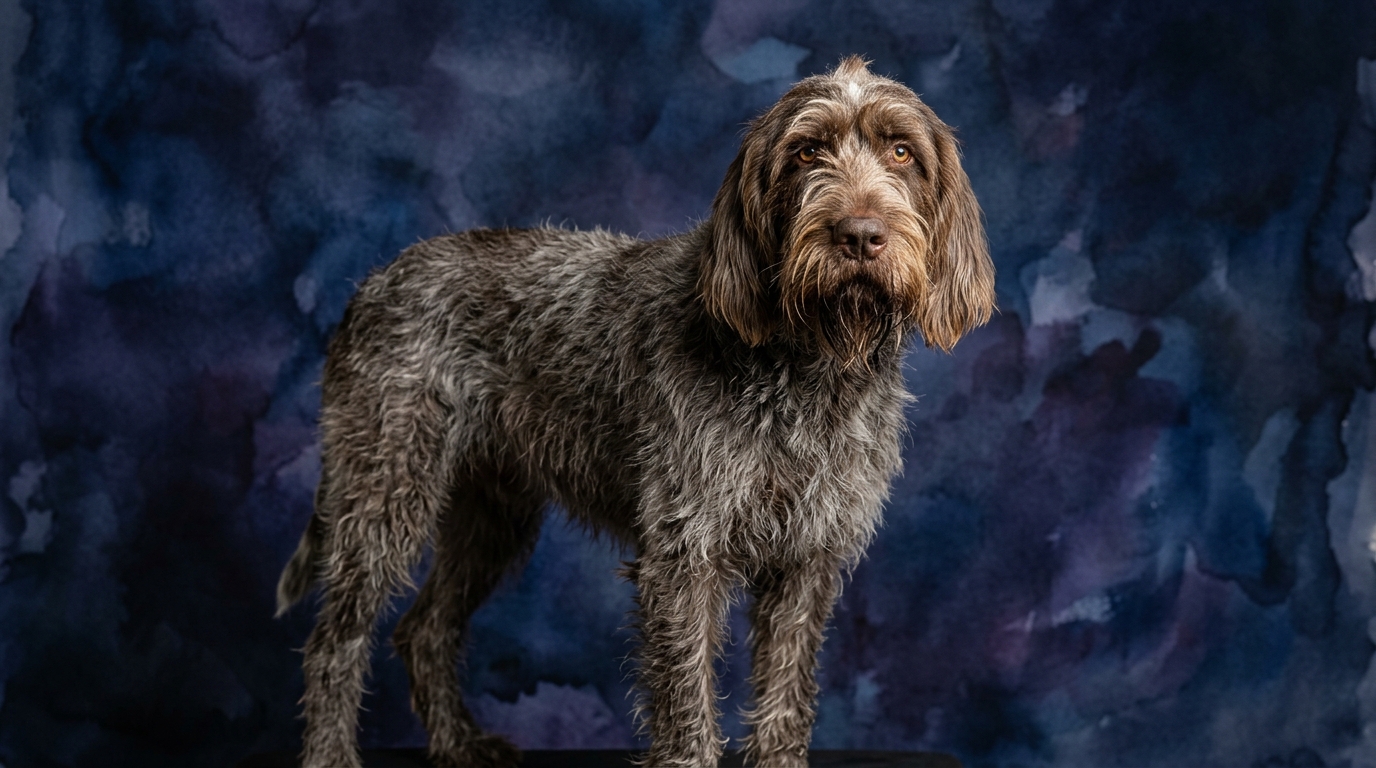
Side-by-Side IQ Profile: Dogue de Bordeaux vs. Spinone Italiano
At The Cosmic Pet Pet IQ Lab, both the Dogue de Bordeaux and the Spinone Italiano register a 3/5 across all five measured intelligence dimensions: Problem Solving, Training Speed, Social Intelligence, Instinctive Drive, and Memory. While these identical numerical scores might suggest similar cognitive expression, a deeper look reveals how their breed-specific traits influence the practical application of these capacities in everyday life and work.
The Dogue de Bordeaux approaches problems with a deliberate, often watchful demeanor. Their capacity for problem-solving tends to manifest in practical scenarios related to their environment and family unit, such as figuring out household routines or discerning unusual occurrences. They are not typically known for intricate puzzle-solving but rather for assessing situations and reacting with measured intent. These mastiffs learn at a moderate pace, benefiting greatly from consistent, positive reinforcement. While capable of grasping commands, their independent and sometimes stoic nature means they require patience and clear communication. They respond best to training that makes sense to them and reinforces their bond with their handler, rather than repetitive drills.
A Dogue de Bordeaux displays a nuanced understanding of social cues within its established family, often forming deep, perceptive bonds. They can read human emotions and intentions with a certain gravitas, often acting as a comforting presence. With strangers, their social intelligence shifts to a more observant, reserved stance, assessing new individuals before offering acceptance. This breed possesses a moderate but pronounced instinctive drive, rooted in its historical role as a guardian. This manifests as a strong protective instinct towards its family and territory, coupled with a vigilant awareness of its surroundings. Their drive isn't typically for chasing small game, but rather for maintaining order and security within their domain. These dogs possess a solid memory, retaining learned commands, routines, and experiences over time. They remember people they have encountered, both familiar and unfamiliar, and recall specific locations or events with accuracy. This memory contributes to their reliability and consistency once a behavior or boundary has been established.
The Spinone Italiano applies its problem-solving capacities primarily to practical, task-oriented challenges, especially those encountered in the field. This includes efficiently navigating varied terrain, locating hidden game, or figuring out how to retrieve an item from a tricky spot. Their approach is often methodical and persistent, driven by their natural hunting instincts. Spinones learn new commands and tasks at a moderate rate, often eager to please but also prone to independent thought. Their biddable nature typically makes them responsive to training, particularly when it involves engaging their natural abilities or is presented as a cooperative effort. However, their curious and sometimes distractible nature means consistency and engaging methods are crucial.
Spinones exhibit a gentle and amiable social intelligence, readily connecting with people and often demonstrating a keen awareness of their handler's mood. They are generally cooperative and enjoy being part of family activities, showing good social etiquette with other dogs. Their sensitivity makes them responsive to positive interactions and clear, calm communication. The Spinone Italiano’s instinctive drive is strongly geared towards its sporting heritage. They possess a moderate yet persistent drive for scenting, pointing, and retrieving, making them natural working partners in the field. This drive is typically focused and controlled, allowing them to work cooperatively rather than impulsively. Spinones have a reliable memory, particularly for hunting routes, specific scents, and the commands associated with their work. They retain obedience cues and household routines effectively, contributing to their reputation as dependable companions. Their recall of past experiences helps them adapt and perform consistently in various environments.
Where Dogue de Bordeaux Wins Cognitively
The Dogue de Bordeaux’s cognitive strengths often lie in its discerning social intelligence and instinctive drive for vigilance. While both breeds rate 3/5, the Dogue de Bordeaux applies its social understanding to a more protective context. It excels at observing subtle shifts in its environment and within its human family, making it particularly adept at identifying potential threats or unusual situations.
Its problem-solving, though not abstract, shines when it involves assessing and responding to the security of its home, often displaying a calm, deliberate decision-making process in such scenarios. This breed's memory for specific individuals and their perceived roles contributes significantly to its reliable guardianship, making it a perceptive and steadfast presence in its chosen domain.
Where Spinone Italiano Wins Cognitively
The Spinone Italiano demonstrates its cognitive advantages through its practical problem-solving and focused instinctive drive, especially in dynamic environments. Its 3/5 in problem-solving manifests as an ability to methodically work through complex scent trails or navigate challenging terrain, showcasing a persistent, goal-oriented approach. This is particularly evident in their natural capacity for field work and retrieving.
Paired with its social intelligence, the Spinone excels in cooperative tasks, making it particularly good at understanding and executing multi-step instructions during activities like hunting or advanced obedience. Its memory for environmental details and learned sequences allows for consistent performance and adaptability in varied situations, often leveraging its natural drives to achieve a shared objective with its handler.
Which Is Easier to Train and Why
While both breeds share a 3/5 rating for Training Speed, the Spinone Italiano is often perceived as easier to train due to its inherent biddability and desire to collaborate. Spinones typically possess a gentle and cooperative temperament, characteristic of many sporting breeds, making them generally more responsive to guidance and eager to engage in shared activities. Their social intelligence fosters a strong desire to please their handler, which can translate into quicker uptake of commands and a more willing attitude during training sessions.
The Dogue de Bordeaux, conversely, with its working-breed independence and sometimes stoic nature, requires a more patient and understanding approach. Though capable of learning at a moderate pace, their training can be punctuated by moments of stubbornness or a need to understand the 'why' behind a command. They thrive on consistency and positive reinforcement that builds a strong, trusting relationship, but their training journey might require more creativity and persistence from the owner to maintain engagement compared to the generally more eager Spinone.
Which Suits Active Owners vs. Relaxed Owners
For owners seeking a more relaxed, yet vigilant companion, the Dogue de Bordeaux often fits the bill. While they require regular exercise to maintain health, their energy levels are generally moderate once past puppyhood. They are content with a few good walks or yard play sessions daily and are typically calm and composed indoors. Their strong protective instincts make them excellent home guardians, appealing to those who appreciate a steady, watchful presence without the need for constant high-intensity activity. They are devoted family members who thrive on companionship and structure.
The Spinone Italiano, originating from a sporting lineage, is better suited for active owners who can provide consistent mental and physical stimulation. Their instinctive drive for scenting and retrieving means they thrive on activities like hiking, field work, scent games, or even canine sports. While not hyperactive, they possess a robust stamina and a need for purposeful engagement. Owners who enjoy outdoor adventures and can incorporate their Spinone into these activities will find a willing and enthusiastic partner, fulfilling their breed's natural inclination for exploration and work.
The Verdict
Choose the Dogue de Bordeaux if you value a steadfast, protective companion with a calm indoor presence, and are prepared for a deliberate training approach that builds on mutual respect.
Choose the Spinone Italiano if you are an active individual or family seeking a gentle, cooperative partner for outdoor adventures and mental engagement, and appreciate a dog with a strong working drive.
🧠 Find Your Pet's IQ Score
Our Pet IQ Lab assessment covers 25+ tests across 5 cognitive dimensions — personalized to your breed.
Take the Full IQ Test →Frequently Asked Questions
Are Dogue de Bordeaux good with children?
With proper socialization and training, Dogue de Bordeaux can be gentle and patient with children, often displaying a protective instinct towards their family. Their calm demeanor and sturdy build can make them tolerant companions, but supervision is always essential due to their size.
Do Spinone Italiano require a lot of grooming?
The Spinone Italiano has a coarse, wiry coat that requires regular brushing a few times a week to prevent matting and remove loose hair. They also benefit from occasional hand-stripping to maintain coat texture, but overall, their grooming needs are moderate compared to some other long-haired breeds.
Can a Dogue de Bordeaux live in an apartment?
While large, a Dogue de Bordeaux can adapt to apartment living if provided with sufficient daily exercise, including walks and mental stimulation. Their calm indoor temperament helps, but access to outdoor space for stretching and leisurely movement is always preferable for their well-being.