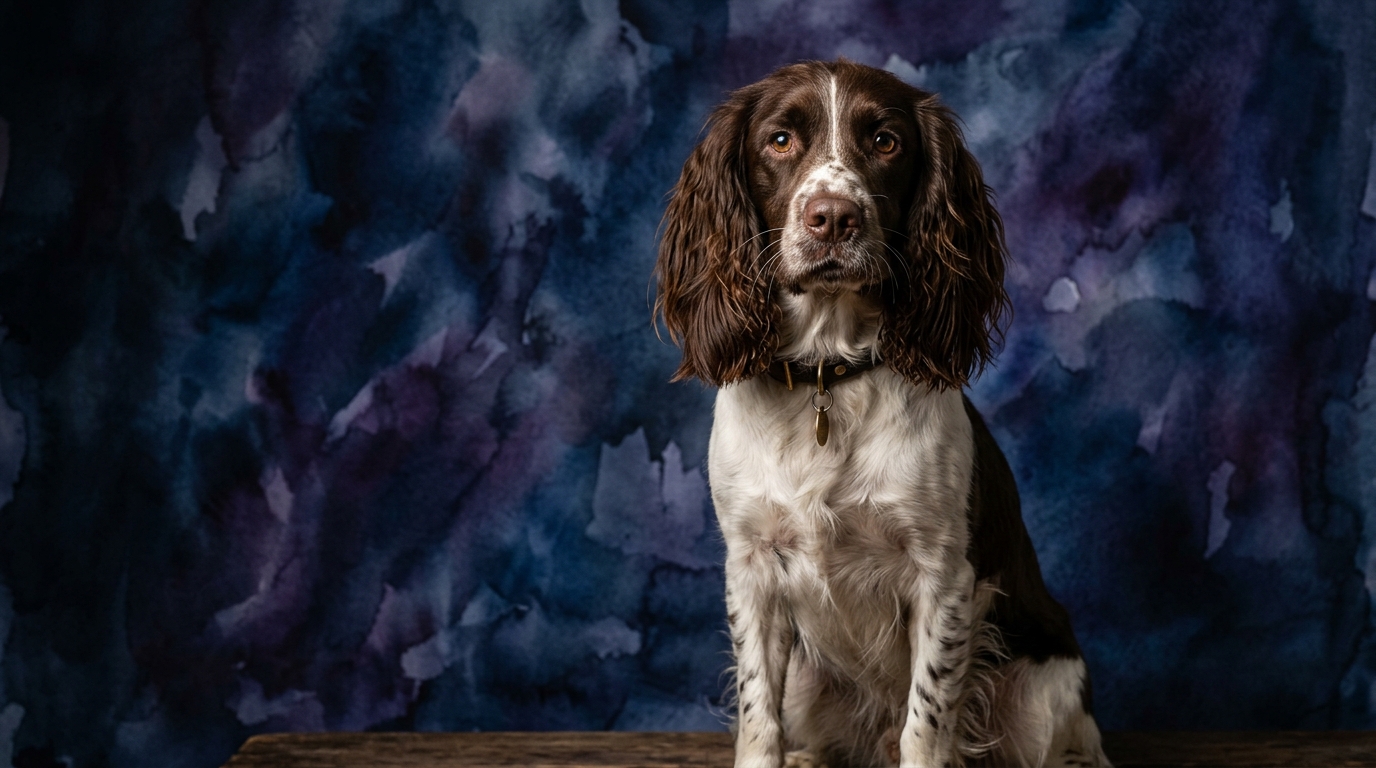

Side-by-Side IQ Profile: English Springer Spaniel vs. Dogue de Bordeaux
At The Cosmic Pet Pet IQ Lab, we evaluate canine intelligence across five key dimensions, revealing a clear contrast between these two distinct breeds. The English Springer Spaniel, a Sporting group member and Coren-ranked #13, showcases a generally higher cognitive aptitude compared to the Dogue de Bordeaux, a Working group member without a specific Coren ranking.
For **Problem Solving**, the English Springer Spaniel scores an impressive 4/5, indicating a strong capacity for independent thought and navigating novel situations with adaptability. In contrast, the Dogue de Bordeaux achieves a 3/5, suggesting they can learn solutions but might require more repetition or guidance to grasp complex puzzles.
**Training Speed** is where the English Springer Spaniel truly shines with a perfect 5/5, processing information quickly and forming associations with remarkable alacrity. The Dogue de Bordeaux's 3/5 in this dimension suggests a more deliberate learning pace, requiring patience and consistent methods from their trainers.
In **Social Intelligence**, the Springer Spaniel earns a 4/5, demonstrating a keen ability to interpret human cues and adapt to various social situations. The Dogue de Bordeaux scores 3/5, indicating they understand social structures but might be more reserved or less overtly responsive to subtle human signals.
The **Instinctive Drive** of the English Springer Spaniel is rated 5/5, reflecting an intense, inherent motivation for tasks, particularly those involving scent work and retrieval. The Dogue de Bordeaux, with a 3/5, possesses a foundational drive typically centered around guarding and companionship, without the high-energy pursuit of a sporting breed.
Finally, for **Memory**, the English Springer Spaniel retains learned behaviors and experiences effectively, earning a 4/5, which aids in complex task execution and recall. The Dogue de Bordeaux’s 3/5 indicates a functional memory, capable of recalling important information, though perhaps not with the same intricate detail or duration as the Spaniel.
Where the English Springer Spaniel Wins Cognitively
The English Springer Spaniel's cognitive strengths are particularly evident in its rapid acquisition of new commands and behaviors, scoring a perfect 5/5 in Training Speed. This breed processes information quickly and forms associations with remarkable alacrity, making complex sequences of actions relatively straightforward to teach. Their 4/5 in Problem Solving highlights an independent streak in navigating novel situations, allowing them to assess circumstances and devise solutions, which is crucial for a working gundog that might encounter varied field conditions.
Furthermore, the Spaniel's 5/5 Instinctive Drive fuels an intense motivation for tasks, especially those involving scent work and retrieval, translating into a dog that not only understands what is asked but eagerly applies its natural predispositions to fulfill the request. This combination of quick learning, effective problem-solving, and strong inherent drive positions the English Springer Spaniel as a highly adaptable and trainable companion, capable of excelling in diverse canine activities from competitive obedience to agility. Their Coren ranking of 13 among nearly 140 breeds further underscores their capacity for understanding and executing commands with minimal repetition.
Where the Dogue de Bordeaux Wins Cognitively
While the Dogue de Bordeaux's cognitive profile might not boast the rapid-fire learning of a Spaniel, its strengths lie in a different kind of mental fortitude and focus. Its 3/5 in Instinctive Drive, for instance, means it possesses a foundational motivation for its duties, typically centered around guarding and companionship, without the intense, high-energy drive that can lead to restlessness in a less active home. This lower drive can be a cognitive advantage for owners seeking a calmer, more predictable companion less prone to independent 'projects' like digging or escaping due to boredom.
The Dogue's 3/5 in Problem Solving suggests a more deliberate approach to challenges; they are less likely to overthink or become anxious in complex situations, preferring a straightforward solution. Their 3/5 in Social Intelligence, while not indicating effusive responsiveness, often translates into a steady, unwavering loyalty and a clear understanding of household hierarchies, providing a sense of stability rather than constant seeking of interaction or validation. These traits combine to form a dog whose cognitive 'wins' are in its unwavering presence, predictable responses, and a steadfast, unshakeable demeanor that can be deeply reassuring for owners who value calm dependability over exuberant activity.
Which Is Easier to Train and Why
Comparing training ease, the English Springer Spaniel undeniably holds the advantage, primarily due to its exceptional 5/5 Training Speed. This breed's quick comprehension and eagerness to please mean they typically grasp new commands and routines with fewer repetitions than many other breeds. Their strong Instinctive Drive (5/5) further enhances trainability, as they are naturally motivated to engage in activities and work alongside their human companions, making positive reinforcement highly effective. An English Springer Spaniel often approaches training as a stimulating game, displaying remarkable focus and enthusiasm.
In contrast, the Dogue de Bordeaux, with a 3/5 in Training Speed, requires a more patient and consistent approach. While capable of learning, they are not as quick to pick up nuances and may exhibit a more independent or stubborn streak. Their 3/5 Instinctive Drive means they might not possess the same inherent eagerness for repetitive tasks, requiring trainers to be highly engaging and to ensure training sessions are short, positive, and varied to maintain their interest. Real behavioral differences include the Spaniel's natural retrieve instinct and desire to work, contrasting with the Dogue's more stoic nature where motivation often stems from a desire to please a trusted owner rather than an inherent drive for the task itself.
Suited for Active vs. Relaxed Owners
For active owners seeking a dynamic partner, the English Springer Spaniel is the clear choice. Their 5/5 Instinctive Drive and high energy levels mean they thrive on physical activity and mental engagement, excelling in activities like hiking, running, agility, or field trials. These dogs require substantial daily exercise to remain content and well-adjusted; a bored Springer Spaniel can quickly become a destructive one, using its 4/5 problem-solving skills to invent its own entertainment.
Conversely, for relaxed owners who appreciate a calm, steadfast presence, the Dogue de Bordeaux is generally a better fit. While they do require regular walks and moderate exercise to maintain health, their 3/5 Instinctive Drive means they are typically content with a more sedentary lifestyle once their basic needs are met. They are less inclined to demand constant mental or physical stimulation and are often happiest lounging by their owner's side, embodying a tranquil companionship that aligns well with a quieter home environment.
The Verdict
If you're an active individual or family seeking a highly trainable, energetic companion eager for mental and physical challenges, the English Springer Spaniel will be an exceptional match.
For those who prefer a calm, loyal, and predictable canine presence and are prepared for consistent, patient training, the Dogue de Bordeaux offers a devoted, tranquil companion.
🧠 Find Your Pet's IQ Score
Our Pet IQ Lab assessment covers 25+ tests across 5 cognitive dimensions — personalized to your breed.
Take the Full IQ Test →Frequently Asked Questions
Is the Dogue de Bordeaux difficult to train?
The Dogue de Bordeaux isn't inherently difficult, but their 3/5 Training Speed means they require more patience and consistency than breeds with higher scores. Positive reinforcement and short, engaging sessions are key to their success.
How much exercise does an English Springer Spaniel need?
English Springer Spaniels are high-energy dogs with a 5/5 Instinctive Drive, requiring significant daily exercise, typically 1-2 hours of vigorous activity, to fulfill their physical and mental needs. This could include long walks, runs, fetch, or dog sports.
Can a Dogue de Bordeaux live in an apartment?
A Dogue de Bordeaux can adapt to apartment living if they receive adequate daily walks and mental stimulation, as their 3/5 Instinctive Drive means they don't demand constant vigorous activity. However, their large size necessitates sufficient indoor space for comfort.