
A Side-by-Side Look at Cognitive Profiles
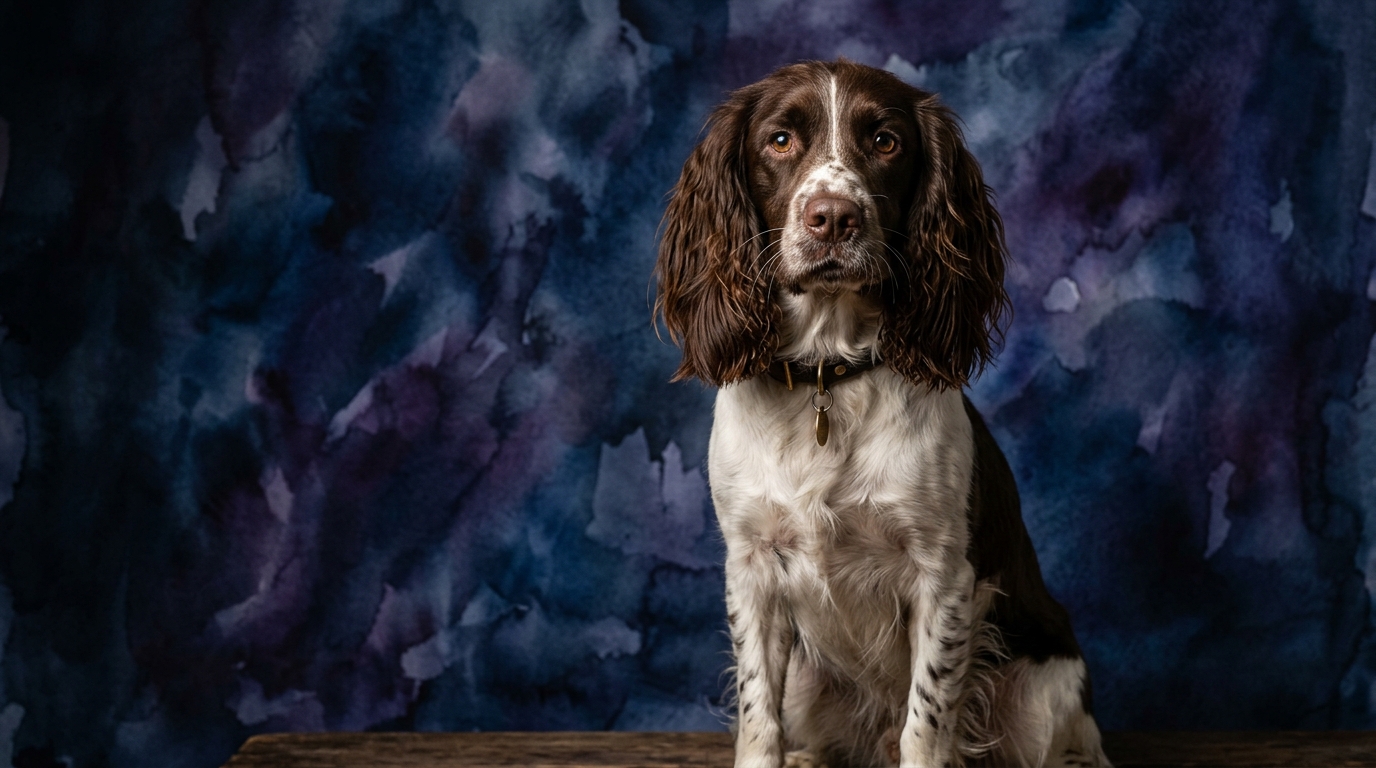
The Cosmic Pet Pet IQ Lab employs a five-dimensional framework to assess canine intelligence, offering a nuanced view beyond simple obedience. For the English Springer Spaniel (ESS), a Sporting Group member with a Coren ranking of #13, we observe a profile geared towards responsive partnership: Problem Solving at 4/5, Training Speed at an exceptional 5/5, Social Intelligence at 4/5, Instinctive Drive at 5/5, and Memory at 4/5. This suggests a dog highly attuned to human direction and capable of intricate task acquisition.
In contrast, the Redbone Coonhound (RCH), a member of the Hound Group and not Coren-ranked, presents a profile reflecting its independent hunting heritage: Problem Solving at 3/5, Training Speed at 3/5, Social Intelligence at 3/5, Instinctive Drive at 3/5, and Memory at 3/5. These scores indicate a breed that approaches challenges with a different cognitive style, often prioritizing its sensory world over human directives. The Coren ranking, which primarily assesses obedience and working intelligence, highlights the ESS's established aptitude for structured learning, a characteristic less emphasized in the RCH's traditional role.
Where the English Springer Spaniel Excels Cognitively
The English Springer Spaniel's cognitive strengths are evident across multiple dimensions, making it a highly adaptable and eager participant in human-directed activities. Its 5/5 Training Speed is a standout feature; these dogs grasp new commands, routines, and complex sequences with remarkable rapidity. This isn't merely about rote learning but a deep understanding of cause-and-effect within a training context, allowing them to generalize learned behaviors efficiently across varied scenarios.
Complementing this rapid acquisition is a 4/5 Problem Solving ability, which the ESS often applies to tasks requiring strategy and adaptation within a structured framework. For instance, retrieving specific items from a cluttered area or navigating an agility course demands not just physical prowess but also quick cognitive processing to interpret cues and execute appropriate actions. Their 4/5 Social Intelligence means they are keenly observant of human body language and vocal tones, allowing for a tight, cooperative working relationship. This enables them to anticipate handler intentions, making them exceptional partners in field trials, obedience, or search and rescue. Finally, a 4/5 Memory ensures they retain these complex lessons and routines over time, building a robust repertoire of skills that can be deployed reliably.
Where the Redbone Coonhound Shows Its Unique Strengths
While the Redbone Coonhound's scores may appear lower in a general comparison, they reflect a specialized cognitive design honed for specific tasks rather than a deficit. Its 3/5 Instinctive Drive, though not a 5/5 like the ESS, is intensely focused on scent work and pursuit. This drive manifests as an unwavering determination to follow a trail, often for extended periods over challenging terrain, requiring significant cognitive stamina and single-mindedness. Their problem-solving (3/5) is less about human-devised puzzles and more about independently interpreting complex scent data to locate quarry, navigating environmental obstacles, and making tactical decisions in the field.
The 3/5 Social Intelligence in a Redbone Coonhound indicates a dog that operates with a degree of independence, less reliant on constant human feedback for motivation or direction. This isn't a lack of affection but a cognitive preference for self-directed work once a scent is engaged. Their 3/5 Memory serves to store detailed scent profiles and successful tracking strategies, enabling them to improve their hunting efficacy over time. These combined traits allow the RCH to perform demanding, autonomous tasks where a dog's primary directive is to use its nose and tenacity to achieve a goal, often with minimal human intervention once the hunt begins.
Training: Cooperation vs. Conviction
When it comes to training, the practical differences between these breeds become pronounced. The English Springer Spaniel, with its 5/5 Training Speed and 4/5 Social Intelligence, is often described as a cooperative student. They are typically eager to please, respond well to positive reinforcement, and quickly associate commands with actions. Their focus on the handler makes them highly receptive to instruction, and they tend to generalize learned behaviors efficiently, making them suitable for a wide array of dog sports and working roles.
The Redbone Coonhound, conversely, requires a different approach to training due to its 3/5 Training Speed and 3/5 Social Intelligence. They can learn, but their independent nature and powerful scent drive mean they may not always prioritize human commands over an intriguing smell. Training an RCH often demands immense patience, consistent positive reinforcement, and a deep understanding of their innate motivations. While they can achieve a solid level of obedience, it often takes more repetition and a more creative approach to keep them engaged, especially when competing with the allure of a fresh scent trail. Their behavioral differences stem from centuries of selective breeding: the ESS was bred to work *with* a hunter, while the RCH was bred to work *for* a hunter, often out of sight and sound.
Matching Breeds to Lifestyles: Active Explorers vs. Engaged Partners
Owners considering either breed must align their lifestyle with the dog's intrinsic drives and cognitive needs. The English Springer Spaniel's 5/5 Instinctive Drive paired with its high training speed and social intelligence makes it ideal for active owners who enjoy engaging in structured activities like agility, obedience, flyball, or field work. They thrive when given a 'job' that challenges both their body and mind, requiring consistent mental stimulation and cooperative tasks. These dogs excel as partners in outdoor adventures, but also appreciate mental games and training sessions indoors.
The Redbone Coonhound, with its focused 3/5 Instinctive Drive and independent problem-solving, is better suited for owners who can provide extensive opportunities for scent-driven exploration and physical exertion in natural environments. They are fantastic companions for long hikes, trail running, or actual hunting pursuits where their nose can lead the way. While they are affectionate companions, their cognitive makeup means they are less suited for owners seeking a purely 'relaxed' indoor pet without substantial outdoor outlets for their powerful scenting instincts. Their need for independent exploration means they might not always be focused on human-initiated games but will find immense satisfaction in following a compelling trail.
The Verdict
Choose an English Springer Spaniel if you desire a highly cooperative, adaptable canine partner eager to learn complex tasks and engage in structured activities with you.
Opt for a Redbone Coonhound if you appreciate an independent, scent-driven companion for extensive outdoor exploration and are prepared for a patient, consistent training approach.
🧠 Find Your Pet's IQ Score
Our Pet IQ Lab assessment covers 25+ tests across 5 cognitive dimensions — personalized to your breed.
Take the Full IQ Test →Frequently Asked Questions
Does a lower IQ score mean a dog is less capable?
Not at all; lower scores in a general framework often indicate specialization. For the Redbone Coonhound, its scores reflect a cognitive style optimized for independent scent tracking, which is a highly complex task within its specific domain.
Can a Redbone Coonhound be trained for obedience like an English Springer Spaniel?
Yes, a Redbone Coonhound can be trained for obedience, but it typically requires more patience, consistency, and a deep understanding of their powerful scent drive. Their independent nature means training sessions might need to be more engaging and reward-based to compete with environmental distractions.
Which breed needs more exercise?
Both breeds require significant exercise, but the *type* differs. English Springer Spaniels need structured physical and mental engagement, while Redbone Coonhounds require extensive physical activity, often involving long, scent-driven explorations in varied terrain to satisfy their natural instincts.