
Side-by-Side Cognitive Profiles
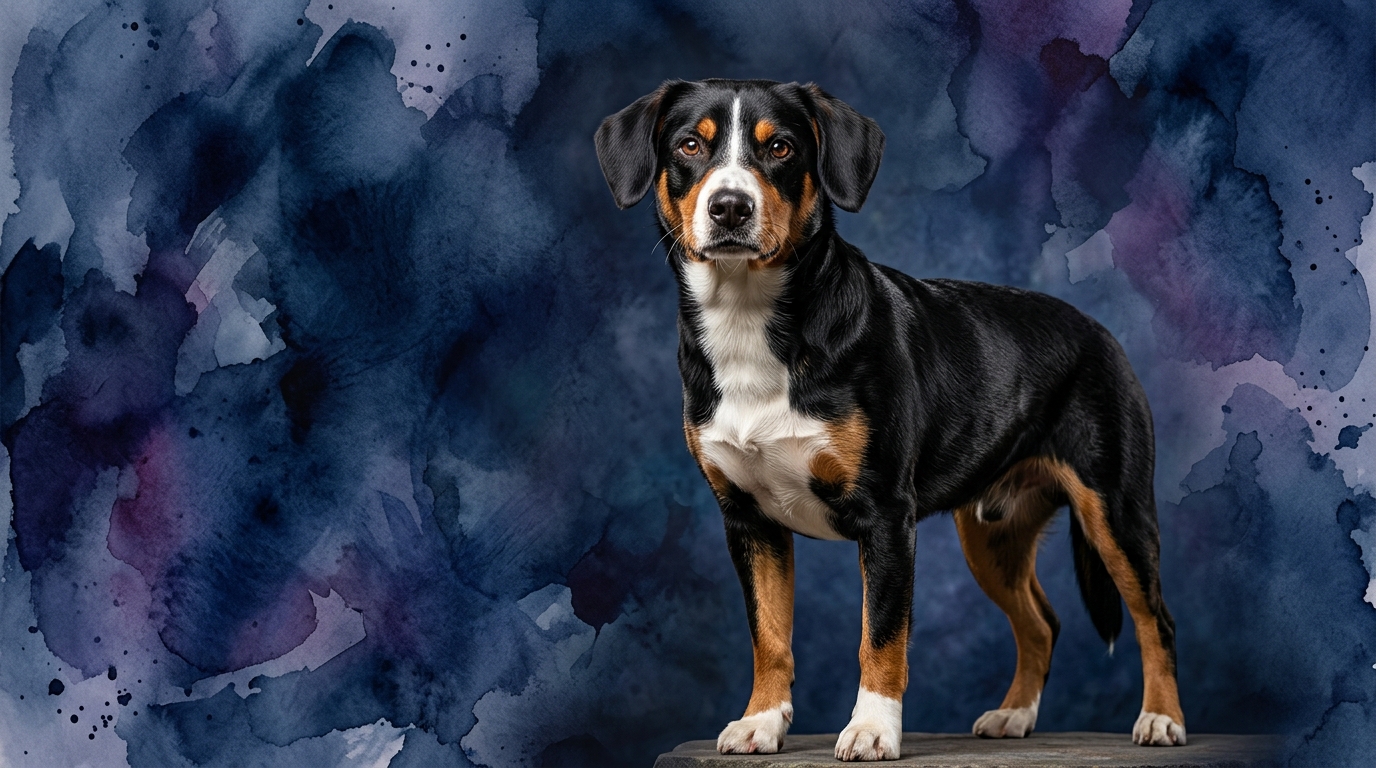
The Entlebucher Mountain Dog, originating from the Swiss Alps, presents a robust and well-rounded cognitive profile, reflecting its heritage as a versatile farm dog. Its Problem Solving ability is rated 3/5, suggesting a practical, on-the-spot approach to challenges, likely honed by navigating varied terrain and managing livestock. This isn't about abstract puzzles, but rather effective solutions to real-world dilemmas. Training Speed for the Entlebucher stands at 3/5, indicating they grasp commands at a moderate pace, thriving with consistent, clear instruction rather than rushed sessions. Their herding background implies a willingness to work, but also a thoughtful processing of information before compliance. Social Intelligence is also 3/5, meaning they are capable of reading human cues and interacting appropriately within a family structure, though they might not always express complex social nuances. Their Instinctive Drive, rated 3/5, points to a present but manageable inclination towards herding or guarding behaviors, which can be channeled through appropriate activities. Finally, their Memory at 3/5 suggests they retain learned information and experiences adequately, remembering routines and past interactions without displaying exceptional recall.
In contrast, the English Setter, a distinguished sporting breed, showcases a cognitive profile optimized for its role in bird hunting, reflected in its Coren rank of #37. Its Problem Solving ability is notably higher at 4/5, indicating a stronger capacity for analytical thought, crucial for strategizing during a hunt or deciphering complex scent trails. This suggests a dog that can adapt and innovate within a task-oriented framework. The English Setter’s Training Speed also rates 4/5, signifying a quicker uptake of commands. This rapid learning is vital for a breed expected to work closely with handlers in the field, responding promptly and precisely. Social Intelligence is 3/5, aligning with the Entlebucher; they understand social cues and interact well, but their primary focus during tasks might be on the objective rather than intricate social maneuvering. Their Instinctive Drive is 3/5, translating into a keen interest in scent work, pointing, and retrieving, embodying their heritage. Crucially, the English Setter's Memory is 4/5, implying superior recall for learned commands, locations, and past experiences, a fundamental asset for remembering where game was flushed or mastering intricate training sequences.
Where the Entlebucher Mountain Dog Leads Cognitively
The Entlebucher Mountain Dog's cognitive strength lies in its balanced and robust all-around profile, particularly its practical adaptability. With a consistent 3/5 across problem-solving, training speed, social intelligence, instinctive drive, and memory, the Entlebucher excels in reliably competent performance across diverse situations. This breed is less prone to overspecialization, meaning it can transition between tasks like guarding, herding, and family companionship with a stable intellectual approach. Their balanced problem-solving suggests an ability to find workable solutions in varied, real-world scenarios without getting fixated on a single method. This pragmatic intelligence makes them incredibly versatile and less likely to struggle when faced with unexpected environmental changes or demands that deviate from a strict routine, a trait often beneficial in a dynamic family environment.
Unlike breeds with extreme peaks in certain cognitive areas, the Entlebucher's uniform scores indicate a dog that processes information and adapts consistently. This means they are not easily flustered by novel situations where a highly specialized breed might struggle if its specific instinct or learned pattern isn't applicable. Their cognitive profile suggests a resilient intellect, capable of handling a broad spectrum of mental tasks without significant cognitive bottlenecks. This steadfastness translates into a dependable companion who can assess and react to their surroundings with a measured, sensible intelligence, making them an excellent choice for owners seeking a dog with a solid, adaptable mental foundation for various life roles.
Where the English Setter Excels Cognitively
The English Setter’s cognitive advantages are clearly evident in its superior problem-solving, training speed, and memory, all scoring 4/5. These attributes are honed for precision and quick execution, making them particularly adept at structured learning and complex task sequences. Their enhanced problem-solving capacity means they can analyze situations more deeply, such as deducing the path of a scent or strategizing how to retrieve an object from a difficult spot. This analytical prowess, combined with their rapid training speed, allows them to master intricate commands and multi-step tasks with greater efficiency than many other breeds. They thrive in environments where specific, detailed instructions are provided and then applied.
Furthermore, the English Setter’s exceptional memory is a significant asset, allowing them to retain vast amounts of learned information, from complex obedience routines to the locations of past finds in the field. This superior recall enables them to perform consistently and reliably, making them prime candidates for advanced dog sports like competitive obedience, agility, or field trials where precision and memory are paramount. Their ability to quickly grasp and remember complex sequences means less repetition is needed during training, and once a lesson is learned, it tends to stick. This cognitive efficiency allows for more advanced and nuanced training, pushing the boundaries of what they can achieve in partnership with their handler.
Training Ease: Entlebucher Mountain Dog vs. English Setter
When considering ease of training, the English Setter generally presents a smoother path due to its higher Training Speed (4/5) and superior Memory (4/5). These cognitive strengths mean English Setters typically grasp new commands more quickly and retain them more effectively, reducing the amount of repetition required. Their cooperative nature, developed through centuries of working closely with human hunters, often translates into an eagerness to please and a responsive demeanor during training sessions. They are generally receptive to positive reinforcement and can progress rapidly through obedience levels, making them a rewarding experience for trainers who enjoy detailed and advanced instruction.
The Entlebucher Mountain Dog, with its 3/5 Training Speed, requires a more patient and consistent approach. While certainly trainable, they might take longer to internalize new commands and may need more repetition to solidify their learning. Their herding background can instill a more independent streak; they might process commands with a degree of deliberation, needing to understand the 'why' behind an instruction rather than offering immediate, unquestioning compliance. This isn't a lack of ability, but rather a different learning style, one that values understanding and purpose. Therefore, an Entlebucher handler might need to be more creative in their training methods, focusing on motivation and demonstrating the utility of commands rather than relying solely on rote memorization.
Active Owners vs. Relaxed Owners: Which Breed Fits?
Neither the Entlebucher Mountain Dog nor the English Setter is truly suited for relaxed, sedentary owners, as both breeds possess moderate to high instinctive drives and require significant physical and mental engagement. However, the *type* of activity they thrive on differs. The English Setter, with its 3/5 instinctive drive focused on scenting and retrieving, needs extensive physical exercise that engages its hunting instincts. Owners who enjoy long hikes, running, field activities, or structured dog sports like agility or competitive obedience will find the English Setter a willing and capable partner. Their cognitive strengths in problem-solving and memory make them excellent candidates for advanced training and tasks that require sustained mental effort, making them ideal for owners dedicated to active, goal-oriented pursuits.
The Entlebucher Mountain Dog, also with a 3/5 instinctive drive, manifests its energy through a desire to herd, guard, and engage in practical work. They require consistent physical exercise, such as hiking, jogging, or brisk walks, but also substantial mental stimulation that channels their herding or protective instincts. This could involve herding games, advanced obedience with a focus on practical tasks, or even jobs around a property. While not a 'relaxed' dog, its balanced cognitive profile might make it slightly more adaptable to a varied activity schedule compared to the Setter's more specialized drive, provided its core needs for structure and purpose are met. Entlebuchers are best for active owners who appreciate a dog that can participate in a wide range of activities and also serve as a vigilant family companion.
The Verdict
Choose the Entlebucher Mountain Dog for a robust, adaptable companion with balanced cognitive abilities, ideal for varied family life and practical tasks requiring a sensible, all-around intellect.
Choose the English Setter for a highly trainable, memory-driven partner excelling in structured learning and field activities requiring precise recall and analytical problem-solving.
🧠 Find Your Pet's IQ Score
Our Pet IQ Lab assessment covers 25+ tests across 5 cognitive dimensions — personalized to your breed.
Take the Full IQ Test →Frequently Asked Questions
How do their instinctive drives differ in practical terms?
The Entlebucher's moderate instinctive drive often manifests as a desire to herd or protect, translating into vigilance and a structured approach to their environment, making them attentive companions. The English Setter's drive is primarily focused on scenting and retrieving, meaning they are keenly interested in exploring with their nose and pursuing movement, making them avid partners for field activities.
Can an Entlebucher Mountain Dog excel in competitive obedience like an English Setter?
While an Entlebucher can certainly learn obedience and perform well, the English Setter's higher training speed and superior memory give it a distinct advantage in the precision and rapid recall required for advanced competitive obedience. The Entlebucher's balanced intelligence means it can participate, but might require more consistent effort to reach the same level of effortless, rapid execution.
Which breed is more adaptable to different living situations?
The Entlebucher Mountain Dog, with its well-rounded cognitive profile, often demonstrates greater adaptability to various living situations, provided its exercise and mental stimulation needs are consistently met. The English Setter, while adaptable, thrives best when its specific hunting instincts can be regularly engaged, making it particularly suited to environments where it can exercise its scenting and retrieving drives.