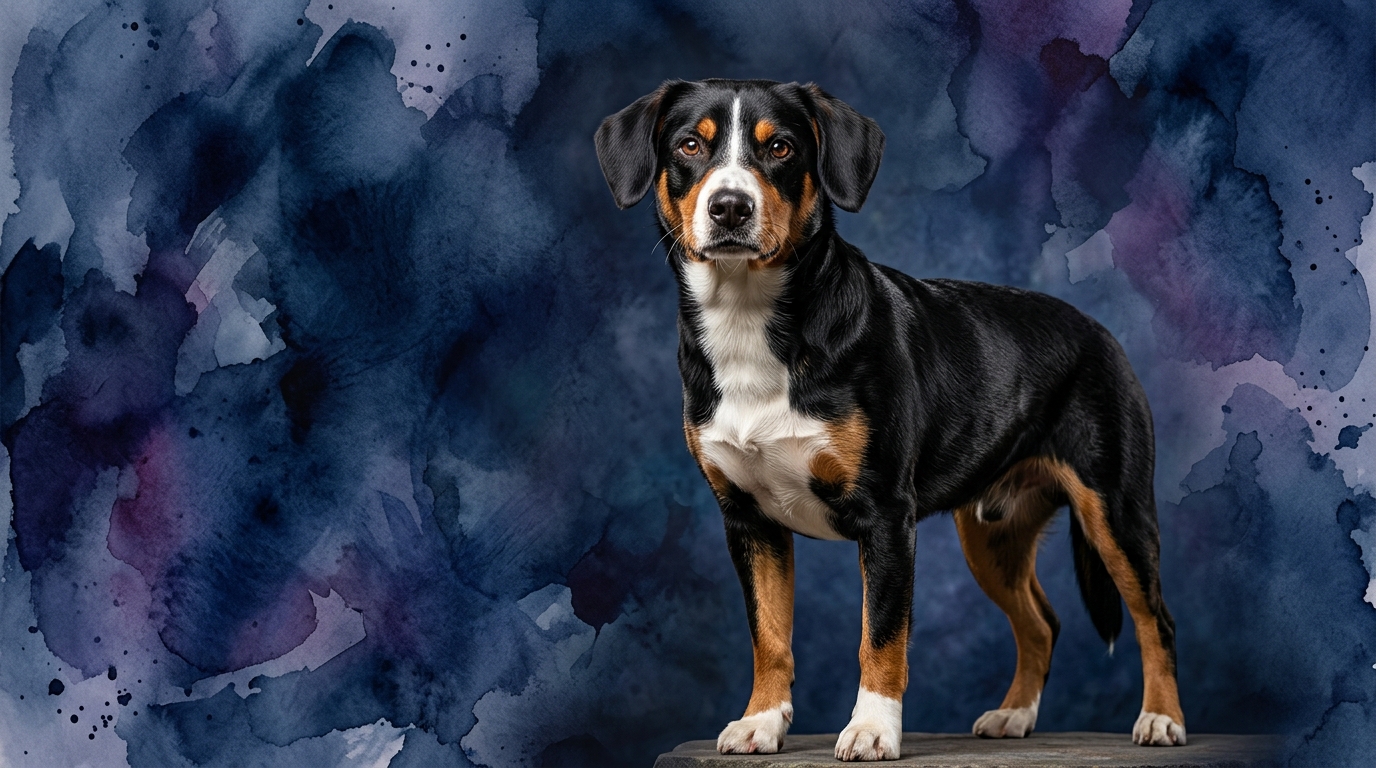
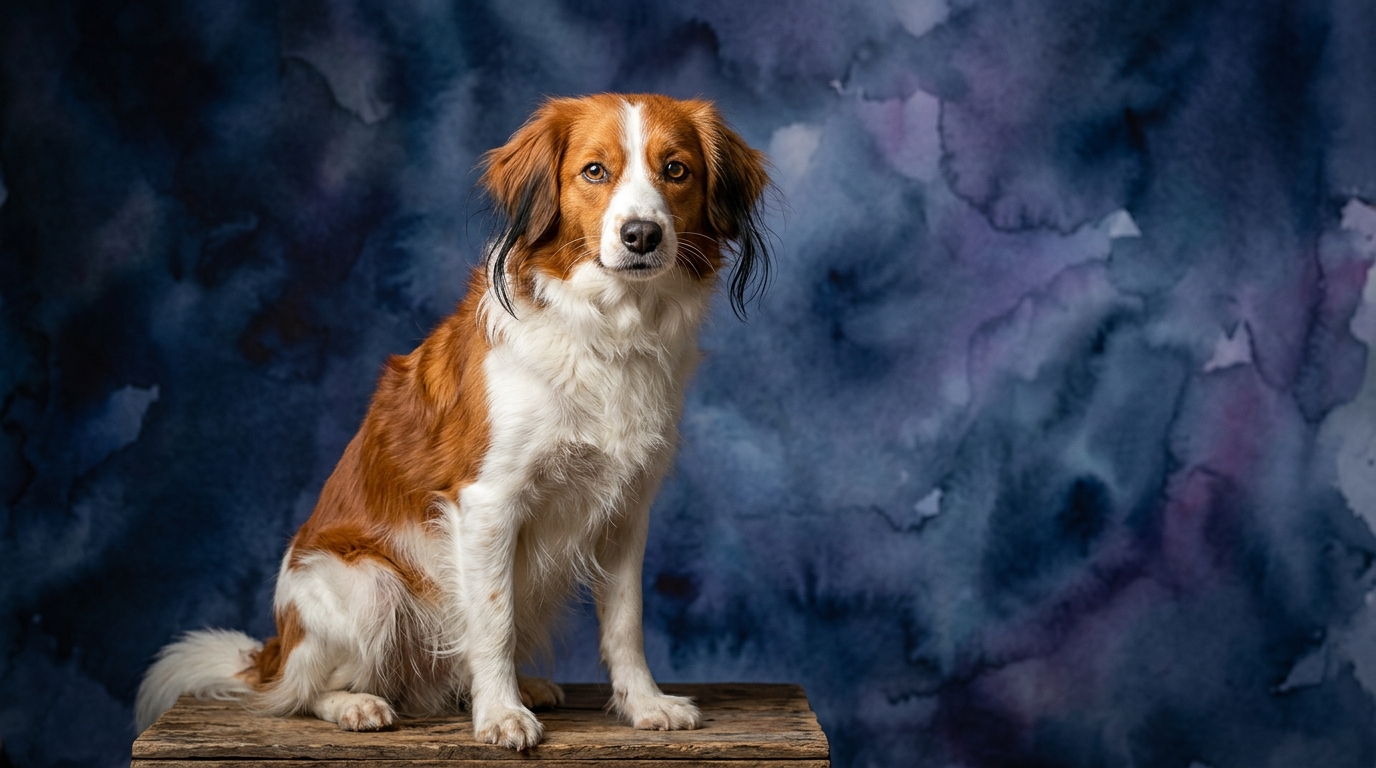
Side-by-Side Cognitive Profiles: Entlebucher Mountain Dog vs. Kooikerhondje
Delving into The Cosmic Pet Pet IQ Lab's framework, both the Entlebucher Mountain Dog and the Kooikerhondje receive a consistent 3 out of 5 across all five cognitive dimensions. This identical numerical score, however, belies distinct qualitative expressions shaped by their breed histories and inherent drives. Understanding these nuances is key to appreciating their individual mental landscapes.
For the **Entlebucher Mountain Dog**, a Herding breed, their **Problem Solving (3/5)** likely manifests as an ability to navigate dynamic, multi-animal environments, making quick decisions to guide or gather livestock. This isn't about complex abstract reasoning but rather practical, real-time assessment of spatial relationships and animal behavior. Their **Training Speed (3/5)** indicates a steady capacity to learn, often thriving on structured tasks where their desire to work and please a handler can be channeled. Consistency and positive reinforcement yield reliable results. Their **Social Intelligence (3/5)** is often geared towards interpreting handler cues and understanding hierarchical dynamics within their 'flock,' whether it's sheep or their human family, fostering strong, cooperative bonds. The **Instinctive Drive (3/5)** is robustly tied to their herding origins, an innate urge to organize and manage, providing a strong motivation for engagement. Finally, their **Memory (3/5)** enables them to retain complex patterns of movement, commands, and spatial layouts, crucial for consistent performance in their working roles.
The **Kooikerhondje**, a Sporting breed, expresses its **Problem Solving (3/5)** through a different lens, specifically in their historical role of duck decoying. Their mental acumen here involves subtle strategizing: figuring out how to lure waterfowl effectively, adapting to changing wind or water conditions, and navigating covertly. It's a cleverness focused on a specific, patient task. Their **Training Speed (3/5)** suggests they are capable learners, absorbing new commands and tricks with consistent, engaging methods. They respond well to reward-based training that stimulates their innate curiosity and desire for interactive activities. The Kooikerhondje's **Social Intelligence (3/5)** points to an ability to pick up on human emotions and intentions, vital for working closely and quietly with a hunter. They are often attuned to their family's mood, fostering deep connections. Their **Instinctive Drive (3/5)** is a moderate, focused drive rooted in their sporting heritage, manifesting as a natural inclination for retrieving, exploring, and engaging in activities that simulate their historical luring role. Their **Memory (3/5)** allows them to recall specific luring patterns, retrieve locations, and remember commands, translating to consistent performance in both historical work and modern household routines.
Entlebucher Mountain Dog: Where Their Cognition Shines
While both breeds share a 3/5 in problem-solving, the Entlebucher Mountain Dog's cognitive strengths are particularly evident in scenarios demanding active management and spatial awareness. Their herding background means their problem-solving often involves understanding and manipulating dynamic, multi-agent situations; they excel at assessing a group's movement and making quick decisions to influence its direction. This translates into a capacity for intricate spatial reasoning, whether navigating an agility course or managing the flow of family members during a walk. Their social intelligence is exceptionally geared towards cooperative work, making them adept at reading and responding to a handler's subtle cues during complex tasks. This makes them particularly effective in structured activities that require teamwork and precise execution, leveraging their moderate training speed for consistent, reliable performance in demanding environments.
Kooikerhondje: Unveiling Their Unique Mental Edge
The Kooikerhondje's cognitive prowess, also rated 3/5 in problem-solving, is more subtly expressed, shining in tasks requiring patience, independent thought, and quiet resourcefulness. Their decoying origins mean they possess an inherent ability to strategize and execute actions with minimal direct instruction, often figuring out the best approach to a task themselves. This manifests as a thoughtful cleverness, particularly in environments where discretion and self-initiation are valued, such as scent work or puzzle toys. Their social intelligence, while equally rated, often leans towards a perceptive sensitivity, allowing them to anticipate human moods and respond with gentle attentiveness. This blend of independence and sensitivity, coupled with their moderate training speed, means they can master complex sequences of actions, especially when motivated by engaging rewards or a sense of 'playful hunting'.
Training Dynamics: Understanding Their Learning Approaches
When considering ease of training, both breeds, with their 3/5 training speed, respond well to consistent, positive methods, yet their inherent behavioral differences shape the experience. The Entlebucher Mountain Dog, as a herding breed, often possesses a strong desire for a 'job' and a clear leader, which can make them eager participants in structured training. Their instinctive drive to work means they typically enjoy learning commands and performing tasks, making them receptive to obedience and agility. However, their independent decision-making, while useful in herding, can sometimes lead to stubbornness if they perceive their own solution to be superior, requiring patient redirection and clear boundaries.
The Kooikerhondje, on the other hand, often brings a more independent and sometimes sensitive temperament to training. While their moderate training speed means they are perfectly capable of learning, they thrive on engaging, positive reinforcement that feels like a fun game rather than a rigid command structure. Their cleverness and resourcefulness mean they can quickly grasp new concepts, but their independent streak might lead to them becoming bored or disengaged with repetitive drills. Training for a Kooikerhondje benefits from variety, mental stimulation, and a gentle approach, as harsh corrections can be counterproductive for their sensitive nature. Both breeds ultimately achieve similar levels of learned behavior, but the journey and the motivational levers differ.
Lifestyle Match: Active Engagement vs. Thoughtful Companionship
The Entlebucher Mountain Dog, with its robust herding background and inherent drive, is generally better suited for active owners who can provide consistent mental and physical engagement. Their need for a 'job' translates into a requirement for structured activities like obedience, agility, or even herding trials. They thrive in environments where they have a purpose and can expend their considerable energy in a constructive manner, making them excellent companions for hikers, runners, or families committed to dog sports. A relaxed owner might find an Entlebucher's persistent need for activity challenging, potentially leading to boredom-induced behaviors.
The Kooikerhondje, while also requiring regular exercise and mental stimulation, often fits well with owners who appreciate a more thoughtful and nuanced companion. Their sporting background means they enjoy activities like retrieving, scent work, and exploring, but their energy tends to be more focused and less overtly 'driven' than the Entlebucher's. They can adapt to moderately active households that provide daily walks, play sessions, and puzzle toys, and they often enjoy quiet time with their families. While they are not couch potatoes, their need for engagement can often be met through interactive play and brain games, making them suitable for owners who enjoy a balance of activity and affectionate companionship without the intensity of a dedicated working dog.
The Verdict
Choose an Entlebucher Mountain Dog if you seek a robust, working-oriented companion eager for structured tasks and consistent physical challenge, thriving on a clear sense of purpose. They are ideal for active individuals or families who embrace dog sports or outdoor adventures.
Opt for a Kooikerhondje if you desire a clever, sensitive, and engaging companion who appreciates a balance of mental stimulation, moderate activity, and affectionate companionship. They suit owners who enjoy interactive play, puzzle-solving, and a dog attuned to family dynamics.
🧠 Find Your Pet's IQ Score
Our Pet IQ Lab assessment covers 25+ tests across 5 cognitive dimensions — personalized to your breed.
Take the Full IQ Test →Frequently Asked Questions
Do Entlebucher Mountain Dogs and Kooikerhondjes learn at the same pace?
Both breeds score a 3/5 in training speed, indicating a moderate learning pace. While the numerical score is identical, the Entlebucher often thrives on structured, work-oriented tasks, whereas the Kooikerhondje responds best to engaging, game-based learning due to their distinct temperaments.
Which breed is better at solving new problems independently?
Both breeds have a 3/5 in problem-solving, but their strengths differ. The Entlebucher excels in dynamic, real-time spatial problem-solving related to managing movement, while the Kooikerhondje shows cleverness in patient, subtle strategizing for specific goals, reflecting their historical roles.
How do their social intelligence scores of 3/5 manifest differently?
The Entlebucher's social intelligence often focuses on cooperative work and understanding handler cues within a structured team. The Kooikerhondje's, while equally rated, tends towards a perceptive sensitivity, allowing them to be highly attuned to human emotions and subtle family dynamics, fostering deep personal bonds.