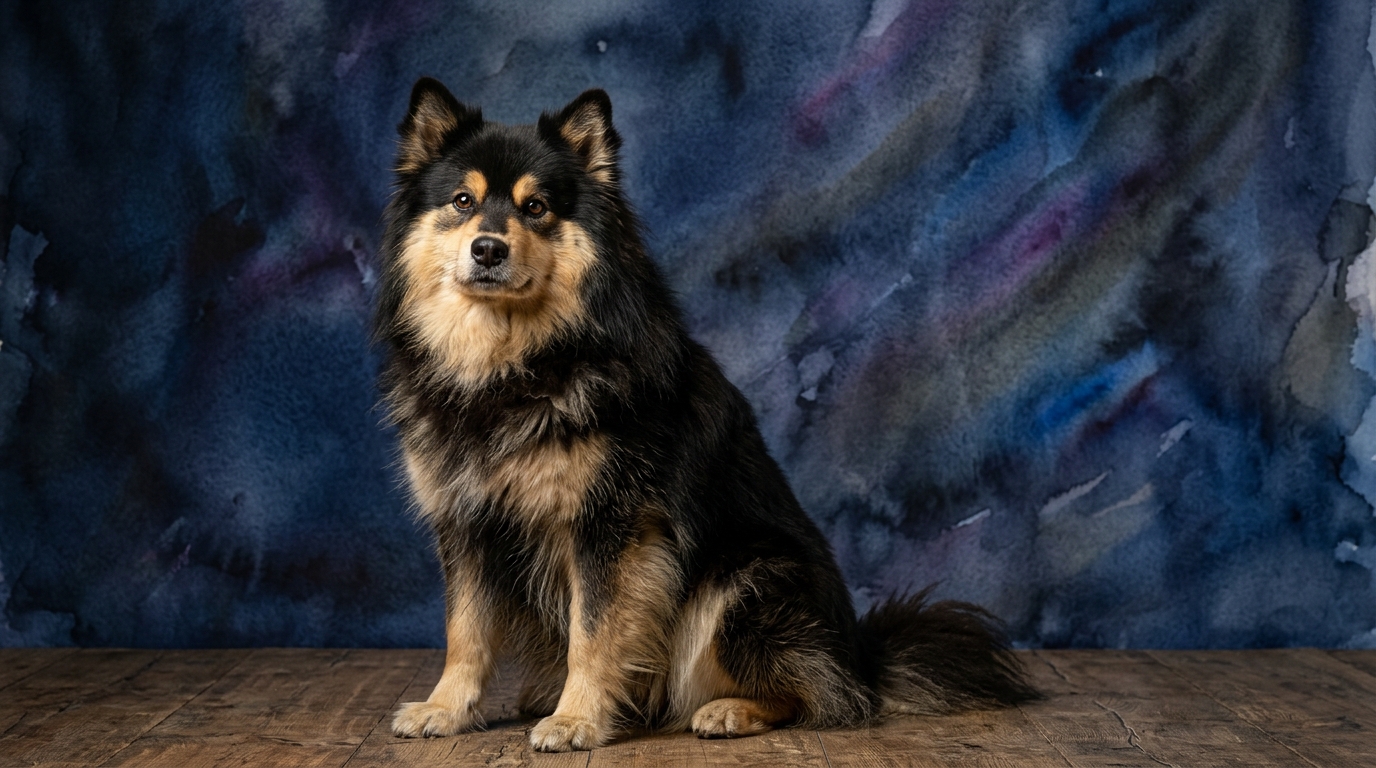

Side-by-Side Cognitive Profile: Finnish Lapphund
Problem Solving (3/5): Lapphunds excel at practical, real-world problem-solving in dynamic environments, like navigating varied terrain or adapting to changing herd movements. Their cognitive strength lies in independent decision-making and flexible responses rather than complex abstract puzzles.
Training Speed (3/5): Learning new commands at a moderate pace, Lapphunds respond well to consistent, positive reinforcement. While biddable, their inherent independence means they may assess the utility of a command before immediate execution, requiring patient motivation.
Social Intelligence (3/5): Developing deep family bonds, Lapphunds understand human moods and intentions, fostering effective cooperation. Their social awareness is practical, enabling them to work alongside humans while retaining a self-reliant demeanor.
Instinctive Drive (3/5): Their moderate herding drive manifests as a watchful nature, a tendency to 'gather' family, or an interest in movement. This manageable drive requires outlets but is less prone to obsessive behaviors than some higher-drive working breeds.
Memory (3/5): Lapphunds possess good memory for territories, routines, and training cues, essential for their herding heritage. This reliable recall supports steady learning and consistent behavior within established structures.
Side-by-Side Cognitive Profile: Brussels Griffon
Problem Solving (3/5): Griffons apply their cleverness to domestic challenges, figuring out how to gain attention or access desired objects. Their problem-solving often involves social dynamics and manipulating their immediate environment for comfort or treats.
Training Speed (3/5): Capable of learning commands and tricks at a moderate pace, Griffons are motivated by positive reinforcement and praise. Their sensitive and sometimes stubborn nature, however, necessitates patient, consistent, and gentle training methods.
Social Intelligence (3/5): Renowned for deep human connections, Griffons are acutely tuned to human emotions and body language, anticipating needs and offering comfort. They excel at communicating desires and responding to nuanced owner cues.
Instinctive Drive (3/5): Retaining a moderate ratter ancestry, Griffons display curiosity, alertness, and a focused interest in small, scurrying objects. This manageable drive contributes to their feisty personality, often expressed through playful chasing or intense observation.
Memory (3/5): Griffons recall routines, favored people, and training cues reliably, allowing them to integrate well into household life. Their memory aids consistent behavior, though negative experiences can also be recalled clearly, emphasizing positive interactions.
Where the Finnish Lapphund Wins Cognitively
The Finnish Lapphund's cognitive strengths distinctly emerge in tasks demanding sustained independence and environmental adaptability over expansive areas. Their ancestral role honed a practical problem-solving ability focused on navigation, spatial reasoning, and dynamic decision-making without constant human oversight. A Lapphund particularly excels at navigating complex outdoor trails or retrieving objects from challenging natural settings, leveraging their memory of terrain and flexible strategies. Their moderate instinctive drive, geared towards purposeful action in an outdoor environment, gives them an edge in tasks requiring self-sufficiency and a broader scope of environmental awareness, such as advanced scent work or long-distance recall in varied terrain.
Where the Brussels Griffon Wins Cognitively
Conversely, the Brussels Griffon's cognitive prowess is acutely refined for a domestic, companion-centric existence. Their problem-solving is often applied to social dynamics and manipulating their immediate environment, such as figuring out how to gain attention or access a comfortable perch. A Griffon might quickly learn to open a specific cabinet for treats or master a sequence of actions to prompt a favorite game, showcasing a nuanced understanding of cause-and-effect within a human household. Their finely-tuned social intelligence allows them to read subtle human cues with remarkable accuracy, making them exceptionally adept at anticipating needs or moods, translating into superior responsiveness to nuanced communication from their caregivers.
Which Is Easier to Train and Why
Determining which breed is 'easier' to train is less about raw learning capacity and more about managing inherent breed traits. The Finnish Lapphund, with its herding background, offers moderate biddability and a desire to collaborate, making them generally responsive to positive reinforcement. However, their independent decision-making, crucial for herding, means they might question commands or pursue interesting scents, requiring consistent motivation and patience. Their vocal nature also needs management. Engaging training that taps into their working drive and provides mental stimulation will yield a well-mannered Lapphund, but it demands understanding of their self-reliant tendencies.
The Brussels Griffon, while equally capable of moderate learning, presents different considerations. Their deep bond and desire for companionship are strong motivators, but their sensitive nature means harsh methods are counterproductive, potentially fostering fear or stubbornness. Griffons can also develop 'small dog syndrome' without early socialization and gentle, firm training, leading to behaviors like excessive barking. Their moderate instinctive drive requires clear boundaries and consistent positive reinforcement. Both breeds benefit from patient, positive, and consistent training, but the Lapphund's independence needs motivation and task engagement, while the Griffon's sensitivity and potential for stubbornness require a gentle, yet firm, approach to boundary setting.
Which Suits Active Owners vs. Relaxed Owners
The choice between a Finnish Lapphund and a Brussels Griffon hinges significantly on an owner's lifestyle. The Finnish Lapphund is better suited for active owners. Originating from herding livestock in harsh Nordic environments, they possess moderate energy levels and a robust constitution, thriving on regular, engaging exercise beyond simple walks. They enjoy activities like hiking, jogging, and dog sports, alongside consistent mental stimulation through training and varied experiences. Owners who embrace an outdoor, active lifestyle and can integrate their dog into these adventures will find a devoted and capable companion, as Lapphunds can become frustrated if under-exercised or under-stimulated.
In contrast, the Brussels Griffon is an ideal match for more relaxed owners, though not sedentary. While they enjoy short, brisk walks and playtime, their exercise needs are moderate and easily met within a typical urban setting. Their preference for companionship often means they are content to be near their human, engaging in indoor games, snuggling, or observing. However, their active minds still require engagement through puzzle toys, short training sessions, and varied social interactions to prevent boredom. Owners who appreciate a devoted, charming companion happy with indoor activities and shorter outdoor excursions will find the Griffon a delightful fit, provided they offer consistent affection and mental enrichment.
The Verdict
Choose the Finnish Lapphund if you are an active, outdoor-oriented individual or family seeking a resilient, moderately independent companion for adventures and consistent mental engagement. Their working heritage makes them excel in structured activities and open spaces, thriving with purposeful interaction.
Opt for the Brussels Griffon if you prefer a devoted, charming, and sensitive companion who thrives on close human interaction and fits well into a more relaxed, indoor-centric lifestyle, provided you can offer consistent affection and gentle mental stimulation.
🧠 Find Your Pet's IQ Score
Our Pet IQ Lab assessment covers 25+ tests across 5 cognitive dimensions — personalized to your breed.
Take the Full IQ Test →Frequently Asked Questions
Do Finnish Lapphunds bark a lot?
Finnish Lapphunds are known to be quite vocal, using barks, yips, and howls to communicate, a trait stemming from their herding role where they needed to alert and direct. While their vocalizations aren't typically excessive or nuisance barking, they will use their voice to express excitement, alert to strangers, or communicate their needs, which can be managed with consistent training.
Are Brussels Griffons good with children?
Brussels Griffons can be good with older, respectful children who understand how to interact gently with a small dog. Due to their sensitive nature and small size, they can be easily overwhelmed or injured by boisterous play, so supervision is key. They generally thrive in calmer environments where they receive consistent, gentle attention.
What is the primary difference in their problem-solving approach?
The Finnish Lapphund's problem-solving is often practical and independent, focused on navigating physical environments and dynamic situations, like finding a path or managing livestock. The Brussels Griffon's problem-solving tends to be more socially oriented and manipulative within a domestic setting, figuring out how to achieve comfort or attention from humans.