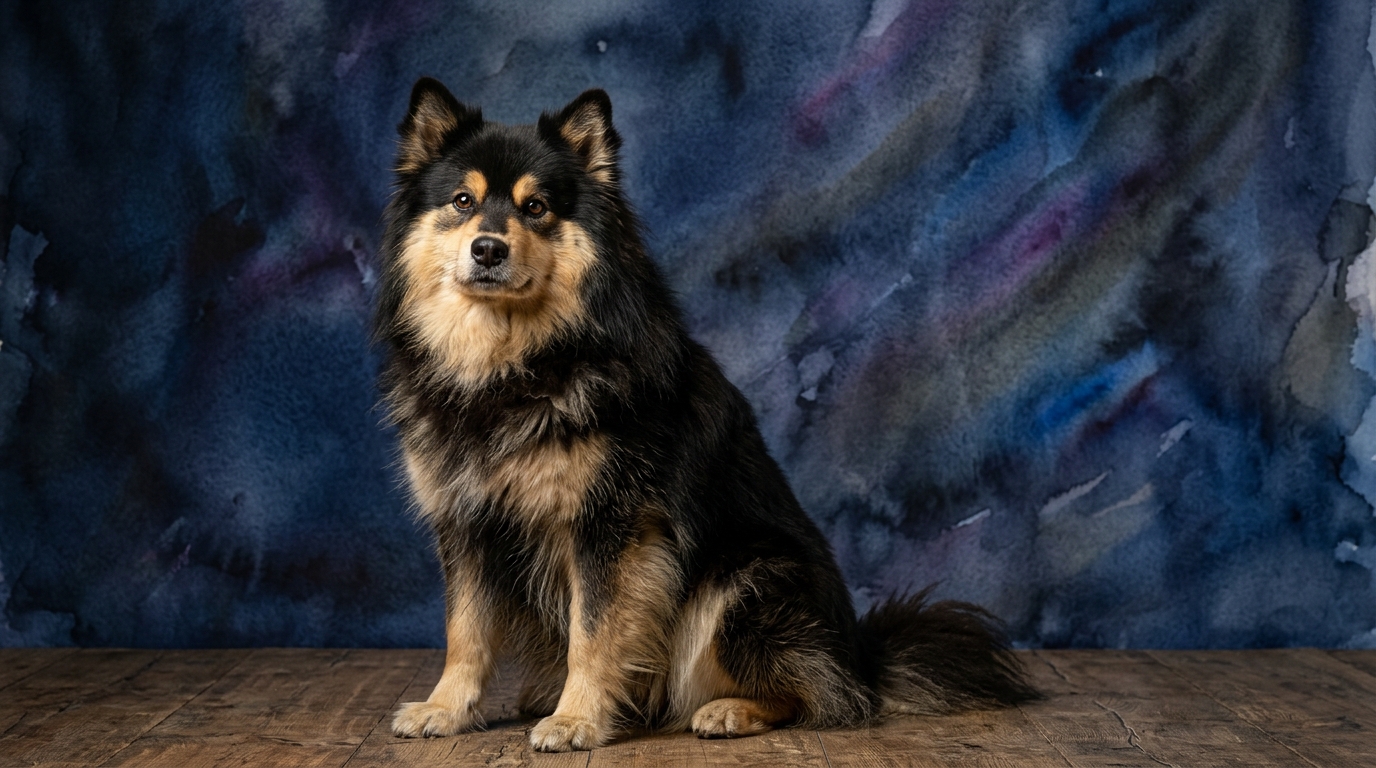

Side-by-Side IQ Profile
The Cosmic Pet Pet IQ Lab assesses canine intelligence across five key dimensions, each rated on a scale. Intriguingly, both the Finnish Lapphund and the English Toy Spaniel achieve a 3/5 score in every category, suggesting a nuanced rather than overt difference in their cognitive capabilities. Let's delve into what these scores mean for each breed, considering their unique backgrounds.
For the **Finnish Lapphund (Herding Breed)**, their scores manifest as follows:
**Problem Solving (3/5):** This score suggests a dog capable of practical, situation-based reasoning, a skill likely honed by their historical role in managing reindeer across varied terrains. They can effectively assess environmental cues and devise functional solutions for tasks like navigating challenging landscapes, finding stray flock members, or adapting to changing conditions, demonstrating a grounded, rather than abstract, form of intelligence.
**Training Speed (3/5):** A moderate training speed indicates that Finnish Lapphunds are receptive to learning new commands and concepts but typically require consistent, patient, and engaging methods. Their intelligence allows them to grasp complex ideas, but their inherent independence, characteristic of many herding breeds, means trainers must maintain high motivation and make learning relevant to their innate drives for optimal engagement.
**Social Intelligence (3/5):** Their social acumen is primarily geared towards cooperative work with humans and understanding the subtle dynamics within a working group, whether a flock or a family unit. They are adept at reading human intentions and responding to commands, fostering strong working relationships built on mutual respect and clear communication, making them attuned companions in a functional sense.
**Instinctive Drive (3/5):** This drive is notably strong and purposeful, deeply rooted in their herding instincts. It manifests as a keen desire to gather, control movement, and maintain an acute awareness of their surroundings, providing them with an inherent motivation for activity, a vigilant nature, and a strong sense of their environment. This drive requires appropriate outlets to prevent frustration.
**Memory (3/5):** Finnish Lapphunds possess a robust memory, enabling them to recall complex routes, specific commands, and the intricate routines associated with their herding duties or daily life. This capability allows them to build effectively on past experiences, remembering successful strategies and the layout of familiar territories or environments for future application.
Now, let's look at the **English Toy Spaniel (Toy Breed)** and how their identical scores play out:
**Problem Solving (3/5):** For this dedicated companion breed, problem-solving often translates to navigating the intricacies of domestic environments and understanding human behavior within a household context. They might skillfully figure out how to retrieve a cherished toy from a tight spot or subtly communicate their desires to their owner, demonstrating a cleverness primarily focused on comfort and social interaction within their home domain.
**Training Speed (3/5):** Their moderate training speed means English Toy Spaniels are capable learners, particularly when training is conducted with positive reinforcement, gentleness, and a focus on strengthening the bond of companionship. They respond well to consistent reinforcement, though their attention span might be shorter for repetitive tasks compared to working breeds, making brief, frequent training sessions generally more effective.
**Social Intelligence (3/5):** This breed's social intelligence is acutely tuned to human interaction and emotional states, making them exceptionally empathetic companions. They are adept at reading their owner's moods, offering comfort when needed, and engaging in appropriate social behaviors within a family unit, seamlessly integrating into the emotional fabric of the home.
**Instinctive Drive (3/5):** The English Toy Spaniel's primary drive is centered on companionship and personal comfort, rather than external tasks. This manifests as a strong desire for proximity to their humans, seeking warmth and affection, and a general contentment with a relaxed, predominantly indoor-centric lifestyle, fulfilling their role as a devoted lapdog.
**Memory (3/5):** Their memory serves them well in recalling household routines, the precise location of their favorite resting spots, and the specific habits and preferences of their human family members. They remember who provides the best cuddles and where the treats are usually kept, contributing significantly to their seamless and comfortable integration into home life.
Where Finnish Lapphund Wins Cognitively
While both breeds share a 3/5 problem-solving score, the Finnish Lapphund's cognitive strengths lean towards practical application in dynamic, outdoor environments. Their herding heritage means their problem-solving often involves assessing changing situations, such as livestock movement or weather conditions, and adapting strategies on the fly. This specific type of intelligence allows them to process multiple environmental stimuli simultaneously and make independent decisions that contribute to a larger task, showcasing adaptability in complex, real-world scenarios.
Their instinctive drive, channeled into purpose-driven work, translates into a sustained focus on tasks requiring endurance and the ability to work semi-autonomously, a trait less emphasized in a companion breed. This means they are often more adept at complex, multi-stage tasks that require a sequence of learned behaviors and self-directed initiative, thriving on challenges that demand both physical and mental stamina.
Where English Toy Spaniel Wins Cognitively
The English Toy Spaniel, despite matching scores, demonstrates cognitive advantages rooted in their role as devoted companions. Their social intelligence, while rated 3/5, is particularly refined in understanding human emotional nuances and domestic dynamics. They excel at "reading the room," anticipating their owner's needs or moods, and responding with appropriate comforting or engaging behaviors, making them incredibly empathetic members of the family.
Their problem-solving, though also 3/5, is often geared towards navigating social situations or finding the most efficient way to secure affection or comfort within a home environment. This breed's memory, again 3/5, is acutely focused on recalling human routines and preferences, making them exceptionally attuned to their family's daily rhythm and emotional landscape, leading to a profound and intuitive bond.
Which Is Easier to Train and Why
Both breeds are rated 3/5 for training speed, indicating a moderate learning curve, but the 'ease' of training often depends on the owner's goals, training style, and the dog's inherent motivations. The Finnish Lapphund, with its herding background, often responds best to training that is purposeful, engaging, and provides ample mental stimulation. They thrive on learning complex commands and sequences that mimic a 'job,' and their inherent drive (3/5) can make them highly motivated to perform when the task is clear and rewarding, though their independence means consistency is key to overcome any potential stubbornness. They might be perceived as 'easier' to train for advanced obedience or dog sports due to their capacity for sustained focus on a task, provided the training is stimulating and varied.
The English Toy Spaniel, conversely, is typically motivated by companionship, affection, and comfort. Their training speed (3/5) allows them to pick up basic obedience readily, especially when positive reinforcement and gentle methods are used. They are eager to please their person, which can make them very compliant in a home setting, but they might have a shorter attention span for repetitive or purely 'task-oriented' drills without a strong social component. Their instinctive drive (3/5) is less about external work and more about social connection, making them less prone to distractions from environmental stimuli when their focus is on their human. Therefore, they might be perceived as 'easier' to train for polite household manners and simple tricks, as their primary reward is often the praise and closeness of their owner, rather than the completion of a complex job.
Which Suits Active Owners vs. Relaxed Owners
The Finnish Lapphund is a clear match for active owners. Their herding heritage means they possess a significant need for both physical exercise and mental engagement. Daily vigorous walks, hiking, or participation in dog sports like agility, herding trials, or advanced obedience are essential to keep their cognitive abilities stimulated and prevent boredom. Owners who enjoy an outdoor lifestyle and can provide consistent training and 'work' for their dog will find a fulfilling partnership with a Lapphund, leveraging their robust instinctive drive (3/5) and practical problem-solving skills (3/5) for a truly engaged companion.
The English Toy Spaniel, on the other hand, is ideally suited for more relaxed owners. As a toy companion breed, their exercise requirements are moderate, typically satisfied with short daily walks and indoor play. Their instinctive drive (3/5) is primarily focused on social interaction and comfort, making them content with lounging alongside their human companions. Owners who prefer a quieter lifestyle, enjoy abundant cuddles on the couch, and seek a devoted, gentle presence will find the English Toy Spaniel to be an excellent fit, thriving on close human companionship and a calm, predictable home environment.
The Verdict
Choose the Finnish Lapphund if you are an active individual or family seeking a mentally engaged dog for outdoor adventures, dog sports, or a working role, and can provide consistent, purposeful training to channel their drives.
Choose the English Toy Spaniel if you desire a devoted, gentle companion for a relaxed home environment, valuing close cuddles and a dog content with moderate activity and abundant affection.
🧠 Find Your Pet's IQ Score
Our Pet IQ Lab assessment covers 25+ tests across 5 cognitive dimensions — personalized to your breed.
Take the Full IQ Test →Frequently Asked Questions
Do Finnish Lapphunds and English Toy Spaniels learn at the same pace?
While both breeds have a training speed score of 3/5, their motivations and preferred learning styles differ. Lapphunds often thrive with purposeful, engaging tasks, while English Toy Spaniels respond best to positive reinforcement centered on companionship and affection, making their learning experiences distinct.
How do their problem-solving skills differ despite identical scores?
A Finnish Lapphund's problem-solving (3/5) is typically geared towards practical, dynamic outdoor challenges related to their herding background and environment. An English Toy Spaniel's problem-solving (3/5) usually manifests in navigating domestic environments and understanding human social cues for comfort and attention, highlighting their different life priorities.
Which breed is better for a first-time dog owner?
The English Toy Spaniel, with its lower exercise needs and strong desire for companionship, can be a good choice for a first-time owner seeking a gentle, adaptable indoor dog. The Finnish Lapphund, due to its higher energy and mental stimulation requirements, might be more challenging for a novice owner without a clear understanding of working breed needs and consistent training.