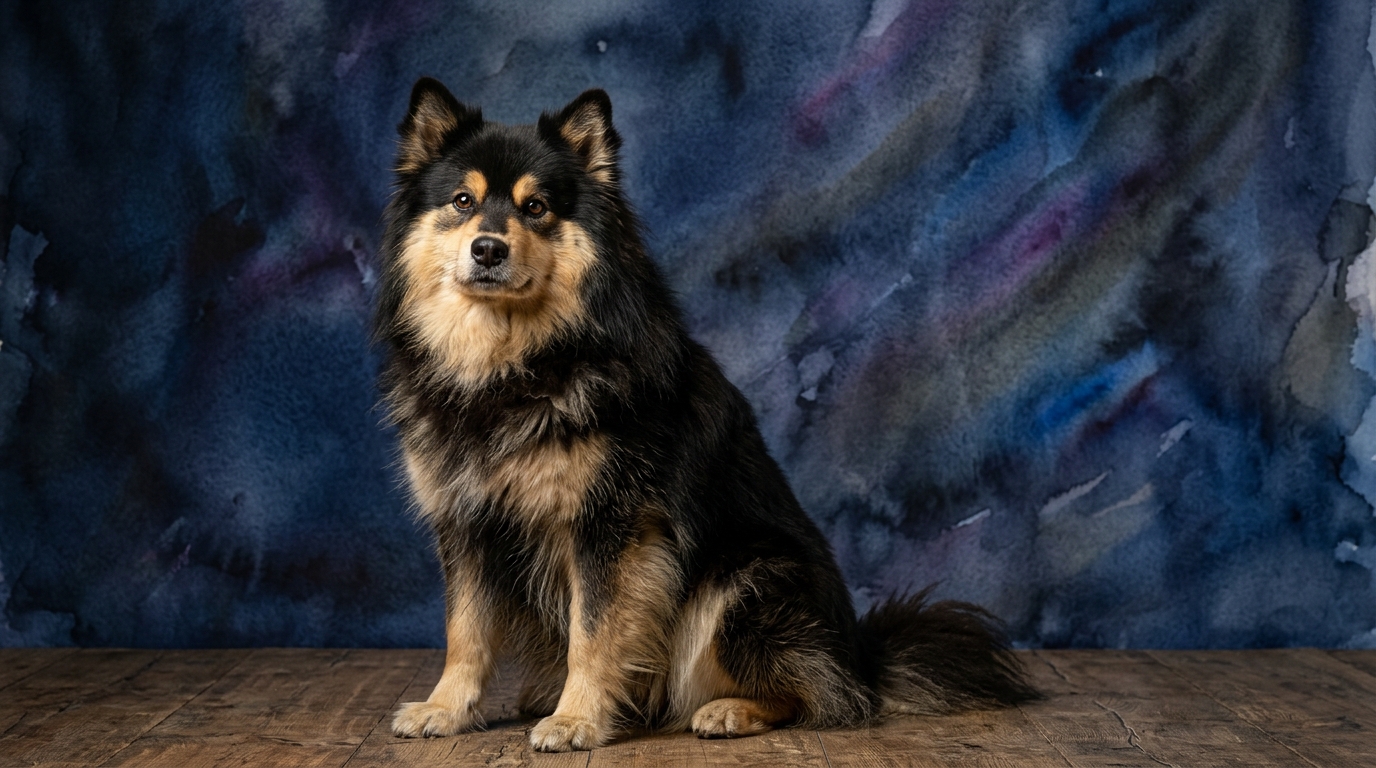
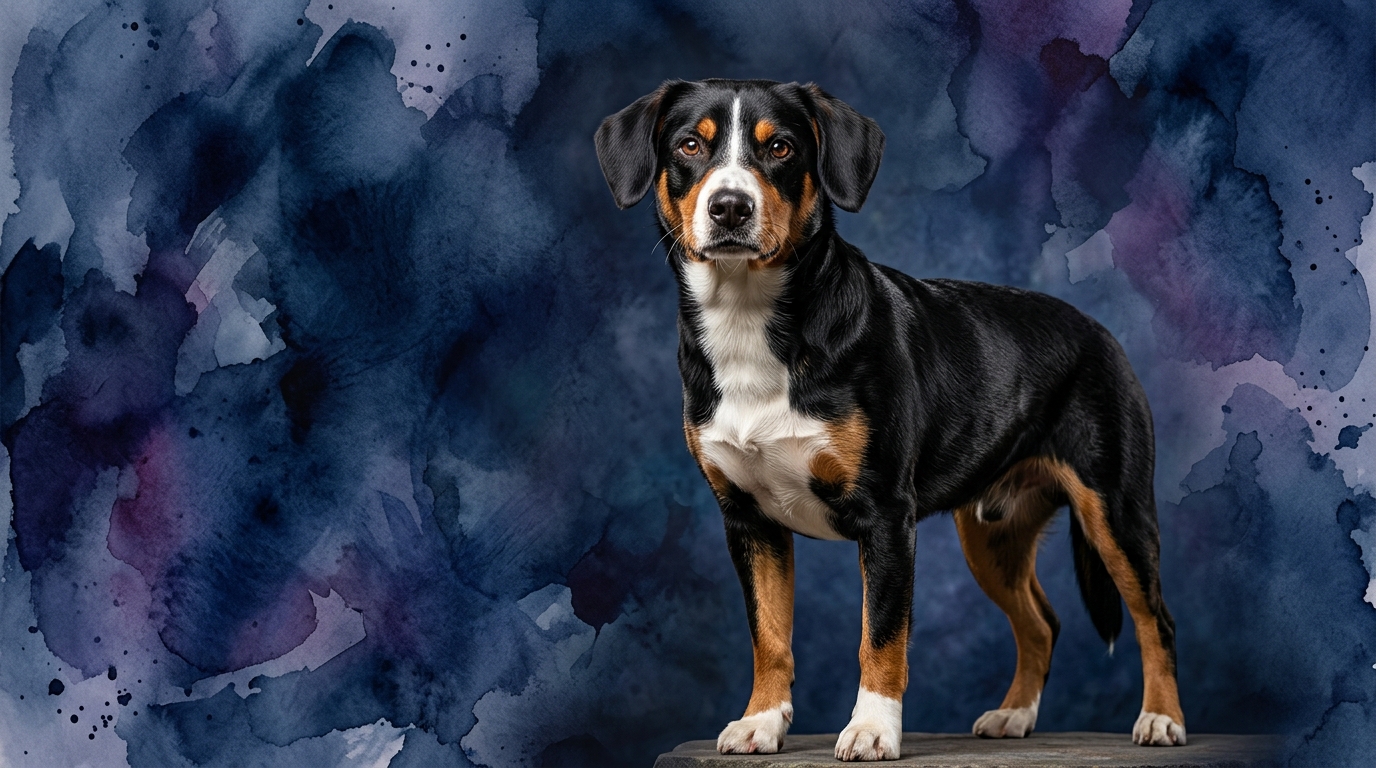
A Side-by-Side Look at Cognitive Profiles
On The Cosmic Pet Pet IQ Lab's scale, both the Finnish Lapphund and the Entlebucher Mountain Dog are rated 3/5 across all five cognitive dimensions: problem-solving, training speed, social intelligence, instinctive drive, and memory. A 3/5 score indicates a competent and capable level of intelligence, typical for many working breeds. These dogs are not exceptionally quick or complex in their cognitive functions, nor are they particularly slow or limited; rather, they demonstrate a solid, practical intelligence that has served them well in their traditional roles.
The Finnish Lapphund, bred for herding reindeer in the harsh Arctic, exhibits its 3/5 problem-solving by adapting to complex, ever-changing terrains and the independent nature of reindeer. Its 3/5 training speed reflects a biddable nature, eager to please but requiring engaging methods. Social intelligence at 3/5 means they are generally good at reading human cues and are sociable with their family, though they can be reserved with strangers. Their instinctive drive (3/5) manifests as a natural herding inclination and watchful vocalizations. Memory (3/5) ensures they retain commands and routines effectively.
The Entlebucher Mountain Dog, originating from the Swiss Alps as a cattle driver and guardian, demonstrates its 3/5 problem-solving through resourcefulness in managing livestock and keen spatial awareness. Its 3/5 training speed suggests a dog that is eager to learn but often strong-willed, demanding consistency. Social intelligence at 3/5 means deep devotion to family, coupled with a wary, sometimes protective stance towards strangers, necessitating early socialization. Their instinctive drive (3/5) is pronounced in herding, guarding, and territorial behaviors. Memory (3/5) is strong for boundaries, commands, and identifying familiar faces and places.
While the numerical scores are identical, the manifestation and emphasis of these cognitive traits vary significantly due to their distinct histories and temperaments. Understanding these nuances is crucial for prospective owners.
Where the Finnish Lapphund Cognitively Shines
Despite sharing identical scores, the Finnish Lapphund's cognitive strengths lean towards adaptable responsiveness and nuanced communication. Its 3/5 problem-solving often manifests as a flexible approach to changing environmental conditions, crucial for herding free-roaming reindeer across varied landscapes. This requires less direct command and more independent, thoughtful adaptation to the herd’s movements and the environment, demonstrating a capacity for subtle decision-making rather than brute force.
The Lapphund's 3/5 social intelligence often translates into a more inherently agreeable and less confrontational demeanor. While watchful of its surroundings, its approach to new situations or people tends to be one of cautious observation rather than immediate suspicion. This makes them generally more amenable to diverse social settings and new experiences once properly introduced, a subtle but significant difference from the more reserved and often protective Entlebucher.
Their 3/5 training speed, combined with their history of working closely with humans in a cooperative partnership, suggests they often learn best through positive reinforcement and bond-based methods. They tend to show a nuanced understanding of their handler's intent rather than just rote obedience, making them feel like willing partners in learning. Their memory (3/5) supports this by retaining learned behaviors and social cues effectively over time, contributing to their reputation as responsive and collaborative companions.
Where the Entlebucher Mountain Dog Cognitively Excels
The Entlebucher's 3/5 problem-solving often expresses itself as a robust, determined approach to tasks, particularly those involving boundaries or protection. Their historical role as cattle drivers and guardians demanded a decisive intelligence to manage large, sometimes stubborn animals, and to alert against intruders. This manifests as strong spatial reasoning and a proactive assessment of their environment, seeking to control and organize, often with a clear sense of purpose.
Their 3/5 instinctive drive is often more pronounced in its territorial and guarding aspects. While both are herding breeds, the Entlebucher's drive frequently presents as a more assertive presence, quick to identify and react to perceived threats or changes within their designated domain. This isn't just about herding; it's about active oversight and protection of their territory and family, requiring sharp observational skills and a confident, often vocal, response.
The Entlebucher's 3/5 training speed, while requiring consistent leadership, often results in a highly reliable and precise execution of commands once learned, especially tasks that align with their protective instincts. Their memory (3/5) is particularly strong for routines, boundaries, and identifying 'friend or foe,' making them dependable in their roles but also prone to remembering past negative experiences if not handled with fairness and consistency.
Training Ease: Nuances in Learning Styles
Both breeds share a 3/5 training speed, indicating they are generally capable learners but not exceptionally quick to pick up complex commands without repetition. However, their underlying temperaments significantly influence the *ease* of training. The Finnish Lapphund, with its more biddable and agreeable nature, often responds well to gentle, positive reinforcement methods and thrives on collaboration. They are less likely to challenge authority directly, making initial training sessions feel smoother and more rewarding for novice owners who appreciate a cooperative learner.
The Entlebucher, while equally capable of learning, often requires a more confident, consistent, and experienced handler. Their strong-willed nature and pronounced protective instincts mean they can test boundaries during training. While they are eager to please their chosen person, they need clear, firm, and fair leadership to channel their 3/5 instinctive drive effectively. Without it, their problem-solving (3/5) might lead them to find their own, potentially undesirable, solutions. Their social intelligence (3/5) means they form deep bonds, but this can also lead to possessiveness if not managed with early and ongoing socialization.
Owners: Active Explorers vs. Dedicated Guardians
For active owners who enjoy varied outdoor activities and appreciate a companion that can adapt to different social settings, the Finnish Lapphund often presents a compelling choice. Their 3/5 problem-solving and social intelligence allow them to navigate new environments and interactions with a curious but generally gentle disposition. They are content to be involved in family life, participating in hikes, dog sports, or simply enjoying a quiet evening, provided their moderate exercise and mental stimulation needs are met. Their adaptability makes them suitable for those seeking a flexible and engaging partner.
The Entlebucher Mountain Dog, while also active, is better suited for owners who value a dedicated, watchful companion and are prepared to provide structured physical and mental engagement. Their pronounced 3/5 instinctive drive and problem-solving skills mean they thrive when given a job, whether it's agility, herding, or simply being a vigilant family guardian. Relaxed owners might find their intensity and need for purpose challenging, as their social intelligence (3/5) often translates to a strong loyalty to their inner circle and wariness of outsiders, requiring consistent socialization and clear leadership.
The Verdict
Choose the Finnish Lapphund if you seek an adaptable, generally biddable companion for varied family activities, valuing a dog that is responsive to gentle guidance and possesses a calm, collaborative intelligence.
Opt for the Entlebucher Mountain Dog if you desire a confident, protective partner who thrives on clear leadership, consistent training, and purposeful work, offering unwavering loyalty to their committed owner.
🧠 Find Your Pet's IQ Score
Our Pet IQ Lab assessment covers 25+ tests across 5 cognitive dimensions — personalized to your breed.
Take the Full IQ Test →Frequently Asked Questions
Are Finnish Lapphunds good with children?
Finnish Lapphunds, with their 3/5 social intelligence, are generally known for being good with children, especially when raised with them. Their patient and gentle nature, combined with their biddability, makes them tolerant family members, though supervision is always advised with young children to ensure respectful interactions.
How much exercise does an Entlebucher Mountain Dog need?
Entlebucher Mountain Dogs, possessing a 3/5 instinctive drive, require significant daily exercise and mental stimulation to thrive. They need at least an hour of vigorous activity, such as running, hiking, or structured play, along with regular training sessions to engage their problem-solving abilities and prevent boredom and destructive behaviors.
Do both breeds bark a lot?
Both breeds, being herding dogs, can be vocal, but for different reasons related to their 3/5 instinctive drive. Finnish Lapphunds often use their voice to communicate and alert to new presences in a more communal way, while Entlebuchers might bark more as a territorial warning or when bored, reflecting their guardian tendencies and a need for purpose.