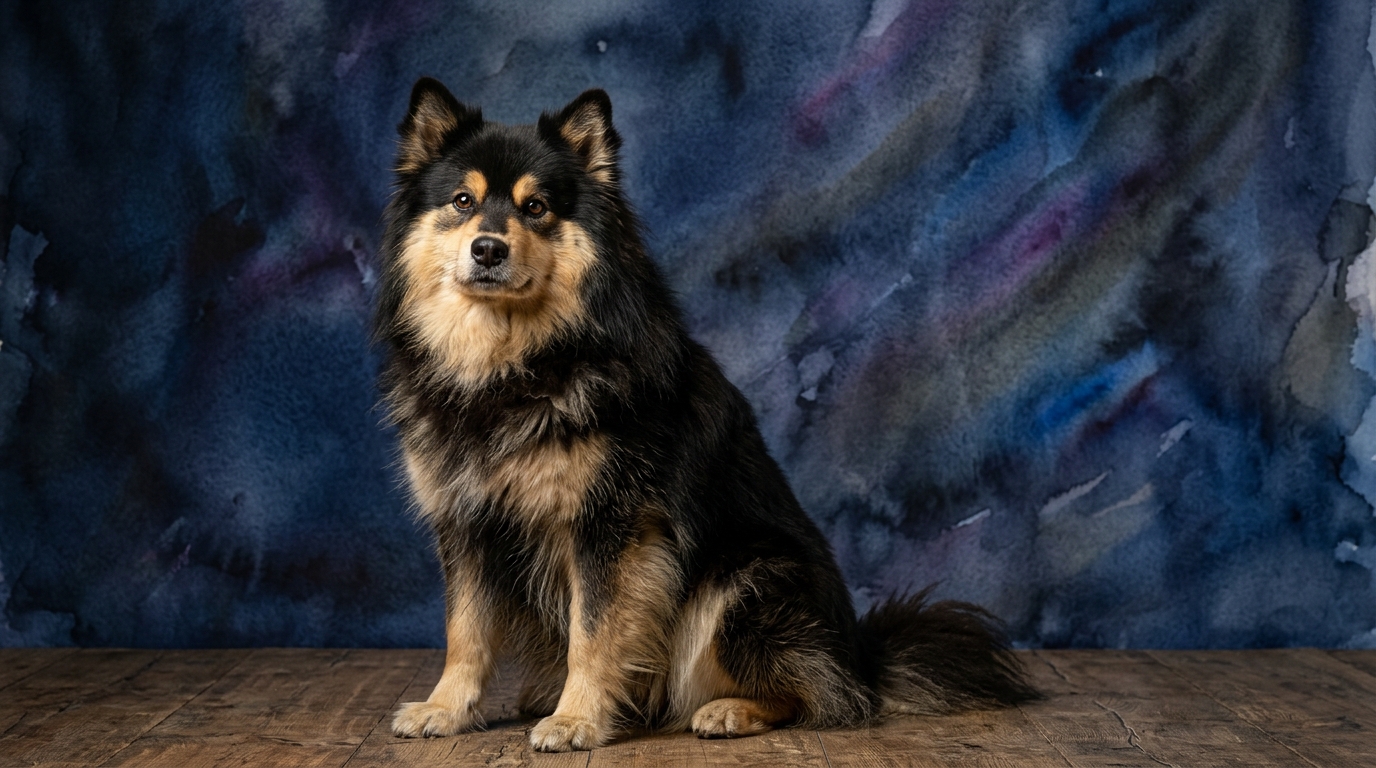

Side-by-Side Cognitive Profiles
The Cosmic Pet Pet IQ Lab assesses canine intelligence across five key dimensions, providing a nuanced look into how different breeds process the world. For the Finnish Lapphund, a breed rooted in Arctic herding, we observe a balanced cognitive profile, scoring 3/5 across all five dimensions. Their Problem Solving (3/5) suggests an aptitude for practical solutions, often related to navigating familiar environments or managing group dynamics within their flock rather than abstract puzzles. Training Speed (3/5) indicates they learn new commands and routines at a steady pace, benefiting significantly from consistent, positive reinforcement. Their Social Intelligence (3/5) allows them to keenly observe and respond to human emotions and family structures, fostering deep bonds and understanding subtle cues. An Instinctive Drive (3/5) is present, manifesting as a desire to observe or patrol, but it's generally manageable. Finally, their Memory (3/5) ensures they retain learned behaviors and routines, contributing to their reliability, though complex sequences might require more reinforcement over time. This profile paints a picture of a dog that learns steadily and engages thoughtfully with its environment and family.
The Irish Setter, a vibrant sporting dog with a Coren rank of #35, presents a distinct cognitive blueprint, often reflecting its role as a bird dog. Its Problem Solving (4/5) score highlights a pronounced ability to navigate complex scenarios, such as tracking game through varied terrain or figuring out how to achieve a desired outcome; they often display ingenuity in overcoming obstacles. Their Training Speed (4/5) is a significant advantage, indicating a rapid uptake of new commands and an eagerness to learn, typically requiring fewer repetitions to master new skills. While their Social Intelligence (3/5) matches the Lapphund's, they are equally adept at understanding human moods and integrating into family life, often expressing connection through enthusiastic engagement. An Instinctive Drive (3/5) focuses on scenting, flushing, and retrieving, providing a clear purpose that can be channeled through structured activities. Their Memory (4/5) is particularly robust, allowing them to recall extensive training sequences, specific locations, and past experiences with considerable accuracy, invaluable in field work and advanced obedience. This profile suggests a dog that is not only quick to learn but also retains that learning effectively, making them capable partners in various demanding activities.
Where the Finnish Lapphund Excels Cognitively
The Finnish Lapphund's cognitive strengths, while not always numerically superior, lie in their nuanced application of abilities within their original context and their profound social attunement. Their '3/5' in Social Intelligence, when interpreted through the lens of their herding history, translates into a remarkable capacity for empathy and observation within their family unit. They might not be the quickest to learn an arbitrary trick, but their sustained observational learning about human routines, emotional states, and household dynamics can be exceptionally deep. This allows them to become incredibly attuned companions, often anticipating needs or offering comfort based on subtle cues like a change in posture or tone of voice. This is a form of practical social cognition that prioritizes connection and understanding over overt performance. Furthermore, their moderate Instinctive Drive (3/5) is a distinct advantage in a domestic setting. It means their innate behaviors, such as a desire to watch or gather, are present enough to provide a sense of purpose without becoming overwhelming or difficult to manage for the average pet owner. Unlike breeds with more intense or specialized drives, the Lapphund's drives are generally adaptable and can be more readily integrated into a modern family's lifestyle, making them less prone to frustration when not actively working. Their overall cognitive balance fosters a thoughtful, resilient companion.
Where the Irish Setter Excels Cognitively
The Irish Setter's cognitive superiority is particularly evident in its Problem Solving (4/5), Training Speed (4/5), and Memory (4/5) scores. This powerful combination makes them exceptionally adept at navigating complex tasks and mastering new skills with impressive alacrity. Their problem-solving isn't merely about figuring out how to get a treat; it involves understanding multi-step processes, such as following a challenging scent trail through varied terrain, or executing a precise sequence of commands during a field trial. This quick cognitive processing and superior retention mean they can master advanced obedience, agility, or intricate field work with greater ease and less repetition than many other breeds, including the Lapphund. Their high Training Speed (4/5) ensures that new information sticks rapidly, allowing for quicker progression in training programs. The Irish Setter's Coren rank of #35 further solidifies this, indicating a breed that generally grasps new instructions after fewer than 25 repetitions and obeys the first command a high percentage of the time. This makes them a prime candidate for owners who enjoy pushing the boundaries of what their canine companion can learn and achieve in structured, performance-oriented activities. Their cognitive profile is geared towards efficient learning and reliable execution.
Training Ease: Finnish Lapphund vs. Irish Setter
Based on The Cosmic Pet Pet IQ Lab scores, the Irish Setter generally presents as the more straightforward breed to train, primarily due to its higher scores in Training Speed (4/5), Memory (4/5), and Problem Solving (4/5). An Irish Setter is likely to grasp new commands and routines with impressive quickness, requiring fewer repetitions to solidify behaviors. Their natural eagerness to engage, combined with their capacity to remember complex sequences, means they can progress rapidly through various training levels, from basic obedience to more intricate tasks like scent discrimination or competitive agility. Their cognitive approach leans towards efficient learning and reliable execution, often making them responsive and enthusiastic students. Conversely, the Finnish Lapphund, with consistent scores of 3/5 across the board, will require a more patient, consistent, and perhaps creative approach to training. While undoubtedly trainable and willing to please, they may take more repetitions to internalize commands and might not generalize learned behaviors as readily to new situations or contexts. Their training journey is often a slower, more deliberate process that deeply benefits from strong bond-building, clear communication, and positive reinforcement to encourage engagement and compliance. Owners must be prepared to invest more time in consistent reinforcement with a Lapphund, understanding that their learning style values thoughtful processing over rapid acquisition.
Lifestyle Match: Active vs. Relaxed Owners
Both the Finnish Lapphund and the Irish Setter are active breeds, but their distinct cognitive profiles and historical roles mean their energy expenditure and mental stimulation needs differ, influencing their suitability for various owner lifestyles. The Irish Setter, with its sporting background and higher problem-solving aptitude, thrives on purposeful activity that engages both body and mind vigorously. They require consistent, high-energy exercise, such as long-distance running, challenging off-leash hikes, or dedicated participation in dog sports like agility, field trials, or advanced obedience. An owner who enjoys daily outdoor adventures, can provide structured mental stimulation through complex training, and appreciates a dog that can keep pace with demanding physical pursuits will find the Irish Setter an exceptionally fulfilling companion. For the Finnish Lapphund, while also active, their herding heritage means their energy often translates into endurance, observation, and a desire for 'work' that involves watching, accompanying, or being involved in family routines. They benefit from regular, moderate-to-long walks, opportunities to explore safely, and activities that involve their family, but might not demand the same intensity or specific task-oriented exercise as the Setter. A moderately active owner who appreciates a companion for sustained walks, light hiking, and shared outdoor time, and who values a dog that observes and participates thoughtfully in family life, might find the Lapphund a better fit. Neither breed is ideal for truly sedentary owners, but the Lapphund's energy is arguably more adaptable to varied paces of life, provided mental engagement and consistent companionship are priorities.
The Verdict
Opt for a Finnish Lapphund if you seek a deeply attuned, observant companion for a moderately active lifestyle, valuing empathetic connection and a dog that thrives on being an integral, watchful family member, even if training requires more consistent patience.
Select an Irish Setter if you are an active individual or family prepared to engage in consistent, vigorous physical and mental activities, appreciating a quick-witted learner eager to master new skills and participate enthusiastically in dog sports or demanding outdoor pursuits.
🧠 Find Your Pet's IQ Score
Our Pet IQ Lab assessment covers 25+ tests across 5 cognitive dimensions — personalized to your breed.
Take the Full IQ Test →Frequently Asked Questions
Do Finnish Lapphunds bark a lot?
Finnish Lapphunds can be vocal, using barks to communicate alerts or excitement, stemming from their herding role where they'd warn against predators. Consistent training from a young age can help manage their vocal tendencies.
Are Irish Setters good with children?
Irish Setters are generally good with children, possessing a playful and friendly disposition, though their exuberance and size mean supervision is always recommended with very young kids. Their energy levels require outlets to prevent overly boisterous indoor behavior.
How much grooming do these breeds require?
Both breeds have coats that require regular grooming. The Finnish Lapphund's double coat needs weekly brushing to prevent matting and manage shedding, especially during seasonal changes. The Irish Setter's long, silky coat requires frequent brushing, often daily, to prevent tangles and keep it in good condition, along with occasional trimming.