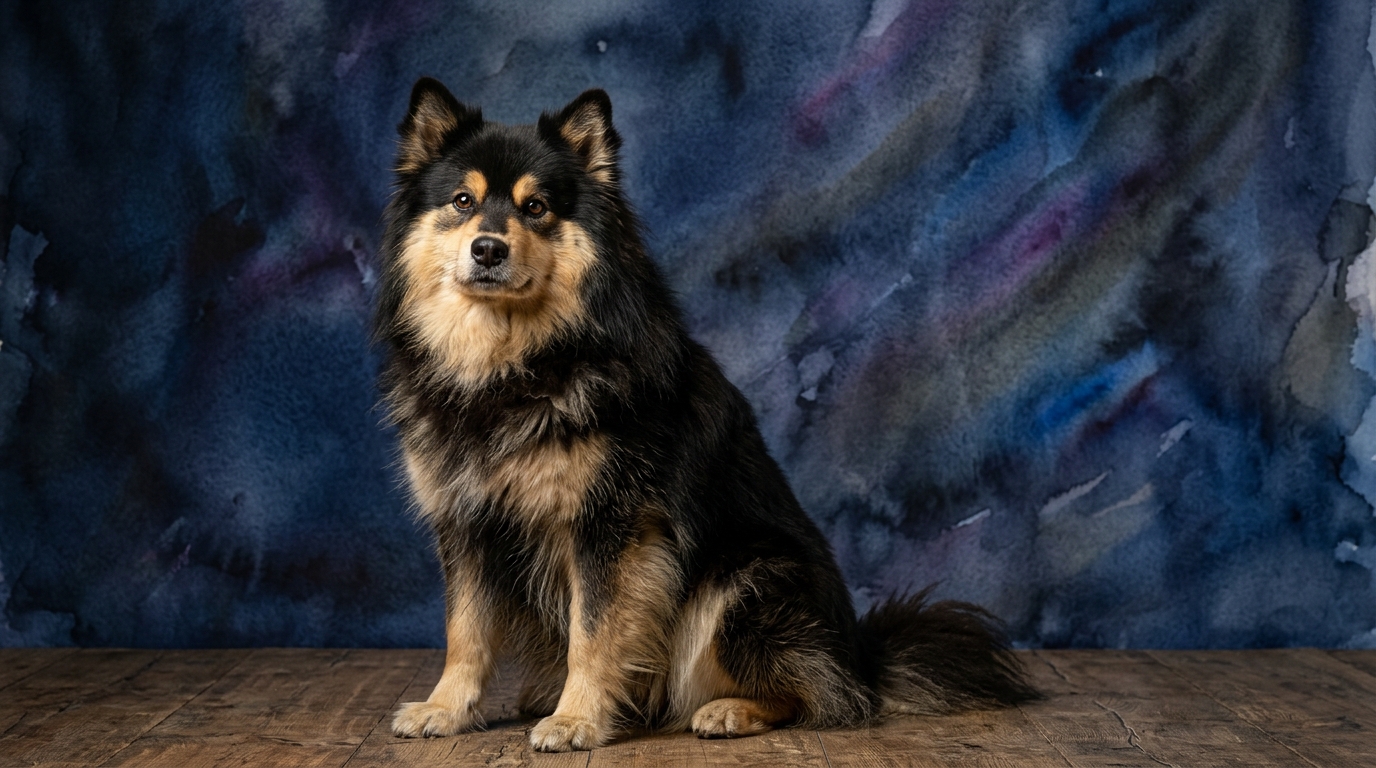

Side-by-Side IQ Profile: Finnish Lapphund vs. Kerry Blue Terrier
At The Cosmic Pet Pet IQ Lab, both the Finnish Lapphund and the Kerry Blue Terrier receive a consistent 3/5 across problem solving, training speed, social intelligence, instinctive drive, and memory. While these scores indicate a comparable level of cognitive capacity, the *application* of these capacities differs significantly due to their distinct breed histories.
For the **Finnish Lapphund**, a breed forged in the harsh Arctic to herd reindeer:
**Problem Solving (3/5):** This Arctic herder applies problem-solving to practical, dynamic situations, excelling at navigating varied terrains and adapting strategies to manage livestock or family members. Their intelligence is intuitive and focused on environmental management and group welfare.
**Training Speed (3/5):** Lapphunds are generally responsive and eager to please, absorbing commands steadily. However, their independent decision-making in herding means they aren't always blindly obedient, requiring consistent, positive reinforcement to maintain engagement.
**Social Intelligence (3/5):** Deeply rooted in cooperative herding and family life, they keenly read human and animal cues, understanding social hierarchies and emotional states. This fosters smooth integration into a household and sensitive companionship.
**Instinctive Drive (3/5):** Primarily focused on herding, protection, and companionship. They possess a moderate drive to gather and manage, often seen with family, coupled with an instinct to alert to perceived threats, typically non-aggressive.
**Memory (3/5):** Exhibiting reliable memory for routines, familiar people, and commands, aiding adaptability. Their recall of specific locations and environmental layouts supports their herding tendencies and ability to navigate complex areas.
For the **Kerry Blue Terrier**, originally developed as an all-around farm dog and vermin hunter in Ireland:
**Problem Solving (3/5):** The Kerry Blue applies problem-solving with terrier tenacity, adept at strategizing prey capture or overcoming obstacles like fences. This intelligence is focused, determined, and often self-initiated to achieve specific objectives.
**Training Speed (3/5):** Kerry Blues learn at a respectable pace, but their independence can make them selective. Training needs to be highly engaging, consistent, and rewarding to overcome their inherent 'what's in it for me?' attitude.
**Social Intelligence (3/5):** Possessing a nuanced social intelligence expressed through deep bonds with chosen humans. They understand human moods but their terrier heritage can lead to reserved or assertive interactions with unfamiliar dogs or people.
**Instinctive Drive (3/5):** Potent and multifaceted, rooted in hunting and guarding. They have a pronounced prey drive to chase and 'dispatch' small animals, complemented by a protective instinct towards family and territory.
**Memory (3/5):** Demonstrating a strong memory for training cues, routines, and experiences, both positive and negative. They recall complex actions and individuals, contributing to learning but also potentially remembering grievances.
Where the Finnish Lapphund Wins Cognitively
While both breeds share identical Pet IQ Lab scores, the Finnish Lapphund's cognitive strengths lean towards cooperative problem-solving and environmental adaptability. Their ability to manage and anticipate the movements of a flock, often across vast and varied landscapes, showcases a spatial and predictive intelligence that is less about confronting a single problem and more about managing a dynamic system. They excel at reading group dynamics and adjusting their actions to maintain harmony, whether with reindeer or a human family, demonstrating a nuanced social awareness in complex, shifting situations.
Where the Kerry Blue Terrier Wins Cognitively
The Kerry Blue Terrier shines in independent, goal-oriented problem-solving, particularly when it involves tenacity and strategic thinking. Their cognitive advantage lies in their single-minded pursuit of an objective, like figuring out how to bypass an obstacle to reach a perceived 'prey' or mastering a complex trick through sheer determination. This isn't about managing a group, but rather about individual ingenuity and perseverance in overcoming specific challenges, often requiring a creative, sometimes mischievous, approach to reach their desired outcome.
Which is Easier to Train and Why
When considering ease of training, the Finnish Lapphund generally presents a more straightforward experience due to their inherent desire to cooperate and their biddable nature. Their herding background instilled a readiness to work alongside humans and respond to direction, making them receptive to positive reinforcement methods and enjoying the collaborative process. The Kerry Blue Terrier, while capable of learning quickly, often requires a more experienced and patient handler. Their strong independent streak and inherent terrier 'stubbornness' mean training must be highly engaging, consistent, and proofed against distractions. They might question the necessity of a command, making them less 'easier' and more 'challenging but rewarding' to train, thriving on variety and mental games.
Which Suits Active Owners vs. Relaxed Owners
The Finnish Lapphund is well-suited for active owners who can provide consistent mental and physical engagement, particularly activities that tap into their herding instincts, like agility, herding games, or extensive walks and hikes. They appreciate downtime with their family but require regular stimulation to prevent boredom. For more relaxed owners, the Kerry Blue Terrier might be a less ideal fit due to their strong prey drive and need for structured outlets for their energy and determination. They thrive with owners who enjoy dynamic activities, rigorous play, and consistent training that challenges their clever minds, rather than those seeking a purely sedentary companion. Both breeds benefit immensely from active engagement, with the Lapphund leaning towards cooperative activities and the Kerry Blue towards more independent, task-focused pursuits.
The Verdict
Choose the Finnish Lapphund if you seek a cooperative, family-oriented companion who thrives on shared activities and possesses an intuitive understanding of group dynamics, appreciating consistent mental and physical engagement.
Opt for the Kerry Blue Terrier if you admire a spirited, independent thinker with a tenacious drive for problem-solving and a need for an owner who can channel their vibrant energy and cleverness into structured, engaging activities.
🧠 Find Your Pet's IQ Score
Our Pet IQ Lab assessment covers 25+ tests across 5 cognitive dimensions — personalized to your breed.
Take the Full IQ Test →Frequently Asked Questions
Do Finnish Lapphunds bark a lot?
Finnish Lapphunds do have a tendency to be vocal, using barks to communicate alerts or express excitement. Early training can help manage excessive barking, but their natural inclination to 'speak' is part of their breed character and their role as watchdogs.
Are Kerry Blue Terriers good with children?
Kerry Blue Terriers can be wonderful family pets and are generally good with children, especially when raised together and properly socialized. However, their lively nature and strong prey drive mean supervision is always recommended, particularly with very young children, to ensure respectful interactions.
What kind of exercise do these breeds need?
Both breeds require regular, substantial exercise. Finnish Lapphunds benefit from long walks, hikes, and mental challenges like puzzle toys or herding games. Kerry Blue Terriers need vigorous daily activity, including running, structured play, and training that engages their problem-solving skills to prevent boredom and destructive behaviors.