
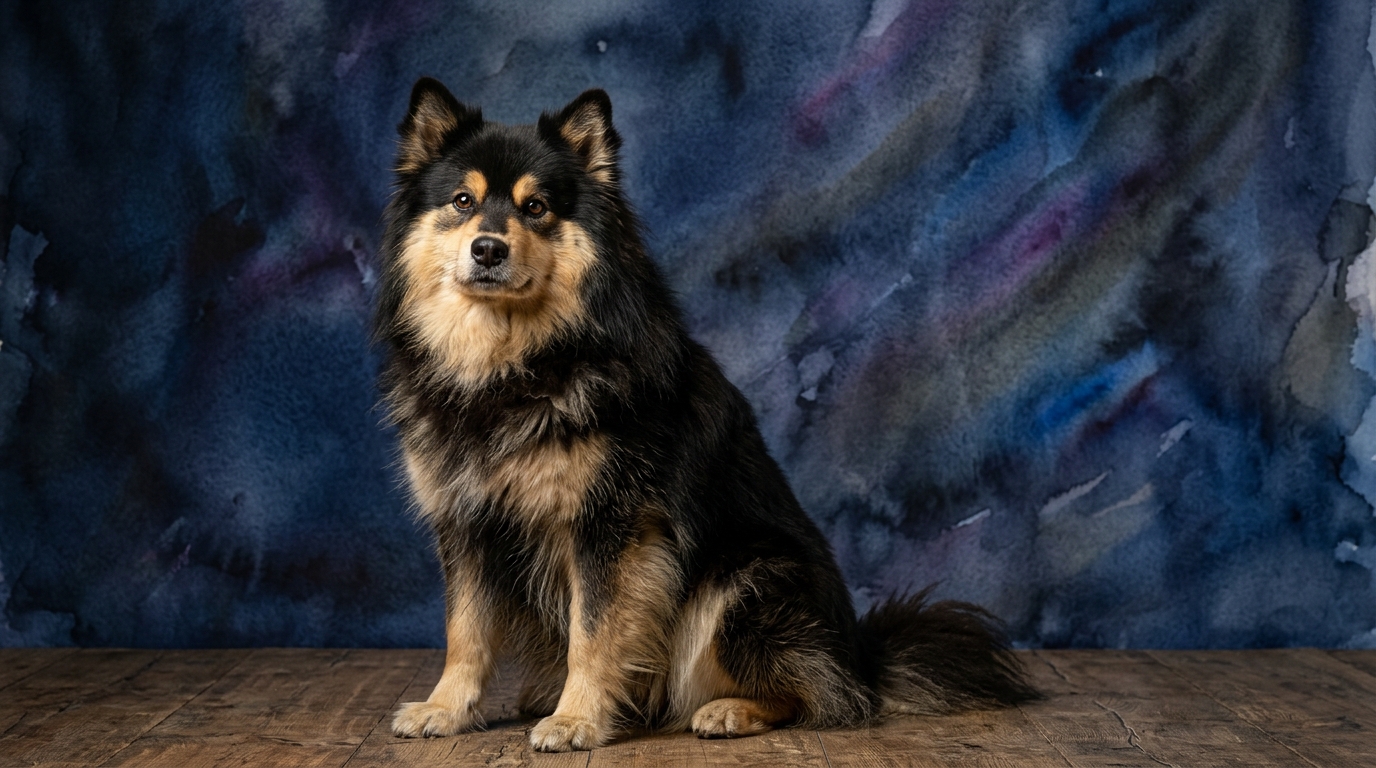
Side-by-Side Cognitive Profiles: GSP vs. Finnish Lapphund
Delving into the specific cognitive dimensions of the German Shorthaired Pointer (GSP) and the Finnish Lapphund provides a foundational understanding of their mental architectures. These profiles, derived from observed behavioral patterns and breed predispositions, illuminate their inherent capacities across various cognitive tasks.
The German Shorthaired Pointer, a Sporting breed, exhibits a robust cognitive blueprint. Its Problem Solving capacity is rated at an exceptional 5/5, indicating an outstanding ability to analyze novel situations, adapt strategies, and devise effective solutions independently. This breed's Training Speed is 4/5, signifying a rapid assimilation of new commands and complex routines, often requiring fewer repetitions than many other breeds. Social Intelligence stands at a strong 4/5, reflecting its aptitude for reading human cues, understanding social dynamics within a family unit, and responding appropriately in varied social contexts. The GSP's Instinctive Drive is a powerful 5/5, a testament to its profound genetic programming for hunting, tracking, and retrieving, manifesting as intense focus and unwavering persistence in goal-oriented tasks. Finally, its Memory is rated 4/5, demonstrating a strong ability to retain learned behaviors, spatial information, and previous experiences over extended periods.
In contrast, the Finnish Lapphund, a Herding breed, presents a different yet equally functional cognitive profile. Its Problem Solving capacity is rated 3/5, suggesting a competence in navigating familiar challenges and routines, but perhaps requiring more guidance or repetition when faced with entirely novel or abstract puzzles. Training Speed is also 3/5, indicating that while they are receptive to learning, they typically acquire new commands at a more deliberate pace, thriving with consistent, patient instruction. Social Intelligence for the Lapphund is 3/5, meaning they form deep, loyal bonds within their immediate family, showing a good understanding of familiar human emotions and dynamics, though they might be more reserved with strangers or in new social settings compared to a GSP. Their Instinctive Drive is 3/5, reflecting a balanced herding instinct that is cooperative and manageable, focused on guiding rather than intensely pursuing. Memory for the Finnish Lapphund is 3/5, demonstrating reliable retention of learned behaviors and routines, particularly those essential to their daily life and family interactions.
Where the German Shorthaired Pointer Excels Cognitively
The German Shorthaired Pointer's cognitive architecture grants it distinct advantages, primarily in areas demanding rapid processing, independent action, and sustained application of physical and mental energy. Its 5/5 Problem Solving capacity means a GSP is not merely reactive but genuinely proactive; it can assess complex environmental stimuli and formulate multi-step plans to achieve a desired outcome, whether that's figuring out how to open a tricky gate or navigating an intricate scent trail. This extends beyond simple obedience, allowing them to excel in advanced dog sports like agility, field trials, and search and rescue, where quick, autonomous decisions are paramount.
Furthermore, the GSP's potent 5/5 Instinctive Drive fuels its exceptional focus and persistence. When a GSP is given a task, especially one that taps into its natural hunting propensities, it exhibits an almost unshakeable determination. This drive, combined with its 4/5 Training Speed, means it can not only learn complex sequences of commands quickly but also execute them with unwavering commitment, making it highly valuable in working roles that require precision and endurance. Their memory, also at 4/5, allows them to recall intricate patterns, scent distinctions, and command progressions with accuracy, enhancing their performance in specialized tasks that demand detailed recall over time. This combination makes them particularly adept at tasks requiring both mental dexterity and physical stamina, such as complex retrieving patterns or advanced scent work.
Where the Finnish Lapphund Finds its Cognitive Niche
While the Finnish Lapphund's cognitive scores may appear more moderate compared to the GSP, they represent a finely tuned set of abilities perfectly suited to its historical role and companion animal life. Its 3/5 Instinctive Drive, for example, is a significant cognitive strength for many owners. Unlike the intense, often overwhelming drive of a GSP, the Lapphund's herding instincts are typically expressed in a more measured, cooperative manner. This means they are often less prone to high-prey drive behaviors that can be challenging to manage in a domestic setting, making them excellent at gently guiding and supervising, rather than intensely pursuing. Their drive is focused on maintaining cohesion, a valuable trait for a family dog.
The Finnish Lapphund's 3/5 Social Intelligence, while not indicating rapid assessment of every new social dynamic, translates into a profound, stable loyalty within their established family unit. They are adept at reading the familiar emotions and routines of their human companions, fostering a deeply empathetic and predictable relationship. This cognitive focus on their immediate 'pack' means they often provide a steady, comforting presence, less likely to be independently exploring distant social interactions. Their 3/5 Problem Solving and Training Speed, though deliberate, ensure that once a task or routine is learned, it is deeply ingrained and reliably performed, fostering a sense of security and consistency that many owners appreciate. They thrive on clear, consistent communication and predictable environments, leveraging their memory (3/5) to build a stable repertoire of learned behaviors and expectations.
Ease of Training: A Behavioral Perspective
When considering ease of training, the German Shorthaired Pointer generally presents a more straightforward path for owners experienced with motivated, high-drive breeds, while the Finnish Lapphund benefits from a patient, consistent approach. The GSP's 4/5 Training Speed and powerful 5/5 Instinctive Drive mean it processes and internalizes commands with impressive rapidity, especially when training taps into its natural predispositions. For instance, teaching a GSP to retrieve or track is often intuitive for the dog, as these behaviors align with its core genetic programming. They are eager to work, often seeking tasks, and respond very well to positive reinforcement that channels their intense focus. However, this same high drive necessitates consistent mental and physical engagement; an under-stimulated GSP can quickly become bored and channel its problem-solving abilities into undesirable behaviors, such as creatively escaping or finding its own 'work' around the house.
The Finnish Lapphund, with its 3/5 Training Speed and 3/5 Instinctive Drive, learns reliably but at a more deliberate pace. They are not 'slow' learners, but rather methodical ones, requiring more repetition and patience to solidify new commands. Their motivation often stems from a desire to cooperate with their family, rather than an intense, independent drive to perform a task for its own sake. They respond best to positive reinforcement and gentle guidance, thriving on consistency and predictability in their training regimen. Unlike the GSP, whose independent problem-solving might lead it to 'figure out' solutions on its own, the Lapphund often waits for direction, making them highly biddable within their comfort zone. Owners should understand that while a Lapphund might not master complex multi-step commands as quickly as a GSP, once a behavior is learned and consistently reinforced, their 3/5 memory ensures its retention, leading to a well-mannered and dependable companion.
Matching Breeds to Lifestyles: Active vs. Relaxed Owners
The distinct cognitive profiles of the German Shorthaired Pointer and Finnish Lapphund create clear distinctions in the types of households they will thrive in. The GSP, with its 5/5 Problem Solving and 5/5 Instinctive Drive, is unequivocally suited for highly active owners who can provide substantial daily engagement, both physical and mental. These dogs require owners who are prepared to channel their formidable energy into structured activities like running, hiking, swimming, or dog sports. Their cognitive need for novel challenges and their powerful drive for purpose mean they are not content with simple backyard access; they need jobs, whether that's formal hunting, advanced obedience, or complex puzzle-solving. Owners who enjoy training for competitive events or have an active outdoor lifestyle will find the GSP to be an unparalleled companion, eager to participate and excel.
Conversely, the Finnish Lapphund, with its more moderate 3/5 scores across all cognitive dimensions, is a better fit for owners seeking a companion with a balanced, adaptable energy level and a cooperative nature. While they certainly enjoy and benefit from regular exercise and mental stimulation, their needs are less intense and demanding than those of a GSP. They are content with daily walks, playtime in a securely fenced yard, and engaging in family activities. Their social intelligence, focused on their immediate family, makes them excellent companions for those who appreciate a loyal and present family member. Relaxed owners, or those with moderately active lifestyles, who value consistency, gentle companionship, and a dog that is present without constantly demanding intense engagement, will find the Finnish Lapphund to be a wonderfully suitable and fulfilling choice. They thrive on being included in daily life and appreciate clear routines, making them less prone to restlessness if their day isn't packed with high-octane activities.
The Verdict
Choose the German Shorthaired Pointer if you are an experienced, highly active owner eager to engage in demanding physical and mental activities like dog sports or hunting, and desire a partner with exceptional problem-solving and drive.
Opt for the Finnish Lapphund if you seek a loyal, cooperative family companion with a balanced drive, who thrives on consistent routines and moderate activity, and appreciates a steady presence in family life.
🧠 Find Your Pet's IQ Score
Our Pet IQ Lab assessment covers 25+ tests across 5 cognitive dimensions — personalized to your breed.
Take the Full IQ Test →Frequently Asked Questions
Are Finnish Lapphunds difficult to train due to lower IQ scores?
Finnish Lapphunds are not difficult to train; rather, they learn at a deliberate pace (3/5 Training Speed). They respond exceptionally well to consistent, positive reinforcement and patience, forming reliable behaviors over time. Their cooperative nature means they are often eager to please their family.
Do German Shorthaired Pointers require a lot of mental stimulation?
Yes, German Shorthaired Pointers absolutely require significant mental stimulation due to their 5/5 Problem Solving and 5/5 Instinctive Drive. Without engaging tasks like puzzle toys, advanced training, or structured 'work,' they can become bored and channel their energy into less desirable behaviors.
Which breed is better for a first-time dog owner?
For a first-time dog owner, the Finnish Lapphund is often a more manageable choice due to its more moderate drive and generally cooperative nature. The German Shorthaired Pointer's intense drive and high energy levels typically require an owner with experience in channeling such powerful cognitive and physical demands.