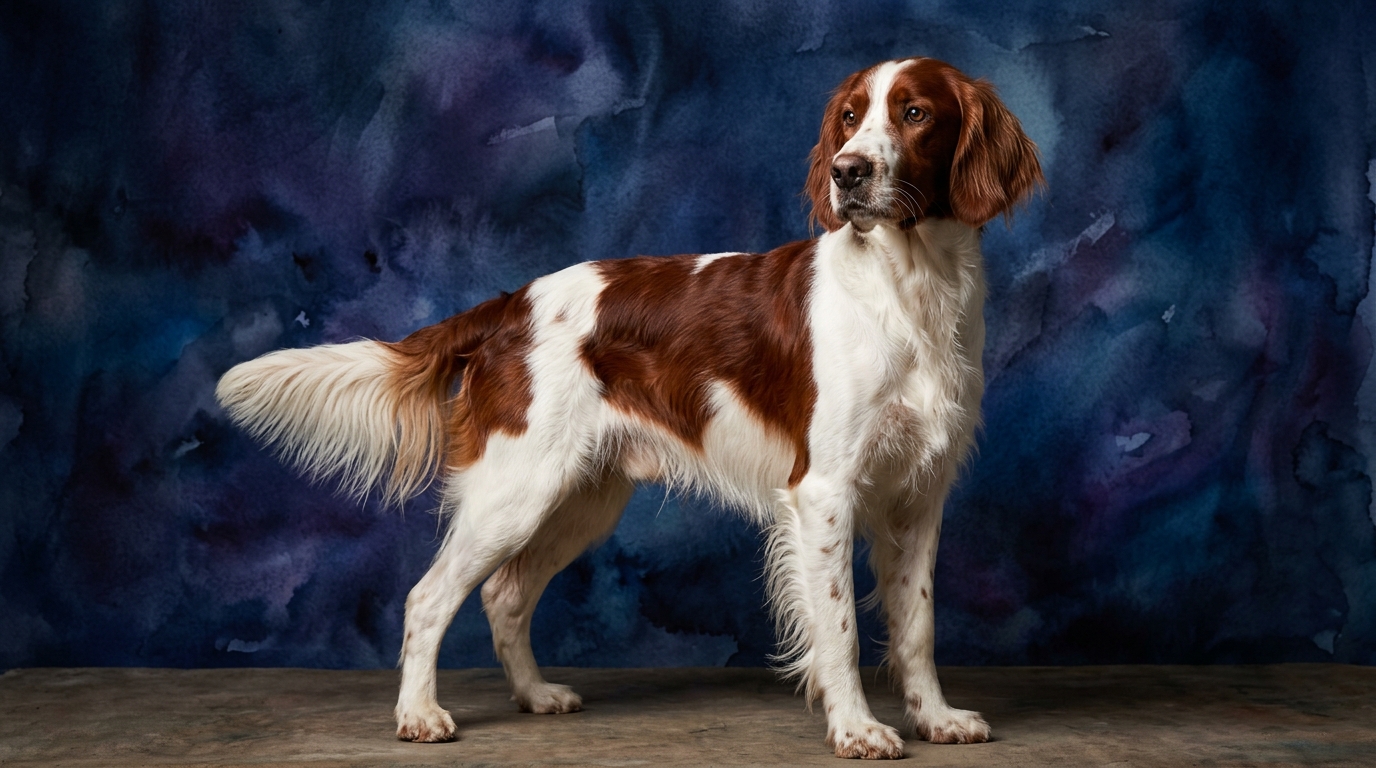

Side-by-Side Cognitive Profiles: Setter vs. Terrier
While both the Irish Red and White Setter and the Kerry Blue Terrier score a consistent 3/5 across all five measured cognitive dimensions, their historical roles mean these scores manifest in profoundly different ways. For the Irish Red and White Setter, a Sporting group dog, their 3/5 in Problem Solving often translates to navigating complex field environments to locate game or efficiently retrieving fallen birds, demonstrating ingenuity within a cooperative framework. Their Training Speed at 3/5 reflects a general eagerness to please and respond to commands, particularly when the task aligns with their natural retrieving and scenting drives. Social Intelligence at 3/5 for the Setter typically involves a strong attunement to their handler's moods and cues, fostering a close working partnership. Their Instinctive Drive, also 3/5, is geared towards the collaborative hunt: scenting, pointing, and retrieving game birds. Finally, a Memory score of 3/5 allows them to recall intricate field patterns, successful search strategies, and a broad repertoire of commands.
Conversely, the Kerry Blue Terrier, a member of the Terrier group, expresses its identical 3/5 scores through a lens of independence and tenacity. Their 3/5 in Problem Solving frequently manifests as resourcefulness in overcoming obstacles to pursue a perceived 'prey,' or finding ingenious ways to access a desired object, often requiring self-directed initiative. A Training Speed of 3/5 for the Kerry Blue indicates they learn efficiently, but their compliance is often contingent on their own motivation and a trainer's ability to make tasks engaging and varied, rather than a simple desire to please. Their Social Intelligence at 3/5 is more about discerning social dynamics within their immediate environment, assessing new individuals or other animals with a discerning, sometimes assertive, stance. The Kerry Blue's 3/5 Instinctive Drive is powerfully channeled into chasing, digging, and dispatching vermin, a more solitary and determined pursuit. Their Memory, also 3/5, allows them to recall locations where 'prey' was last seen, weaknesses in fences, or past strategies that yielded success in their independent endeavors.
Where the Irish Red and White Setter Shines Cognitively
The Irish Red and White Setter truly excels in cognitive tasks requiring sustained, cooperative effort and a nuanced understanding of human directives. Their problem-solving abilities, while rated 3/5, are particularly effective when applied to shared objectives, such as methodically quartering a field to flush game or executing complex retrieve patterns over varied terrain. This isn't just about finding a solution, but finding it *with* their human partner, often anticipating the handler's next move. Their social intelligence fosters a deep, intuitive bond, making them remarkably attuned to subtle vocal cues and body language, which enhances their performance in precision-based activities like obedience or agility.
Furthermore, the Setter's memory (3/5) is particularly robust for routines and sequences of actions that contribute to a successful joint venture. They can recall elaborate scent trails, the specific locations of previous retrieves, and a wide array of commands, making them highly reliable partners in consistent, structured environments. This reliability stems from their breed history as hunting companions, where consistency and predictability were paramount. Their instinctive drive, while equally rated, is inherently more collaborative, leading to a cognitive approach that seeks partnership rather than independent conquest.
Where the Kerry Blue Terrier Demonstrates Cognitive Prowess
The Kerry Blue Terrier's cognitive strengths lie in their independent problem-solving and unyielding tenacity, even with an identical 3/5 rating. Their ingenuity is often self-directed, manifesting as clever strategies to achieve their own goals, whether that's figuring out how to open a cupboard, outmaneuver a perceived 'intruder,' or persistently work at a puzzle toy until it's solved. This breed's instinctive drive, while sharing the same 3/5 score, fuels a relentless determination to pursue and 'deal with' perceived vermin, translating into a cognitive approach that thrives on overcoming challenges through sheer will and cleverness, often without direct human guidance.
The Kerry Blue's social intelligence (3/5) is acutely geared towards assessing and navigating their immediate social landscape, rather than purely cooperative bonding. They are observant of their surroundings and can quickly size up new situations or individuals, making independent judgments. Their memory (3/5) is particularly strong for details related to their environment and past experiences that either rewarded their tenacious efforts or presented a challenge. They might remember the exact spot where a squirrel disappeared or the precise location of a weak point in a fence, showcasing a memory focused on practical, often self-serving, applications of their intelligence.
Training Dynamics: Biddable Setter vs. Independent Terrier
While both breeds possess a 3/5 Training Speed, the *experience* of training them differs significantly due to their behavioral predispositions. The Irish Red and White Setter generally feels 'easier' to train for many owners because of their inherent biddability and strong desire to cooperate. They are often highly motivated by praise, play, and food, and respond well to consistent, positive reinforcement methods. Their background as a cooperative hunting dog means they are inclined to work *with* their handler, making the learning process smoother and often faster in terms of initial command acquisition and reliable recall. Setters typically enjoy structured training sessions and thrive on having a 'job' to do alongside their person.
The Kerry Blue Terrier, despite the same 3/5 Training Speed, presents a different kind of training challenge. Their independence and strong terrier will mean that while they learn quickly, they are not always inclined to *comply* if they don't see the immediate benefit or if the task feels repetitive or uninteresting. Training a Kerry Blue requires creativity, patience, and a deep understanding of their motivations. Owners must make training fun, varied, and engaging, often incorporating games and problem-solving elements to capture their attention. Consistency is crucial, but so is making them believe that 'your' idea was actually 'their' idea. Their strong prey drive also means distractions can be a significant hurdle, requiring meticulous proofing in various environments.
Matching Breeds to Lifestyles: Active Engagement
Neither the Irish Red and White Setter nor the Kerry Blue Terrier is suited for a truly 'relaxed' owner; both are active breeds requiring significant physical and mental engagement. The Irish Red and White Setter thrives with owners who enjoy long, vigorous walks, hiking, or field activities like scent work or retrieving games. They are wonderful companions for active families who appreciate a dog that is eager to participate in outdoor adventures and enjoys being a close, cooperative partner. Their need for exercise is substantial, and without it, their intelligent minds can become bored, potentially leading to undesirable behaviors. They flourish in environments where their innate desire to work alongside humans is fulfilled.
The Kerry Blue Terrier also demands an active lifestyle, but one that caters to their unique blend of energy and independence. They are excellent for owners who appreciate a dog with a robust personality, enjoy mental challenges, and can provide outlets for their terrier instincts, such as earthdog trials, agility, or engaging puzzle toys. Daily vigorous exercise is essential, often involving varied activities to keep their keen minds engaged. Owners should be prepared for a dog that, while loyal and affectionate, maintains a strong sense of self and requires consistent, confident leadership. They are best suited for individuals or families who embrace their spirited nature and can channel their tenacity positively.
The Verdict
Choose the Irish Red and White Setter if you seek a highly cooperative, biddable, and elegant partner for active outdoor pursuits and enjoy a strong, intuitive bond in a working relationship. They thrive on collaborative effort and consistent interaction, making them ideal for owners who appreciate a dog eager to please and perform alongside them.
Opt for the Kerry Blue Terrier if you are drawn to a resilient, independent, and clever companion with a spirited personality, who will challenge you with their tenacity and resourcefulness. They are best for owners who can provide consistent, engaging training and ample outlets for their strong terrier drives, appreciating a dog that thinks for itself.
🧠 Find Your Pet's IQ Score
Our Pet IQ Lab assessment covers 25+ tests across 5 cognitive dimensions — personalized to your breed.
Take the Full IQ Test →Frequently Asked Questions
Do Irish Red and White Setters make good family pets?
Yes, Irish Red and White Setters can be excellent family pets due to their generally gentle, affectionate, and patient nature. They typically get along well with children and other pets, provided they receive adequate exercise and mental stimulation to prevent boredom and channel their energy positively.
Are Kerry Blue Terriers good with other dogs?
Kerry Blue Terriers can coexist with other dogs, especially if socialized extensively from a young age. However, their strong terrier instincts and sometimes assertive nature mean they may challenge other dogs, particularly those of the same sex, requiring careful introductions and supervision.
What is the key difference in problem-solving between these two breeds?
While both rate 3/5, the Setter's problem-solving tends to be cooperative, focused on achieving a shared goal with their human partner, like navigating a field for a retrieve. The Kerry Blue's problem-solving is often more independent and self-motivated, aimed at overcoming obstacles to achieve their own objectives, such as accessing a desired item or pursuing a perceived 'prey.'