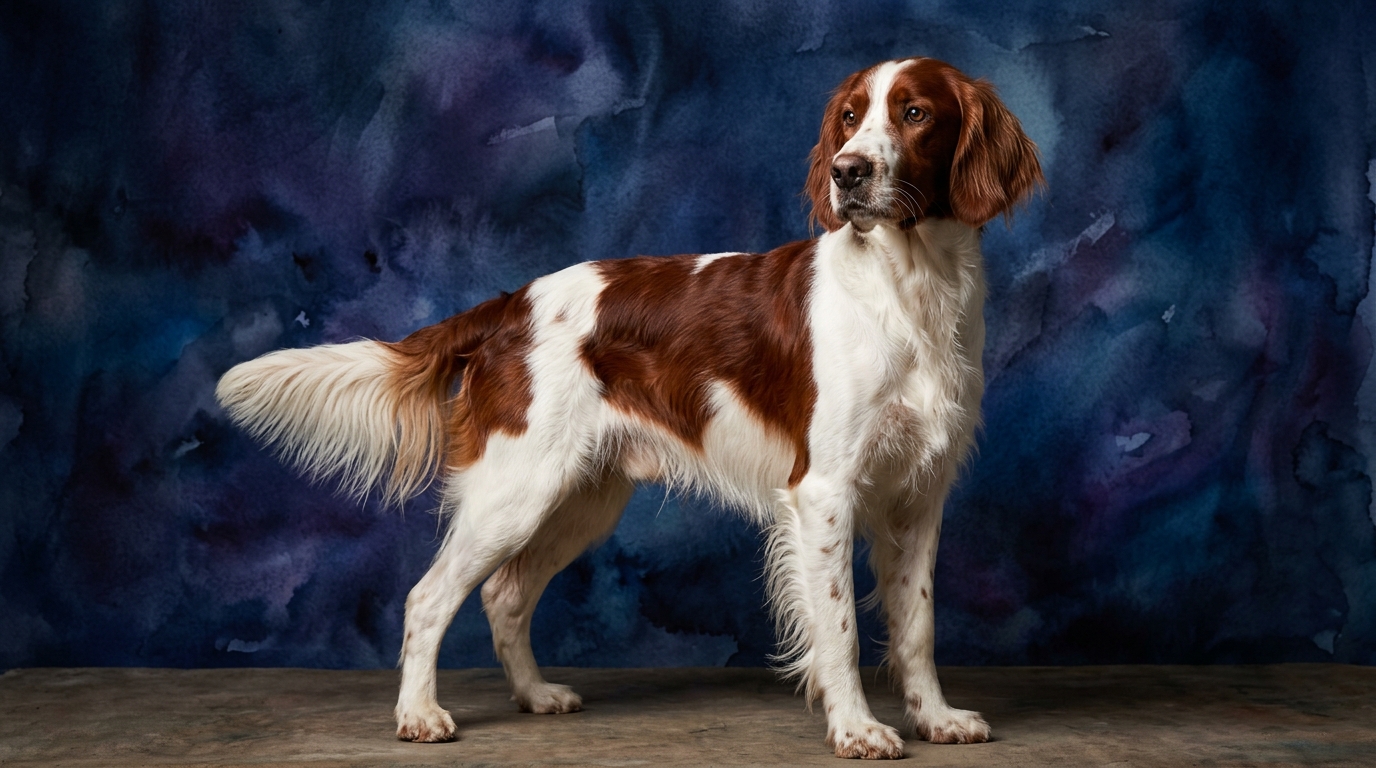

Side-by-Side IQ Profile: Sporting Dog vs. Scent Hound Minds
At first glance, the identical 3/5 ratings for both the Irish Red and White Setter (IRWS) and the Redbone Coonhound (RBC) might suggest interchangeable cognitive profiles. However, understanding their historical purposes—the IRWS as a cooperative bird dog and the RBC as an independent scent tracker—reveals how these scores manifest uniquely in each breed's daily function and problem-solving approach.
For Problem Solving, both breeds score a 3/5, indicating a moderate capacity to navigate new challenges. The IRWS typically applies this by figuring out how to locate hidden game, navigate dense cover to retrieve, or understand complex handler signals in the field. Their problem-solving is often collaborative, aimed at achieving a goal *with* their human partner. The RBC, conversely, uses its 3/5 problem-solving to unravel intricate scent trails, determine the most efficient path through varied terrain to a treed animal, or overcome physical obstacles independently during a chase. Their challenges are less about human cooperation and more about environmental mastery driven by scent.
Training Speed, also at 3/5 for both, highlights a moderate pace of learning new commands and routines. An IRWS, eager to please and bred for handler responsiveness, will generally pick up basic obedience and field commands with consistent, positive reinforcement. Their learning curve is often geared towards precision and teamwork. The RBC, while capable of learning, frequently finds its powerful instinctive drive for scent work competing with human directives. Training success for a Coonhound often requires making the desired behavior more rewarding than the allure of an interesting smell, which can make their 3/5 speed feel slower in a domestic setting.
Social Intelligence, rated 3/5 for both, also shows divergence. The IRWS typically exhibits a cooperative and amiable nature, readily forming strong bonds with family members and often getting along well with other dogs. Their social awareness extends to reading human cues and adapting their behavior accordingly in a hunting party. The RBC, while generally affectionate with its family and capable of living in a pack, often displays a more independent social dynamic. Their social intelligence is less about strict human-centric cooperation during work and more about maintaining a stable pack hierarchy or focusing intently on their task, sometimes to the exclusion of external social signals.
Instinctive Drive, at 3/5, is a core defining trait for both, yet it powers different functions. The IRWS possesses a strong prey drive, expressed as an unwavering desire to find, point, and retrieve birds, working in close concert with a hunter. This drive is channeled and controlled by training to ensure they don't flush game prematurely. The RBC's 3/5 instinctive drive is an almost overwhelming compulsion to follow a scent trail, often for miles, with immense stamina and single-minded focus. This drive is the engine of their hunting prowess and, if not properly managed, can lead them to 'tune out' everything else.
Finally, Memory, another 3/5, is crucial for both breeds. An IRWS will remember commands, field patterns, the location of fallen birds, and the nuances of their handler's signals. Their memory aids in efficient, repeatable performance in the field. An RBC's memory is primarily dedicated to retaining complex scent information, remembering successful hunting grounds, and recalling the specific characteristics of various quarry trails. Their memory is highly specialized for their tracking endeavors, allowing them to learn and apply intricate scent patterns over time.
Where the Irish Red and White Setter Excels Cognitively
The Irish Red and White Setter's cognitive strengths lie in its cooperative intelligence and adaptability within a structured working relationship. While their raw IQ scores are similar, the IRWS applies its 3/5 problem-solving and memory in ways that prioritize teamwork. They excel at understanding complex sequences of commands and adapting their hunting strategy based on subtle handler cues, demonstrating a nuanced form of field intelligence. This breed's 3/5 social intelligence is often geared towards forming a strong, responsive partnership, making them particularly adept at activities requiring synchronized effort, such as advanced obedience or agility, where they need to process and react quickly to human instruction. Their memory allows them to recall precise locations and handler expectations, contributing to a fluid working dynamic.
Where the Redbone Coonhound Excels Cognitively
The Redbone Coonhound truly shines in its independent, scent-driven cognitive prowess. Their 3/5 problem-solving is exceptionally applied to navigating intricate, challenging environments solely based on olfactory information, often over long distances and varied terrain. This isn't about solving problems *with* a human, but *for* a human, by independently pursuing a scent to its conclusion. Their 3/5 instinctive drive, coupled with their specialized memory, allows them to discriminate between myriad scents, follow a specific trail with relentless determination, and recall past successes or failures in particular areas. Their intelligence is deeply ingrained in their ability to persevere and make tactical decisions in the chase, demonstrating a unique form of environmental and sensory problem-solving that few breeds can match.
Training Dynamics: Biddability vs. Instinct
When it comes to ease of training, the behavioral differences between these two breeds become quite pronounced, despite their identical 3/5 training speed rating. The Irish Red and White Setter, with its sporting dog heritage, generally presents as more biddable and eager to please its handler. Their 3/5 training speed translates into a willingness to engage in learning sessions and a responsiveness to positive reinforcement, especially when the training involves working collaboratively towards a goal. They tend to maintain focus on the handler and are motivated by praise, treats, and the opportunity to work. This makes them generally more straightforward to teach foundational obedience and more advanced tasks, provided consistency is maintained.
The Redbone Coonhound, conversely, often presents a greater training challenge due to its potent, all-consuming scent drive. While they possess a 3/5 training speed, their innate instinct to track can frequently override their desire to comply with human commands. A captivating scent can render a Coonhound 'deaf' to calls or cues, making recall particularly difficult in an open environment. Training an RBC requires immense patience, creativity, and a deep understanding of their hound nature. Owners must work to make training sessions more engaging and rewarding than the allure of an interesting smell, often incorporating scent work into their training to satisfy this powerful drive. Their learning is often slower in contexts that don't directly align with their primary instinct, demanding a different approach to motivation and focus.
Lifestyle Match: Active Engagement vs. Relentless Pursuit
Choosing between an Irish Red and White Setter and a Redbone Coonhound also depends heavily on an owner's lifestyle and how they envision integrating a dog into their daily routine. Both breeds are undeniably active, but the *nature* of their activity differs significantly, reflecting their cognitive application.
The Irish Red and White Setter is an excellent match for active owners who enjoy cooperative outdoor activities. Their 3/5 instinctive drive for field work means they thrive on regular, vigorous exercise that engages both their body and mind. This includes long hikes, trail running, field trials, agility, or even competitive obedience. They enjoy being active *with* their people and require mental stimulation through training and tasks that leverage their cooperative intelligence. Owners who can provide a consistent routine, plenty of outdoor adventures, and opportunities for mental engagement will find an IRWS a joyful and devoted companion. While they can be calm indoors after sufficient exercise, they are not suited for truly relaxed, sedentary owners who cannot commit to their exercise needs.
The Redbone Coonhound demands an even more specific type of active owner, particularly those who understand and can cater to their relentless pursuit drive. Their 3/5 instinctive drive dictates a need for extensive physical activity, ideally involving opportunities for scent work. This could mean participation in tracking sports, consistent long walks or runs in securely fenced areas, or even supervised off-leash time in very safe, contained environments where their scent drive won't lead them astray. While they can be remarkably mellow and affectionate indoors, becoming 'couch potatoes' after their needs are met, achieving that state requires significant effort from the owner. A 'relaxed owner' in the traditional sense, who prefers short strolls and minimal engagement, would likely find the Coonhound's instinctual needs overwhelming, leading to frustrated behaviors like baying, destructive chewing, or attempting to escape to follow a scent. Their cognitive strengths are tied to their work, and denying them that outlet is a disservice to their nature.
The Verdict
Choose an Irish Red and White Setter if you seek a cooperative, handler-focused companion for shared outdoor adventures and enjoy engaging in structured training and activities that leverage their biddable nature.
Opt for a Redbone Coonhound if you are a highly active owner prepared to manage and channel a powerful, independent scent drive, appreciating their unique intelligence for tracking and their affectionate, laid-back demeanor once their intense exercise needs are met.
🧠 Find Your Pet's IQ Score
Our Pet IQ Lab assessment covers 25+ tests across 5 cognitive dimensions — personalized to your breed.
Take the Full IQ Test →Frequently Asked Questions
Do Irish Red and White Setters make good family dogs?
Yes, Irish Red and White Setters generally have a gentle and amiable temperament, making them suitable for families. They are typically good with children and other pets, provided they receive proper socialization and sufficient exercise to manage their energy levels.
Are Redbone Coonhounds difficult to train?
Redbone Coonhounds are not inherently difficult to train, but their strong, independent scent drive can make them challenging. Owners need immense patience, consistency, and creative motivation to hold their attention against the allure of a scent, especially for recall and off-leash reliability.
Which breed requires more exercise?
Both breeds require significant exercise, but the Redbone Coonhound typically demands a more intense and specific type of activity. While the Irish Red and White Setter thrives on vigorous, cooperative exercise, the Coonhound needs extensive opportunities for scent work and long, sustained physical output to satisfy its deep-seated tracking instincts.