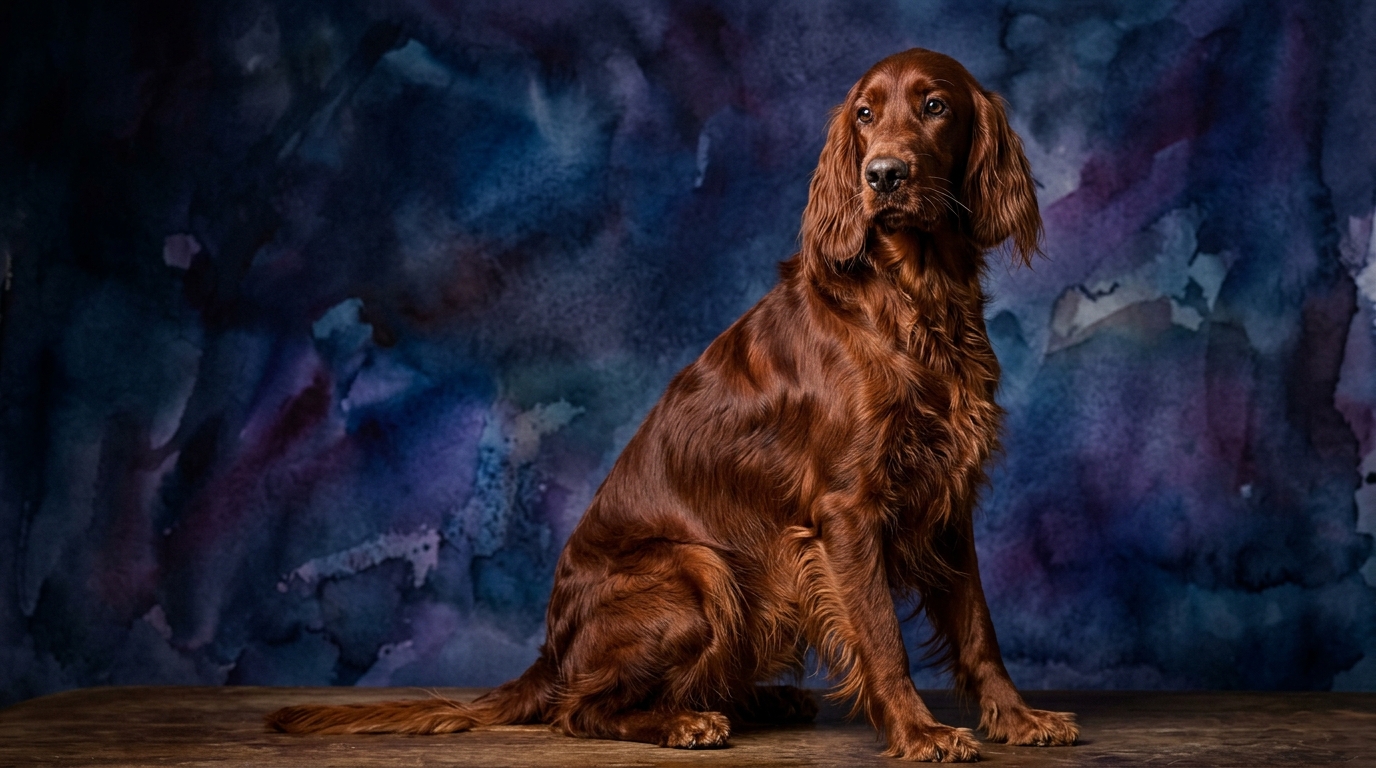
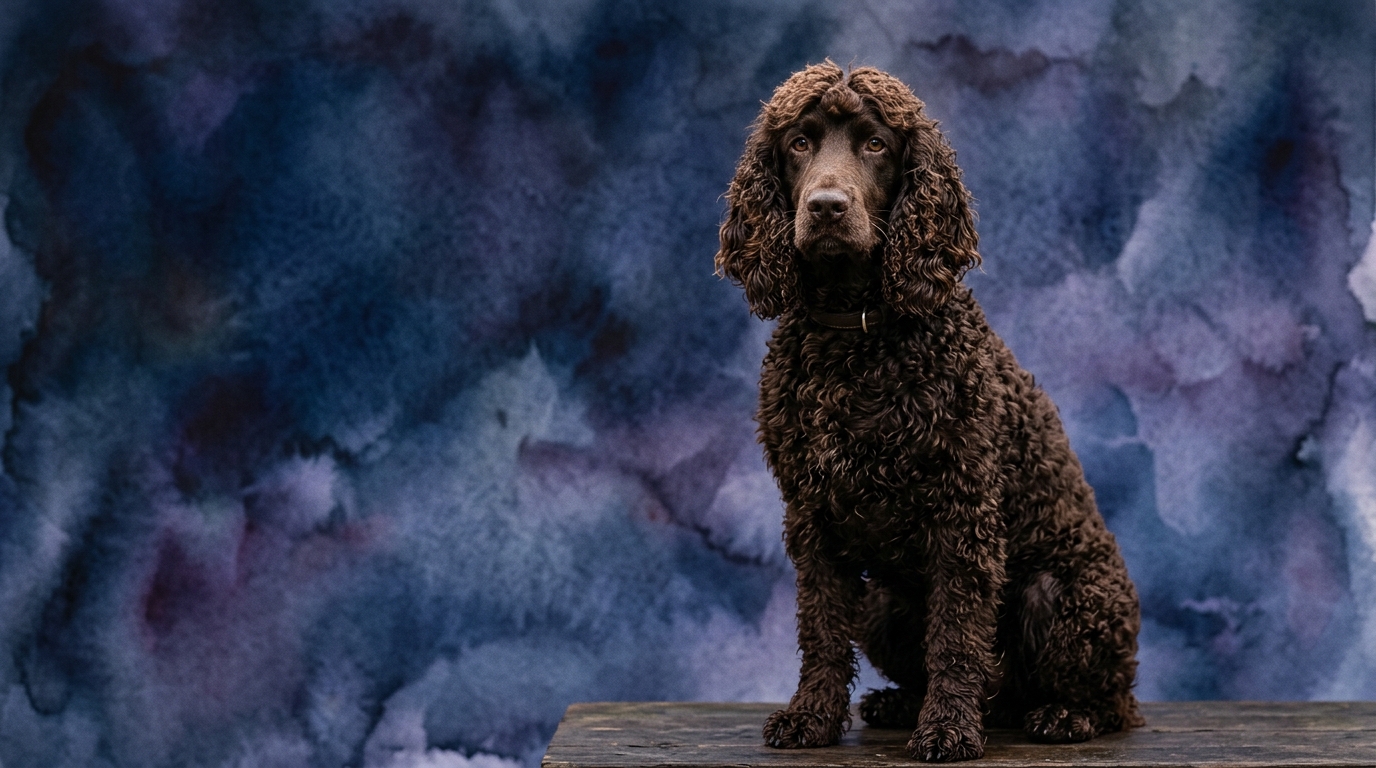
Side-by-Side IQ Profile
**Problem Solving (4/5 for both):** For the Irish Setter, this manifests as an exceptional ability to independently track complex scent trails over vast distances, strategizing the most efficient path to locate game. Their problem-solving is often self-directed, requiring minimal human intervention once a task is initiated. The Irish Water Spaniel, with the same score, applies its problem-solving prowess to navigating challenging aquatic environments, figuring out optimal routes through dense reeds or strong currents to retrieve a bird, often under direct instruction from a handler.
**Training Speed (4/5 for both):** Both breeds demonstrate a rapid capacity to grasp new commands and routines. The Irish Setter picks up new tasks swiftly, but its independent streak, honed for ranging far from a handler, can sometimes mean a command is understood but not immediately prioritized over an enticing scent. The Irish Water Spaniel also learns quickly, often displaying an eagerness to please that translates into enthusiastic participation during training sessions, making their quick learning highly observable.
**Social Intelligence (3/5 for both):** The Irish Setter's social intelligence is often directed towards its human family, forming strong, affectionate bonds, and it can be quite sensitive to the handler's mood, responding with empathy. However, their focus during hunting often overrides social cues from other dogs. The Irish Water Spaniel, with its "clownish" reputation, uses its social intelligence to interact playfully and engagingly with its human companions, often making eye contact and using body language to solicit attention or initiate games.
**Instinctive Drive (3/5 for both):** The Irish Setter's instinctive drive is primarily focused on scent detection and pointing, with a strong urge to range and cover ground. This drive is powerful and deeply ingrained, making them relentless in their pursuit of game. The Irish Water Spaniel's instinctive drive is centered on retrieving, particularly from water, displaying a powerful natural inclination to plunge into water and bring back objects, a drive that can be channeled effectively in various working scenarios.
**Memory (4/5 for both):** An Irish Setter's superior memory is crucial for recalling specific field locations, remembering complex scent patterns, and retaining learned hunting strategies over long periods. This allows them to return to productive areas or recall the handler's usual movements. The Irish Water Spaniel's memory excels at recalling specific retrieve locations, remembering sequences of commands, and retaining knowledge of various training exercises, which is vital for complex water retrieves and obedience work.
Where Irish Setter Wins Cognitively
The Irish Setter particularly shines in cognitive tasks requiring sustained, independent focus and decision-making over expansive areas. Their 4/5 problem-solving and memory are specifically adapted for tracking and locating game without constant handler direction, demonstrating a unique ability to process a vast array of sensory information – particularly scent – to formulate and execute intricate search patterns. This self-reliance in navigating complex, ever-changing environments, often with minimal immediate feedback, highlights a particular cognitive strength in autonomous fieldwork.
Where Irish Water Spaniel Wins Cognitively
Despite the identical scores, the Irish Water Spaniel's cognitive strengths manifest powerfully in tasks demanding precise cooperation and focused application of skills under direct instruction. Their higher Coren rank of #24, compared to the Setter's #35, suggests an inherent cognitive bias towards "working and obedience intelligence." This means their 4/5 problem-solving and training speed are more readily channeled into understanding and executing complex, multi-step commands, especially in retrieving scenarios where quick, accurate responses to handler cues are paramount. Their intelligence is acutely geared towards collaborative task execution.
Which is Easier to Train and Why
While both breeds boast a 4/5 Training Speed, the Irish Water Spaniel generally presents as the easier breed to train, particularly for obedience and competitive dog sports. This distinction stems partly from their Coren rank (#24 for the Spaniel vs. #35 for the Setter), which reflects a greater historical amenability to formal obedience work. The Irish Setter, with its strong independent hunting drive (3/5 Instinctive Drive), can be more easily distracted by environmental stimuli like scents, requiring a handler to work harder to maintain focus, even if it understands commands quickly. The Irish Water Spaniel, conversely, often possesses a more intense desire to work *with* its handler and a less easily diverted focus during tasks, making them appear more biddable and responsive in a structured training setting. Their social intelligence (3/5) often translates into a keen awareness of handler expectations and a willingness to engage directly to please.
Which Suits Active Owners vs. Relaxed Owners
Neither the Irish Setter nor the Irish Water Spaniel is truly suited for a "relaxed" owner in the traditional sense, as both are sporting breeds with substantial energy needs. However, the *type* of activity they thrive on differs. Irish Setters are well-suited for active owners who enjoy long-distance running, extensive hikes, or activities that allow for independent exploration and scent work, such as field trials or endurance sports. They can be content to lounge after significant exercise, but their need for outdoor activity is profound. Irish Water Spaniels are ideal for active owners who enjoy interactive, goal-oriented activities like swimming, dock diving, agility, or advanced obedience. Their desire for engagement means they prefer activities that involve direct partnership and problem-solving with their human, making them less suited for owners who prefer their dog to entertain itself for long stretches.
The Verdict
Choose an Irish Setter if you value an independent, elegant companion for long, free-ranging outdoor adventures and appreciate a dog that uses its keen senses for autonomous exploration.
Opt for an Irish Water Spaniel if you seek a highly engaged, collaborative partner for water-based activities, advanced obedience, and dog sports, valuing a strong desire to work directly with you.
🧠 Find Your Pet's IQ Score
Our Pet IQ Lab assessment covers 25+ tests across 5 cognitive dimensions — personalized to your breed.
Take the Full IQ Test →Frequently Asked Questions
How can two breeds have identical IQ scores but different Coren ranks?
The Cosmic Pet IQ Lab scores measure underlying cognitive capacities, while Coren's rank reflects "working and obedience intelligence," which includes biddability and focus in structured training. The Irish Water Spaniel's higher Coren rank suggests it's generally more focused and eager to please in obedience settings, even if its raw cognitive abilities are similar to the Setter's.
Does the Irish Setter's "Instinctive Drive" make them harder to train off-leash?
Yes, their strong instinctive drive (3/5) for scent tracking and ranging means an Irish Setter can be highly motivated by environmental scents, potentially making off-leash reliability more challenging without consistent, dedicated training focused on recall and distraction management.
Are Irish Water Spaniels prone to separation anxiety due to their collaborative nature?
While their strong desire to work and engage with their handler (part of their social intelligence and collaborative nature) fosters deep bonds, it doesn't automatically equate to separation anxiety. However, like any dog with a strong attachment, insufficient mental and physical stimulation or improper training can lead to distress when left alone.