
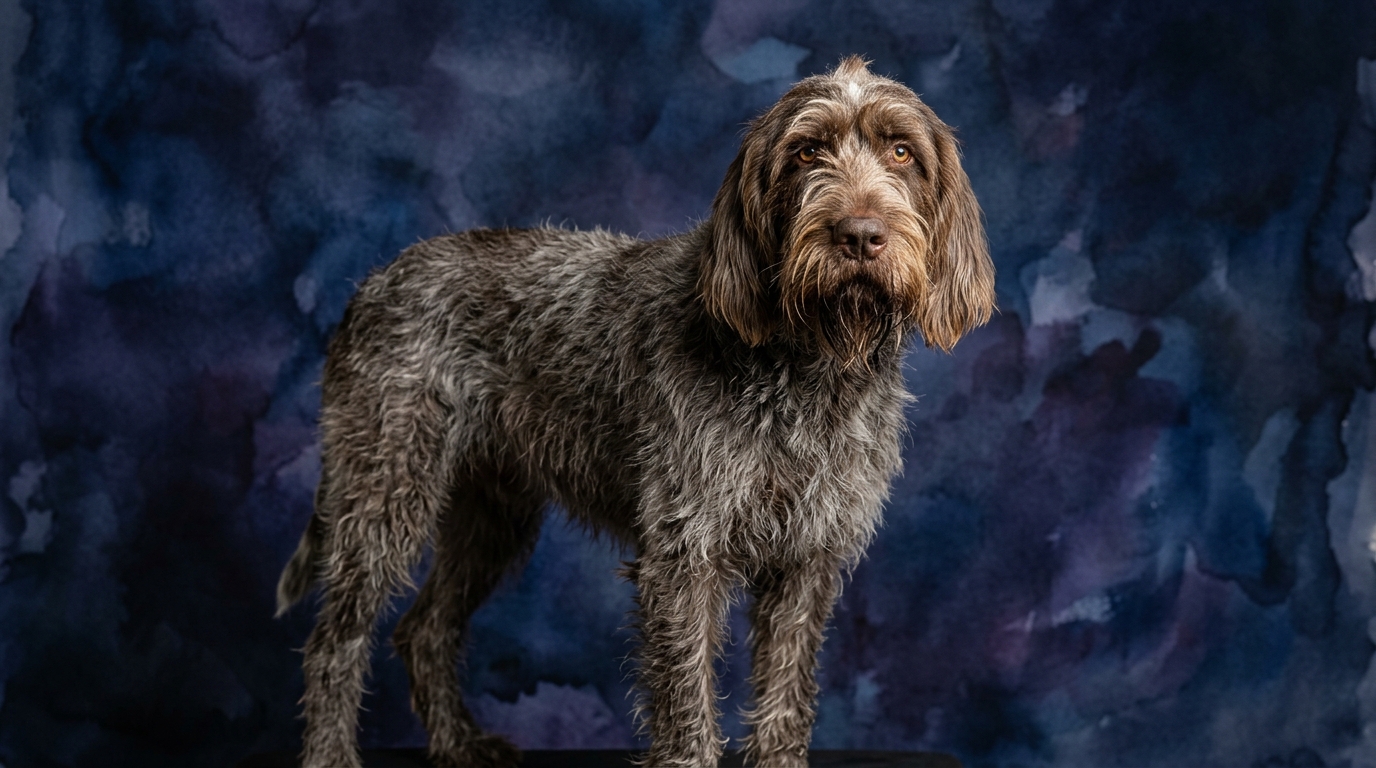
Side-by-Side Cognitive Profile: Irish Setter vs. Spinone Italiano
The Cosmic Pet Pet IQ Lab assesses canine intelligence across five key dimensions, providing a granular view of each breed's mental architecture. For the Irish Setter, its profile highlights a quick-thinking and highly retentive mind, while the Spinone Italiano’s scores suggest a more deliberate and steady cognitive style.
Irish Setter (Sporting Group): Problem Solving 4/5, Training Speed 4/5, Social Intelligence 3/5, Instinctive Drive 3/5, Memory 4/5. This profile indicates a dog with a strong capacity for independent thought and rapid learning. They are adept at figuring out novel situations and quickly internalizing new commands and routines. Their memory is robust, contributing to excellent retention of learned behaviors and experiences. While possessing a moderate instinctive drive for their heritage work, their social intelligence allows for solid family integration.
Spinone Italiano (Sporting Group): Problem Solving 3/5, Training Speed 3/5, Social Intelligence 3/5, Instinctive Drive 3/5, Memory 3/5. The Spinone’s consistent scores across the board point to a balanced and thoughtful cognitive approach. They tackle problems with a more deliberate pace, taking time to process information before acting. Their learning is reliable but typically requires more repetitions. Socially, they are amiable and capable of forming strong bonds, and their instinctive drive, though present, is expressed with calm determination. Their memory is reliable, benefiting from consistent reinforcement.
Where the Irish Setter Excels Cognitively
The Irish Setter clearly distinguishes itself in areas demanding quick mental processing and retention. Its Problem Solving score of 4/5 indicates a dog that can independently navigate complex situations, adapting rapidly to new environmental stimuli or challenges. For instance, an Irish Setter might more quickly strategize how to retrieve a toy stuck under furniture or learn the sequence of steps required to open a puzzle feeder. This isn't just about speed, but about an innate capacity for cognitive flexibility and innovative thinking.
Furthermore, the Setter's Training Speed (4/5) signifies a breed that grasps new commands with impressive alacrity. Owners often report that Irish Setters can master a new trick or obedience cue in fewer sessions than many other breeds, provided the training is engaging and positive. This rapid acquisition of knowledge is complemented by their strong Memory (4/5), meaning once a lesson is learned, it tends to stick. This combination makes them excellent candidates for advanced obedience, agility, or competitive field work where recalling intricate sequences of commands is crucial. Their ability to remember specific locations, scent patterns, and past training cues over extended periods provides a distinct advantage in performance-based roles.
Cognitive Strengths of the Spinone Italiano
While the Spinone Italiano's scores might appear lower in certain cognitive dimensions, their strengths lie in a different quality: considered deliberation and robust temperament. Their Problem Solving score of 3/5, while not indicating lightning-fast reflexes, suggests a dog that approaches challenges with a thoughtful, persistent manner. Instead of quick, trial-and-error attempts, a Spinone might spend more time observing and processing before acting, leading to solutions that, while slower to arrive, are often well-executed. This patient approach can be a significant advantage in tasks requiring sustained focus rather than immediate ingenuity, where a hasty decision might lead to errors.
The Spinone's consistent 3/5 across Social Intelligence, Instinctive Drive, and Memory, coupled with its deliberate Problem Solving, paints a picture of a balanced and steady cognitive profile. They are not prone to impulsive decisions; rather, their cognitive processes lean towards reliability and consistency. Their social intelligence, matching the Irish Setter's, allows for equally strong bonds and understanding of family dynamics, but perhaps with a slightly more reserved or observant demeanor. Their instinctive drive, while present, is typically expressed with a calm determination rather than high-octane energy, making them persistent hunters without being overly frantic. This steady mental approach means they are less likely to become overstimulated or frustrated by complex tasks, preferring a methodical progression which, for the right owner, can be a profound “win.”
Training Dynamics: Which Breed is Easier to Train?
Based on their respective IQ profiles, the Irish Setter generally presents as the easier breed to train, primarily due to its superior Training Speed (4/5) and Problem Solving (4/5). An Irish Setter’s quick mental processing allows them to make connections between commands and desired actions more rapidly. They are adept at understanding what is being asked of them and can generalize learned behaviors to new contexts more efficiently. For example, teaching an Irish Setter a multi-step retrieve, where they must locate an item, pick it up, and bring it back, would likely see faster progress due to their ability to quickly grasp each component and string them together.
The Spinone Italiano, with its 3/5 in Training Speed and Problem Solving, requires a more patient and consistent approach. They learn reliably, but typically need more repetitions and a slower progression through new concepts. While they will eventually master tasks, their learning curve is generally flatter. For instance, teaching a Spinone to “stay” with increasing duration or distance might involve more incremental steps and consistent reinforcement over a longer period. Their thoughtful nature means they might take more time to process and internalize commands, but once learned, these behaviors are usually well-established. Therefore, for owners seeking quicker results and a dog that thrives on rapid learning, the Irish Setter holds an advantage.
Lifestyle Match: Active vs. Relaxed Owners
The choice between an Irish Setter and a Spinone Italiano largely hinges on an owner's lifestyle and their capacity for mental and physical engagement. The Irish Setter, with its higher Problem Solving and Training Speed, combined with a robust (though moderate) Instinctive Drive (3/5), aligns well with active owners who enjoy structured activities and mental challenges. These dogs thrive when given opportunities to use their quick minds in activities like agility, advanced obedience, scent work, or competitive field trials. Their rapid learning makes them excellent partners for owners who want to continuously teach new skills and participate in dog sports. While their instinctive drive is not extreme, it provides ample motivation for outdoor adventures and requires consistent engagement to prevent boredom. Owners who appreciate a mentally agile dog that enjoys learning and working alongside them will find the Irish Setter a rewarding companion.
Conversely, the Spinone Italiano, with its more deliberate cognitive style and consistent 3/5 across several dimensions, might appeal more to owners who value a steady, calm, and less frenetic companion. While still possessing a sporting dog's drive, its expression is often more measured. Relaxed owners, or those who prefer a more methodical pace in training and daily life, may find the Spinone's thoughtful approach more compatible. They still require regular exercise and mental stimulation, but they are less likely to become restless if not constantly challenged with novel, high-intensity tasks. Their amiable social intelligence and patient demeanor make them excellent family dogs for those who appreciate a loyal, stable presence that enjoys consistent routines and less pressure for rapid-fire learning or complex problem-solving.
The Verdict
Opt for an Irish Setter if you are an owner who relishes engaging in dynamic training, advanced dog sports, or enjoys a companion that quickly grasps new concepts and retains information readily. Their mental agility and faster learning curve make them ideal for those who want a partner for continuous skill development and quick problem-solving in various activities.
Select a Spinone Italiano if you appreciate a dog with a thoughtful, steady cognitive approach, valuing consistency and patience in training over rapid progress, and prefer a calm, reliable companion for consistent routines and less frenetic mental demands. Their balanced temperament and methodical learning style suit owners who enjoy a more deliberate pace in life and training.
🧠 Find Your Pet's IQ Score
Our Pet IQ Lab assessment covers 25+ tests across 5 cognitive dimensions — personalized to your breed.
Take the Full IQ Test →Frequently Asked Questions
Are Irish Setters difficult to live with due to their intelligence?
Irish Setters possess a strong problem-solving capacity and learn quickly, which means they thrive on mental engagement. Without sufficient stimulation, they can become bored and channel their cognitive energy into less desirable behaviors, but they are not inherently difficult; rather, they require consistent, stimulating interaction to prevent this.
Does a Spinone Italiano's lower problem-solving score mean it isn't capable of complex tasks?
Not at all. A 3/5 in problem-solving indicates a thoughtful, deliberate approach rather than a lack of capability. Spinone Italianos can certainly perform complex tasks, but they typically require more time to process information and may benefit from tasks that encourage sustained focus and methodical progression rather than rapid improvisation.
How do their social intelligence scores impact their suitability as family pets?
Both breeds score 3/5 in social intelligence, indicating a solid capacity to interact positively with humans and other animals, forming strong bonds within a family unit. They are generally amiable and capable of understanding social cues, making both suitable as companions, though individual personalities and early socialization will always influence their specific demeanor.