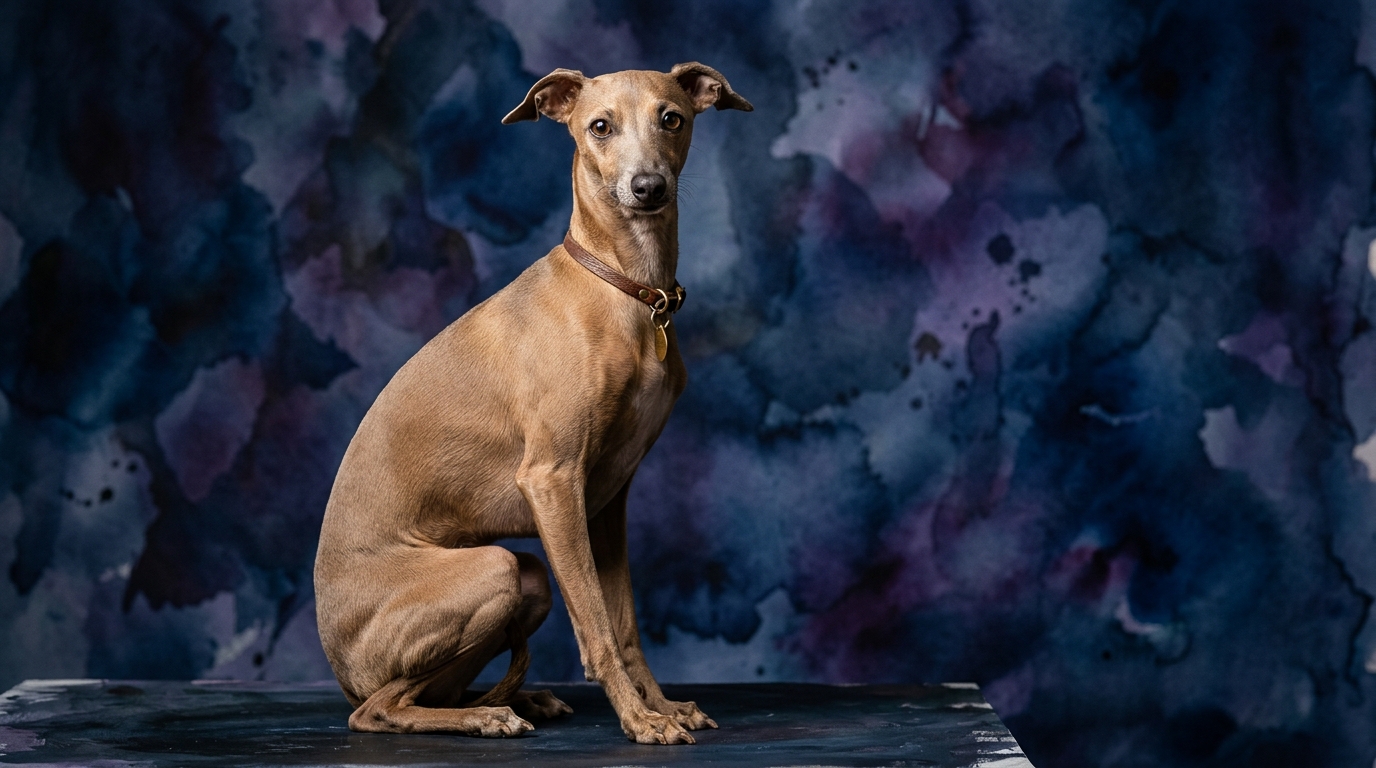

Side-by-Side IQ Profile: Italian Greyhound vs. English Toy Spaniel
**Italian Greyhound (IG) IQ Profile:** The Italian Greyhound, a sighthound of delicate grace, approaches the world with a blend of independent thought and deep sensitivity. Their **Problem Solving (3/5)** isn't about complex puzzles but rather about efficiently navigating their environment for comfort and opportunity, such as figuring out how to reach a sunbeam on a high perch or subtly signaling for attention. **Training Speed (3/5)** is moderate; IGs grasp commands effectively when motivated by positive reinforcement and engaging methods, but their focus can be fleeting if they perceive a task as uninteresting or overly demanding. Their **Social Intelligence (3/5)** is refined, forming profound bonds with their inner circle while often being reserved with strangers, adept at reading human emotions and communicating their needs through subtle cues. The **Instinctive Drive (3/5)** of an IG is rooted in their sighthound heritage, manifesting as a strong visual prey drive for small, fast-moving objects, coupled with an innate desire for warmth and burrowing. Finally, their **Memory (3/5)** is solid for routines, learned commands, and both positive and negative experiences, contributing to their consistent daily habits and preferences.
**English Toy Spaniel (ETS) IQ Profile:** The English Toy Spaniel, a quintessential companion breed, processes the world through a lens of affection and gentle engagement. Their **Problem Solving (3/5)** often revolves around achieving proximity and comfort with their human companions, such as navigating obstacles to reach a lap or gently persisting for attention. **Training Speed (3/5)** is also moderate; ETSs are generally eager to please, responding well to gentle, consistent positive reinforcement for basic obedience and house manners, though complex tasks may require more repetition. Their **Social Intelligence (3/5)** is a standout, allowing them to intuitively understand human emotions and social cues, often adapting well to various social dynamics and seeking to diffuse tension with their sweet demeanor. The **Instinctive Drive (3/5)** for an ETS is primarily geared towards companionship and comfort, with a strong desire to be close to their family, seek warmth, and engage in gentle play, rather than a strong prey drive. Their **Memory (3/5)** is reliable for routines, beloved people, and the location of their favorite resting spots, effectively recalling learned commands and reinforcing their bond with their family through consistent positive interactions.
Where the Italian Greyhound Wins Cognitively
While both breeds share identical IQ scores, the Italian Greyhound's sighthound heritage lends a particular nuance to their cognitive strengths. Their problem-solving often involves a more independent assessment of physical space and opportunities, such as finding creative ways to access elevated surfaces for sunbathing or navigating complex environments with agile efficiency. This spatial awareness and quick, independent decision-making in navigating their physical world, driven by their instinctive curiosity, gives them a distinct edge in certain environmental challenges. Their memory for specific locations and routes, coupled with their sharp visual acuity, likely contributes to this unique cognitive approach to their surroundings.
Where the English Toy Spaniel Wins Cognitively
The English Toy Spaniel's cognitive strengths shine in their nuanced social engagement and ability to foster deep emotional connections. Their social intelligence often manifests as an exceptional ability to read subtle human emotional cues and adjust their behavior accordingly, offering comfort or seeking gentle interaction with remarkable sensitivity. This profound attunement to human companionship means they are often quicker to understand unspoken desires for affection or quiet presence, making them masters of emotional support and harmonious household integration. Their willingness to engage in sustained interaction for positive feedback also makes their training speed more consistent, particularly in obedience that strengthens their bond with their owner.
Which is Easier to Train and Why?
Despite both breeds scoring 3/5 in training speed, the English Toy Spaniel is generally perceived as easier to train for the average owner due to its inherent desire to please and less independent nature. An ETS thrives on positive reinforcement and will often repeat behaviors that earn them praise and affection, making them highly motivated students for basic obedience and house manners. Their focus is typically directed towards their human, making them more consistently receptive to instruction and eager to participate in training sessions.
The Italian Greyhound, conversely, possesses a more independent and sometimes sensitive temperament. While they are certainly capable of learning, their training requires exceptional patience, consistency, and a deep understanding of their sighthound instincts. They can become easily bored or distracted if training isn't engaging, and will often choose comfort or independent exploration over compliance if not properly motivated. Successful IG training often means making the task seem like their idea or intrinsically rewarding, requiring a more nuanced and creative approach from the trainer.
Which Suits Active Owners vs. Relaxed Owners?
For active owners, the Italian Greyhound often proves to be a more suitable companion. Despite their dainty appearance, IGs possess surprising bursts of speed and enjoy opportunities to run and chase in secure, enclosed spaces. Their need for regular, albeit short, bursts of vigorous exercise, combined with mental stimulation through exploring new environments, aligns well with owners who enjoy daily walks, agility, or simply having a dog that can keep up on a brisk stroll. Their love for warmth means they are also content to curl up after exercise, offering a balanced energy profile.
Relaxed owners will find a wonderful match in the English Toy Spaniel. These dogs are content with gentle daily walks and thrive on companionship within the home environment. Their lower energy levels mean they are perfectly happy to spend much of their day napping on a soft bed or cuddling on a lap. Their primary need is for consistent human presence and affection, making them ideal for individuals or families seeking a devoted, calm, and affectionate indoor companion who doesn't demand extensive outdoor adventures.
The Verdict
Choose the Italian Greyhound if you value a graceful, independent companion who thrives on bursts of speed and enjoys navigating their world with sighthound curiosity, and you're prepared to engage their sensitive nature with consistent, positive training.
Opt for the English Toy Spaniel if you seek a devoted, gentle lap companion who excels at social connection and offers unwavering affection, and you appreciate a dog whose greatest joy is simply being by your side.
🧠 Find Your Pet's IQ Score
Our Pet IQ Lab assessment covers 25+ tests across 5 cognitive dimensions — personalized to your breed.
Take the Full IQ Test →Frequently Asked Questions
Do Italian Greyhounds learn tricks quickly?
Italian Greyhounds can learn tricks at a moderate pace (3/5 training speed), especially if the training is fun, engaging, and uses positive reinforcement. Their sensitive nature means they respond best to gentle methods and can excel when tasks are presented as a game rather than a chore.
Are English Toy Spaniels good with children and other pets?
English Toy Spaniels (3/5 social intelligence) are generally excellent with gentle children and other pets, thanks to their sweet and adaptable nature. Their calm demeanor and desire for companionship make them tolerant and affectionate family members, thriving in a harmonious household.
How do their 'instinctive drives' differ given they both score 3/5?
While both score 3/5, the Italian Greyhound's instinctive drive is primarily rooted in visual prey pursuit and comfort-seeking, leading to bursts of speed and burrowing. The English Toy Spaniel's drive, in contrast, is more focused on seeking close human companionship and comfort, manifesting as a strong desire for lap-sitting and affectionate interaction.