Side-by-Side Cognitive Profile: Miniature American Shepherd vs. Brittany
The Cosmic Pet Pet IQ Lab employs a five-dimensional framework to assess canine intelligence, moving beyond simplistic notions of 'smartness' to provide a detailed understanding of a breed's cognitive strengths. Let's apply this lens to the Miniature American Shepherd and the Brittany, examining their problem-solving abilities, training speed, social intelligence, instinctive drives, and memory.
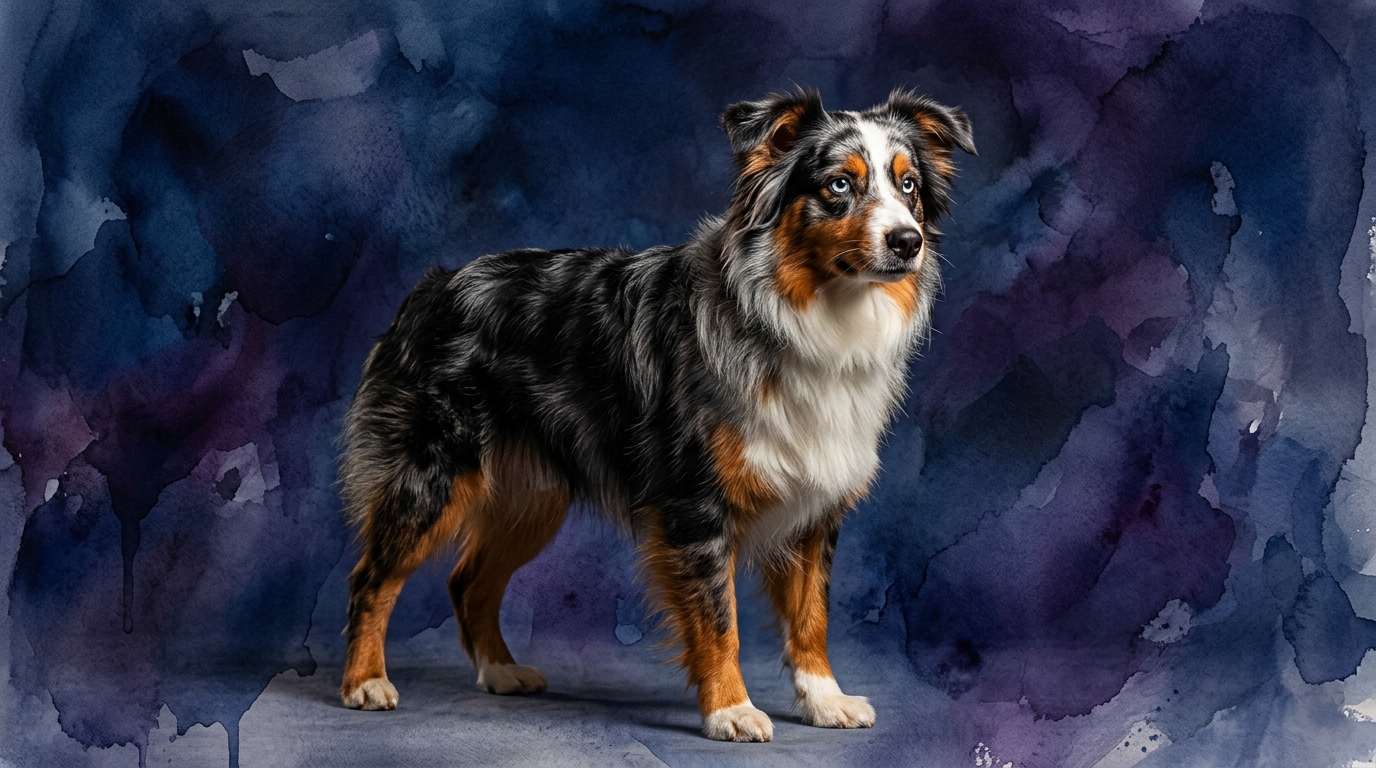
The Miniature American Shepherd (MAS), originating from a herding lineage, presents a balanced cognitive profile. Their Problem Solving is rated 3/5, indicating a capacity for navigating moderate challenges, often by applying learned solutions rather than devising entirely novel ones. Training Speed for the MAS also sits at 3/5, suggesting they grasp new commands steadily, requiring consistent repetition to embed behaviors firmly. Social Intelligence is 3/5, reflecting an awareness of human cues and family dynamics, though they tend to be most attuned to their immediate household. Their Instinctive Drive is 3/5, manifesting as a manageable desire to gather or control, a remnant of their herding heritage. Finally, Memory for the MAS is 3/5, allowing them to retain learned behaviors and experiences adequately, though less-frequent commands may benefit from occasional refreshers.
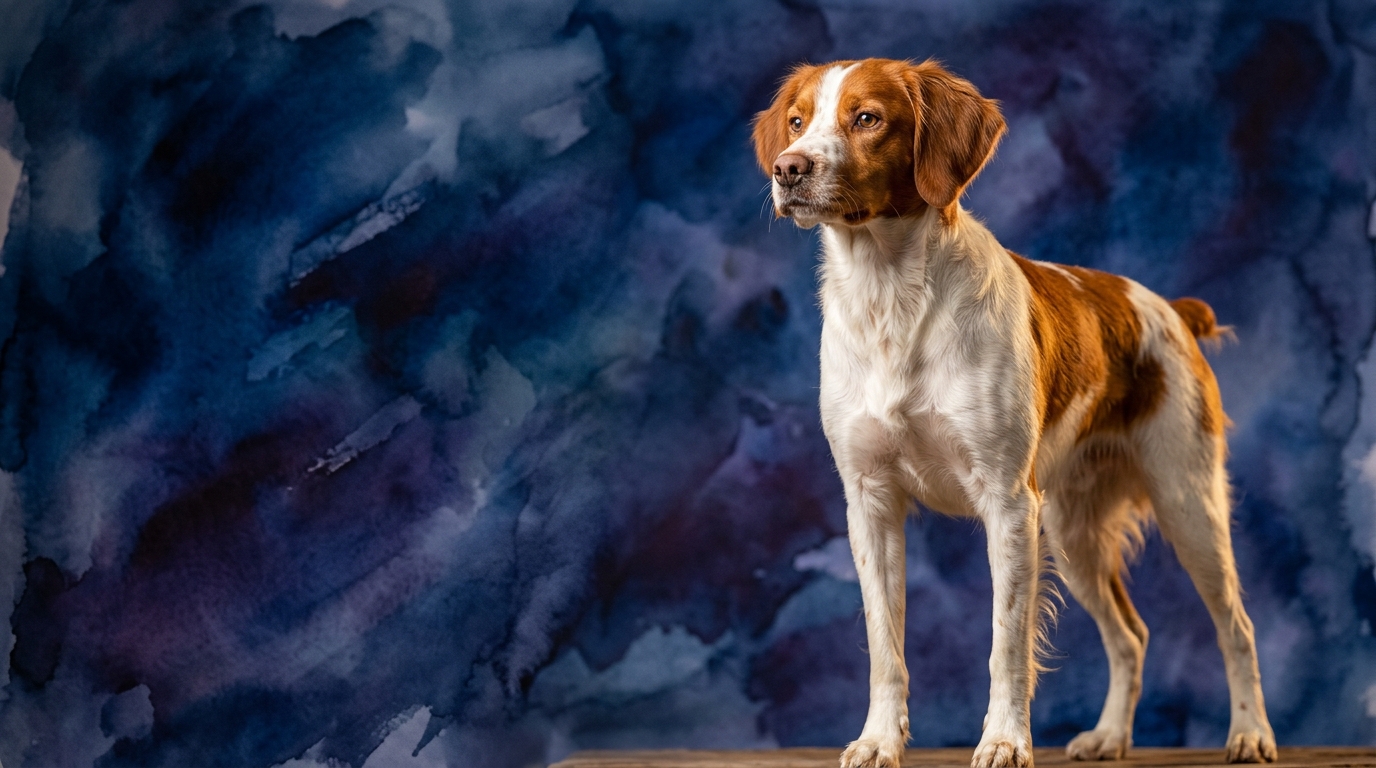
In contrast, the Brittany, a celebrated sporting dog, showcases a profile geared towards dynamic fieldwork. Their Problem Solving skill is rated 4/5, indicating a stronger aptitude for creative solutions and adaptability in complex scenarios. Training Speed for the Brittany is 4/5, meaning they typically acquire new commands and routines with fewer repetitions, often displaying an eagerness to learn. Social Intelligence is 3/5, similar to the MAS, signifying good awareness of their environment and human companions, enjoying interactive play. Their Instinctive Drive is 3/5, primarily expressed as a moderate to strong prey drive and desire to hunt, yet they remain highly biddable. Where the Brittany truly stands out is in Memory, earning a remarkable 5/5, allowing them to retain a vast repertoire of commands, locations, and intricate sequences over extended periods, a crucial trait for a field dog.
Where the Miniature American Shepherd Excels Cognitively
While the Brittany often scores higher in raw cognitive metrics, the Miniature American Shepherd's balanced 3/5 ratings across the board translate into specific cognitive advantages for particular lifestyles. Their moderate problem-solving (3/5) means they are less prone to invent their own 'entertainment' by deconstructing household items or outsmarting containment, provided their foundational needs are met. This can be a benefit for owners who prefer a dog that adheres more predictably to established routines rather than constantly seeking novel mental challenges.
The MAS's social intelligence (3/5), while not outwardly effusive with strangers, fosters a deeply devoted connection within its family unit. This focused social awareness means they are highly attuned to their handler's moods and expectations, making them responsive companions in a structured home environment. Their instinctive drive (3/5) is present enough to provide purpose and engagement through activities like herding games or structured walks, but it is generally easier to manage and channel compared to breeds with more intense, unyielding drives. This moderation across multiple cognitive dimensions results in a dog that is consistently capable, adaptable without being overly demanding, and a reliable partner in a variety of family settings, excelling in steady, predictable engagement.
Where the Brittany Demonstrates Superior Cognitive Prowess
The Brittany's cognitive profile clearly shines in areas crucial for its sporting heritage, offering distinct advantages for owners seeking a highly capable and intelligent partner. Their problem-solving ability (4/5) is a significant win, enabling them to quickly assess and adapt to changing environments, whether navigating complex scent trails in a field or figuring out a new puzzle toy at home. This higher capacity for novel solutions means they thrive on varied and intricate mental challenges, often displaying impressive ingenuity.
The Brittany's exceptional memory (5/5) is arguably their most defining cognitive strength. This allows them to recall a vast array of commands, retrieve locations, and complex patterns with remarkable precision and longevity. For owners involved in dog sports like obedience, agility, or field trials, this superior recall translates into faster learning of intricate sequences and more reliable performance over time. Coupled with their faster training speed (4/5), Brittanys are often quicker to master new skills and retain them, making advanced training a particularly rewarding endeavor. Their Coren rank of #19 further underscores their biddability and capacity for understanding and executing commands effectively, positioning them as highly responsive and intelligent working companions.
Which is Easier to Train and Why?
When considering ease of training, the Brittany generally holds an advantage over the Miniature American Shepherd, primarily due to its faster training speed (4/5) and outstanding memory (5/5). Brittanys typically pick up new commands with fewer repetitions and retain them for longer periods. Their eagerness to please, combined with a strong work ethic inherent in their sporting background, makes them highly biddable students. This means that once a concept is taught, a Brittany is likely to remember it and perform it reliably, even after a break from training.
The Miniature American Shepherd, with a training speed of 3/5 and memory of 3/5, requires a more consistent and patient approach. While certainly trainable, they may need more repetitions to solidify new behaviors and occasional refreshers to maintain proficiency, especially for less frequently used commands. Their herding instinct, though moderate, means they can sometimes be more focused on their environment or perceived 'tasks' than on the trainer, requiring more effort to maintain focus. Thus, for an owner prioritizing rapid learning and long-term retention with less reinforcement, the Brittany presents an easier training experience, while the MAS thrives with an owner who enjoys the process of consistent, routine-based instruction.
Suited for Active Owners vs. Relaxed Owners
Both the Miniature American Shepherd and the Brittany are energetic breeds that require significant physical and mental engagement, making them generally unsuitable for truly 'relaxed' or sedentary owners. However, their cognitive profiles suggest different *types* of activity and owner commitment. The Miniature American Shepherd, with its balanced 3/5 ratings, suits active owners who appreciate structured routines and consistent, moderate engagement. Their problem-solving (3/5) is sufficient for puzzle toys and basic obedience, but they are less likely to become destructive out of sheer boredom if their physical needs (daily walks, playtime) are consistently met. They thrive with owners who enjoy activities like canine sports (agility, obedience) but don't necessarily need the most intensely driven competitor.
The Brittany, with its higher problem-solving (4/5) and exceptional memory (5/5), demands a more dynamic and varied activity regimen. These dogs are ideal for very active owners who can provide extensive mental stimulation alongside vigorous physical exercise. They excel in activities that tap into their natural sporting instincts, such as extensive retrieve games, scent work, field trials, or advanced agility courses where complex sequences need to be remembered and executed. An owner who can offer diverse challenges and opportunities for their Brittany to utilize its keen intellect and athleticism will find an incredibly fulfilled companion, whereas a less engaged owner might find a Brittany inventing its own, potentially undesirable, forms of entertainment due to under-stimulation.
The Verdict
Choose a Miniature American Shepherd if you seek a versatile, moderately driven companion who thrives on routine and consistent, positive reinforcement, and who appreciates a dog with balanced cognitive traits adaptable to various family settings.
Choose a Brittany if you are an active individual or family who can provide extensive mental stimulation, intricate training, and opportunities for your dog to utilize its exceptional memory and problem-solving skills in dynamic, often outdoor, environments.
🧠 Find Your Pet's IQ Score
Our Pet IQ Lab assessment covers 25+ tests across 5 cognitive dimensions — personalized to your breed.
Take the Full IQ Test →Frequently Asked Questions
Are Miniature American Shepherds good family dogs?
Yes, Miniature American Shepherds are generally devoted family dogs, often forming strong bonds with their primary handlers. Their social intelligence of 3/5 means they are attuned to their family's dynamics, but early socialization is crucial for them to be comfortable with strangers and other pets.
Do Brittanys need a lot of exercise?
Absolutely, Brittanys are high-energy sporting dogs that require substantial daily exercise, ideally incorporating mental challenges. Their instinctive drive of 3/5, coupled with their superior memory and problem-solving, means they thrive on activities like scent work, retrieve games, and agility.
Which breed is better for first-time dog owners?
While both breeds require committed owners, the Miniature American Shepherd's more moderate training speed and drive might make it slightly more manageable for a dedicated first-time owner willing to learn. The Brittany's higher cognitive demands and energy levels often benefit from an owner with some prior experience in canine training and engagement.