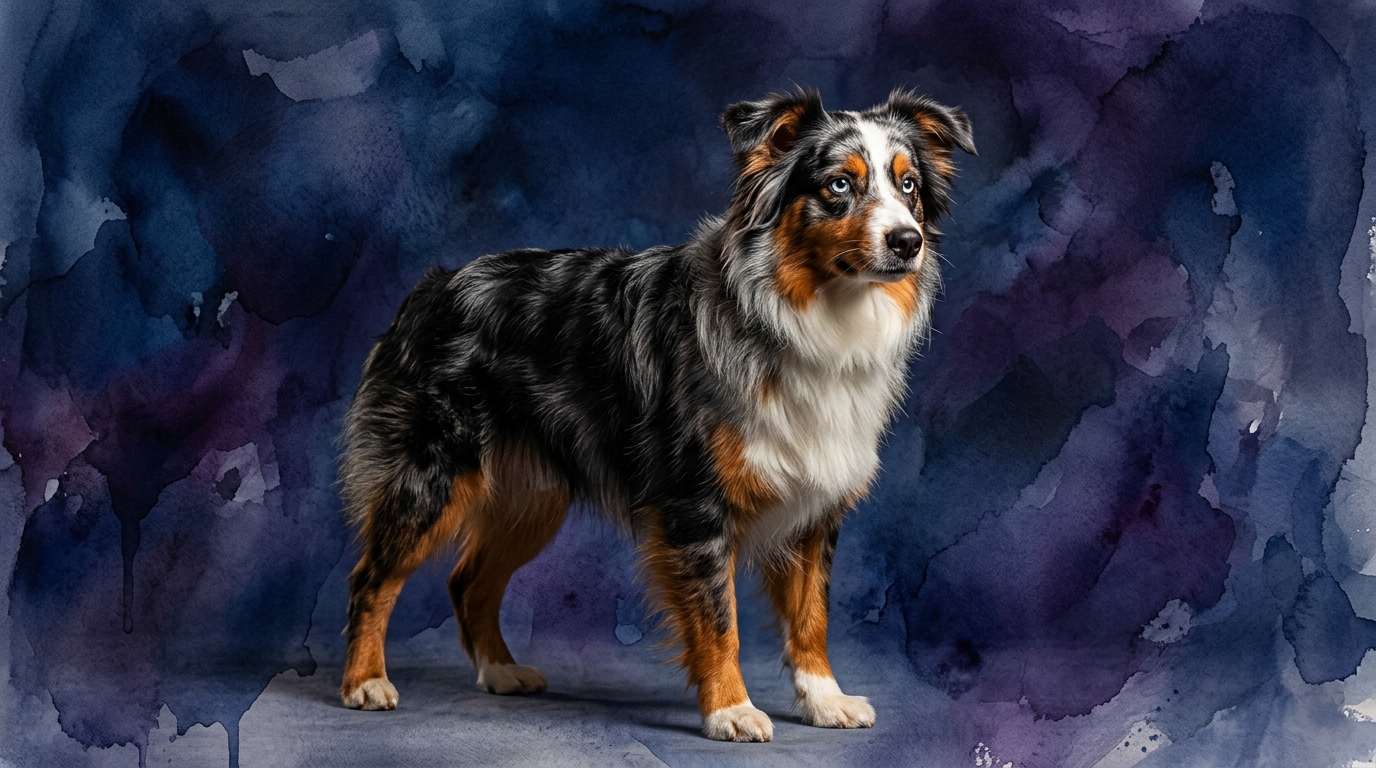
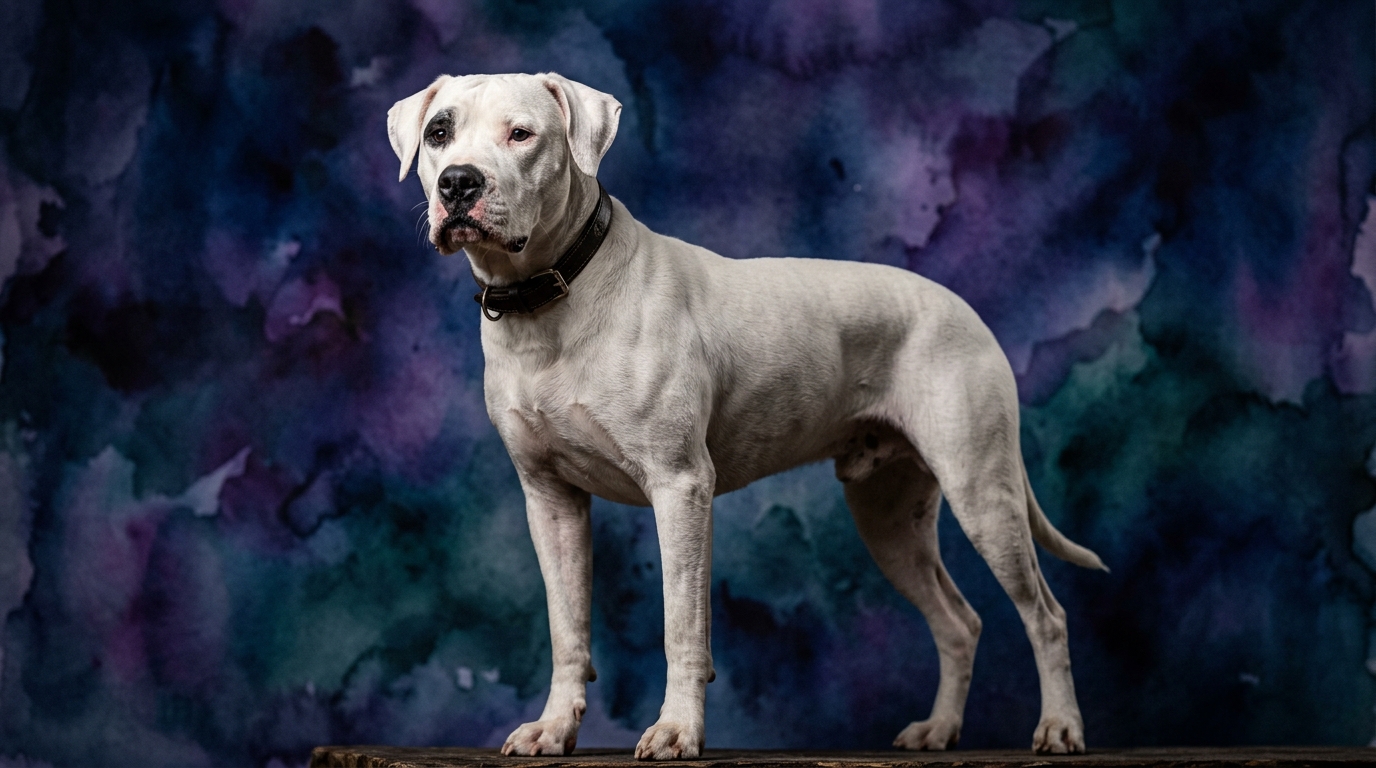
Side-by-Side IQ Profile: Miniature American Shepherd vs. Dogo Argentino
While both breeds share a consistent 3 out of 5 across our IQ dimensions, their ancestral roles profoundly shape how these cognitive capacities are utilized and expressed. This isn't about which breed is 'smarter,' but how their inherent intellect serves their distinct purposes.
For the Miniature American Shepherd, a 3/5 in Problem Solving reflects their historical role in independently strategizing to manage livestock, figuring out how to direct a flock or navigate complex obstacles in a field. Their problem-solving often manifests in dynamic, real-time scenarios requiring adaptability and quick adjustments to changing animal movements or environmental factors. The Dogo Argentino's 3/5 in Problem Solving points to their capacity for independent decision-making in high-stakes guarding or hunting contexts, such as assessing a perceived threat, tracking challenging prey through varied terrain, or navigating dense brush. Their solutions tend to be more direct, assertive, and physically oriented, focused on achieving a specific, often physical, outcome.
A 3/5 in Training Speed indicates the Miniature American Shepherd learns new commands and routines at a moderate, consistent pace, often excelling with positive reinforcement and structured, engaging sessions that tap into their desire to work collaboratively. Their herding background means they are generally receptive to direction but also possess a degree of independent thought that requires thoughtful guidance. The Dogo Argentino also learns at a moderate speed, absorbing new tasks and commands effectively when presented with clear expectations and consistent methods. Their training might require more steadfast consistency and a firm yet fair approach due to their inherent drive and potential for focused stubbornness. They grasp tasks well when motivated by a clear purpose and strong, confident leadership.
The Miniature American Shepherd's 3/5 in Social Intelligence suggests they are adept at reading human cues, understanding social dynamics within a family structure, and interacting appropriately, showing empathy and an understanding of moods. They can integrate well into complex social environments, often forming strong, intuitive bonds with their primary caregivers and responding to subtle social signals. The Dogo Argentino's 3/5 in Social Intelligence implies they are capable of forming deep, unwavering bonds with their immediate human family and understanding social hierarchies within the household. However, their social acumen outside this inner circle might be more reserved, discerning, or even wary, consistent with a breed bred for guardianship and a need to assess new individuals carefully.
The Miniature American Shepherd's 3/5 Instinctive Drive is primarily expressed through their strong herding instincts—a deep-seated desire to gather, control, and move. This drive is a powerful motivator for work and play and needs appropriate, constructive outlets to prevent it from being misdirected into less desirable behaviors. For the Dogo Argentino, a 3/5 drive stems from their powerful prey drive, intense hunting instincts, and protective urges, geared towards pursuing game or defending territory with unwavering determination. This drive is potent and requires careful management, extensive socialization, and appropriate channeling through structured activities to ensure it's directed positively.
A 3/5 in Memory means the Miniature American Shepherd retains training, established routines, and past experiences effectively, making them reliable in learned tasks and capable of remembering past interactions or environmental cues. This strong recall aids in their consistency in obedience and complex sequential tasks. The Dogo Argentino also exhibits solid memory, remembering commands, past experiences, and the identities of familiar and unfamiliar individuals with accuracy. This reliable memory contributes significantly to their effectiveness as consistent guardians and their ability to learn and recall complex hunting or protection tasks over extended periods.
Where the Miniature American Shepherd Wins Cognitively
While both breeds score identically, the Miniature American Shepherd often demonstrates a cognitive edge in tasks requiring dynamic adaptability and nuanced real-time decision-making, particularly in fluid, rapidly changing environments. Their herding heritage cultivates an ability to process multiple variables simultaneously—such as the movement of individual livestock, subtle changes in terrain, and complex human commands—and adjust their strategy with precision and agility. This translates to superior cognitive flexibility in complex, evolving scenarios, where a Dogo Argentino might prefer a more direct, forceful approach. The MAS also excels in interpreting subtle human body language and vocal inflections, demonstrating a finely tuned social intelligence geared towards collaborative work and intricate communication rather than independent, assertive action.
Where the Dogo Argentino Wins Cognitively
The Dogo Argentino, despite identical raw scores, exhibits cognitive strengths that shine in scenarios demanding independent judgment, unwavering resolve, and a powerful, focused drive towards a singular objective. Their problem-solving, while rated similarly, is often applied to assessing and neutralizing perceived threats or tracking challenging prey with remarkable tenacity and physical prowess, requiring a different kind of strategic thinking than herding. This breed’s cognitive advantage lies in its capacity for sustained concentration on a specific task, filtering out distractions to achieve a goal, whether it’s scent tracking over long distances or making autonomous decisions in a protective role without constant human direction. Their memory often solidifies deeply learned patterns of behavior related to territory and family protection, making them formidable and consistent in their duties as guardians.
Which is Easier to Train and Why?
Considering their identical Training Speed scores, the *ease* of training can still differ significantly due to underlying motivations and drives. The Miniature American Shepherd generally presents as easier to train for the average owner due to their inherent biddability and strong desire to work cooperatively with their human. Their herding instincts often translate into a natural attentiveness to handler cues and an eagerness to engage in structured learning, making them highly responsive to positive reinforcement and varied training exercises like agility, obedience, or trick training. They thrive on mental stimulation that involves problem-solving and collaboration, making them a joy to teach.
In contrast, the Dogo Argentino, while capable of learning at the same pace, requires a more experienced and exceptionally consistent handler. Their formidable instinctive drive, rooted in hunting and protection, means training must be highly purposeful, channel their natural tenacity, and establish clear, unwavering leadership. If not properly channeled, their independent decision-making, combined with powerful physical capabilities, can make training more challenging, requiring unwavering dedication to consistency, early socialization, and firm guidance to shape appropriate behaviors. They respond best when they understand the 'why' behind a command and when their handler demonstrates calm, assertive, and unwavering authority.
Which Suits Active Owners vs. Relaxed Owners
Both breeds are far from suited for truly relaxed, sedentary owners, but their activity requirements manifest differently in intensity and type. The Miniature American Shepherd is an excellent fit for active owners who enjoy engaging in dog sports like agility, obedience, flyball, or herding trials, or simply a very active lifestyle. Their combination of physical stamina and keen intellect means they thrive on consistent mental and physical challenges, needing a 'job' to feel fulfilled and prevent boredom. They integrate well into active family lifestyles where they are included in outdoor adventures and regular training sessions. A relaxed owner, or one unable to provide consistent engagement, would likely find a MAS exhibiting undesirable behaviors born from boredom and unmet cognitive needs, such as excessive barking or destructive chewing.
The Dogo Argentino, however, demands an even higher tier of commitment from an active owner. Their robust physical build and intense instinctive drive necessitate extensive daily exercise, often including vigorous runs, long walks, or dedicated training for strength and endurance. Beyond sheer physical activity, they require consistent mental stimulation, early and ongoing socialization, and strong leadership to manage their powerful protective instincts and ensure they are well-adjusted and safe. They are absolutely not suitable for relaxed owners, as their immense strength, independent nature, and protective drives require an owner who is not only active but also confident, consistent, and highly experienced in handling a powerful working breed.
The Verdict
Choose the Miniature American Shepherd if you seek a highly adaptable, collaborative companion for dog sports or active family life, valuing nuanced communication and shared problem-solving over sheer force.
Opt for the Dogo Argentino if you are an experienced, active owner seeking a powerful, loyal protector and steadfast companion, prepared to channel immense drive and provide consistent, firm leadership.
🧠 Find Your Pet's IQ Score
Our Pet IQ Lab assessment covers 25+ tests across 5 cognitive dimensions — personalized to your breed.
Take the Full IQ Test →Frequently Asked Questions
Do identical IQ scores mean these breeds think identically?
Not at all. Identical scores of 3/5 indicate similar *capacity* for intelligence, but the *application* and *manifestation* of that intelligence are deeply influenced by breed history and purpose. A Miniature American Shepherd applies its problem-solving to dynamic herding tasks, while a Dogo Argentino uses its intellect for focused protection or hunting.
How does a Miniature American Shepherd's herding instinct affect its problem-solving?
The MAS's herding instinct enhances its problem-solving by requiring quick, adaptive thinking to manage livestock movements, anticipate changes, and interpret subtle cues from both animals and handlers. This cultivates a highly flexible and responsive cognitive style focused on strategy and control rather than direct confrontation.
What kind of mental stimulation is best for a Dogo Argentino given its instinctive drive?
For a Dogo Argentino, mental stimulation should channel their strong prey and protective drives constructively. This includes advanced obedience, scent work, protection sports (under expert guidance), and puzzle toys that require focused effort, all designed to engage their tenacity and independent problem-solving skills.