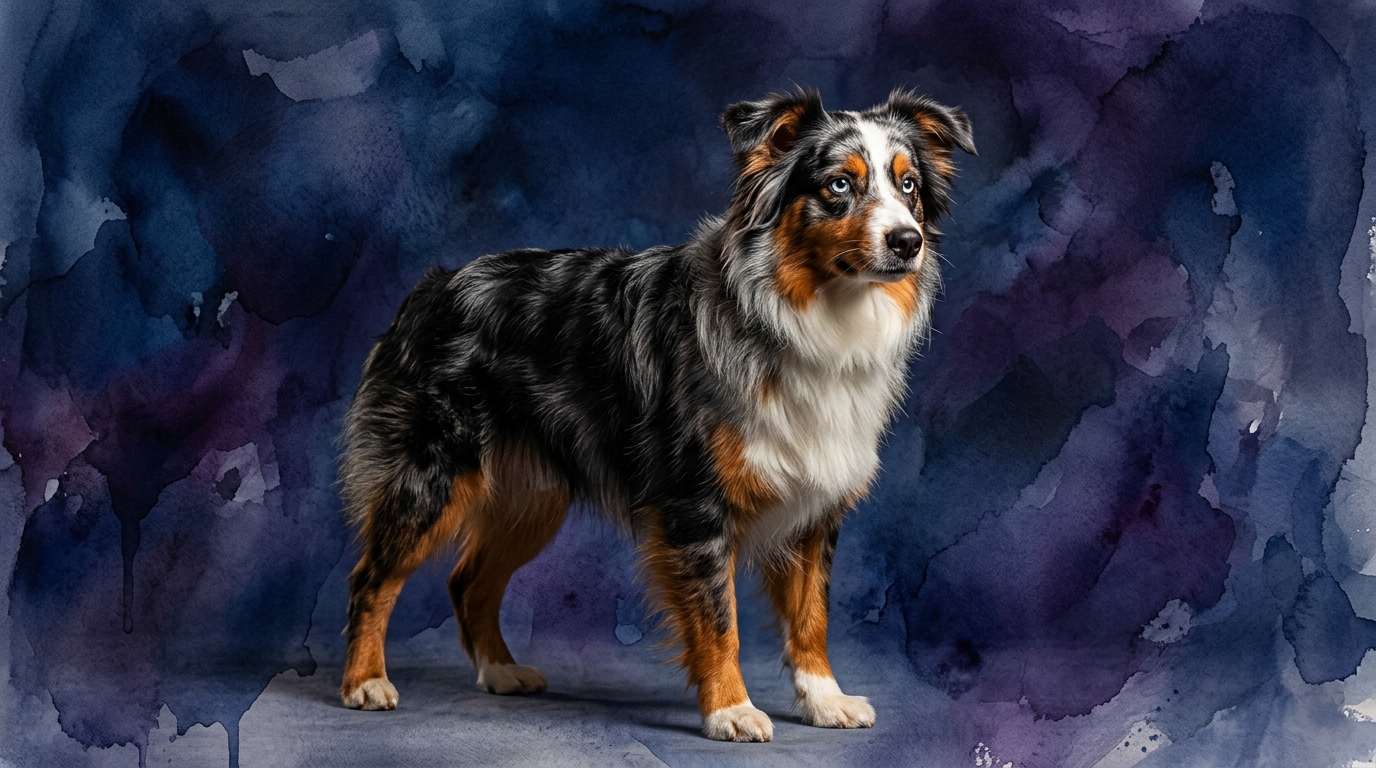

Side-by-Side Cognitive Profiles: Decoding the 3/5
At The Cosmic Pet Pet IQ Lab, we assess canine intelligence across five key dimensions, each rated on a scale of 1 to 5. Interestingly, both the Miniature American Shepherd (MAS) and the English Toy Spaniel (ETS) exhibit a consistent 3/5 across all categories. This parity in scores doesn't imply identical mental landscapes; rather, it highlights how a moderate cognitive capacity can be channeled and expressed in vastly different ways, reflecting their evolutionary paths and breed roles.
For the **Miniature American Shepherd**, a herding breed, a 3/5 in **Problem Solving** often manifests as an aptitude for navigating complex environments, devising strategies to manage livestock, or figuring out how to overcome obstacles in an agility course. Their problem-solving is typically physical and task-oriented, driven by an innate desire to work and organize. Their **Training Speed** at 3/5 indicates a good capacity to learn new commands and routines with consistent, positive reinforcement, often showing a keen attentiveness to their handler's cues. This breed's **Social Intelligence** (3/5) involves a practical understanding of pack dynamics, reading human intentions for cooperative tasks, and being watchful yet discerning with strangers. A 3/5 **Instinctive Drive** for the MAS points to a moderate but present urge to herd, chase, and be actively engaged, which fuels their enthusiasm for activities. Finally, their **Memory** (3/5) allows them to retain a good repertoire of commands, remember complex sequences of actions, and recall the layout of familiar territories.
The **English Toy Spaniel**, a companion breed, interprets its 3/5 scores through a different lens. Their **Problem Solving** (3/5) might involve more nuanced tasks, like figuring out how to retrieve a favored toy from a tricky spot, subtly communicating a desire for attention, or solving simple puzzle feeders. Their problem-solving is often observation-based and socially motivated. A 3/5 **Training Speed** for the ETS means they are receptive to learning basic obedience and house rules, especially when training is gentle, positive, and paired with affection, though they might require more patience for repetitive drills due to their focus on comfort. Their **Social Intelligence** (3/5) is particularly attuned to human emotions and moods, making them adept at providing comfort and forming deep, intuitive bonds. This breed’s **Instinctive Drive** (3/5) is geared towards companionship, comfort, and gentle interaction rather than intense physical work, manifesting as a strong desire to be near their people. Their **Memory** (3/5) excels at recalling beloved family members, preferred routines, and positive or negative associations with specific experiences, making them excellent at remembering who provides the best belly rubs.
Where the Miniature American Shepherd Shines Cognitively
While both breeds share a 3/5 rating across the board, the Miniature American Shepherd's cognitive strengths lean towards practical application and sustained engagement. Their herding lineage instills a natural inclination for tasks that require sustained focus and problem-solving in dynamic environments. For instance, a MAS often excels in dog sports like agility, obedience, or rally, where they must quickly process sequences of commands, navigate obstacles, and make on-the-spot decisions. Their moderate instinctive drive, coupled with a good memory for sequences, gives them an edge in activities demanding both mental and physical coordination over extended periods. This isn't about being 'smarter' than the ETS, but about their cognition being better suited for active, task-oriented challenges, demonstrating a robust capacity for learning complex physical routines and applying them effectively.
Where the English Toy Spaniel Excels Cognitively
The English Toy Spaniel's cognitive prowess, though numerically equivalent, thrives in the realm of social and emotional intelligence. Their 3/5 social intelligence is expressed through a profound sensitivity to human cues, often anticipating their owner's needs or moods with remarkable accuracy. They demonstrate a subtle understanding of household routines and social dynamics, learning through observation and association rather than explicit instruction for complex tasks. An ETS might not be solving complex herding puzzles, but they could be masters at interpreting a sigh or a change in tone, adjusting their behavior to seek comfort or offer gentle reassurance. Their memory is particularly strong for social bonds and comfort-related routines, making them exceptionally adept at navigating the nuances of a human-centric home environment. Their cognitive strengths are less about overt performance and more about intuitive connection and emotional resonance.
Training Dynamics: Effort and Expectation
When considering ease of training, the underlying motivations and behavioral tendencies of each breed play a significant role. The Miniature American Shepherd, with its herding background and moderate instinctive drive, often approaches training with a cooperative spirit and a desire to engage in structured activities. Their 3/5 training speed is bolstered by their biddability and focus on their handler, making them generally responsive to consistent, reward-based methods for obedience, tricks, or even advanced dog sports. They thrive on having a 'job' and find satisfaction in mastering tasks, which can make formal training sessions feel productive and relatively straightforward, provided the owner offers clear direction and engaging challenges.
The English Toy Spaniel, while also rated 3/5 for training speed, presents a different training experience. Their primary drive is companionship and comfort, not necessarily performing complex tasks. They are sensitive dogs, highly responsive to positive reinforcement, especially praise, gentle petting, and tasty treats. However, their shorter attention span for repetitive drills and a tendency to prioritize affection over task completion might mean training sessions need to be shorter, more varied, and always end on a positive note. While they are certainly capable of learning basic obedience and house manners, an owner might need more patience and creativity to keep an ETS engaged in formal training, focusing on making it a bonding experience rather than a rigorous curriculum. Their sensitivity also means harsh corrections are counterproductive, potentially leading to anxiety or withdrawal, underscoring the need for a gentle, encouraging approach.
Aligning with Lifestyles: Active vs. Relaxed Owners
The cognitive and instinctive profiles of these breeds lend themselves to different owner lifestyles. The Miniature American Shepherd, with its moderate instinctive drive and capacity for sustained problem-solving, is an ideal companion for active owners. They flourish in homes where daily physical exercise, such as long walks, hikes, or runs, is a given. Beyond physical activity, their mental engagement needs are met through structured training, dog sports, or even puzzle toys that challenge their problem-solving abilities. Owners who enjoy teaching new tricks, participating in canine activities, or simply having a highly engaged partner for outdoor adventures will find the MAS's cognitive makeup aligns perfectly with their lifestyle. Their social intelligence, while practical, also means they appreciate being an integral part of family activities.
Conversely, the English Toy Spaniel, with its deep social intelligence and focus on companionship, is perfectly suited for more relaxed owners. Their moderate instinctive drive is primarily directed towards forming close bonds and enjoying the comforts of home. While they appreciate gentle walks and playtime, their primary need is for consistent human presence and affection. Owners who prefer quiet evenings, enjoy cuddling on the sofa, and are content with a devoted, sensitive companion will find the ETS's cognitive and emotional landscape highly rewarding. Their problem-solving and memory are geared towards understanding their human's routines and desires, making them excellent companions for those seeking a less demanding, yet deeply connected, furry family member. They are content to observe and participate gently in household life, thriving on intimate interaction rather than strenuous activity.
The Verdict
Choose the Miniature American Shepherd if you seek an engaged, active partner for dog sports, outdoor adventures, and enjoy consistent, structured training that challenges both mind and body.
Opt for the English Toy Spaniel if you prioritize a gentle, deeply affectionate companion for a more relaxed home life, valuing nuanced social interaction and a sensitive presence.
🧠 Find Your Pet's IQ Score
Our Pet IQ Lab assessment covers 25+ tests across 5 cognitive dimensions — personalized to your breed.
Take the Full IQ Test →Frequently Asked Questions
Do Miniature American Shepherds and English Toy Spaniels have similar cognitive needs despite identical IQ scores?
Yes, while both breeds score 3/5 across our IQ dimensions, their cognitive needs diverge significantly. The MAS thrives on mental stimulation through tasks and physical activity, whereas the ETS's needs are met through strong social bonds and gentle interaction, reflecting their distinct breed purposes.
Which breed is better for a first-time dog owner looking for a 'smart' dog?
Neither breed is inherently 'better' in intelligence, but their suitability for a first-time owner depends on lifestyle. A first-time owner seeking an active, biddable learner for structured training might find the MAS rewarding, while one desiring a gentle, sensitive companion focused on affection might prefer the ETS, provided they understand the nuances of positive reinforcement for each.
How does 'Instinctive Drive' differ between these two breeds, given their 3/5 rating?
For the Miniature American Shepherd, a 3/5 instinctive drive translates to a moderate but present urge for herding, chasing, and active engagement, requiring outlets like sports or jobs. For the English Toy Spaniel, the 3/5 drive is primarily expressed as a strong desire for comfort, close companionship, and gentle interaction, seeking proximity and affection over active tasks.