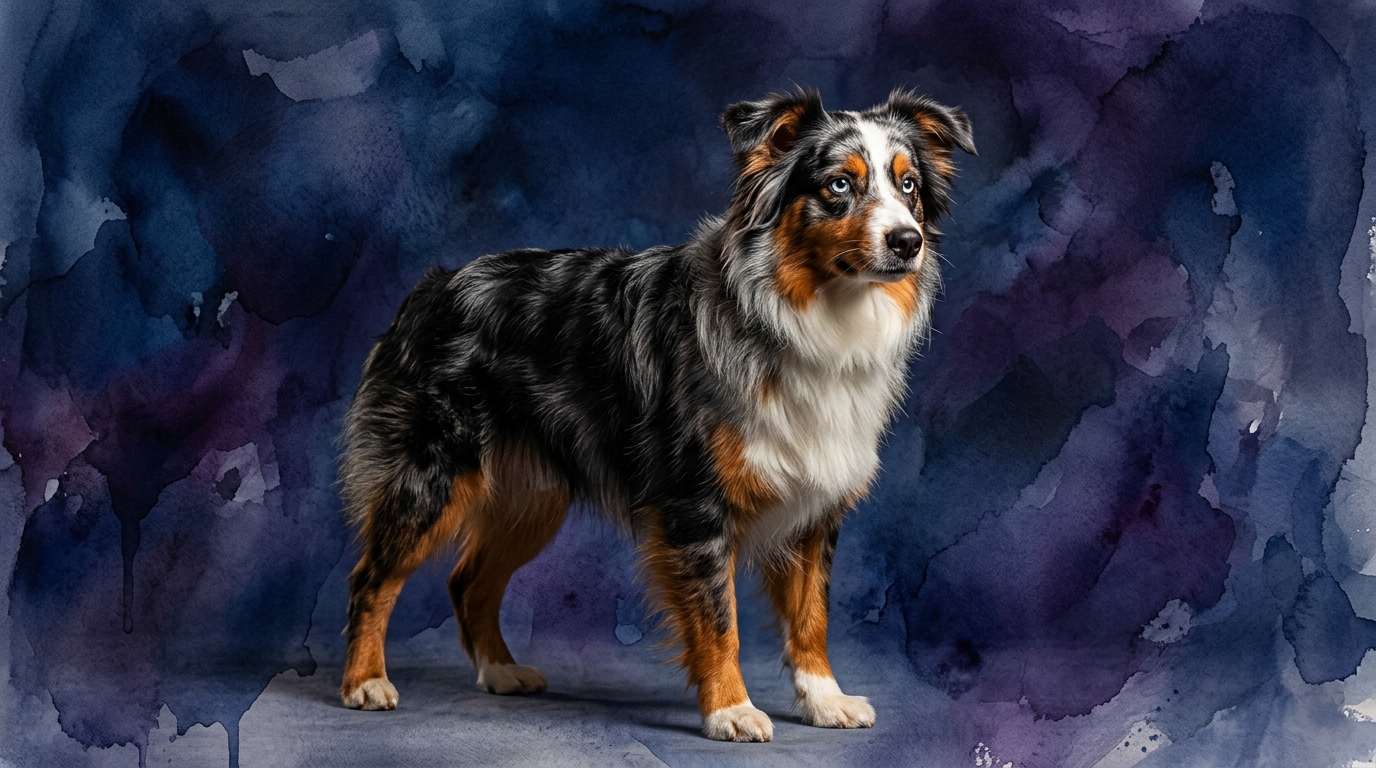
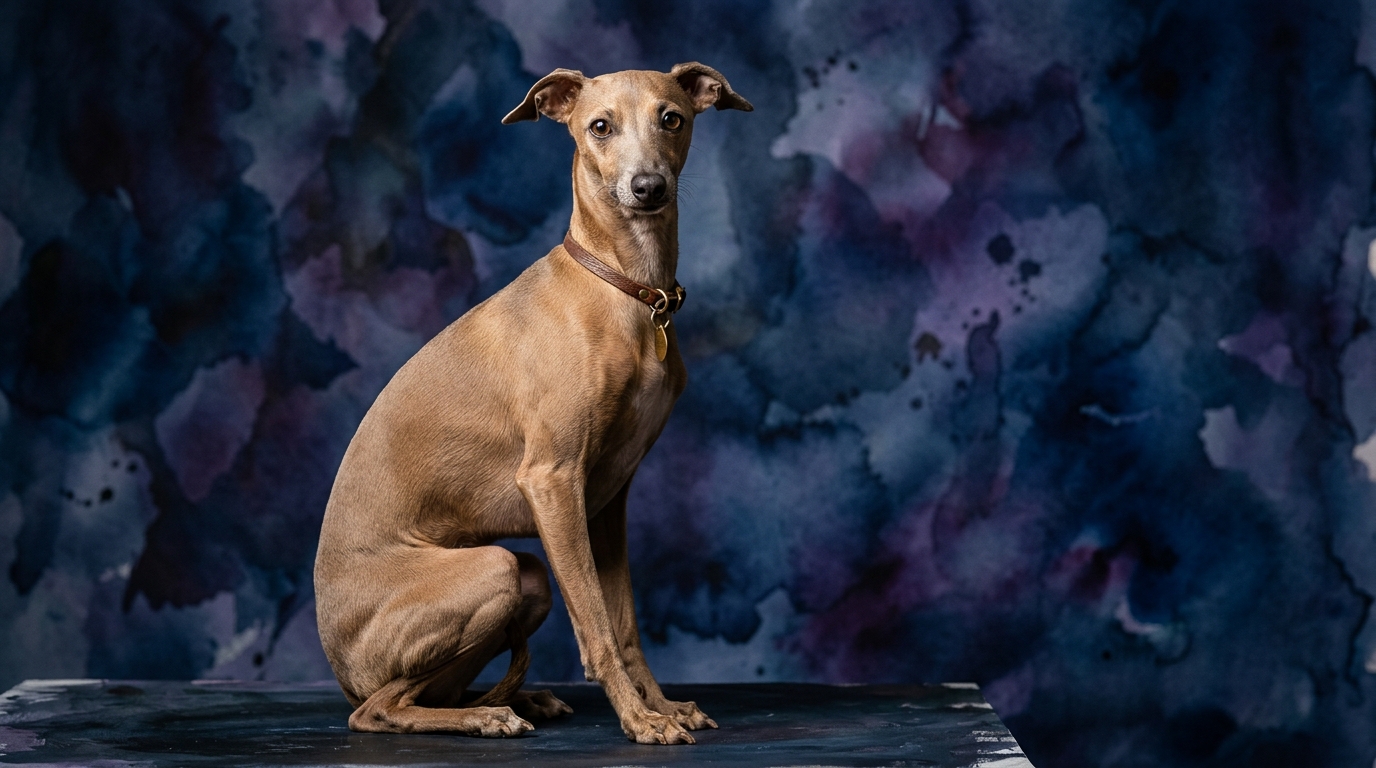
Side-by-Side Pet IQ Lab Profile
The Cosmic Pet Pet IQ Lab assesses canine intelligence across five key dimensions, each scored on a scale of 1 to 5. Interestingly, both the Miniature American Shepherd (MAS) and the Italian Greyhound (IG) register a consistent 3/5 across all categories. This numerical parity, however, belies distinct cognitive styles shaped by their breed histories and inherent drives, necessitating a closer look at how each breed embodies these moderate scores.
For the Miniature American Shepherd, a Herding group dog, a 'Problem Solving' score of 3/5 often translates into a methodical approach to tasks. They might excel at figuring out how to manipulate objects to achieve a goal, like opening a gate or navigating an agility course, using a structured and persistent thought process. Their 'Training Speed' at 3/5 suggests they grasp new commands at a steady pace, benefiting from consistent, positive reinforcement and appreciating a clear purpose in their learning. 'Social Intelligence' at 3/5 means they are generally attuned to human emotions and cues, often seeking to understand and respond to their handler's desires, though they can be reserved with strangers. Their 'Instinctive Drive' of 3/5 clearly points to a moderate but present herding impulse, manifesting as an urge to gather or control movement, which can be channeled into appropriate activities. Finally, a 'Memory' score of 3/5 indicates they retain learned behaviors and routines reasonably well, making them reliable companions once a behavior is established.
The Italian Greyhound, a member of the Toy group with Sighthound ancestry, expresses the same 3/5 scores in a profoundly different manner. Their 'Problem Solving' at 3/5 often manifests as resourceful ingenuity, especially when it comes to comfort or acquiring favored items. They might creatively find the warmest sunbeam, strategically position themselves for affection, or cleverly outwit a pet gate. 'Training Speed' at 3/5 means they can learn quickly, but their sighthound independence suggests they learn best when highly motivated, often by comfort or play, rather than an inherent desire to please for work's sake. 'Social Intelligence' at 3/5 makes them highly sensitive to their owner's mood and body language, forming deep, affectionate bonds within their inner circle, though they are famously shy and delicate with unfamiliar people or boisterous environments. Their 'Instinctive Drive' of 3/5 is primarily expressed as a strong prey drive for small, fast-moving objects, coupled with an intense need for warmth and physical closeness. A 'Memory' score of 3/5 means they remember positive experiences and routines that benefit them, such as meal times or cuddle sessions, with notable consistency.
Where Miniature American Shepherd Wins Cognitively
The Miniature American Shepherd's cognitive strengths shine particularly in structured environments and tasks requiring partnership. Their moderate herding drive, even at a 3/5, provides an inherent foundation for understanding and responding to direction, making them adept at activities like obedience, agility, or rally. Their problem-solving, while not exceptionally high, is often applied with a purpose-driven focus, allowing them to methodically work through challenges presented by their handler, such as navigating a complex obstacle course or learning a multi-step trick sequence. This breed's expression of 3/5 social intelligence is geared towards active collaboration, making them excel in roles where they need to anticipate and react to human commands in real-time, forming a cohesive working unit.
Furthermore, the MAS's memory, combined with its training speed and desire for engagement, allows for the consistent reinforcement of complex behavioral chains. Owners can build upon previously learned commands with greater ease, as the dog remembers the sequence and the reward associated with successful completion. This makes them particularly suited for owners who enjoy progressive training and want a dog that actively participates in learning and problem-solving alongside them, rather than independently.
Where Italian Greyhound Wins Cognitively
The Italian Greyhound's cognitive advantages lie in their independent resourcefulness and acute sensory awareness, characteristic of their sighthound lineage. Their 3/5 problem-solving often manifests as clever ways to optimize their comfort and environment, whether it's burrowing under blankets with precision or finding the sunniest spot in the house. This isn't about solving human-assigned tasks, but rather about self-directed ingenuity. Their social intelligence, while also 3/5, is expressed through a profound sensitivity to their immediate human companions, allowing them to pick up on subtle mood shifts and offer comfort or retreat as needed, creating a deep, intuitive bond.
The IG's quick reflexes and sharp visual acuity, part of their instinctive drive, translate into a different kind of cognitive speed. While their training speed is a moderate 3/5, their ability to react swiftly to visual stimuli means they can learn and execute commands that involve quick movements or target recognition with surprising agility, provided the motivation is strong. Their memory, too, is excellent for retaining information related to their comfort, routine, and preferred interactions, making them reliable in remembering where the softest bed is or who provides the best cuddles.
Which is Easier to Train and Why
Despite both breeds scoring 3/5 in Training Speed, the Miniature American Shepherd is generally considered easier to train for obedience and complex tasks. This difference stems not from raw learning capacity, but from their inherent motivations and breed purpose. The MAS, as a herding dog, possesses an innate desire to work collaboratively with a handler, to have a job, and to please. Their 3/5 instinctive drive is channeled towards purposeful activity, meaning they often find the act of training itself rewarding. This translates into greater focus, persistence, and a willingness to repeat actions until mastered, even if the task is challenging.
The Italian Greyhound, conversely, while capable of learning quickly, has a more independent streak typical of sighthounds and toy breeds. Their 3/5 instinctive drive is more about chasing and comfort than cooperative work. They learn best when training is fun, short, and highly rewarding, often needing more creative motivation to maintain engagement. While they can learn a wide array of commands, their compliance might be more situational, depending on their interest level or competing distractions. House training, for instance, can be more challenging for IGs due to their delicate bladder and preference for warmth, requiring extra patience and consistency compared to the more robust and work-oriented MAS.
Which Suits Active Owners vs. Relaxed Owners
For active owners seeking a canine partner in their adventures, the Miniature American Shepherd is often the more suitable choice. Their 3/5 instinctive drive for herding, combined with their moderate problem-solving and training speed, means they thrive on consistent mental and physical engagement. They excel in dog sports like agility, flyball, and obedience, and enjoy hiking or long walks. Owners who appreciate a dog that is eager to learn new things and participate actively in family activities will find the MAS's moderate but consistent energy levels and cooperative nature a perfect match. They require an owner willing to invest time in structured training and provide outlets for their intelligent minds.
Relaxed owners who appreciate a quieter, more independent companion might find the Italian Greyhound to be a better fit. While they enjoy short bursts of play and zoomies, their energy is generally lower than a herding breed, and they are content with indoor cuddles and lounging in warm spots. Their 3/5 social intelligence makes them devoted to their immediate family, but their sensitivity means they prefer calm environments to boisterous ones. Owners who enjoy a dog that is affectionate but not overly demanding for constant activity, and who can provide a warm, secure home, will appreciate the IG's delicate charm and independent spirit. They still benefit from mental stimulation through puzzle toys and short training sessions, but their primary need is for comfort and companionship.
The Verdict
Choose the Miniature American Shepherd if you seek an active, engaged canine partner for structured training, dog sports, and outdoor adventures, valuing their cooperative nature and purpose-driven intelligence.
Opt for the Italian Greyhound if you prefer a sensitive, affectionate, and relatively low-energy companion who thrives on comfort and a calm home, appreciating their independent ingenuity and deep bond with family.
🧠 Find Your Pet's IQ Score
Our Pet IQ Lab assessment covers 25+ tests across 5 cognitive dimensions — personalized to your breed.
Take the Full IQ Test →Frequently Asked Questions
Do Miniature American Shepherds need a lot of mental stimulation?
Yes, while their IQ scores are moderate, their herding background means Miniature American Shepherds possess a keen desire to work and learn. Regular mental challenges through training, puzzle toys, or dog sports are crucial to prevent boredom and ensure a well-adjusted companion.
Are Italian Greyhounds difficult to house train?
Italian Greyhounds can present unique challenges in house training due to their small bladders, preference for warmth, and sometimes independent nature. Consistent routines, frequent outdoor breaks, and positive reinforcement are key to success, often requiring more patience than with other breeds.
How do their social intelligence scores manifest differently?
Both scoring 3/5, the MAS's social intelligence often manifests as an eagerness to understand and respond to handler cues in a working context, while the IG's is expressed through a deep, intuitive sensitivity to their immediate family's moods and a strong preference for familiar company over strangers.