Side-by-Side Cognitive Profiles
While both the Miniature American Shepherd and the Redbone Coonhound register a consistent 3 out of 5 across all five cognitive dimensions in The Cosmic Pet Pet IQ Lab, the manifestation and context of these abilities are remarkably different. A score of 3/5 indicates a solid, functional cognitive capacity, neither at the extreme end of rapid acquisition nor prolonged processing, but rather a robust average that serves their historical roles effectively. This isn't about one being 'smarter' than the other in a general sense, but about how their cognitive strengths are specialized.
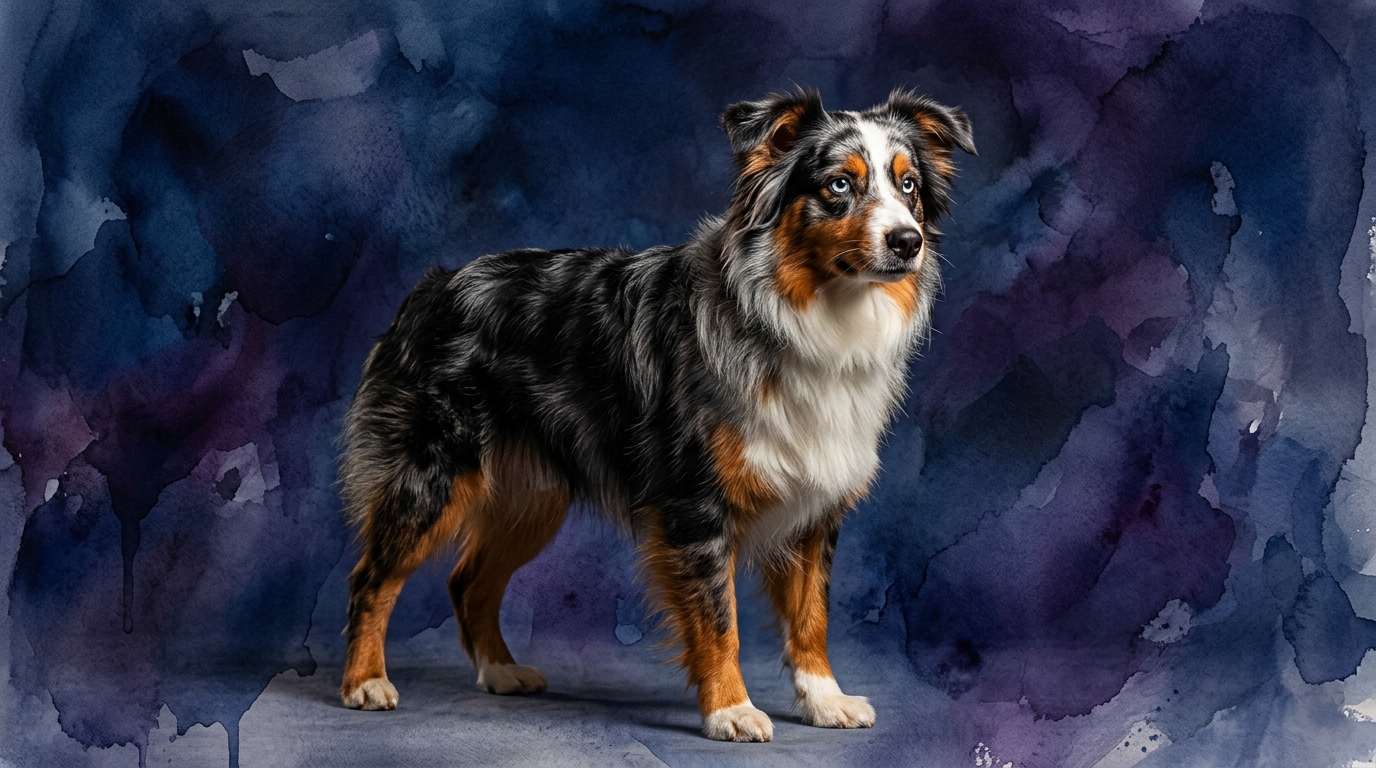
For the Miniature American Shepherd, a Herding breed, their Problem Solving (3/5) often involves navigating complex agility courses or figuring out how to strategically move a flock of livestock. Their Training Speed (3/5) reflects an eagerness to learn a wide array of commands, from intricate obedience routines to multi-step herding patterns, driven by a desire to collaborate. Social Intelligence (3/5) in the MAS is deeply tied to reading human cues, anticipating handler intentions, and understanding the subtle dynamics of a family unit, often extending to interactions with other animals in a controlled environment. Their Instinctive Drive (3/5) is primarily a herding impulse—the desire to gather, control, and direct movement, often manifesting as a focused attentiveness to their surroundings and charges. Memory (3/5) for this breed is excellent for recalling specific commands, routines, and the learned locations of objects or people within their familiar territory.
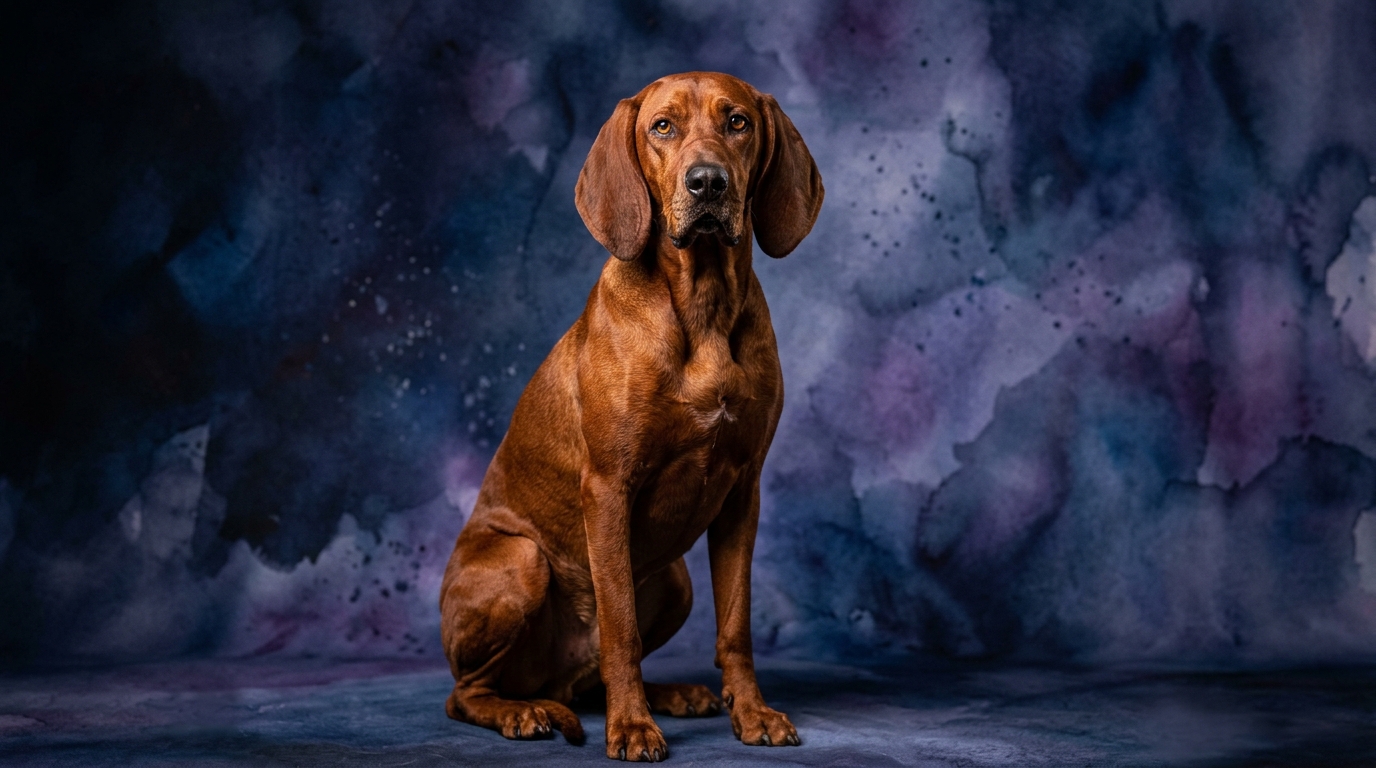
The Redbone Coonhound, a member of the Hound group, applies its Problem Solving (3/5) to deciphering intricate scent trails, navigating challenging terrain to locate a treed animal, or overcoming obstacles to follow a quarry. Their Training Speed (3/5) is often rapid for commands directly related to their hunting tasks, such as 'track' or 'tree,' but may require more motivation for abstract obedience, particularly when a compelling scent is present. Social Intelligence (3/5) in the RC focuses on cooperation within a hunting pack, understanding the roles of other dogs and human partners in the field, and a deep loyalty to their chosen family, though they can be reserved with strangers. Their Instinctive Drive (3/5) is dominated by an powerful olfactory drive—the relentless pursuit of a scent, coupled with characteristic vocalizations like baying. Memory (3/5) for the Redbone is exceptional for retaining complex scent patterns, remembering successful hunting grounds, and recalling the specific sounds associated with their quarry.
Where the Miniature American Shepherd Excels Cognitively
The Miniature American Shepherd's cognitive strengths shine particularly bright in scenarios requiring collaborative problem-solving and a high degree of biddability. Their herding lineage has instilled a deep desire to work in partnership with a human handler, making them adept at interpreting complex, multi-step commands and applying them to dynamic situations. For example, an MAS might quickly learn a sequence of commands like 'flank right, walk up, lie down' to move sheep, demonstrating not just memory but also the ability to integrate spatial reasoning with verbal cues. This breed shows a remarkable capacity for generalizing learned behaviors; a 'sit-stay' command practiced in the living room will likely transfer effectively to a busy park, a testament to their focus on human direction.
Furthermore, their social intelligence is acutely tuned to human emotional states and expectations, allowing them to anticipate needs and respond with precision. This makes them highly responsive in competitive dog sports like agility or obedience, where precision and timing are paramount. Their problem-solving often involves strategy within a defined structure, such as figuring out the most efficient path through an agility course or subtly influencing the movement of livestock. The MAS excels at tasks where human input is central to the solution, demonstrating a cognitive flexibility within a structured, cooperative framework.
Where the Redbone Coonhound Excels Cognitively
In contrast, the Redbone Coonhound's cognitive prowess is most evident in autonomous problem-solving, particularly when driven by their extraordinary sensory capabilities. Their olfactory processing is unparalleled, allowing them to differentiate subtle scent variations, follow trails hours old, and ignore distracting odors to focus on a specific target. This isn't just an instinct; it's a complex cognitive process involving memory of scent profiles, predictive tracking, and an understanding of how scents move and dissipate in different environments. A Redbone might independently determine the most probable direction a scent trail took after a break, demonstrating sophisticated reasoning far from human guidance.
Their persistence and single-mindedness in pursuing a goal, often over vast and challenging terrains, is a hallmark of their cognitive strength. While on a scent, a Redbone Coonhound can exhibit a remarkable ability to filter out all other stimuli, focusing solely on the task at hand. This deep concentration, coupled with their robust memory for geographical locations and past scent experiences, allows them to navigate complex, unseen environments with remarkable efficiency. They excel in situations where independent judgment, sensory acuity, and unwavering dedication to a self-assigned mission are the primary requirements for success.
Training: Miniature American Shepherd vs. Redbone Coonhound
When considering ease of training, the Miniature American Shepherd generally presents a more straightforward path for the average owner due to their inherent biddability and desire to please. Their herding background means they are accustomed to taking direction from a handler and thrive on structured learning environments. An MAS often approaches training as a collaborative effort, eager to engage with their human partner and quickly pick up new commands through positive reinforcement. Their social intelligence is geared towards understanding and responding to human expectations, making them highly receptive to traditional obedience training and dog sports. They often enjoy the mental challenge of learning new tricks and tasks, viewing it as a bonding experience.
The Redbone Coonhound, however, can be more challenging to train due to their independent nature and powerful instinctive drives. While they are certainly capable of learning, their motivation is often tied to their primary scenting instinct. They might quickly learn hunting-related commands, but general obedience, especially recall when off-leash in an interesting environment, can be a significant hurdle. Their problem-solving is often self-directed, meaning they might prioritize following a compelling scent over responding to a 'come' command. Training a Redbone requires immense patience, consistency, and a creative approach that often leverages their natural drives, such as scent games or long-line work. Owners must understand that a Redbone's 'listening' might be conditional upon external stimuli, requiring a deeper commitment to making training more rewarding than any environmental distraction.
Lifestyle Suitability: Active vs. Relaxed Owners
For owners with an active lifestyle, both breeds require significant engagement, but their ideal activities diverge. The Miniature American Shepherd is an excellent fit for owners who enjoy structured activities and mental stimulation. They thrive on having a 'job,' whether it's participating in agility, obedience, flyball, or even complex trick training. Daily long walks are a must, but equally important is dedicated time for mental puzzles, training sessions, and interactive play. A Miniature American Shepherd requires an owner who can consistently provide both physical exertion and cognitive challenges; without sufficient mental outlets, they can become bored, anxious, or develop undesirable behaviors. They are not suited for truly relaxed owners who prefer minimal interaction beyond basic care.
The Redbone Coonhound also demands an active owner, but one whose definition of 'active' leans towards outdoor exploration and scent work rather than structured sports. They need extensive daily exercise, ideally long, meandering walks or hikes where they can fully engage their powerful nose and follow interesting scent trails. While they might not be as eager for agility courses, their need for physical exertion and mental stimulation through scent is profound. After a good, invigorating outdoor session that allows them to fulfill their instinctive drives, a Redbone can be remarkably calm and relaxed indoors, often enjoying a long nap. They are not for owners who cannot commit to significant outdoor time in varied environments, but they might suit an owner who enjoys long, investigative adventures over intense, high-energy structured activities.
The Verdict
Choose the Miniature American Shepherd if you seek a highly engaged, biddable partner for dog sports, structured training, and a dog that thrives on consistent direction and mental tasks within a family setting.
Opt for the Redbone Coonhound if you appreciate canine independence, possess an adventurous spirit for outdoor exploration, and can provide ample opportunities for scent work and long, investigative walks.
🧠 Find Your Pet's IQ Score
Our Pet IQ Lab assessment covers 25+ tests across 5 cognitive dimensions — personalized to your breed.
Take the Full IQ Test →Frequently Asked Questions
Do Miniature American Shepherds make good family pets?
Yes, Miniature American Shepherds often make excellent family pets for active households. They are typically loyal, affectionate, and enjoy being involved in family activities, though early socialization is crucial for their comfort around strangers and children.
Are Redbone Coonhounds good with children?
Redbone Coonhounds can be good with children, particularly if raised with them from a young age. They are generally patient and tolerant, but their playful energy and size mean supervision is advisable, especially with very young children, to prevent accidental bumps.
How much exercise do these breeds need daily?
Both breeds require substantial daily exercise, but in different forms. Miniature American Shepherds need at least an hour of vigorous activity, including mental stimulation like training or dog sports. Redbone Coonhounds need extensive outdoor time, ideally 1-2 hours of walking or hiking where they can engage their strong scent drive.