
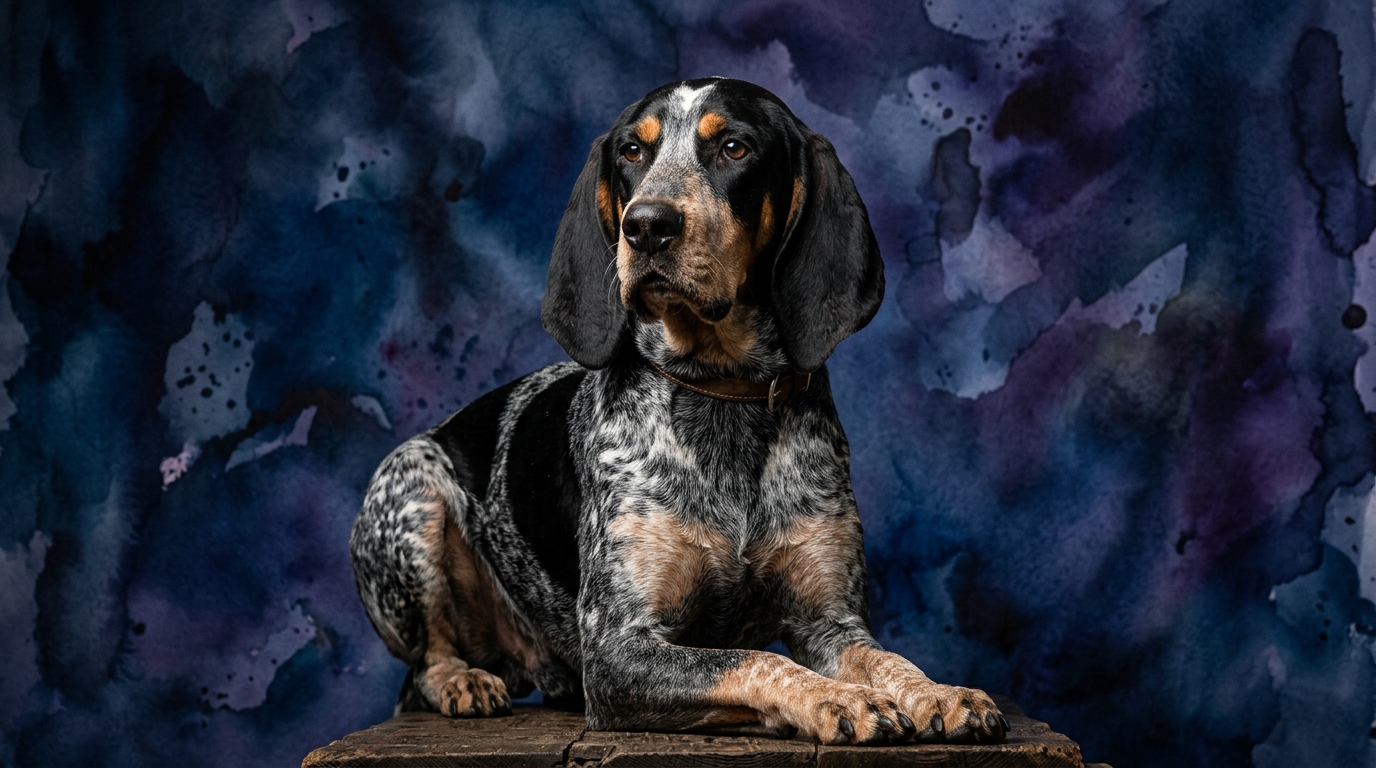
Side-by-Side IQ Profile: Rottweiler vs. Bluetick Coonhound
The Cosmic Pet Pet IQ Lab employs a five-dimensional framework to assess canine intelligence, offering a nuanced view beyond simple obedience. Let's examine how the Rottweiler and Bluetick Coonhound stack up across these critical cognitive domains, highlighting their unique mental blueprints.
For the **Rottweiler**, a Coren-ranked #9 breed, their profile reflects a highly adaptable and task-oriented mind. Their Problem Solving is rated 5/5, indicating an exceptional capacity for analytical thought and devising solutions to complex, novel challenges. Training Speed stands at 4/5, showcasing their rapid grasp of new commands and enjoyment of structured learning environments. Social Intelligence, at 4/5, points to a sophisticated understanding of human cues and a strong desire for cooperative engagement, forming deep bonds. An Instinctive Drive of 5/5 underscores their powerful protective and working instincts, providing immense motivation for tasks. Finally, their Memory is rated 5/5, reflecting an outstanding ability to retain complex sequences, commands, and experiences over extended periods.
The **Bluetick Coonhound**, a breed not included in Coren's ranking but celebrated for its specialized abilities, presents a different cognitive landscape. Their Problem Solving is rated 3/5, demonstrating practical intelligence primarily focused on navigating scent trails and environmental obstacles rather than abstract puzzles. Training Speed, also 3/5, suggests a moderate learning pace, often influenced by their powerful olfactory distractions. Social Intelligence at 3/5 indicates they are generally amiable and capable of bonding, though their independence might make them less attuned to subtle human emotional shifts compared to highly social breeds. Their Instinctive Drive, 3/5, is strongly channeled towards trailing and hunting, rather than generalized obedience or guarding. Memory at 3/5 means they recall routines and familiar people adequately, but perhaps not with the same depth for complex, multi-step tasks as their working dog counterparts.
Where the Rottweiler Wins Cognitively
The Rottweiler’s cognitive strengths are particularly evident in areas demanding versatility and intricate understanding of human directives. Their 5/5 Problem Solving rating means they excel at tasks requiring strategic thought, such as figuring out how to open a complex puzzle toy or adapting quickly to rule changes in a training exercise. This breed demonstrates a superior ability to generalize learned behaviors to new contexts, making them highly effective in diverse roles. Their 4/5 Training Speed, combined with a 5/5 Memory, allows for the swift and lasting acquisition of extensive command repertoires, from advanced obedience to specialized protection work, requiring fewer repetitions and a deeper understanding of the 'why' behind the command. Furthermore, their 4/5 Social Intelligence makes them exceptionally receptive to human communication, often anticipating intentions and responding with nuanced behavioral adjustments. This capacity for deep interspecies communication fosters a highly collaborative working relationship, making them adept at discerning and responding to subtle changes in their handler’s mood or instructions. The Rottweiler's powerful 5/5 Instinctive Drive is channeled into purposeful, human-directed tasks, providing an unwavering focus and motivation for work that requires precision and consistency.
Where the Bluetick Coonhound Wins Cognitively
While the Bluetick Coonhound’s general IQ scores might appear lower, their cognitive profile reveals specialized brilliance, particularly in olfactory processing and sustained focus. Their unique strength lies in their exceptional sensory problem-solving, specifically in decoding and following complex scent trails over varied terrains and long durations. This isn't just a physical act; it's a sophisticated cognitive process involving scent discrimination, memory recall of specific odors, and environmental navigation. Their instinctual drive, while rated 3/5 in a general context, is a 5/5 in its specific application to trailing, allowing them to maintain an unwavering, almost obsessive, focus on a scent, overriding other distractions. This tenacity and independent drive are cognitive assets in their field, requiring immense mental endurance and resilience to stick to a task for hours without direct human intervention. The Bluetick's memory, though 3/5 generally, is undoubtedly exceptional for scent-related information, allowing them to recall and differentiate between countless odor profiles. They exhibit a form of 'cognitive tunneling' when on a scent, filtering out irrelevant stimuli to concentrate solely on their primary objective, a unique form of focused intelligence that is invaluable in their specialized work.
Which Is Easier to Train and Why?
When considering ease of training, the Rottweiler generally presents a more straightforward experience for the average owner due to their higher scores in Training Speed (4/5), Social Intelligence (4/5), and Memory (5/5). They possess an inherent desire to work cooperatively with humans, quickly grasping new commands and retaining them with minimal repetition. Their focus is often on their handler, and they thrive on structured learning, excelling in obedience and advanced canine sports. Behavioral differences such as their strong 'pack' mentality and eagerness to please make them highly responsive to positive reinforcement and consistent guidance, seeing training as a rewarding collaborative effort.
The Bluetick Coonhound, with its 3/5 ratings across Training Speed, Social Intelligence, and Memory, presents a different training dynamic. Their powerful scent drive is a significant behavioral factor; once a compelling odor is detected, their focus can shift entirely from their handler to the trail. This can make recall challenging and requires immense patience and highly motivating, high-value rewards to maintain their attention during formal obedience sessions. While they are capable of learning, their independence and primary motivation for scent work mean that training often requires more creativity, persistence, and an understanding of their deep-seated instincts. They are not necessarily disobedient, but rather intensely purpose-driven by their noses, which can override human commands if not managed effectively.
Which Suits Active Owners vs. Relaxed Owners?
The **Rottweiler** is an excellent match for active owners who enjoy structured activities and desire a deeply engaged companion in their daily lives. Their high instinctive drive (5/5) and problem-solving ability (5/5) mean they thrive on mental and physical challenges such as advanced obedience, protection sports, agility, or even search and rescue. They require consistent training, purpose-driven exercise, and a clear role within their human family to feel fulfilled. An owner who provides consistent leadership and engaging activities will find the Rottweiler to be a highly rewarding and devoted partner, eager to participate in any task set before them.
The **Bluetick Coonhound** also suits active owners, but their activity preferences are markedly different. They are best suited for individuals who appreciate long, meandering walks, hiking, or specific scent-based activities that allow them to utilize their exceptional nose and endurance. While they need significant physical exertion, it's often less about structured, high-intensity bursts and more about sustained exploration. A 'relaxed owner' might struggle with their persistent need for scent-driven outlets and their tendency to follow a compelling odor. They are not typically suited for a sedentary lifestyle, requiring ample opportunity to engage their primary cognitive strength: their sense of smell and the pursuit of a trail. Owners who understand and embrace this unique drive will find a tenacious and loyal companion.
The Verdict: When to Choose Each Breed
Choosing between a Rottweiler and a Bluetick Coonhound hinges on your lifestyle, experience, and the kind of cognitive partnership you seek. Both breeds offer immense loyalty and unique strengths, but their internal operating systems are calibrated for different purposes.
The Verdict
Choose a Rottweiler if you desire a highly trainable, protective companion who excels in structured environments, enjoys learning complex tasks, and offers deep social engagement and collaborative work.
Opt for a Bluetick Coonhound if you seek a dedicated, independent companion who thrives on scent work, long explorations, and offers a unique, tenacious partnership in the field, valuing their exceptional olfactory prowess.
🧠 Find Your Pet's IQ Score
Our Pet IQ Lab assessment covers 25+ tests across 5 cognitive dimensions — personalized to your breed.
Take the Full IQ Test →Frequently Asked Questions
Do Bluetick Coonhounds make good family pets?
Yes, Bluetick Coonhounds can make affectionate and loyal family pets, often good with children if properly socialized. However, their strong prey drive and independent nature mean they require consistent training and secure environments to prevent them from following a scent trail.
Are Rottweilers difficult to manage for first-time dog owners?
Rottweilers require consistent, firm, and positive training from an early age due to their strength and protective instincts. While their trainability is high, their power and cognitive demands mean they are often best suited for experienced dog owners who can dedicate time to their socialization and ongoing mental engagement.
How much exercise do these breeds need?
Rottweilers need at least 1-2 hours of vigorous exercise daily, coupled with mental stimulation through training and puzzle toys. Bluetick Coonhounds require similar amounts of physical activity, but often prefer long walks, hikes, or opportunities for sustained scent exploration, which can be less structured but equally demanding.