
Side-by-Side IQ Profile: Rottweiler vs. Chihuahua
The Cosmic Pet Pet IQ Lab employs five crucial dimensions to assess canine intelligence, providing a nuanced understanding beyond simple obedience. For the Rottweiler, a Working group dog with a Coren rank of #9, its profile includes a robust Problem Solving score of 5/5, indicating an exceptional capacity to analyze and navigate complex situations. Its Training Speed, at 4/5, suggests a quick grasp of new commands and routines, while Social Intelligence, also 4/5, points to a strong ability to interpret human and canine cues. An Instinctive Drive of 5/5 underscores a powerful internal motivation for tasks, complemented by an impressive Memory score of 5/5 for retaining learned information.
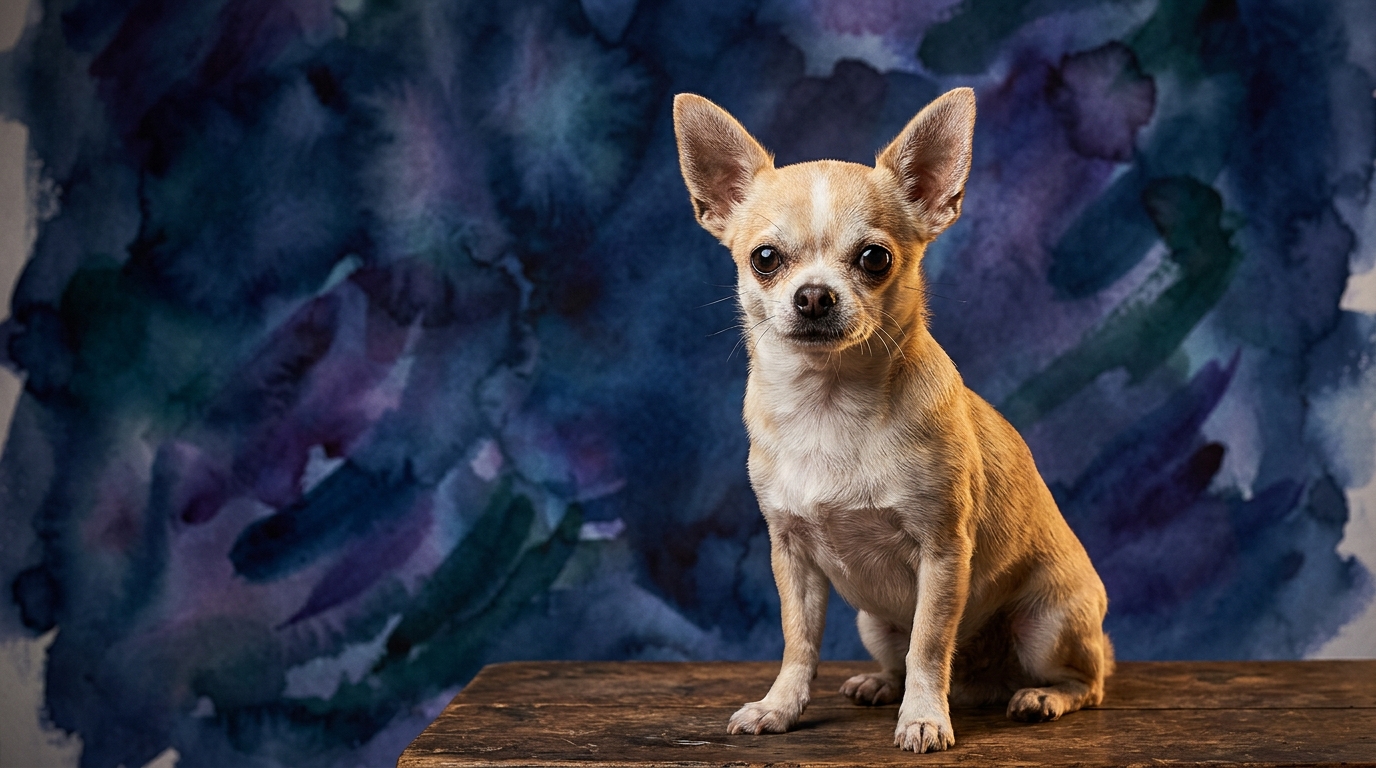
In stark contrast, the Chihuahua, a Toy group dog with a Coren rank of #67, presents a different cognitive blueprint. Its Problem Solving ability is rated 3/5, suggesting it can tackle straightforward puzzles but might require more assistance with intricate challenges. Training Speed stands at 3/5, meaning it learns at a moderate pace, requiring consistent reinforcement. Interestingly, its Social Intelligence matches the Rottweiler at 4/5, highlighting its strong aptitude for inter-species communication and bonding. The Chihuahua's Instinctive Drive is 3/5, indicating a lower intrinsic motivation for complex tasks, and its Memory is a respectable 4/5, allowing it to retain important details and routines.
Where the Rottweiler Excels Cognitively
The Rottweiler's cognitive strengths are evident in its superior Problem Solving and Instinctive Drive, both scoring 5/5. This breed demonstrates an exceptional aptitude for deciphering complex environmental cues and executing multi-step tasks, making them adept at roles requiring strategic thinking, such as protection work or advanced obedience. Their profound instinctive drive means they possess a deep-seated motivation to engage in activities, pushing through challenges with impressive focus and determination. Furthermore, a Memory score of 5/5 allows Rottweilers to retain vast amounts of information and intricate command sequences over long periods, making their learning durable and reliable. These combined traits enable the Rottweiler to excel in demanding environments where quick, accurate cognitive processing and sustained effort are paramount.
Where the Chihuahua's Cognitive Profile Shines in its Niche
While the Chihuahua's individual scores might seem lower in some areas compared to a working breed, its cognitive profile is exceptionally well-suited for its primary role as a companion. Its Social Intelligence, matching the Rottweiler at 4/5, indicates a keen ability to read human emotions and intentions, fostering deep, intuitive bonds with its owners. This high social acumen allows them to be incredibly responsive and attuned to household dynamics, often anticipating their human's needs or moods. A solid Memory score of 4/5 ensures they quickly learn household routines, recognize familiar faces, and remember specific events or locations within their home environment. Although their Problem Solving and Training Speed scores are moderate, their cognitive makeup prioritizes acute environmental awareness within their immediate social circle, making them masters of companionship rather than complex task execution.
Which is Easier to Train and Why
Based on The Cosmic Pet Pet IQ Lab metrics, the Rottweiler is generally easier to train for complex tasks and commands due to its higher scores in Training Speed (4/5), Problem Solving (5/5), Instinctive Drive (5/5), and Memory (5/5). Rottweilers acquire new behaviors quickly, understand multi-step instructions, and possess a strong internal motivation to work, coupled with excellent retention of what they’ve learned. Their inherent drive means they are often eager to engage in training sessions and require less external incentive once a task is understood.
Conversely, the Chihuahua, with Training Speed at 3/5 and Problem Solving at 3/5, may require more patience and repetition during training. Their lower Instinctive Drive (3/5) means trainers might need to employ more creative and consistent motivational strategies, as they may not possess the same inherent eagerness for task-oriented work. While capable of learning, Chihuahuas often respond best to positive reinforcement and shorter, engaging sessions, as their attention might wane more quickly than a Rottweiler's when faced with repetitive or challenging tasks. Successful training for a Chihuahua often hinges on making the process highly rewarding and directly linked to social interaction.
Which Suits Active Owners vs. Relaxed Owners
The Rottweiler, with its high Instinctive Drive (5/5), Problem Solving (5/5), and robust physical capabilities, is an ideal match for active owners who can provide consistent mental and physical stimulation. These owners thrive on engaging their dog in activities like advanced obedience, agility, protection sports, or even working roles, channeling the Rottweiler's inherent desire to perform and solve problems. A Rottweiler requires an owner committed to harnessing its profound cognitive and physical energy through structured activities and consistent training.
The Chihuahua, on the other hand, with its moderate Instinctive Drive (3/5) and smaller stature, is better suited for more relaxed owners seeking a devoted companion. While they benefit from regular walks and play, their exercise needs are less demanding than a Rottweiler's. Owners who enjoy close companionship, indoor games, and providing a secure, stimulating home environment will find the Chihuahua's cognitive profile, particularly its high Social Intelligence (4/5) and solid Memory (4/5), perfectly aligns with their lifestyle, creating a deeply connected household member without the need for intense, task-oriented engagement.
The Verdict
Choose a Rottweiler if you are an active, experienced owner eager to engage a dog with significant problem-solving abilities, a strong work ethic, and a deep capacity for complex learning and retention. This breed thrives with structured training and a clear purpose.
Opt for a Chihuahua if you seek a highly social, attentive companion dog that excels in forming close bonds within a home environment, requiring moderate physical activity and valuing consistent, gentle training.
🧠 Find Your Pet's IQ Score
Our Pet IQ Lab assessment covers 25+ tests across 5 cognitive dimensions — personalized to your breed.
Take the Full IQ Test →Frequently Asked Questions
Are Chihuahuas genuinely capable of learning complex commands, despite their lower training speed score?
Yes, Chihuahuas are capable of learning complex commands, though they might take more time and repetition than breeds with higher training speed. Their solid memory (4/5) ensures retention, and consistent, positive reinforcement makes the process effective. Success often depends on the trainer's patience and ability to make learning engaging.
How important is mental stimulation for a Rottweiler given its high problem-solving and instinctive drive?
Mental stimulation is crucial for a Rottweiler; their high problem-solving (5/5) and instinctive drive (5/5) mean they require regular cognitive challenges to prevent boredom and destructive behaviors. Engaging them in puzzle toys, advanced obedience, or task-oriented games is vital for their well-being. Without it, their powerful cognitive abilities can lead to them finding their own, potentially undesirable, 'work.'
Does a Chihuahua's 4/5 social intelligence score mean they get along with everyone, or is it more nuanced?
A Chihuahua's 4/5 social intelligence score indicates a strong capacity to read and respond to social cues, making them generally adept at forming bonds with their chosen humans. However, this doesn't automatically mean they get along with *everyone*; their social intelligence is often keenly focused on their immediate family, and they can be discerning or reserved with strangers. Early socialization is key to broadening their social comfort zone.