
Side-by-Side IQ Profile
The Cosmic Pet Pet IQ Lab employs a five-dimensional framework to dissect canine intelligence, offering a nuanced understanding beyond simple obedience. For the Rottweiler, ranked #9 by Coren, their profile paints a picture of a perceptive and driven worker. Their Problem Solving score of 5/5 indicates an exceptional ability to analyze situations and devise effective solutions, often demonstrating ingenuity in navigating obstacles or understanding complex tasks. A Training Speed of 4/5 means they absorb new commands and routines with impressive efficiency, often requiring fewer repetitions to achieve mastery. Their Social Intelligence, rated 4/5, reflects a keen awareness of human cues and social dynamics, allowing them to form deep, responsive bonds and discern intentions. With an Instinctive Drive of 5/5, the Rottweiler possesses a powerful, inherent urge to perform, whether guarding, herding, or engaging in protection work, demanding purposeful engagement. Finally, a Memory score of 5/5 underscores their capacity for excellent long-term retention of commands, experiences, and individuals, making them reliable partners.
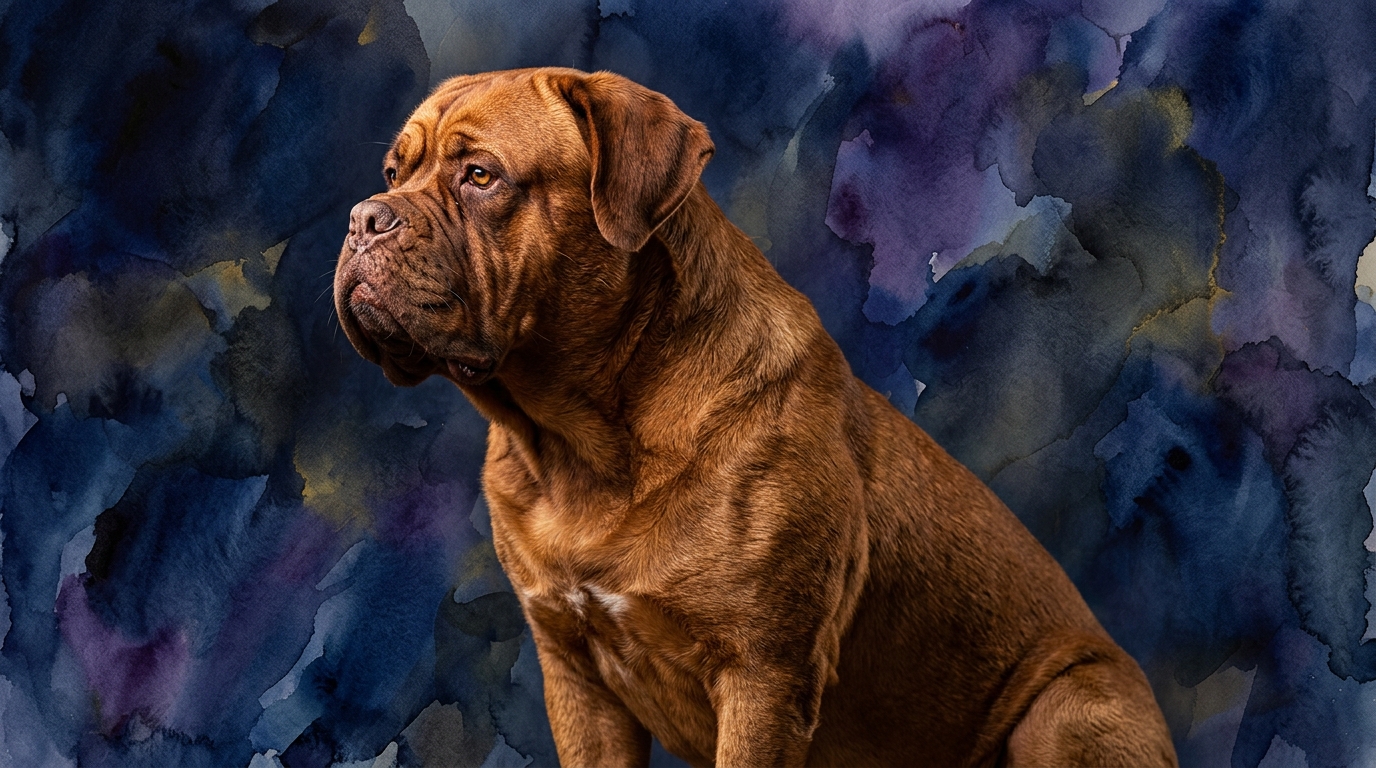
In contrast, the Dogue de Bordeaux, while not Coren-ranked, presents a distinct cognitive landscape. Their Problem Solving is rated 3/5, suggesting they can tackle challenges but might approach them with more deliberation or through trial and error rather than immediate, inventive solutions. A Training Speed of 3/5 indicates they are capable learners but require more patience, repetition, and consistent positive reinforcement to solidify new behaviors. Their Social Intelligence, also 3/5, points to a deep, focused loyalty to their immediate family, though they may be more reserved or less overtly responsive to subtle cues from strangers or in novel social settings. An Instinctive Drive of 3/5 means they possess a watchful, protective nature, but typically without the intense, constant 'need to work' seen in the Rottweiler, often being content as a steadfast companion. Their Memory score of 3/5 suggests good retention, but they may benefit from occasional refreshers, especially for commands or lessons not frequently practiced.
Where Rottweiler Wins Cognitively
The Rottweiler's cognitive strengths clearly position them ahead in areas demanding quick analytical thinking and proactive engagement. Their 5/5 Problem Solving aptitude means they don't just follow instructions; they actively interpret and adapt, often finding the most efficient path to a solution. This manifests in tasks like complex scent work, navigating agility courses with minimal guidance, or even figuring out how to open child-proof latches. Coupled with a 4/5 Training Speed, they are remarkably efficient learners, absorbing multi-step commands and intricate routines with fewer repetitions than many other breeds. This efficiency isn't just about speed; it's about a deep understanding and eagerness to participate in the learning process. Furthermore, their 5/5 Instinctive Drive fuels a profound purposefulness, making them exceptional candidates for roles requiring sustained focus and a strong work ethic, such as protection, search and rescue, or competitive obedience. They thrive on having a job to do, and their cognitive framework is perfectly aligned to excel in such demanding environments, consistently demonstrating a sharp mental acuity and a robust capacity for independent thought within a structured framework. Their superior memory (5/5) ensures that once a lesson is learned or an experience is processed, it remains firmly embedded, contributing to their reliability and consistency in performance over extended periods.
Where Dogue de Bordeaux Wins Cognitively
While the Dogue de Bordeaux's cognitive metrics are generally more moderate, their unique profile yields distinct advantages, particularly for owners seeking a specific type of companionship and household presence. Their 3/5 Instinctive Drive, while lower than the Rottweiler's, can be a 'win' in terms of domestic tranquility. It means they are less prone to the restless energy or constant need for a 'job' that can accompany higher-drive breeds. This often translates into a calmer, more settled demeanor around the home, making them excellent, watchful companions without demanding intense, daily cognitive challenges to prevent boredom. Their deliberate pace in Problem Solving (3/5) and Training Speed (3/5) means that while they may take longer to grasp concepts, the learning is often deeply ingrained. They aren't prone to impulsive errors driven by overexcitement; instead, they process information at a measured rate, leading to a solid, reliable understanding once a behavior is established. Their Social Intelligence at 3/5, while not broadly expressive, speaks to a profound, unwavering loyalty to their inner circle. They form incredibly strong, focused bonds with their family, offering a deep, quiet devotion that many owners find incredibly rewarding. This selective social focus, combined with their moderate drive, means they are less likely to overreact to nuanced external stimuli, contributing to their reputation as a steadfast and stable presence.
Which is Easier to Train and Why
Considering their respective IQ profiles, the Rottweiler is demonstrably easier to train for a broad range of tasks and obedience commands. Their Training Speed of 4/5 means they grasp new concepts and cues with remarkable alacrity, often requiring fewer repetitions to achieve proficiency. This efficiency is amplified by their 5/5 Problem Solving ability, allowing them to not just parrot commands but to understand the underlying intent and apply it contextually. For instance, a Rottweiler is more likely to quickly generalize a 'stay' command from the living room to a bustling park. Their 5/5 Memory further solidifies this advantage, ensuring that learned behaviors are retained over long periods, reducing the need for constant refreshers. Rottweilers thrive on the mental engagement that training provides, often eager to please and excel.
Conversely, the Dogue de Bordeaux, with a 3/5 Training Speed and 3/5 Memory, requires a more patient, consistent, and reward-based approach. They are not stubborn, but deliberate learners. They process information at a slower pace, and while they can certainly learn complex commands, it will necessitate more repetitions and a longer period of consistent practice to embed the behavior firmly. Their 3/5 Problem Solving means they might not proactively seek solutions in training scenarios but will respond well to clear, step-by-step guidance. Owners training a Dogue de Bordeaux must embrace consistency and positive reinforcement, understanding that the journey will be a marathon, not a sprint, but the results, once achieved, are often deeply rooted.
Which Suits Active Owners vs. Relaxed Owners
The choice between these two breeds largely depends on an owner's lifestyle and their capacity for mental and physical engagement. The Rottweiler, with its 5/5 Instinctive Drive and 5/5 Problem Solving, is an ideal match for active owners who relish providing structured challenges and purposeful activities. These dogs thrive when given a 'job,' whether it's advanced obedience, protection sports, competitive tracking, or extensive hiking and running. Their sharp cognitive abilities and desire to engage mean they require consistent mental stimulation to prevent boredom and channel their considerable energy positively. An active owner will find a Rottweiler an eager and capable partner in almost any endeavor that involves learning and working.
In contrast, the Dogue de Bordeaux, with its more moderate 3/5 Instinctive Drive and 3/5 Problem Solving, is often better suited for owners who prefer a more relaxed, yet still active, companionship. While they certainly need regular physical exercise to maintain health, their mental demands are generally less intense and constant than a Rottweiler's. They are content with daily walks, play sessions, and ample family interaction, without the same inherent 'need' for complex tasks or a working role. A relaxed owner will appreciate the Dogue de Bordeaux's calm, watchful presence and deep devotion, finding satisfaction in a loyal companion who values comfort and family life over constant mental gymnastics.
The Verdict
For owners seeking a proactive companion eager for mental challenges, structured training, and a strong working partnership, the Rottweiler's sharp intellect and driven nature align perfectly.
Opt for the Dogue de Bordeaux if you appreciate a devoted, watchful companion who thrives on close family bonds and a more relaxed pace, valuing deep connection over constant cognitive tasks.
🧠 Find Your Pet's IQ Score
Our Pet IQ Lab assessment covers 25+ tests across 5 cognitive dimensions — personalized to your breed.
Take the Full IQ Test →Frequently Asked Questions
Do Dogue de Bordeaux struggle with learning?
No, they don't struggle, but their learning pace is more measured compared to breeds like the Rottweiler. They benefit from consistent, positive reinforcement and a patient approach, allowing them to thoroughly process and retain information over time.
How does a Rottweiler's high instinctive drive manifest?
A Rottweiler's 5/5 instinctive drive means they possess a strong, innate desire to perform tasks, whether it's guarding, herding, or protection work. This drive requires appropriate outlets through training and activities, otherwise, it can lead to boredom or channel into undesirable behaviors.
Can a Dogue de Bordeaux excel in obedience?
Absolutely, a Dogue de Bordeaux can excel in obedience, though it may take more time and dedication than with a Rottweiler. Their 3/5 training speed means that patience, clear communication, and consistent practice are key to building a solid foundation of commands and behaviors.