
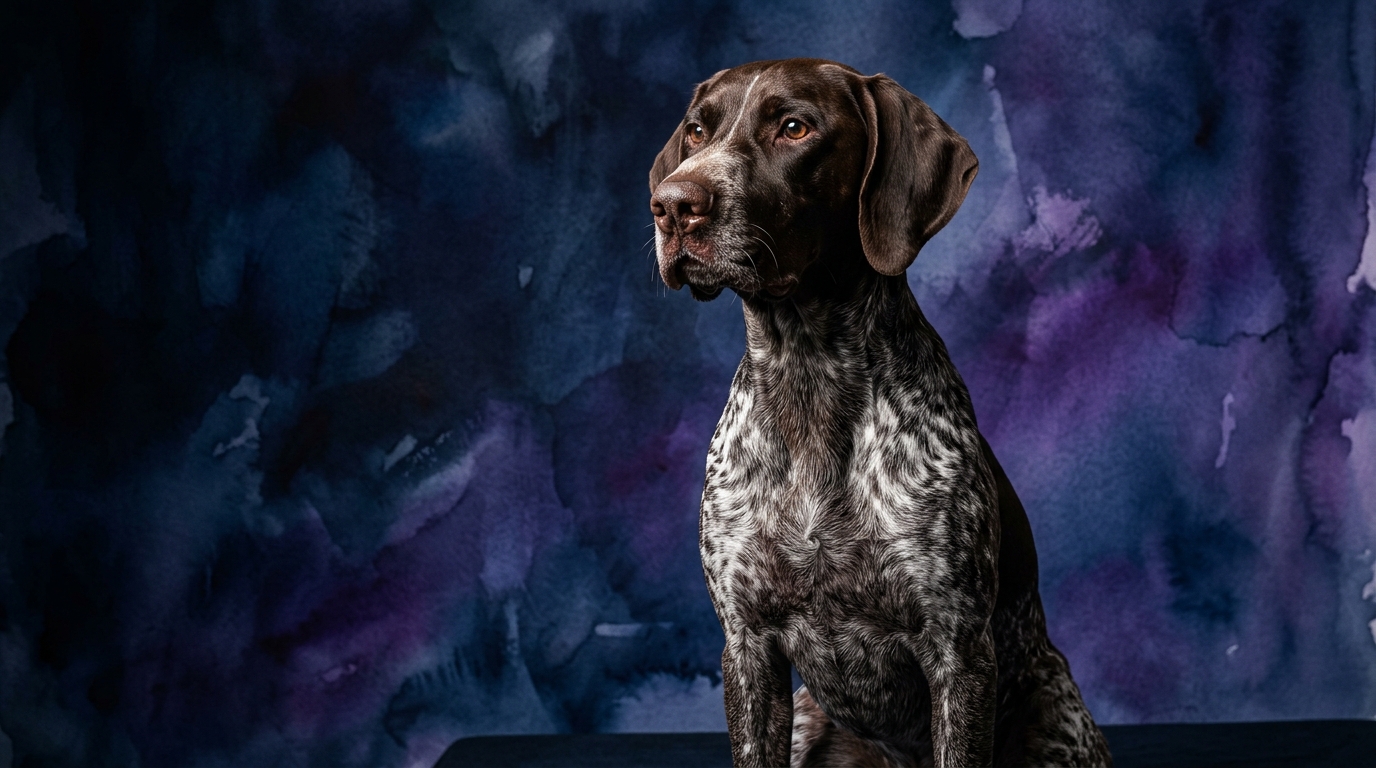
Side-by-Side IQ Profile: Rottweiler vs. German Shorthaired Pointer
The Cosmic Pet Pet IQ Lab ranks the Rottweiler with a Coren rank of #9, signifying a top-tier cognitive capacity. Their Problem Solving is rated 5/5, indicating an exceptional ability to navigate complex situations and devise solutions. Training Speed is 4/5, meaning they assimilate new commands and routines quickly. Social Intelligence stands at 4/5, reflecting their nuanced understanding of social cues and group dynamics. Their Instinctive Drive is a perfect 5/5, fueled by a powerful heritage of protection and work. Finally, their Memory is also a flawless 5/5, showcasing an enduring capacity for recall and retention of experiences and lessons.
The German Shorthaired Pointer (GSP) holds a Coren rank of #17, also placing them among breeds with high working and obedience intelligence. Their Problem Solving also scores 5/5, demonstrating an adeptness at resolving environmental challenges, especially those related to their hunting tasks. Training Speed is 4/5, highlighting their eagerness to learn and receptiveness to instruction. Social Intelligence is 4/5, indicating strong bonds and responsiveness to their human companions. Like the Rottweiler, their Instinctive Drive is 5/5, overwhelmingly focused on their hunting origins. Their Memory is rated 4/5, signifying good recall, though slightly less profound than the Rottweiler's exceptional retention.
Where the Rottweiler Wins Cognitively
Rottweilers hold a distinct cognitive advantage in the depth and longevity of their memory, evidenced by their perfect 5/5 score compared to the GSP's 4/5. This translates to an enduring capacity for recalling intricate sequences of commands, past experiences, and the specific behaviors of individuals, making them incredibly consistent once a lesson is ingrained. Their superior retention allows for the building of complex behavioral repertoires over time, supporting their roles in demanding working capacities.
While both breeds score 5/5 in problem-solving, the Rottweiler's approach often manifests in a more deliberate, analytical manner, particularly in situations involving strategy or assessing potential threats. This profound depth of thought, combined with their exceptional memory, allows them to construct intricate mental models of their environment and social structure, contributing to their discerning judgment and steady demeanor in varied circumstances.
Where the German Shorthaired Pointer Wins Cognitively
The German Shorthaired Pointer's cognitive strengths truly shine in adaptability and quick, reactive problem-solving within dynamic, often unpredictable environments. While both breeds achieve a 5/5 in problem-solving, the GSP's intelligence is frequently geared towards immediate, in-the-moment decisions, such as adjusting a pursuit path or locating a hidden retrieve. This agility in thought allows them to quickly devise solutions in fast-changing outdoor settings, an essential trait for their sporting heritage.
Their instinctive drive, also rated 5/5, is channeled with immense focus into specific tasks, particularly those involving scent work, pointing, and retrieving. This laser-like focus, combined with their boundless energy, means they excel at repetitive, high-drive activities. They demonstrate an unparalleled tenacity and enthusiasm for their specialized roles, often maintaining a higher level of sustained engagement in field-oriented tasks that can be more challenging to replicate in the Rottweiler.
Which is Easier to Train and Why?
Both breeds score a respectable 4/5 in training speed, indicating a rapid capacity for learning. However, the nature of their training experience and the required handler approach often differs. The Rottweiler’s formidable memory (5/5) and strong instinctive drive (5/5) for purpose-driven work mean they generally require a firm, consistent hand from a confident leader. Once they grasp a command and its underlying purpose, they commit it to memory with remarkable tenacity, ensuring excellent long-term retention. Their social intelligence allows them to quickly understand hierarchical roles, which can be advantageous in establishing clear training authority.
The German Shorthaired Pointer’s training, while equally fast, is fueled by a different kind of enthusiasm and a strong desire for active partnership. Their instinctive drive (5/5) is less about guarding and more about engaging in cooperative hunting-style activities. This means they often respond exceptionally well to positive reinforcement and training methods that incorporate movement, scent work, and games. While they learn quickly, their inherent high energy and occasional independent streak in pursuit of interesting scents might require more creative engagement and environmental management to maintain focus compared to the Rottweiler’s more steadfast, task-oriented concentration.
Which Suits Active Owners vs. Relaxed Owners
For active owners seeking a dynamic companion, the German Shorthaired Pointer is an exceptional match. Their relentless instinctive drive (5/5) and high energy levels demand substantial daily exercise, including running, swimming, or extensive field work. Owners who can consistently provide hours of stimulating physical and mental engagement will find the GSP to be an enthusiastic, tireless partner, thriving on adventure and shared activities that tap into their innate hunting prowess and need for movement.
The Rottweiler, while certainly requiring regular exercise to maintain physical and mental health, aligns well with owners who appreciate a more structured routine and purpose-driven activities rather than continuous high-intensity exertion. Their powerful instinctive drive (5/5) is often channeled into roles like protection, advanced obedience, or tracking, which, while demanding, don't necessarily require the same non-stop, high-octane physical output as a GSP. Owners who enjoy confident, loyal companionship and are prepared to provide consistent, mentally challenging training will find a deeply rewarding bond.
The Verdict
Opt for the Rottweiler if you seek a highly discerning, deeply loyal companion who excels in structured roles, possesses exceptional memory, and thrives on purpose-driven mental engagement.
Select the German Shorthaired Pointer if you desire an endlessly energetic, cooperative partner for outdoor adventures and field sports, whose problem-solving shines in dynamic, fast-paced environments.
🧠 Find Your Pet's IQ Score
Our Pet IQ Lab assessment covers 25+ tests across 5 cognitive dimensions — personalized to your breed.
Take the Full IQ Test →Frequently Asked Questions
Do Rottweilers require more mental stimulation than German Shorthaired Pointers?
Both breeds benefit immensely from mental stimulation, but the type often differs. Rottweilers thrive on complex problem-solving, obedience challenges, and guardian-type roles, leveraging their superior memory and analytical approach. GSPs, while also needing mental work, prefer activities that engage their hunting instincts, such as scent games, retrieving, and agility.
Are German Shorthaired Pointers prone to being easily distracted during training?
German Shorthaired Pointers can be prone to distraction, particularly by compelling scents or movement, given their powerful instinctive drive for hunting. While they learn quickly (training speed 4/5), trainers often need to incorporate engaging, high-energy methods and gradually introduce distractions to maintain focus, especially in outdoor environments.
How does the Rottweiler's social intelligence impact their family life?
The Rottweiler's strong social intelligence (4/5) contributes to their discerning loyalty and protective nature within their family unit. They form deep bonds, understand family dynamics, and can be reserved with strangers, making them excellent guardians who are attuned to the well-being of their human companions and their established social structure.