
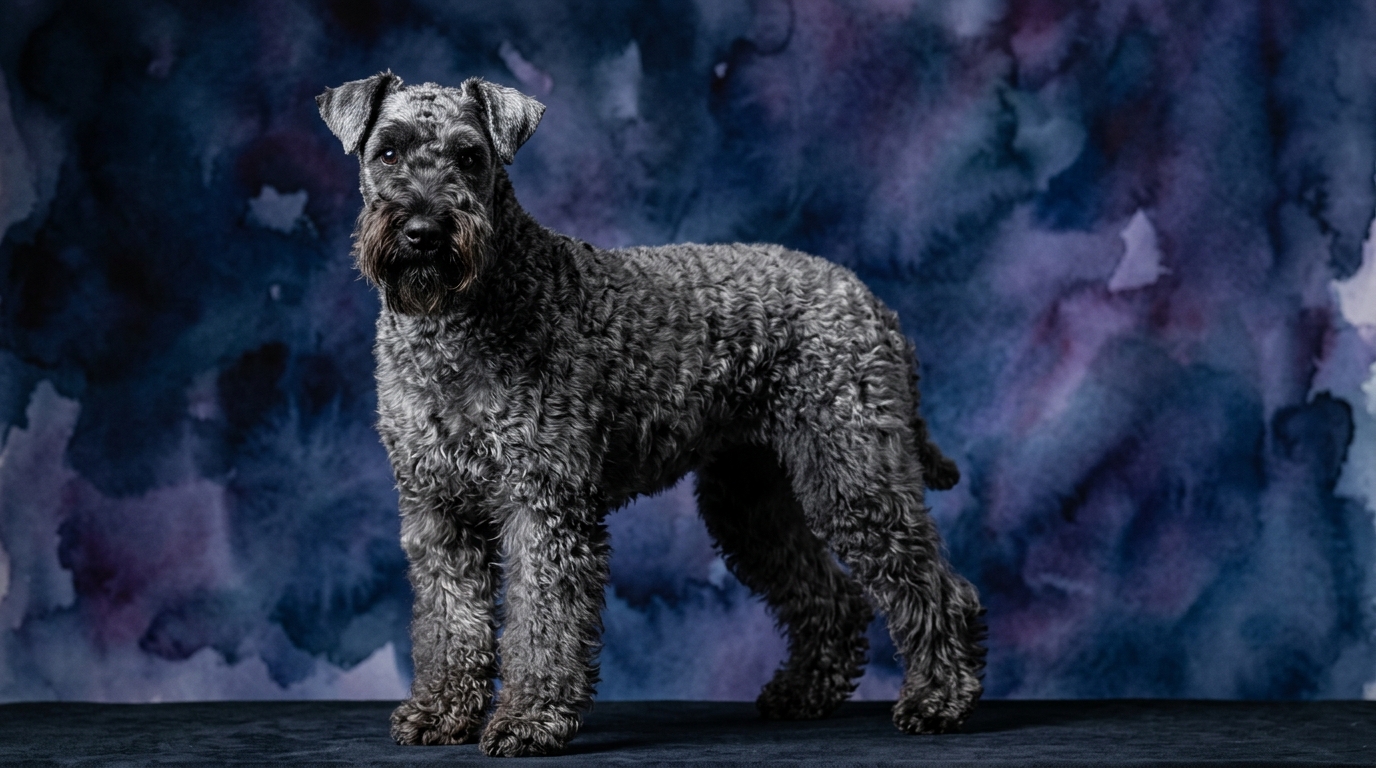
Side-by-Side IQ Profile: Rottweiler vs. Kerry Blue Terrier
The Rottweiler, a formidable working breed with a Coren rank of #9, exhibits a robust cognitive profile tailored for complex tasks and partnership. Their Problem Solving is rated 5/5, indicating an exceptional capacity for understanding intricate situations and devising multi-step solutions. Training Speed stands at 4/5, reflecting their quick grasp of commands and desire to learn when properly motivated. Social Intelligence, at 4/5, highlights their ability to interpret human cues and bond deeply, while their Instinctive Drive of 5/5 underscores powerful guarding and protective instincts. A Memory rating of 5/5 ensures they retain vast amounts of information over time, from specific commands to past experiences.
In contrast, the Kerry Blue Terrier, a spirited terrier breed without a specific Coren ranking, presents a different cognitive blueprint, rooted in independence and resourcefulness. Their Problem Solving is rated 3/5, focusing more on practical, immediate solutions, often related to their environment or desires. Training Speed is 3/5, meaning they can learn but may require more patience and engaging methods due to their independent streak. Social Intelligence, also 3/5, suggests they form strong bonds with their family but can be reserved or assertive with outsiders. Their Instinctive Drive is 3/5, primarily manifesting as a strong prey drive and digging propensity, while their Memory at 3/5 is sufficient for routines and basic learning, though perhaps not for the same depth of complex recall as the Rottweiler.
Where the Rottweiler Wins Cognitively
The Rottweiler's cognitive strengths shine particularly bright in areas demanding structured thought and cooperative engagement. Their 5/5 rating in Problem Solving reflects an ability to deconstruct complex tasks, such as navigating intricate obedience courses or understanding multi-stage commands, often anticipating outcomes. This isn't just about following instructions; it's about processing information to achieve a goal. Their superior Social Intelligence (4/5) means they excel at interpreting subtle human body language and vocal inflections, making them highly responsive partners in tasks like protection work or advanced obedience where nuanced communication is key. Furthermore, their 5/5 Memory allows them to retain vast repertoires of commands and experiences, enabling them to perform reliably even after long breaks from training or to recall specific individuals and their associated behaviors, crucial for their role as discerning guardians.
Where the Kerry Blue Terrier Wins Cognitively
The Kerry Blue Terrier, while not possessing the same cooperative intellectual profile, demonstrates a distinct and valuable set of cognitive advantages rooted in its terrier lineage. Its 3/5 Problem Solving, though lower, is uniquely geared towards independent action and resourcefulness. This breed excels at figuring out immediate, practical solutions to get what it wants, whether it's outsmarting a gate latch to explore or locating a hidden toy through scent and persistence. Their 3/5 Instinctive Drive, primarily a strong prey drive, translates into an unwavering focus and determination when pursuing a perceived 'quarry,' a cognitive trait that makes them formidable in pest control and engaging in games that simulate hunting. This breed's cognitive strengths lie in its tenacity and self-reliance, demonstrating an ability to work independently to achieve its own objectives, often with a clever, opportunistic flair that belies their numerical score in a cooperative context.
Which Is Easier to Train and Why
When considering ease of training, the Rottweiler generally presents a smoother path for most handlers. Their 4/5 Training Speed and 4/5 Social Intelligence mean they are eager to engage, quick to understand new commands, and have a strong desire to work collaboratively with their human. This willingness to form a partnership and their excellent memory (5/5) allows for rapid acquisition and long-term retention of complex behaviors, from basic obedience to advanced protection work. They thrive on clear structure and consistent guidance, often finding satisfaction in pleasing their handler.
In contrast, the Kerry Blue Terrier, with a 3/5 in both Training Speed and Social Intelligence, requires a different approach. Their inherent independence and strong-willed terrier nature mean they often question commands or prefer to follow their own agenda. Training them demands patience, creativity, and highly motivating rewards to maintain engagement. While they are certainly capable of learning, their progress can be slower, and their responses less immediate, often punctuated by moments where their instincts override their learned behaviors, such as a sudden chase impulse. A Rottweiler often seeks to understand 'what do you want me to do?', while a Kerry Blue might ponder 'why should I do that?'.
Which Suits Active Owners vs. Relaxed Owners
Both breeds require active engagement, but the type of activity and mental stimulation differs significantly. The Rottweiler, with its high instinctive drive (5/5) and need for purpose, thrives with owners who can provide consistent training, structured exercise, and mentally stimulating tasks. They are ideal for active individuals or families committed to advanced obedience, protection sports, or even therapy work, where their cognitive abilities and desire to serve are fully utilized. A 'relaxed owner' in this context would mean someone who appreciates a dog that can be calm indoors but is dedicated to providing significant outdoor activity and mental challenges.
The Kerry Blue Terrier, while also requiring an active lifestyle, suits owners who appreciate a dog with an independent spirit and a penchant for energetic play. They excel with owners who enjoy varied activities like agility, earthdog trials, or long, exploratory walks where their keen senses and prey drive can be engaged. They are not a sedentary breed, but their mental stimulation often comes from problem-solving on their own terms – sniffing out interesting scents, playing 'hunt' games, or even outsmarting their owners. A 'relaxed owner' for a Kerry Blue might be someone who enjoys a dog that provides entertainment through its clever antics and requires less formal, cooperative work but still needs ample physical outlets for its boundless energy.
The Verdict
Choose a Rottweiler if you seek a highly trainable, cooperative, and protective companion for structured activities, valuing a strong working bond and consistent performance.
Opt for a Kerry Blue Terrier if you appreciate an independent, resourceful, and spirited companion, willing to engage in playful, active pursuits that tap into their keen terrier instincts.
🧠 Find Your Pet's IQ Score
Our Pet IQ Lab assessment covers 25+ tests across 5 cognitive dimensions — personalized to your breed.
Take the Full IQ Test →Frequently Asked Questions
Is a Rottweiler too much for a first-time owner?
A Rottweiler's robust physical and mental needs, combined with their strong drives, mean they are best suited for experienced owners or highly committed first-timers willing to invest heavily in training and socialization. Their cognitive abilities require consistent direction and leadership from an early age to channel their instincts appropriately.
Do Kerry Blue Terriers get along with other pets?
Kerry Blue Terriers can coexist with other pets, especially if raised with them from a young age and properly socialized. However, their strong prey drive (3/5 instinctive drive) means they might not be suitable with small, non-canine pets, and proper introductions and supervision are always essential with other dogs, as they can sometimes be assertive.
How much mental stimulation does each breed need daily?
Both breeds require significant daily mental stimulation. A Rottweiler needs at least 30-60 minutes of focused training or puzzle work, in addition to physical exercise, to satisfy its 5/5 memory and 5/5 instinctive drive. A Kerry Blue Terrier benefits from 20-40 minutes of engaging play, scent work, or short, fun training sessions that tap into its problem-solving and prey drive, alongside vigorous physical activity, to prevent boredom and destructive behaviors.