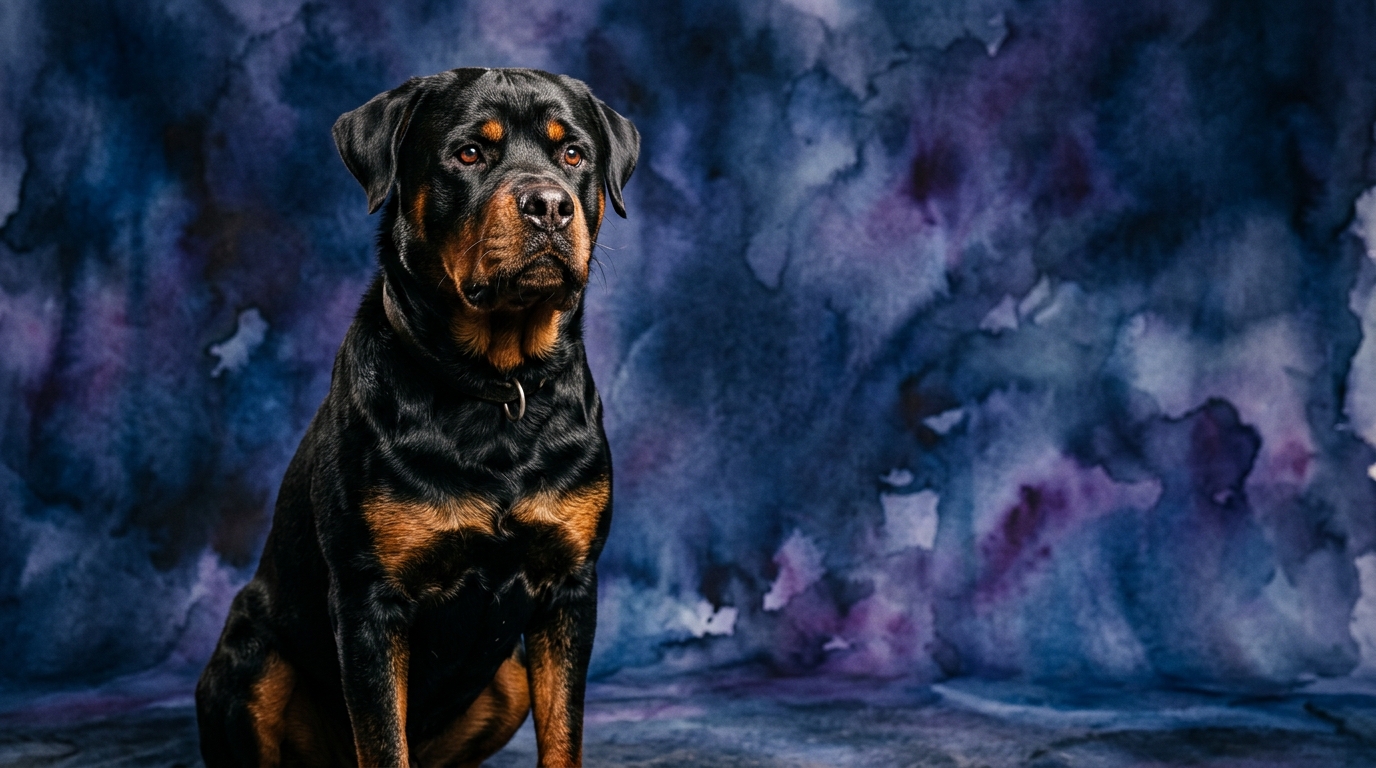
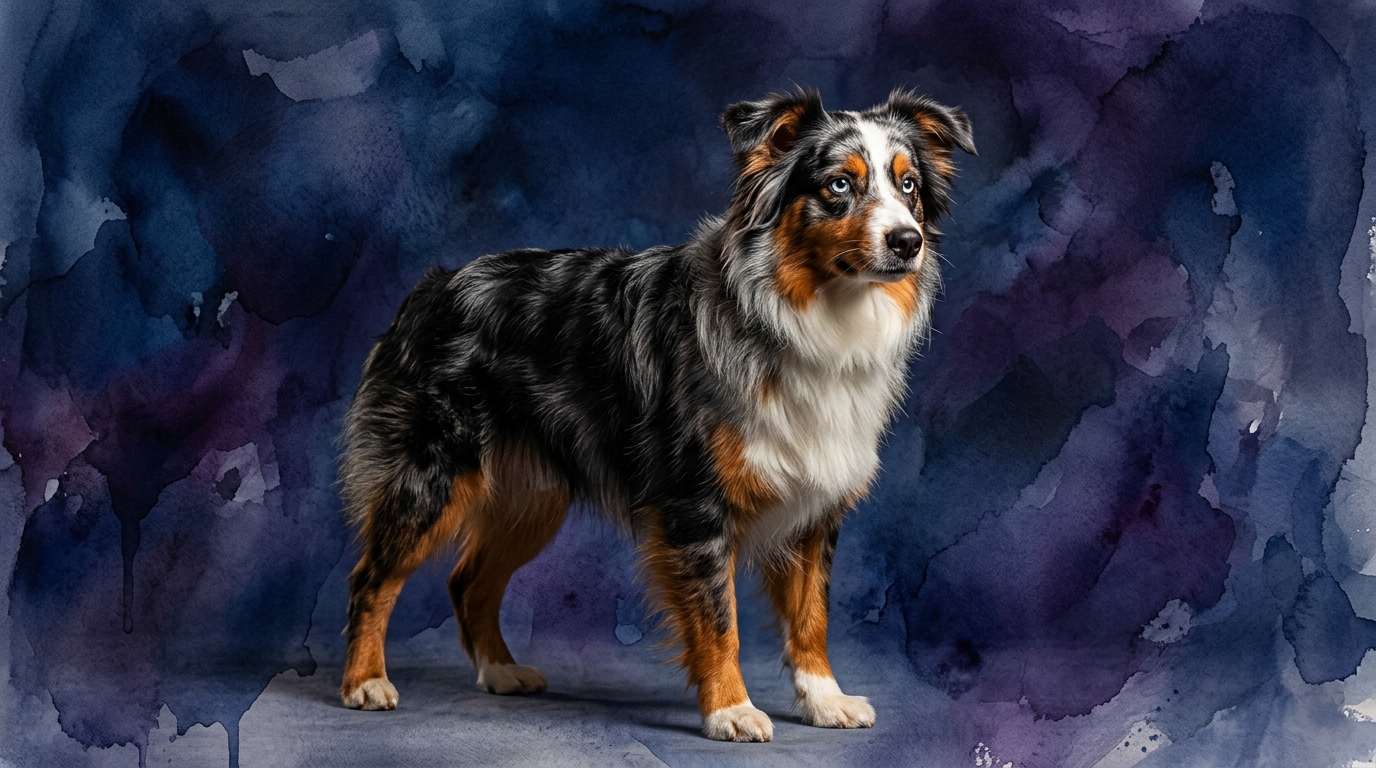
Side-by-Side Cognitive Profiles: Rottweiler vs. Miniature American Shepherd
The Cosmic Pet Pet IQ Lab provides a unique framework for evaluating canine cognition across five crucial dimensions, allowing us to dissect the mental make-up of these breeds. The Rottweiler, a robust Working Group dog, holds a distinguished Coren rank of #9, indicating a high capacity for understanding new commands. Their cognitive profile is marked by Problem Solving 5/5, Training Speed 4/5, Social Intelligence 4/5, Instinctive Drive 5/5, and Memory 5/5. This suggests a breed that not only grasps concepts quickly but also applies them creatively, retains information over long periods, and possesses powerful, inherent motivations.
In contrast, the Miniature American Shepherd, a nimble Herding Group dog, is not Coren-ranked but presents a distinct cognitive blueprint. Their scores are Problem Solving 3/5, Training Speed 3/5, Social Intelligence 3/5, Instinctive Drive 3/5, and Memory 3/5. This profile indicates a dog with solid, functional intelligence that, while perhaps less independently innovative than the Rottweiler, possesses reliable learning capabilities and a focused approach to tasks. Their scores across the board suggest a more consistent, perhaps less complex, cognitive engagement with their environment and tasks.
Where the Rottweiler Excels Cognitively
The Rottweiler’s cognitive strengths are evident in their top-tier Problem Solving (5/5) and Memory (5/5) scores. This combination means they are exceptionally adept at analyzing novel situations and devising effective solutions, often with minimal human intervention. For instance, a Rottweiler faced with a gate they perceive as a barrier might not just wait for an owner; they might systematically test latches, push on various points, or even attempt to dig under, recalling previous successes or failures in similar scenarios. Their formidable Instinctive Drive (5/5) further empowers this, channeling their natural guarding and working proclivities into focused, determined action. This drive, combined with superior problem-solving, makes them formidable in protection work or complex scent detection, where independent decision-making under pressure is paramount. Their Social Intelligence (4/5) also allows them to interpret human cues and intentions with considerable nuance, making them highly perceptive companions who understand intricate social dynamics within their family unit.
Where the Miniature American Shepherd Shines Cognitively
While the Miniature American Shepherd's cognitive scores are generally lower than the Rottweiler's, their specific profile offers distinct advantages in certain contexts. Their Instinctive Drive (3/5), though not as intense as a Rottweiler's, is perfectly calibrated for their herding lineage. This means they possess a strong, functional drive for working and engaging in structured activities like agility or herding trials, without the overwhelming intensity that might require constant, strenuous management in a pet home. This controlled drive makes them highly biddable and responsive within specific task parameters. Their Social Intelligence (3/5) suggests a more direct and less independently interpretive approach to social interactions, making them highly attuned to handler guidance rather than prone to complex, autonomous social decisions. This can be a significant benefit for owners who prioritize a dog whose social responses are consistently shaped by training and clear direction, fostering a deep, cooperative working relationship. Their Problem Solving (3/5) allows them to master intricate routines and sequences reliably, making them exceptional performers in precision-based dog sports where consistency and rule adherence are key, rather than spontaneous innovation.
Training Dynamics: Which Breed Learns More Readily?
When considering ease of training, the Rottweiler's Training Speed (4/5) and Memory (5/5) give them a clear edge in rapidly acquiring and retaining new commands. They grasp concepts quickly and commit them to long-term memory, often requiring fewer repetitions than many other breeds. However, their high Problem Solving (5/5) and Instinctive Drive (5/5) mean they also require an owner who can consistently provide mental challenges and clear, firm leadership. Without it, their cognitive prowess can be applied to independent, sometimes undesirable, problem-solving. For example, a Rottweiler might quickly learn to open cabinets if not properly managed, applying their intelligence to access forbidden items.
The Miniature American Shepherd, with a Training Speed of 3/5 and Memory 3/5, will generally take more repetitions to solidify new commands compared to a Rottweiler. However, their slightly lower Problem Solving (3/5) and Instinctive Drive (3/5) can translate to a more straightforward training experience for certain owners. They are typically eager to please and respond well to positive reinforcement, making them highly trainable for those who appreciate a cooperative learner. Their herding background means they thrive on structured tasks and clear direction, making them less likely to independently 'invent' solutions to perceived problems in a way that might challenge an owner. For instance, while a Rottweiler might try multiple methods to escape a yard, a Miniature American Shepherd is more likely to wait for a command or follow a learned routine.
Matching Lifestyles: Active Owners vs. Relaxed Companionship
For active owners seeking a canine partner for demanding activities, the Rottweiler's cognitive profile aligns perfectly. Their high Instinctive Drive (5/5), combined with superior Problem Solving (5/5) and Memory (5/5), means they excel in roles requiring sustained focus, independent decision-making, and physical endurance, such as advanced protection training, competitive obedience, or search and rescue. These dogs thrive on consistent mental and physical challenges, making them ideal for individuals or families committed to rigorous daily engagement and structured work. A relaxed owner who cannot meet these intense needs might find a Rottweiler's powerful cognitive abilities lead to frustration and behavioral issues born of boredom.
The Miniature American Shepherd, while still an active breed, offers a different kind of engagement, making them suitable for active owners who appreciate focused, cooperative work without the same level of independent intensity. Their balanced cognitive scores (3/5 across the board) mean they excel in dog sports like agility, flyball, or frisbee, where their biddability, agility, and eagerness to please are highly valued. They thrive on having a 'job' to do that involves working closely with their owner, but their drives are generally more manageable for an active family who enjoys regular outdoor activities and dog sports without the need for constant, high-stakes mental challenges. While not a 'relaxed owner' dog in the couch potato sense, their cognitive demands are less overwhelming than a Rottweiler's for an owner seeking an engaged but less intensely driven companion.
The Verdict
Choose a Rottweiler if you are an experienced owner prepared to channel profound cognitive abilities, powerful instincts, and independent problem-solving into structured work or advanced training.
Opt for a Miniature American Shepherd if you seek a highly cooperative, biddable companion for dog sports or active family life, whose cognitive strengths lie in focused task performance and reliable responsiveness to direction.
🧠 Find Your Pet's IQ Score
Our Pet IQ Lab assessment covers 25+ tests across 5 cognitive dimensions — personalized to your breed.
Take the Full IQ Test →Frequently Asked Questions
Do Rottweilers require a lot of mental stimulation?
Absolutely. With their 5/5 Problem Solving and 5/5 Memory, Rottweilers need consistent, challenging mental engagement to thrive. Without it, their sharp minds can lead to boredom and potentially destructive behaviors as they invent their own 'work'.
Are Miniature American Shepherds good for first-time dog owners?
While their cognitive profile suggests a more manageable intensity, Miniature American Shepherds are still working dogs with herding instincts. First-time owners who are committed to consistent training and providing an outlet for their dog's energy and desire to work can certainly succeed.
Which breed is better for competitive dog sports?
Both breeds can excel, but in different ways. Rottweilers might dominate in protection sports or competitive obedience due to their independent problem-solving and drive, while Miniature American Shepherds often shine in agility, flyball, or herding trials where their cooperative spirit, agility, and focused biddability are highly advantageous.