
Side-by-Side Cognitive Profiles
**Rottweiler (Coren rank #9):** This breed consistently demonstrates robust cognitive capabilities across various dimensions.
**Problem Solving (5/5):** Rottweilers exhibit exceptional analytical abilities, quickly assessing situations and devising effective solutions. They excel at complex tasks requiring sequential steps and abstract thought, often anticipating outcomes.
**Training Speed (4/5):** Their rapid comprehension and strong desire to work make them quick learners. Rottweilers absorb new commands and routines efficiently, often requiring fewer repetitions than many other breeds to solidify a behavior.
**Social Intelligence (4/5):** These dogs possess a nuanced understanding of human cues and pack dynamics. They are adept at interpreting emotional states and adapting their behavior accordingly, fostering strong bonds and exhibiting protective instincts.
**Instinctive Drive (5/5):** Rottweilers are driven by powerful innate urges, particularly in guarding, herding, and protection roles. This inherent motivation fuels their work ethic and commitment to their tasks.
**Memory (5/5):** Possessing a remarkable capacity for retention, Rottweilers remember commands, routines, and experiences over extended periods. This contributes significantly to their consistency in learned behaviors and their ability to recall complex information.
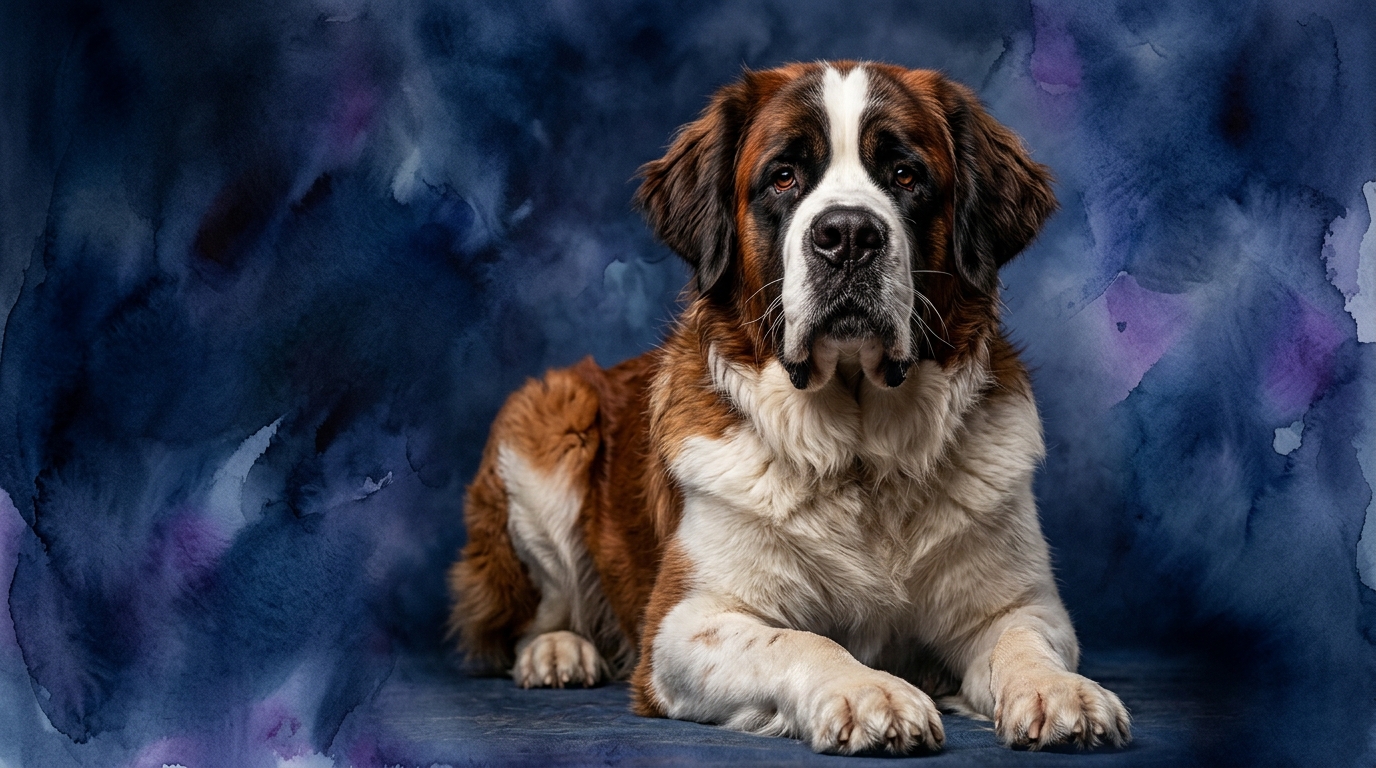
**Saint Bernard (Coren rank #65):** While differing in some cognitive aspects, Saint Bernards possess a unique blend of attributes that define their thoughtful approach.
**Problem Solving (3/5):** Saint Bernards approach problems with a more deliberate, less analytical style. While capable of finding solutions, they may require more time and guidance to navigate novel challenges or multi-step tasks.
**Training Speed (2/5):** Their learning pace is generally more measured. Saint Bernards benefit from patient, consistent training methods, often needing more repetitions and positive reinforcement to integrate new commands into their behavioral repertoire.
**Social Intelligence (4/5):** These gentle giants exhibit a profound empathy and understanding of social interactions. They are highly attuned to human emotions and display a calming, benevolent presence, making them exceptional companions in family settings.
**Instinctive Drive (5/5):** The Saint Bernard's instinctive drive is profoundly rooted in their historical role of search and rescue, particularly in alpine environments. Their innate desire to assist and their powerful sense of direction guide their actions.
**Memory (3/5):** While capable of retaining essential commands and familiar routines, their memory capacity for intricate details or less frequently reinforced information may be less robust than some breeds. They remember significant experiences and key people with great affection.
Where the Rottweiler Excels Cognitively
The Rottweiler's cognitive strengths truly shine in areas demanding swift analytical processing and intricate task execution. Their 5/5 Problem Solving score reflects an impressive ability to deconstruct complex scenarios, whether navigating an agility course with precision or understanding the nuances of a multi-stage protection exercise. This breed doesn't just react; it strategizes, often anticipating the next step in an unfolding situation.
Coupled with a 5/5 Memory, a Rottweiler can recall an extensive library of learned behaviors and apply them judiciously, making them remarkably consistent in performance. This superior recall extends beyond commands, allowing them to remember specific interactions and learn from past experiences with a level of detail that aids in their development as reliable working partners. Their quick Training Speed (4/5) also means they integrate new information rapidly, solidifying their advantage in disciplines requiring continuous learning and adaptation.
Where the Saint Bernard Excels Cognitively
While not boasting the same rapid analytical processing, the Saint Bernard's cognitive profile emphasizes a different, yet equally valuable, set of attributes. Their 4/5 Social Intelligence is a standout, reflecting a deep capacity for empathy and an intuitive understanding of emotional states. This isn't about solving a puzzle; it's about sensing a child's distress or offering comfort to a grieving owner. Their presence is inherently calming, a testament to their ability to read and respond to human emotional cues with remarkable sensitivity.
Furthermore, their 5/5 Instinctive Drive, primarily focused on their historical role as rescue dogs, speaks to a powerful, unwavering dedication to a core purpose. This drive isn't about speed or complex maneuvers, but about persistent, focused effort in dire circumstances, demonstrating a profound sense of duty and determination that underpins their benevolent nature. Their cognitive strength lies in their steadfastness and their innate capacity for compassionate interaction.
Training Aptitude: Rottweiler vs. Saint Bernard
When considering ease of training, the Rottweiler generally presents a more straightforward path for dedicated owners, primarily due to their higher Training Speed (4/5) and exceptional Problem Solving (5/5) and Memory (5/5) scores. A Rottweiler often grasps new commands with fewer repetitions, quickly associating actions with desired outcomes. Their inherent desire to work and please their handler, combined with their capacity for understanding complex sequences, means they can advance through training levels relatively quickly. This doesn't imply they are effortlessly trained; their strong instinctive drives and protective nature require consistent, firm, and positive guidance from an early age.
In contrast, the Saint Bernard's Training Speed (2/5) indicates a more deliberate learning pace. While they possess a strong desire to please and a high Social Intelligence (4/5), they may require more patience and consistent reinforcement to solidify new behaviors. Their lower Problem Solving (3/5) and Memory (3/5) scores suggest that complex multi-step commands or infrequent practice might lead to slower retention. Training a Saint Bernard thrives on positive reinforcement, short, engaging sessions, and a deep understanding of their gentle, sometimes stubborn, temperament. An owner must be prepared for a longer, more gradual training journey, focusing on consistency over speed, to bring out the best in this affectionate breed. Their sheer size also means early and consistent leash and manners training is crucial, even if the learning curve is extended.
Matching Cognitive Profiles to Lifestyles
The cognitive profiles of these two breeds distinctly guide their suitability for different lifestyles. An active owner seeking a canine partner for demanding activities would find a strong match in the Rottweiler. Their 5/5 Problem Solving and 5/5 Instinctive Drive make them excel in sports like obedience, agility, tracking, and protection work, where mental engagement is as crucial as physical exertion. These dogs thrive on having a job to do and require owners who can channel their significant cognitive and physical energies into structured activities. They are best suited for individuals or families committed to extensive training, mental enrichment, and regular, vigorous exercise.
Conversely, the Saint Bernard's cognitive strengths align beautifully with a more relaxed, family-oriented lifestyle. Their high Social Intelligence (4/5) means they are content observing and interacting gently within a household setting, offering companionship and comfort. While they possess a 5/5 Instinctive Drive for rescue, this translates more into a steadfast, watchful presence rather than a need for constant high-intensity tasks. They appreciate leisurely walks and family time over competitive sports, making them ideal for owners who enjoy a calmer pace of life and value a benevolent, observant companion. Their lower Training Speed and Problem Solving scores suggest they are less suited for owners looking for a dog to quickly master complex tricks or participate in high-level dog sports. Instead, they flourish with patient owners who appreciate their calm demeanor and profound social understanding.
The Verdict
Choose a Rottweiler if you are an experienced, active owner seeking a mentally agile partner for structured activities, protection, or advanced obedience, and are prepared to engage their strong drives daily.
Choose a Saint Bernard if you desire a gentle, empathetic, and steadfast companion for a relaxed family environment, valuing social connection and a benevolent presence over rapid learning or intense activity.
🧠 Find Your Pet's IQ Score
Our Pet IQ Lab assessment covers 25+ tests across 5 cognitive dimensions — personalized to your breed.
Take the Full IQ Test →Frequently Asked Questions
Do Rottweilers require more mental stimulation than Saint Bernards?
Yes, Rottweilers, with their 5/5 Problem Solving and Memory, thrive on consistent mental challenges and structured learning to prevent boredom and channel their high cognitive drive constructively. Saint Bernards, while benefiting from engagement, are generally content with less intense mental exertion.
Are Saint Bernards difficult to train because of their lower training speed?
"Difficult" might be too strong a word; rather, they require more patience and consistency. Their 2/5 Training Speed means they learn at a slower pace, necessitating shorter, positive reinforcement-based sessions and more repetitions to effectively instill and maintain commands.
How does instinctive drive differ between these two breeds?
Both breeds have a 5/5 Instinctive Drive, but its manifestation differs. The Rottweiler's drive is often geared towards guarding, herding, and protection tasks, demanding an outlet for these strong working urges. The Saint Bernard's drive is rooted in search and rescue, manifesting as a deep-seated desire to aid and a steadfast, watchful nature, less focused on active tasking in a domestic setting.