
Side-by-Side IQ Profile: A Cognitive Blueprint
The Cosmic Pet Pet IQ Lab employs a five-dimensional framework to assess canine intelligence, offering a granular view beyond generic labels. Let's delve into the specific scores for the Saint Bernard and the Dogo Argentino, understanding how their historical purposes shaped their cognitive strengths.
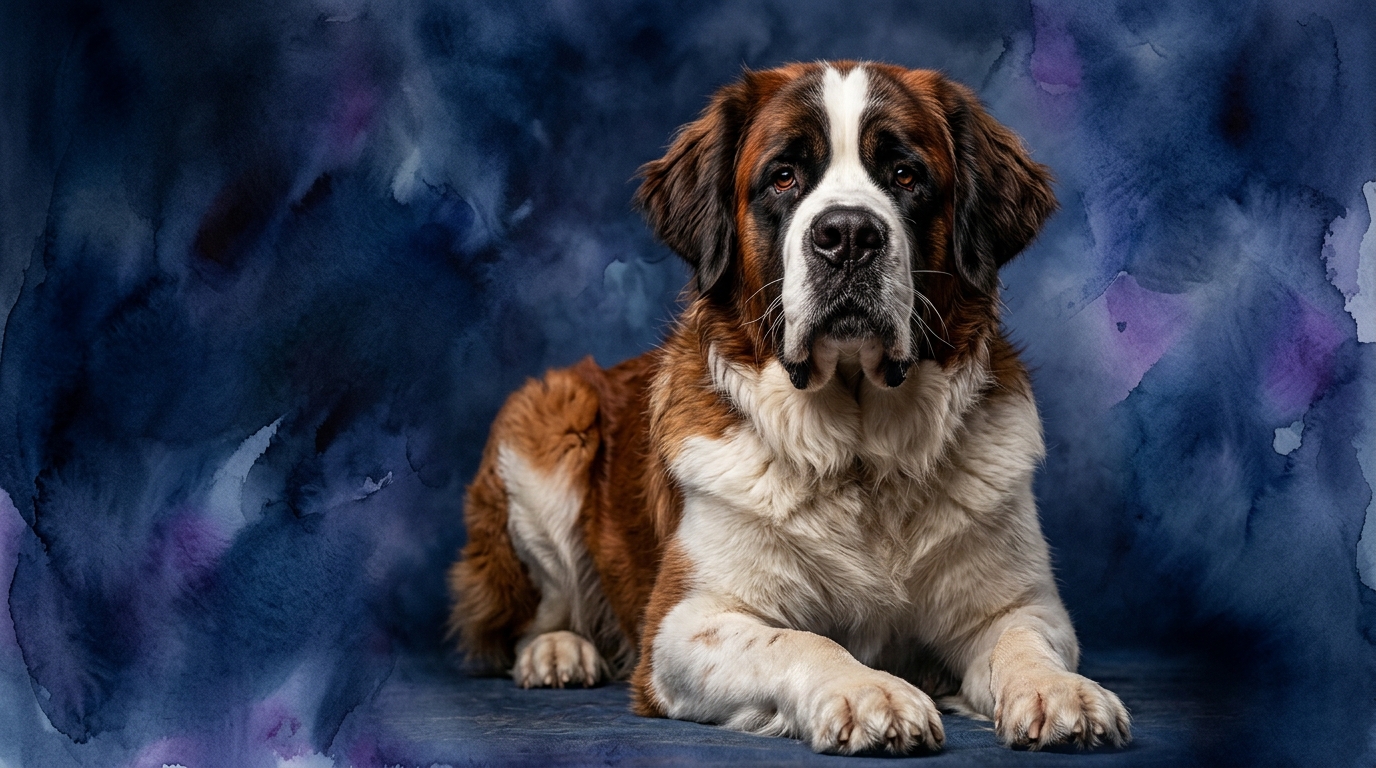
The Saint Bernard, a working breed ranked #65 by Coren, presents a unique cognitive makeup. Their Problem Solving is rated 3/5, indicating an ability to navigate complex, real-world scenarios, particularly those related to their rescue heritage, but perhaps not excelling in abstract puzzles. Training Speed is 2/5, suggesting they may require more repetitions and patience to master new commands. Their Social Intelligence shines at 4/5, reflecting a deep capacity for empathy and understanding human emotional states, crucial for rescue operations. An Instinctive Drive of 5/5 highlights their profound, innate motivation for search and rescue, detecting buried individuals and navigating challenging environments. Memory is a solid 3/5, enabling them to retain routes and familiar faces effectively.
The Dogo Argentino, also a working breed though not Coren-ranked, possesses a different set of cognitive priorities. Their Problem Solving scores 3/5, demonstrating resourcefulness in hunting and protective contexts, such as strategically cornering prey or assessing threats in their immediate environment. Training Speed is 3/5, indicating a moderate pace of learning, often responding well to clear and consistent guidance. Social Intelligence stands at 3/5; they are adept at understanding pack dynamics and human leadership, though perhaps less attuned to subtle human emotional nuances compared to the Saint Bernard. Their Instinctive Drive is 3/5, encompassing strong prey drive and protective instincts, tailored for their role in hunting large game and guarding. Memory is also 3/5, allowing them to recall training, routines, and differentiate between familiar individuals and potential threats.
Where the Saint Bernard Wins Cognitively
The Saint Bernard's cognitive triumphs are deeply rooted in their historical function as alpine rescue dogs. Their exceptional Social Intelligence (4/5) allows them to form profoundly empathetic bonds, reading human distress with remarkable accuracy. This goes beyond simple obedience; it involves an innate understanding of subtle cues that signify a person in need, a trait invaluable for their life-saving work. They are adept at recognizing sorrow, fear, or vulnerability, and responding with comforting presence.
Furthermore, their Instinctive Drive (5/5) is unparalleled in its specificity for rescue. This isn't just a general drive to work; it's a powerful, self-directed motivation to search, locate, and aid. This high drive, combined with a respectable Problem Solving score (3/5), enabled them to autonomously navigate treacherous snowscapes, make independent decisions in critical situations, and maintain focus under immense pressure. Their cognitive strength lies in a blend of profound social attunement and a tenacious, purposeful drive to assist.
Where the Dogo Argentino Wins Cognitively
The Dogo Argentino's cognitive strengths are forged in the crucible of formidable hunting and guarding. Their Problem Solving (3/5) is geared towards practical, goal-oriented tasks within their working domain. This breed exhibits resourcefulness in tracking and confronting large, dangerous game, requiring quick assessment of situations and decisive action to corner or subdue. They are not merely following commands but are actively strategizing in dynamic, high-stakes environments.
While not Coren-ranked, their Training Speed (3/5) is comparatively more efficient than the Saint Bernard's, suggesting they can learn and execute complex protective and hunting tasks with moderate repetitions. This efficiency, combined with their strong physical capabilities, makes them adept at specialized roles that demand focused intensity. Their cognitive edge lies in their ability to rapidly process environmental stimuli relevant to their protective and prey drives, translating that into effective, controlled action under the guidance of a strong leader.
Which is Easier to Train and Why
When considering ease of training, the Dogo Argentino generally presents a more straightforward path for an experienced owner, largely due to their Training Speed score of 3/5 compared to the Saint Bernard's 2/5. Dogo Argentinos often exhibit a keen desire to please their primary handler and respond well to consistent, firm, and positive reinforcement. Their inherent working drive, when properly channeled, translates into focused attention during training sessions. However, their powerful protective instincts and physical prowess necessitate early and extensive socialization, coupled with unwavering leadership, to ensure their strength is always managed responsibly.
The Saint Bernard, while possessing deep social intelligence, can be slower to pick up new commands, requiring more patience and repetitions. Their independent nature, historically essential for autonomous rescue work, can sometimes manifest as a stubborn streak in obedience training. Their immense size also adds a physical dimension to training; an untrained Saint Bernard can be challenging to physically manage. Therefore, while equally capable of learning, the Saint Bernard demands a more patient, consistent, and creative approach to motivation, often responding best to training that taps into their desire for companionship and gentle interaction rather than pure command execution.
Suited for Active vs. Relaxed Owners
The Dogo Argentino is unequivocally suited for active, experienced owners. This breed possesses significant physical energy and a profound working drive that demands an outlet. They thrive when given a 'job' to do, whether it's participating in dog sports, engaging in extensive daily runs, or performing protective tasks. A sedentary lifestyle will quickly lead to boredom, frustration, and potentially destructive behaviors. Owners must be prepared to provide consistent, challenging physical exercise and mental stimulation to keep a Dogo Argentino balanced and content.
Conversely, while the Saint Bernard is a giant breed requiring appropriate exercise to maintain health, they are generally better suited for owners seeking a more relaxed pace. Their activity needs are moderate; daily walks and opportunities for gentle play are usually sufficient. Their primary 'activity' often revolves around companionship and social interaction. They are not built for high-octane sports or endurance activities. Owners should be prepared for the demands of managing a very large dog, including grooming and space requirements, but will find their Saint Bernard a calm, affectionate companion content with a less frenetic lifestyle than the Dogo Argentino.
The Verdict
Choose a Saint Bernard if you seek a deeply empathetic, gentle giant capable of profound companionship, and you appreciate a slower, more deliberate learning pace prioritizing social connection and a calm home environment.
Opt for a Dogo Argentino if you are an experienced, active owner seeking a powerful, protective companion with a keen drive for work or sport, capable of providing consistent, firm leadership to channel their formidable energy effectively.
🧠 Find Your Pet's IQ Score
Our Pet IQ Lab assessment covers 25+ tests across 5 cognitive dimensions — personalized to your breed.
Take the Full IQ Test →Frequently Asked Questions
Are Saint Bernards difficult to train due to their size?
Their sheer size certainly adds a physical challenge to training, but their 2/5 training speed score indicates a need for patience and consistency, rather than outright difficulty. Early, positive reinforcement training is essential to manage their strength effectively and ensure they grow into well-behaved companions.
Does the Dogo Argentino's protective instinct make it unsuitable for families?
No, with proper socialization and consistent training from a young age, Dogo Argentinos can be loyal and protective family members. Their strong instinct requires responsible ownership to ensure they differentiate between genuine threats and normal interactions, making them reliable guardians rather than indiscriminate aggressors.
How do their Coren ranks compare, or lack thereof?
The Saint Bernard's Coren rank of #65 places it in the average working intelligence category, indicating steady learning and obedience. The Dogo Argentino's lack of a Coren rank doesn't imply lower intelligence, but rather that its specific working aptitudes might not align perfectly with traditional obedience trial metrics, focusing more on independent action and prey drive.