
Side-by-Side Cognitive Profile
The Saint Bernard, a member of the Working Group and ranked #65 by Coren, presents a cognitive profile shaped by its history of alpine rescue and guardianship. Its Problem Solving is rated at 3/5, indicating a moderate ability to independently navigate novel challenges, often through perseverance rather than rapid conceptual leaps. Training Speed sits at 2/5, suggesting a more deliberate pace in acquiring new commands and routines, requiring consistent and patient instruction. However, its Social Intelligence shines at 4/5, reflecting a deep capacity for empathy and understanding human emotional cues. An impressive Instinctive Drive of 5/5 underscores a powerful intrinsic motivation tied to its historical purpose, manifesting as strong protective and seeking behaviors. Memory is rated 3/5, indicating solid recall for learned experiences and information.
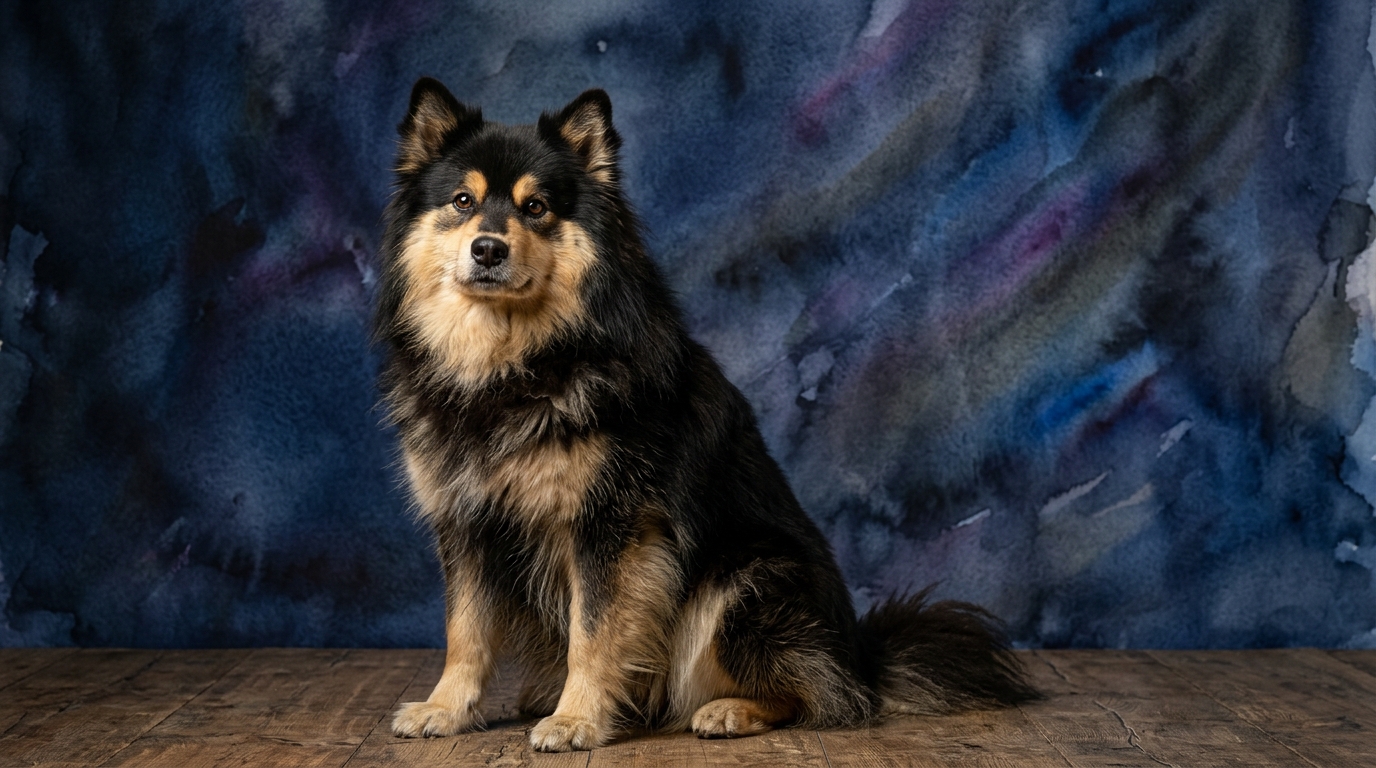
In contrast, the Finnish Lapphund, a Herding Group breed not listed in Coren's rankings, exhibits a cognitive makeup optimized for agile livestock management. Its Problem Solving is also 3/5, demonstrating a competent ability to adapt learned strategies, particularly those related to spatial awareness and group control, to new scenarios. Training Speed is a more responsive 3/5, indicating a moderate pace in grasping new behaviors, often coupled with an eagerness to engage. Social Intelligence is 3/5, reflecting a good understanding of social dynamics and a capacity for strong bonds, though perhaps less overtly empathetic than some breeds. Instinctive Drive is 3/5, primarily channeled towards herding behaviors such as gathering and watchful vigilance. Memory is also 3/5, showing reliable recall consistent with a role requiring attention to detail and past commands.
Where the Saint Bernard Wins Cognitively
The Saint Bernard’s superior Social Intelligence, rated at 4/5 compared to the Lapphund’s 3/5, is a significant cognitive advantage. This attribute allows them an uncanny ability to read subtle human emotional shifts, often anticipating needs before they are vocalized. This manifests as an innate capacity to offer comfort when a family member is distressed or to subtly position themselves as a protective barrier without explicit command, a profound empathy rooted in their historical role as companions and rescuers in challenging environments. This deep social attunement fosters an incredibly strong, intuitive bond with their human family.
Furthermore, the Saint Bernard’s robust Instinctive Drive, an impressive 5/5 versus the Lapphund’s 3/5, speaks to a powerful innate motivation tied to their historical purpose. This isn't merely about 'wanting to work'; it's a profound, almost primal urge to protect, to locate, and to provide comfort in dire situations, a legacy of their alpine rescue origins. This drive can translate into unwavering loyalty, a steadfast presence, and a powerful sense of guardianship over their home and family, an instinct that needs careful guidance and channeling rather than suppression.
Where the Finnish Lapphund Wins Cognitively
The Finnish Lapphund gains a cognitive edge in Training Speed, scoring 3/5 compared to the Saint Bernard’s 2/5. This higher responsiveness is a direct reflection of their herding lineage, where rapid learning and immediate reaction to handler cues were crucial for effectively managing livestock across varied terrains. Lapphunds tend to form associations between actions and consequences more readily, making positive reinforcement highly effective and accelerating the training process significantly. Their eagerness to engage and work alongside their human partners, often for praise or a treat, contributes to this faster learning curve, making them a joy to teach new tricks or advanced obedience commands.
Which is Easier to Train and Why
The Finnish Lapphund generally presents as the easier breed to train, primarily due to its superior training speed and inherent responsiveness. Their herding background has selected for dogs who naturally pay close attention to their handler, react quickly to signals, and are motivated by collaborative tasks. This translates into a dog that often enjoys learning new tasks and excels in obedience, agility, or other dog sports, provided the training is engaging, positive, and consistent. They are typically keen to please and less prone to independent streaks, making them receptive students.
Conversely, the Saint Bernard, with its 2/5 training speed, requires a more patient and persistent approach. Their sheer size alone can make physical guidance challenging, but cognitively, they tend to process new information at a more deliberate pace. While deeply loyal and possessing high social intelligence, their strong instinctive drives and a certain degree of independence mean that training often involves more repetition and the discovery of powerful, consistent motivators to channel their considerable strength and focus. They understand what you want, but their slower processing and potential for stubbornness mean they might not always execute quickly or enthusiastically without clear incentives and a strong, trusting relationship.
Which Suits Active Owners vs. Relaxed Owners
For **active owners**, the Finnish Lapphund is an ideal match. Their herding heritage means they thrive on purpose, mental engagement, and regular physical activity. Owners who enjoy hiking, dog sports like agility or obedience, or even just consistent, engaging training sessions will find the Lapphund a willing and enthusiastic partner. While not hyperactive, they require a consistent outlet for their energy and cognitive abilities to prevent boredom and potential behavioral issues. Their moderate instinctive drive means they are generally adaptable to various engaging activities.
The **relaxed owner** might find a better fit in the Saint Bernard, particularly after their boisterous puppy phase. While they are massive dogs requiring space and daily walks, their overall physical energy demands are lower than many working breeds. Their high social intelligence means they deeply value companionship and are content with being a steadfast, gentle presence in the home. However, 'relaxed' does not mean 'inactive'; they still require mental stimulation, consistent training to manage their size, and sufficient exercise to maintain health, but they are generally less demanding of constant strenuous activity than the Finnish Lapphund. Their strong instinctive drive for guardianship also means they are naturally watchful and comforting companions.
The Verdict
Choose a Saint Bernard if you seek a deeply empathetic, steadfast companion with a powerful protective instinct and are prepared for a slower, highly patient training journey focused on building a strong social bond.
Choose a Finnish Lapphund if you desire an engaged, responsive partner for consistent training and activities, appreciating a dog that learns readily and thrives on collaborative mental and physical challenges.
🧠 Find Your Pet's IQ Score
Our Pet IQ Lab assessment covers 25+ tests across 5 cognitive dimensions — personalized to your breed.
Take the Full IQ Test →Frequently Asked Questions
Are Saint Bernards difficult to train due to their lower training speed?
While Saint Bernards have a slower training speed (2/5), they are not 'difficult' in the sense of being unwilling. They require more patience, consistency, and positive reinforcement, often responding best to calm, clear guidance rather than harsh methods. Their strong social intelligence means they understand your intentions, but their learning pace is simply more deliberate.
Do Finnish Lapphunds have strong herding instincts that need managing?
Yes, Finnish Lapphunds possess a moderate instinctive drive (3/5) for herding, which can manifest as a tendency to 'gather' family members, playfully nip at heels, or chase moving objects. Early socialization and training are crucial to channel these instincts appropriately, perhaps through herding games or focused obedience work, to prevent them from becoming problematic behaviors.
Which breed is generally better with children?
Both breeds can be excellent with children, but in different ways. Saint Bernards, with their high social intelligence and gentle giant nature, are often incredibly patient and protective, making them wonderful family guardians. Finnish Lapphunds are generally playful and tolerant, but their herding instincts might lead to playful nipping or chasing of small, fast-moving children, requiring careful supervision and training to redirect these behaviors.