
Side-by-Side Cognitive Profile
The Saint Bernard's cognitive profile showcases a Problem Solving score of 3/5, indicating competence in navigating environmental challenges, especially those related to their historical rescue roles, rather than abstract puzzles. Their Training Speed is a deliberate 2/5, meaning they require consistent, patient repetition over time to embed commands. Where they truly shine is in Social Intelligence, earning a 4/5 for their profound ability to understand human emotions and intentions, fostering deep, empathetic bonds. An Instinctive Drive of 5/5 highlights their powerful innate motivations, historically directed towards search and rescue, demanding purpose-driven engagement. Their Memory stands at 3/5, allowing for reasonable retention of routines and experiences.
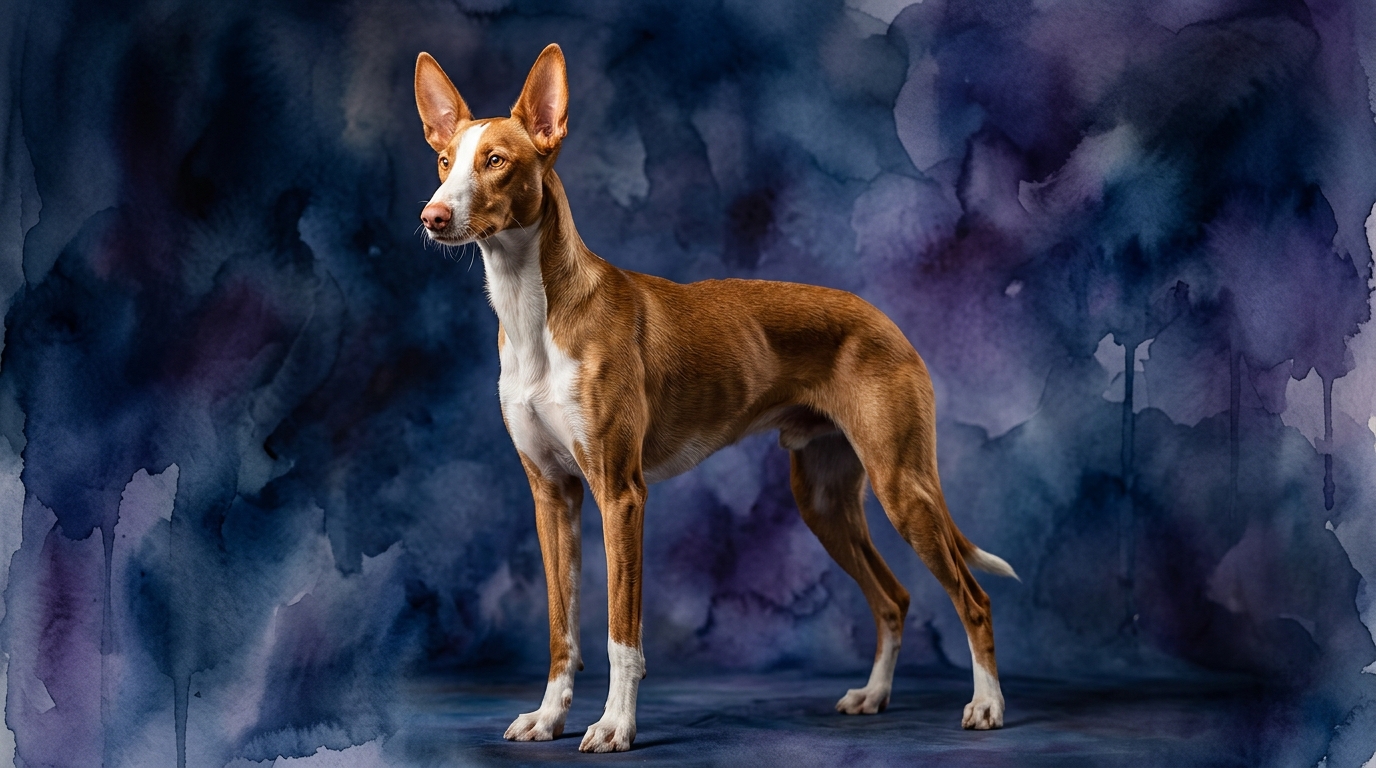
In contrast, the Ibizan Hound also scores 3/5 for Problem Solving, but this manifests as practical ingenuity in hunting scenarios, such as outsmarting prey or navigating complex terrain. Their Training Speed is a moderate 3/5, suggesting they can grasp new concepts with more alacrity than the Saint Bernard, though their independent streak can pose challenges. Social Intelligence is rated 3/5; they form affectionate bonds but may be more reserved with strangers and less overtly empathetic. Their Instinctive Drive is 3/5, primarily centered on their sight-hound prey drive, which is a strong motivator but also a potential distraction. Like the Saint Bernard, their Memory is 3/5, enabling them to recall learned behaviors and visual triggers efficiently.
Where the Saint Bernard Wins Cognitively
Saint Bernards exhibit a clear cognitive advantage in social intelligence, scoring 4/5, which manifests as a deep capacity for empathy and understanding human emotional states. This translates into an intuitive ability to comfort and protect, making them exceptional companions in family settings where emotional attunement is valued. Furthermore, their instinctive drive, rated at a robust 5/5, is a powerful cognitive asset, historically channeled into their life-saving search and rescue work. This drive isn't just about physical exertion; it's a profound, innate motivation to pursue and aid, requiring complex environmental assessment and persistence, which few breeds match. Their memory, while average at 3/5, is sufficiently robust to retain the routines and critical sensory cues associated with these instinctive tasks, allowing them to effectively recall learned rescue protocols or family habits.
Where the Ibizan Hound Wins Cognitively
The Ibizan Hound demonstrates a distinct cognitive edge in training speed, clocking in at 3/5 compared to the Saint Bernard's more deliberate 2/5. This suggests they can grasp new commands and concepts with slightly fewer repetitions, making them potentially more responsive to varied training stimuli. Their problem-solving ability, also rated 3/5, is often honed by their sighthound heritage; they are adept at quickly assessing and navigating environments to outmaneuver prey, showcasing a swift, practical intelligence for immediate challenges. This cognitive nimbleness, combined with a strong, yet manageable, instinctive drive of 3/5, allows them to be highly focused on specific tasks, particularly those involving chase and pursuit, where they can quickly process visual information and react. Their memory, like the Saint Bernard's, stands at 3/5, enabling them to retain the learned sequences and visual triggers crucial for effective hunting or agility pursuits.
Which is Easier to Train and Why
When evaluating ease of training, the Ibizan Hound generally presents as the more adaptable learner due to its Training Speed score of 3/5, surpassing the Saint Bernard's 2/5. Ibizan Hounds tend to pick up new commands and routines with greater alacrity, responding well to engaging, positive reinforcement methods. However, their independent nature and strong prey drive (Instinctive Drive 3/5) mean that training sessions must be stimulating and manage distractions effectively; a squirrel might prove more compelling than a command. Conversely, the Saint Bernard's training pace is more deliberate, requiring significant patience, consistency, and repetition to solidify behaviors. Their lower Training Speed means owners must commit to longer, more frequent sessions. While their high social intelligence (4/5) makes them eager to please and attuned to their handler's cues, their sheer size and powerful instinctive drive (5/5) necessitate early and firm training to manage their physical presence and potential for independent action, particularly in novel situations or during their rescue-oriented "work." Therefore, while the Ibizan might learn faster, both breeds require dedicated, understanding trainers attuned to their specific cognitive profiles.
Which Suits Active Owners vs. Relaxed Owners
For active owners seeking a canine partner for vigorous outdoor pursuits, the Ibizan Hound is often the more suitable choice. Their athletic build, moderate instinctive drive (3/5), and problem-solving skills make them excellent companions for activities like lure coursing, agility, or long hikes where their speed and agility can be fully expressed. They thrive on mental and physical challenges that tap into their natural hunting instincts, requiring consistent outlets for their energy to prevent boredom. Conversely, the Saint Bernard, despite its immense size and powerful instinctive drive (5/5) for "work," is generally better suited for more relaxed owners who appreciate a steadfast, less overtly energetic companion. While they benefit from regular, moderate exercise to maintain health, their energy levels are not comparable to the Ibizan's. Their cognitive strengths lie in their social intelligence and ability to form deep, empathetic bonds, making them ideal for a home environment where calm companionship and emotional connection are prioritized over high-octane physical activity. Their robust build means that even moderate walks are significant exercise, and their historical role suggests a purpose-driven, rather than constantly active, disposition.
The Verdict
Choose a Saint Bernard if you seek an empathetic, deeply bonded companion for a more relaxed lifestyle, valuing their social intelligence and protective instincts.
Opt for an Ibizan Hound if you are an active owner looking for a quicker learner with a strong independent spirit, thriving on physical and mental challenges.
🧠 Find Your Pet's IQ Score
Our Pet IQ Lab assessment covers 25+ tests across 5 cognitive dimensions — personalized to your breed.
Take the Full IQ Test →Frequently Asked Questions
Is a Saint Bernard difficult to train?
Saint Bernards are not difficult in the sense of unwillingness, but their training speed is deliberate, requiring consistent, patient, and positive reinforcement over extended periods. Their social intelligence helps them understand cues, but repetition is key to solidifying commands.
Do Ibizan Hounds need a lot of exercise?
Yes, Ibizan Hounds are athletic sight hounds that require significant daily exercise to satisfy their moderate instinctive drive and maintain their physical and mental well-being. Activities like running, lure coursing, or secure off-leash play are essential for their contentment.
Which breed is better with children?
The Saint Bernard, with its high social intelligence and empathetic nature, often excels as a gentle and patient family companion, particularly with children. Ibizan Hounds can be good with respectful children but may be more reserved and less overtly demonstrative, often preferring a calmer household.