
Side-by-Side Cognitive Profiles
The Cosmic Pet Pet IQ Lab employs five dimensions to paint a comprehensive picture of a breed's cognitive landscape. For the majestic Saint Bernard, a Working group dog with a Coren rank of #65, its profile reveals a creature of purpose and deep social connection. Its Problem Solving is rated 3/5, indicating a moderate ability to navigate novel challenges and figure out solutions when given time and motivation. Training Speed stands at 2/5, suggesting it requires more repetition and patience to master new commands, often thriving when tasks align with its innate drives. Social Intelligence shines at 4/5, reflecting a profound capacity to understand human emotions and cues, forming strong empathetic bonds. An Instinctive Drive of 5/5 underscores its powerful natural inclinations for tasks like search and rescue or guardianship. Memory is rated 3/5, indicating a moderate ability to retain learned information and routines over time.
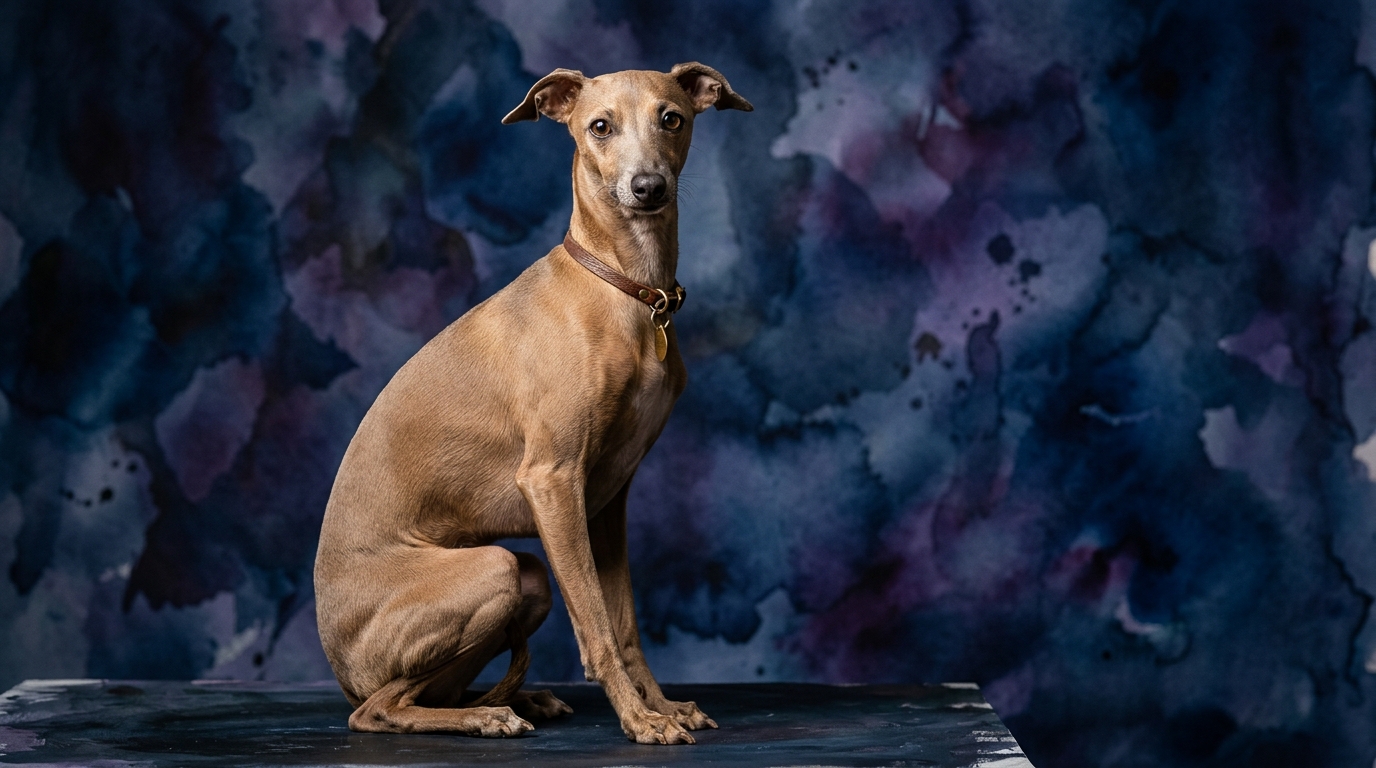
In stark contrast, the svelte Italian Greyhound, a Toy group dog not listed in Coren's ranking, presents a different set of cognitive strengths tailored to companionship. Its Problem Solving is also 3/5, demonstrating an average ability to adapt to new situations or overcome minor obstacles in its environment. Training Speed is 3/5, meaning it picks up new commands at an average pace, often responding well to engaging, reward-based methods. Social Intelligence holds at 3/5, signifying a good capacity to bond with its primary caregivers and understand their familiar interactions, though perhaps less broadly empathetic than some working breeds. Instinctive Drive is 3/5, indicating a moderate, rather than intense, drive for activities like chasing or seeking, primarily focused on interaction within its family unit. Its Memory is 3/5, allowing it to remember routines, learned behaviors, and familiar faces adequately.
Where the Saint Bernard Truly Shines Cognitively
The Saint Bernard's cognitive profile showcases an undeniable strength in areas requiring profound empathy and unwavering commitment to a task, particularly evident in its 4/5 Social Intelligence and 5/5 Instinctive Drive. This breed excels at reading subtle human cues, often anticipating needs or moods without explicit commands, a trait crucial for its historical role in alpine rescue. Their powerful instinctive drive isn't just about physical action; it's a deep-seated motivation that allows them to focus intensely on a perceived purpose, whether it's 'guarding' their family or 'rescuing' a lost toy. This combination means a Saint Bernard can form incredibly deep, almost telepathic bonds, understanding complex emotional states and responding with comforting presence or focused assistance in a way few other breeds can match. Their moderate problem-solving is often amplified when their instinctive drive is engaged, allowing them to methodically work through challenges related to their perceived 'job' or family well-being.
Cognitive Advantages of the Italian Greyhound
While the Italian Greyhound doesn't boast the Saint Bernard's intense instinctive drives, its cognitive profile reveals distinct advantages, particularly in its more balanced Training Speed (3/5) and a Problem Solving rating (3/5) that often translates to nimble adaptability within a domestic setting. Italian Greyhounds tend to be quicker to grasp household rules and specific tricks when motivation is high, making them responsive companions in daily interactions. Their problem-solving, while moderate, is often applied to navigating complex social dynamics within the home or figuring out clever ways to secure a cozy spot on the sofa. Unlike the Saint Bernard, whose problem-solving is often tied to a grander 'purpose,' the Italian Greyhound's cognitive efforts are frequently directed towards optimizing comfort, play, and social interaction within its immediate environment. This more agile cognitive approach allows them to integrate smoothly into varied lifestyles, adapting to new routines or environments with relative ease, provided their emotional security is maintained.
Trainability: Saint Bernard vs. Italian Greyhound
When it comes to formal training, the Italian Greyhound generally presents a slightly less demanding experience due to its 3/5 Training Speed compared to the Saint Bernard's 2/5. Italian Greyhounds tend to be more sensitive and responsive to positive reinforcement, quickly connecting actions with rewards. They are eager to please their favored humans and, while they can have a mischievous streak, their smaller size and quicker learning curve make them generally easier to guide through basic obedience and house-training. Their moderate instinctive drive means they are less likely to be distracted by strong external stimuli, allowing for more focused training sessions.
The Saint Bernard, with its lower Training Speed, requires a different approach. They are not unintelligent, but they require more repetition, consistency, and a clear understanding of the 'why' behind a command. Their strong instinctive drive means training is most effective when it taps into their natural inclinations for companionship, protection, or a perceived 'job.' They can be prone to stubbornness if they don't see the point of an exercise, or if their massive size is used as an excuse for lax training. Patience, positive reinforcement, and making training feel like a meaningful collaboration are key to unlocking the Saint Bernard's full training potential.
Matching Breeds to Lifestyles: Active vs. Relaxed Owners
The Saint Bernard, with its powerful 5/5 Instinctive Drive and 4/5 Social Intelligence, is an ideal match for owners who are active in a specific, purpose-driven sense, rather than purely physically. These owners should be prepared to engage their dog in mentally stimulating activities that tap into its innate desire for a 'job,' such as scent work, carting, or even advanced obedience that feels like a shared mission. They thrive with owners who appreciate deep emotional bonds and are willing to invest time in structured training and consistent companionship, providing a stable, loving environment where their protective instincts can be channeled appropriately. While they enjoy walks, their activity needs are more about fulfilling their internal drives than constant high-energy exertion.
Conversely, the Italian Greyhound, with its balanced cognitive traits and moderate drives, suits owners who appreciate a blend of playful bursts and tranquil companionship. They are perfect for those seeking an affectionate, relatively adaptable dog that enjoys short, energetic play sessions followed by extensive periods of lounging. Their moderate problem-solving and training speed make them amenable to a relaxed home environment where routine is valued, but flexibility is also possible. Owners who enjoy cozy evenings, gentle walks, and a dog that can easily fit into a smaller living space will find the Italian Greyhound a delightful companion, appreciating its elegant demeanor and loving nature without the intense demands of a working breed.
The Verdict: When to Choose Each Breed
The Verdict
Choose a Saint Bernard if you seek a deeply empathetic, purpose-driven companion and are prepared to engage its powerful instincts with consistent, patient training and a stable home environment. They thrive with owners who value profound emotional connection and a sense of shared mission.
Opt for an Italian Greyhound if you desire a graceful, affectionate companion that offers a pleasing balance of playful energy and relaxed cuddles, adapting well to various home settings. They are ideal for owners who appreciate a responsive, less demanding dog that integrates smoothly into a companion-focused lifestyle.
🧠 Find Your Pet's IQ Score
Our Pet IQ Lab assessment covers 25+ tests across 5 cognitive dimensions — personalized to your breed.
Take the Full IQ Test →Frequently Asked Questions
Do Saint Bernards adapt well to apartment living?
While Saint Bernards are large, their activity levels are moderate, and they can adapt to apartment living if given sufficient daily walks and mental stimulation. However, their size means they require ample indoor space to move comfortably and a patient owner committed to consistent training to manage their presence in smaller quarters.
Are Italian Greyhounds good with children?
Italian Greyhounds can be good with older, respectful children who understand how to interact gently with a small, delicate dog. Due to their fragile build, they are generally not recommended for homes with very young or boisterous children who might accidentally injure them during play.
Which breed is more prone to separation anxiety?
Both breeds can develop separation anxiety, but Italian Greyhounds, being companion dogs with a moderate social intelligence, often form very strong attachments and can be more prone to distress when left alone for extended periods. Saint Bernards, with their high social intelligence, also crave companionship but may express anxiety differently, often through more destructive behaviors if their strong drives are not met.