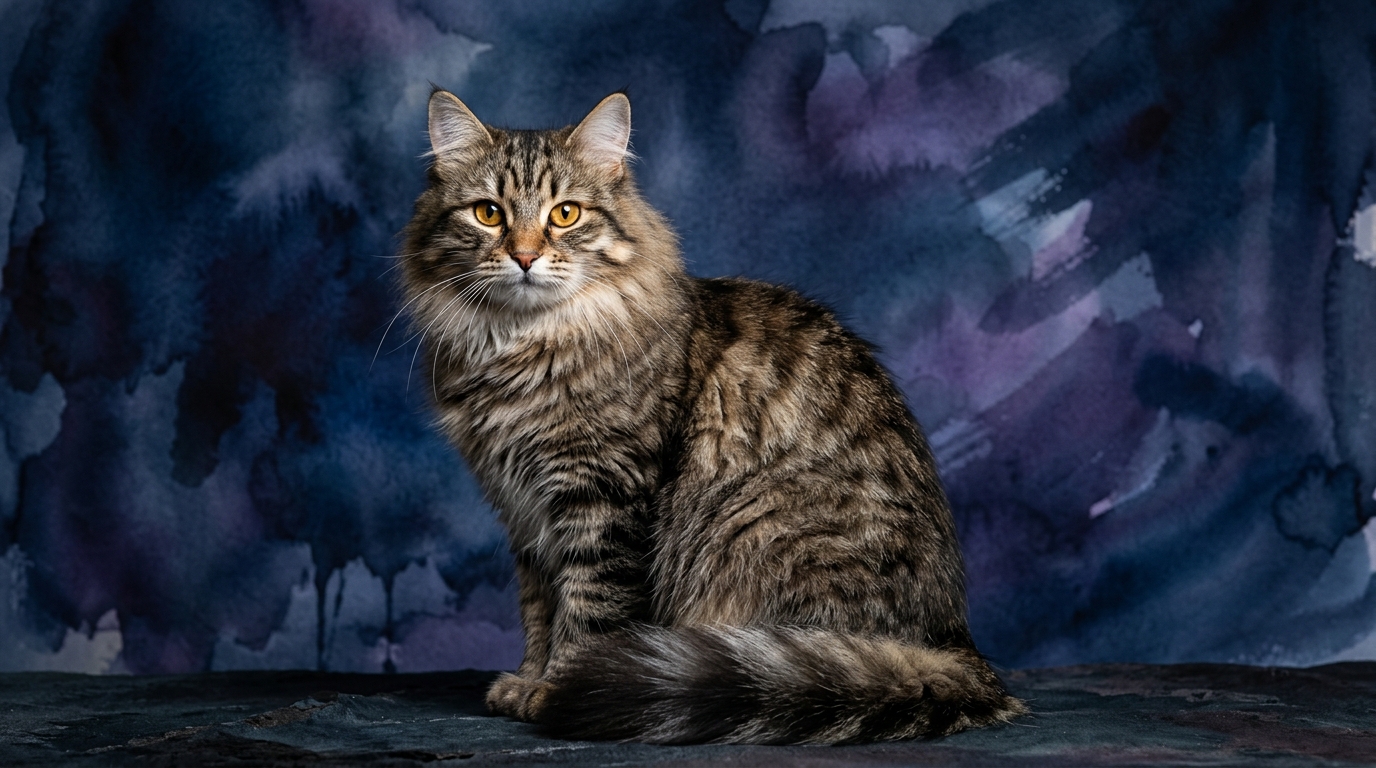
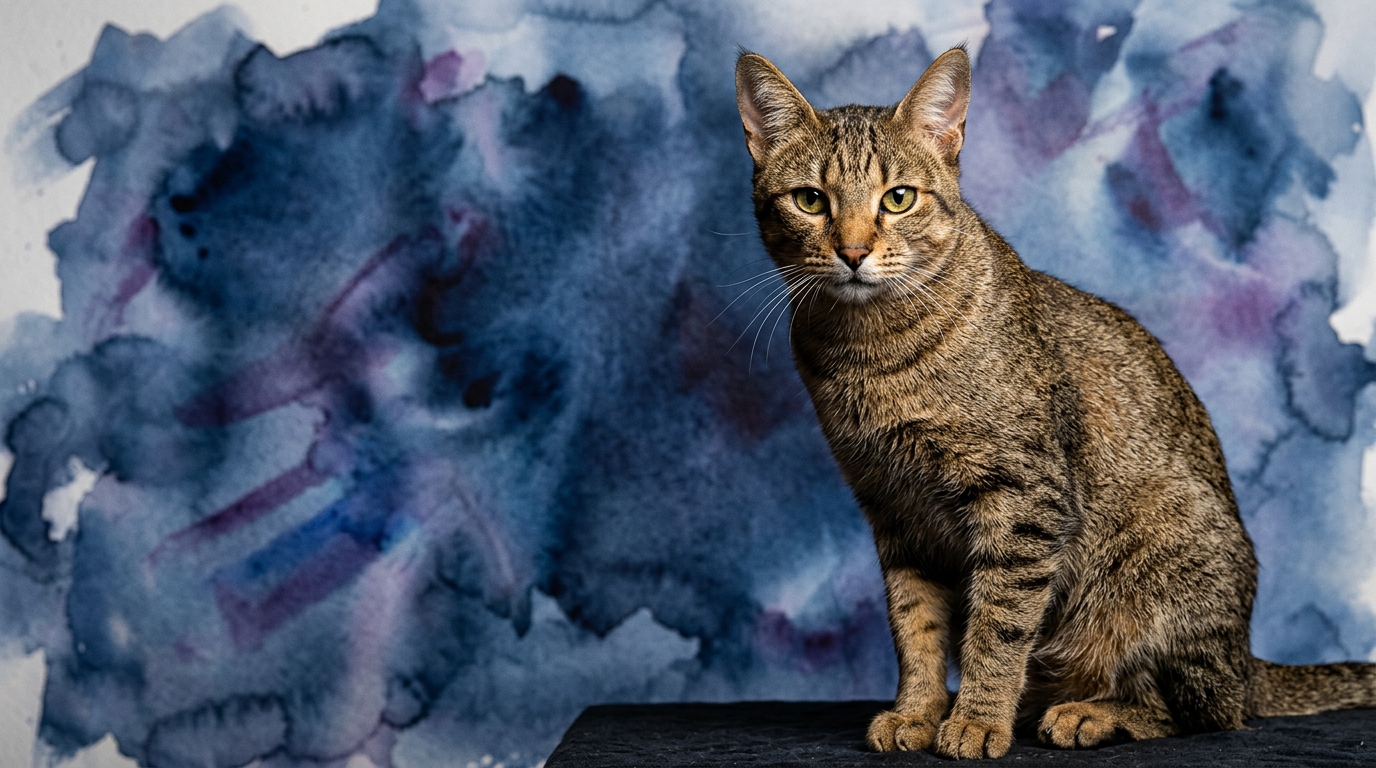
Side-by-Side IQ Profile: Siberian vs. Chausie
At The Cosmic Pet Pet IQ Lab, we evaluate feline intelligence across five crucial dimensions, each scored on a scale of 1 to 5. Interestingly, both the Siberian and Chausie breeds register a consistent 3/5 across all categories, suggesting a baseline of moderate cognitive ability. However, understanding these scores requires looking beyond the number to appreciate how each breed uniquely expresses these capacities through its inherent temperament and physical attributes.
For Problem Solving (3/5), the Siberian exhibits a moderate capacity for understanding cause-and-effect, often seen in their ability to manipulate simple latches or navigate multi-step play sequences to retrieve a favored toy. Their persistence is typically tempered by a willingness to seek human assistance if a puzzle proves too complex, indicating a reliance on social cues. The Chausie, while also possessing a moderate problem-solving aptitude, often applies it with greater physical dexterity and a strong drive to overcome obstacles. They might creatively scale furniture or find ingenious ways to access forbidden areas, driven by their high energy and profound curiosity.
In Training Speed (3/5), the Siberian responds moderately well to positive reinforcement, capable of learning basic commands like 'sit' or coming when called, especially when motivated by treats or affection. Their trainability benefits from their generally agreeable nature and desire for companionship, making them cooperative learners. The Chausie also shows a moderate pace in acquiring new behaviors, but requires consistent, engaging sessions to prevent boredom. Their training success often hinges on tapping into their prey drive and athleticism, making trick training or agility particularly rewarding for them, demanding a more dynamic approach from their owner.
Regarding Social Intelligence (3/5), the Siberian demonstrates a moderate understanding of social cues, forming strong, often dog-like bonds with their human family and frequently adapting well to other pets. They express affection readily and can discern moods, responding with comforting purrs or gentle nudges. The Chausie possesses a similar moderate social acumen, typically forming a deep, singular bond with one or two individuals, while being more reserved or even aloof with strangers. They communicate their needs and desires clearly to their chosen people, often through vocalizations and persistent gestures, indicating a focused social awareness.
Their Instinctive Drive (3/5) in Siberians manifests as a moderate inclination towards hunting behaviors, seen in playful pouncing and stalking games. Their natural curiosity encourages exploration and climbing, but usually within acceptable household boundaries, demonstrating a balanced approach to their innate urges. The Chausie, however, displays a moderate, but often more intense, instinctive drive, particularly related to hunting and exploration. Their wild cat ancestry contributes to a strong prey drive, requiring ample outlets for vigorous play and mental stimulation to prevent them from seeking inappropriate targets for their considerable energy.
Finally, for Memory (3/5), the Siberian possesses a moderate capacity, remembering routines, the location of favored items, and the association between commands and rewards. They can recall positive and negative experiences, shaping their future interactions with a sense of cautious curiosity. The Chausie also demonstrates a moderate memory, capable of recalling complex sequences for play or escape routes. They remember their preferred people and routines with precision, and can hold a grudge if an experience was particularly unpleasant or frustrating, indicating a strong associative memory for perceived threats or injustices.
Where the Siberian Wins Cognitively
The Siberian's cognitive strengths often shine in their emotional attunement and adaptability to varied social dynamics. Their moderate social intelligence allows them to not only form deep, affectionate bonds but also to navigate complex household environments with multiple pets or children, often acting as a calming and integrating presence. They exhibit a patient approach to problem-solving, preferring to observe and understand the mechanics of a puzzle rather than immediately resorting to brute force, which can make them more amenable to structured learning environments where observation is key. Their memory, while moderate, seems particularly adept at recalling positive social interactions and routines, fostering a harmonious and predictable home life where they feel secure and loved.
Where the Chausie Wins Cognitively
The Chausie's cognitive advantages are most evident in their application of problem-solving and instinctive drives towards physical challenges. Their moderate problem-solving aptitude, coupled with their athletic build and high energy, makes them adept at navigating intricate physical puzzles or devising strategies to reach elevated perches. This often involves a creative use of their environment, demonstrating a spatial intelligence geared towards exploration and access. Their training speed benefits from their intense focus during engaging activities, particularly those that mimic hunting or require agility and quick reflexes. This breed's memory is keenly tied to spatial awareness and the recall of successful hunting strategies, making them highly efficient at mastering complex play sequences or obstacle courses, driven by a powerful internal motivation.
Which is Easier to Train and Why
When considering ease of training, the Siberian often presents a more straightforward experience for the average owner. Their moderate training speed is complemented by a generally agreeable and companion-oriented temperament. They tend to be more patient with repetition and find joy in shared activities with their human, making them highly responsive to positive reinforcement involving treats, praise, and gentle play. Their moderate social intelligence means they are often keen to understand and respond to human cues, fostering a cooperative training dynamic where the cat actively seeks to engage with its owner.
The Chausie, while equally capable of learning at a moderate speed, demands a different approach. Their high instinctive drive and need for vigorous mental and physical engagement mean that training sessions must be dynamic and challenging to hold their interest. They might quickly become bored with simple, repetitive tasks, requiring owners to incorporate puzzle toys, agility drills, or fetch games that tap into their natural hunting instincts. Their strong-willed nature means consistency and creative motivation are paramount for successful training, making them potentially more challenging for novice trainers who are not prepared for a highly energetic and demanding learner.
Which Suits Active Owners vs. Relaxed Owners
For owners leading a more relaxed lifestyle, the Siberian emerges as a fitting companion. While they appreciate interactive play and climbing opportunities, their moderate instinctive drives and social intelligence allow them to adapt gracefully to quieter moments, often content to observe or cuddle beside their human. They are generally less demanding of constant stimulation, finding satisfaction in regular, but not necessarily intense, engagement. Their balanced cognitive profile makes them versatile companions, thriving in homes where affection and routine are prioritized, and they can enjoy both periods of activity and serene companionship.
Conversely, the Chausie is unequivocally suited for active owners. Their robust physical needs and moderate yet intensely applied instinctive drives necessitate a home environment that can provide ample space for exploration, vigorous play sessions, and consistent mental challenges. An owner who enjoys interactive games, leash training, or even cat agility will find a highly engaged and rewarding partner in a Chausie. Without sufficient outlets for their considerable energy and problem-solving drive, Chausies can become restless or develop undesirable behaviors, making them a poor match for a truly relaxed household that cannot keep pace with their inherent dynamism.
The Verdict
Choose a Siberian if you value a balanced, adaptable companion who integrates smoothly into various family dynamics and offers affectionate, moderately interactive companionship.
Opt for a Chausie if you are an active owner prepared to provide extensive physical and mental stimulation, appreciating a cat with intense focus and a strong drive for engaging challenges.
🧠 Find Your Pet's IQ Score
Our Pet IQ Lab assessment covers 25+ tests across 5 cognitive dimensions — personalized to your breed.
Take the Full IQ Test →Frequently Asked Questions
Do Siberians and Chausies learn tricks easily?
Both breeds exhibit a moderate training speed, meaning they can learn tricks with consistent positive reinforcement. Siberians respond well to reward-based methods and enjoy shared activity, while Chausies thrive on challenging, high-energy trick training that taps into their athletic abilities, requiring more dynamic engagement.
Which breed is more social with strangers?
Siberians generally display a more open, moderately social intelligence, often accepting new people with curiosity and gentle interaction, making them welcoming household members. Chausies, while forming deep bonds with their chosen family, tend to be more reserved and discerning with strangers, preferring to observe from a distance or avoid direct interaction.
How do their problem-solving skills differ in daily life?
Both have moderate problem-solving skills, but their application varies. Siberians might apply theirs to gently manipulating objects or understanding household routines, often seeking human help when stuck. Chausies, driven by higher physical energy and curiosity, often use their problem-solving to overcome physical barriers, reach high places, or manipulate complex toys independently with great determination.