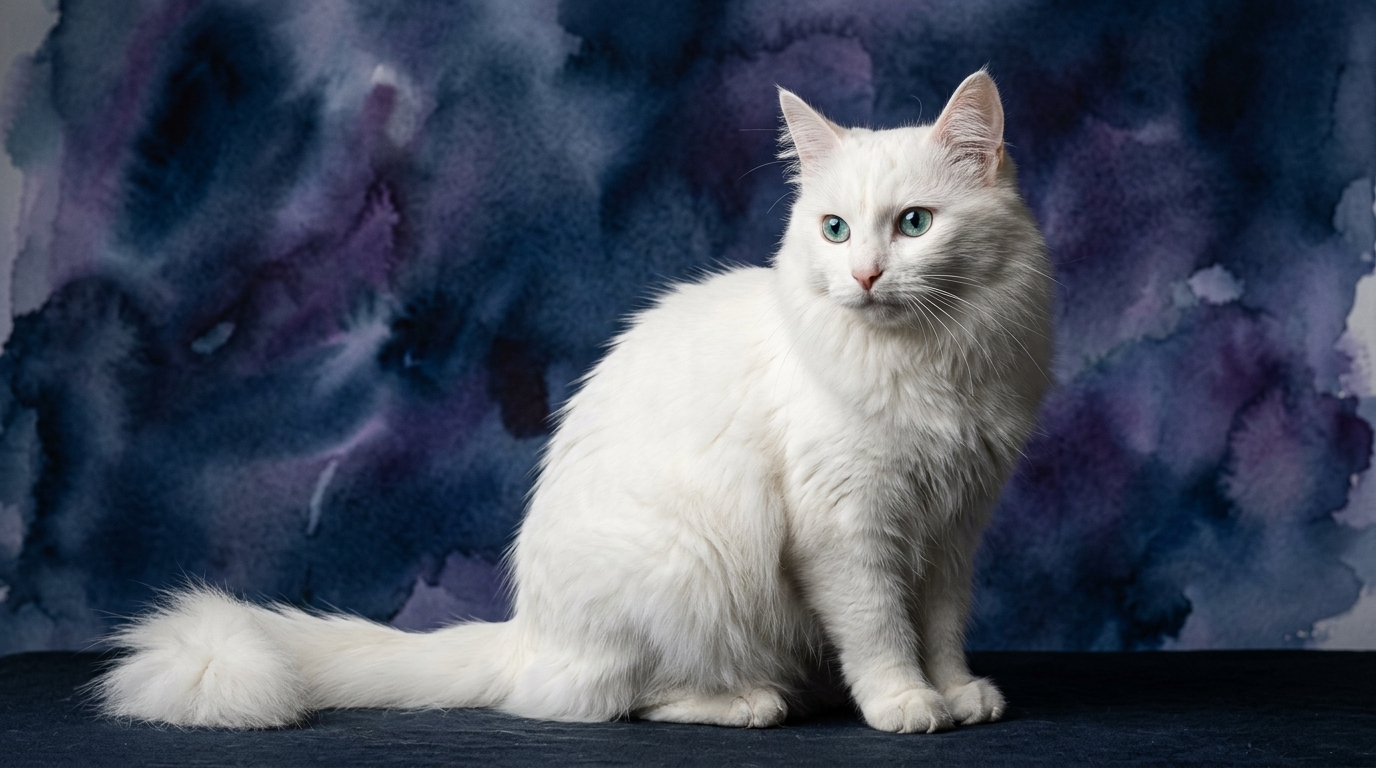
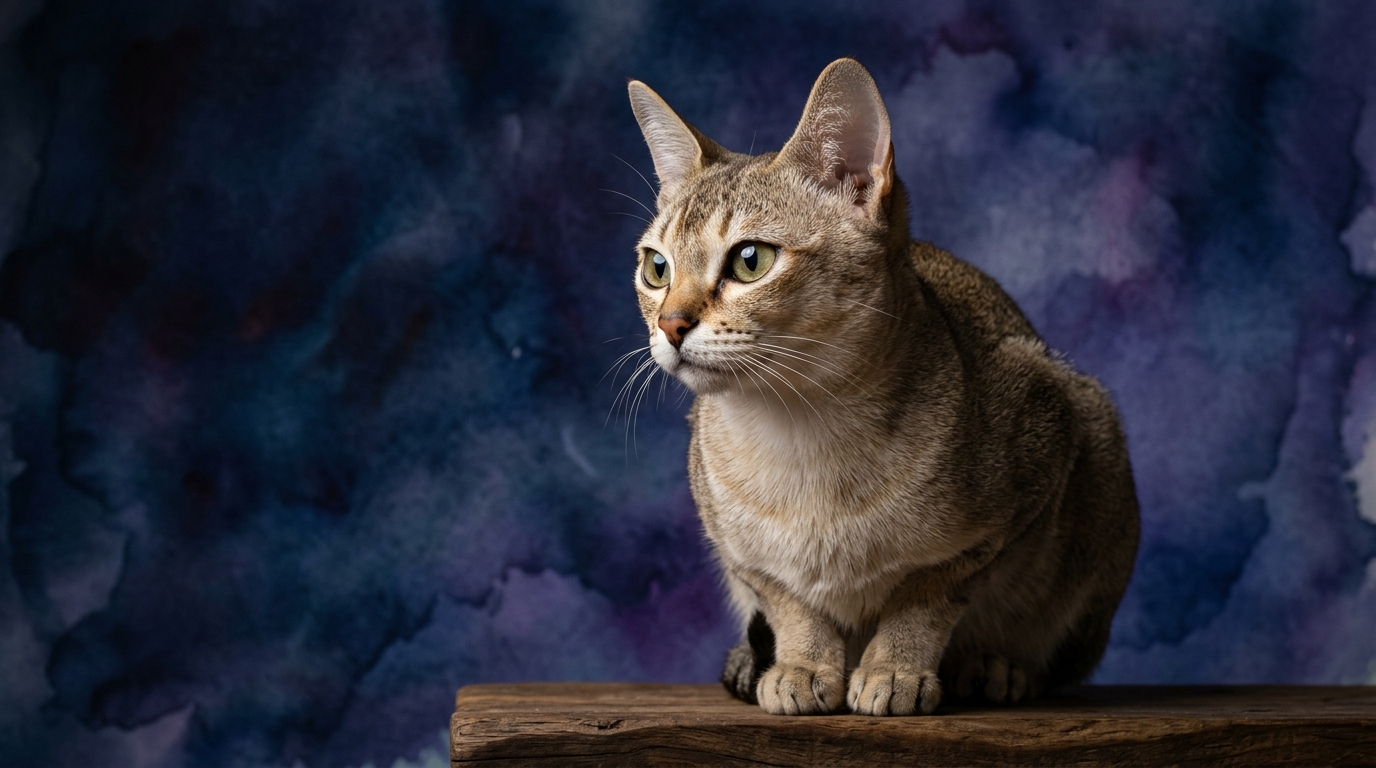
Side-by-Side IQ Profile: Turkish Angora vs. Singapura
The Cosmic Pet Pet IQ Lab employs a five-dimensional framework to map feline intelligence, offering a nuanced understanding beyond simple labels. For the Turkish Angora, the scores reflect a highly engaged and mentally agile companion. Their Problem Solving is rated a perfect 5/5, indicating a profound capacity to navigate complex challenges and devise innovative solutions. Training Speed stands at a robust 4/5, suggesting a quick uptake of new commands and routines. Social Intelligence, also at 4/5, highlights their adeptness at understanding and responding to human cues and social dynamics. An Instinctive Drive of 4/5 points to a strong natural curiosity and predatory engagement, while their Memory, a remarkable 5/5, signifies an enduring recall of experiences, routines, and relationships.
In contrast, the Singapura presents a more moderate, yet equally engaging, cognitive profile across all dimensions. Their Problem Solving is rated 3/5, indicating a practical, direct approach to challenges rather than elaborate strategizing. Training Speed also sits at 3/5, meaning they can learn, but might require more consistent repetition than their Angora counterparts. Social Intelligence at 3/5 suggests they are affectionate and connected, though perhaps less overtly expressive or attuned to subtle shifts in human emotion. Their Instinctive Drive, a balanced 3/5, means they possess natural feline curiosity without an overwhelming urge for intense hunting or exploration. Finally, a Memory score of 3/5 implies a solid recall for important routines and trusted individuals, though perhaps less retention for minor details or less frequently encountered stimuli.
Where the Turkish Angora Excels Cognitively
The Turkish Angora's cognitive strengths are particularly pronounced in areas demanding complex thought and enduring recall. With a 5/5 in Problem Solving, an Angora might meticulously observe a treat puzzle, methodically testing different mechanisms until the reward is retrieved, or even figure out how to manipulate a door handle to access a forbidden room. This isn't just trial-and-error; it's often a strategic approach, demonstrating an ability to conceptualize solutions and execute multi-step plans. Owners frequently report Angoras learning to open cabinets, turn on faucets, or even fetch specific items on command, showcasing their remarkable capacity for understanding and manipulation of their environment.
Their 5/5 Memory score complements this problem-solving prowess, allowing them to retain these learned solutions and experiences over extended periods. An Angora will remember where a favorite toy was hidden months ago, or recall a specific interaction with a particular visitor, influencing future behaviors. This enduring recall also contributes to their adaptability; once they've learned a new routine or adapted to a change in their environment, that knowledge tends to stick. This combination of superior problem-solving and long-term memory makes the Turkish Angora a truly engaging and often surprising companion, constantly seeking mental engagement and demonstrating a profound understanding of their surroundings.
Where the Singapura's Cognitive Disposition Offers Distinct Advantages
While the Singapura's cognitive scores are generally moderate, this disposition brings its own unique set of advantages, particularly for owners seeking a different kind of feline companionship. Their 3/5 in Problem Solving means they are less likely to become 'too clever for their own good,' which can be a relief for owners who prefer a less challenging household dynamic. A Singapura is less prone to systematically dismantling child-proof locks, opening intricate food containers, or devising elaborate escape routes from secure areas. Their approach to obstacles is often more direct and less persistent in the face of complex barriers, leading to fewer unexpected household 'surprises'.
The Singapura’s balanced 3/5 Instinctive Drive also contributes to a generally more manageable domestic presence. While they enjoy play and interaction, their predatory instincts are typically not as intense or demanding as breeds with higher scores. This means less frantic chasing of phantom prey, less intense 'hunting' of housemates' feet, and potentially less destructive behavior stemming from unfulfilled hunting urges. Their moderate Social Intelligence (3/5) can also be an advantage in quieter homes, as they tend to be affectionate without being overly demanding of constant attention, often content to observe or cuddle on their own terms, providing a comforting, predictable presence without the intense social demands that some higher-scoring breeds might exhibit.
Ease of Training: Turkish Angora vs. Singapura
When it comes to training, the Turkish Angora's cognitive profile positions them as the more responsive and quicker learner. With a Training Speed of 4/5, combined with their 5/5 Problem Solving and 5/5 Memory, Angoras typically pick up new commands, tricks, and routines with impressive alacrity. They not only grasp the association between a cue and an action quickly but also remember it reliably. Their high Social Intelligence (4/5) further aids training, as they are often keenly attuned to human vocalizations, body language, and expressions of approval, making them highly receptive to positive reinforcement. Owners can often teach Angoras complex sequences, leash walking, or even interactive games that require understanding multiple steps, transforming training into a rewarding collaborative activity.
The Singapura, with a Training Speed of 3/5, is certainly trainable, but owners should anticipate a more patient and consistent approach. Their moderate problem-solving and memory mean that while they can form associations, it might take more repetitions for a command to become ingrained, and recall might require more regular reinforcement. Singapura's moderate social intelligence suggests they respond well to gentle, consistent positive reinforcement, but might not seek out training sessions with the same enthusiastic, problem-solving zeal as an Angora. Owners looking to train a Singapura will find success by keeping sessions short, fun, and highly rewarding, focusing on consistency to build lasting habits rather than expecting rapid mastery of complex tricks.
Suitability for Active vs. Relaxed Owners
The distinct cognitive profiles of the Turkish Angora and Singapura lend themselves to different owner lifestyles. The Turkish Angora, with its high scores across Problem Solving, Memory, and Instinctive Drive, thrives with active owners who are prepared to provide consistent mental stimulation and engagement. These cats require more than just physical play; they need puzzle toys, interactive games that challenge their intellect, and opportunities to 'hunt' and explore in a safe environment. An Angora without sufficient mental outlets can become bored, potentially leading to inventive but sometimes undesirable behaviors as they seek to entertain themselves. They are ideal for individuals or families who enjoy teaching tricks, engaging in daily interactive play, and providing an enriching environment that caters to a highly curious and strategic mind.
Conversely, the Singapura's moderate cognitive demands make them an excellent match for more relaxed owners or those with quieter households. While they certainly enjoy play and affection, their contentment is often found in simpler interactions, a comfortable lap, or observing the household's gentle rhythms. Their balanced instinctive drive means they are generally less prone to destructive behaviors born from intense boredom, and their moderate social intelligence makes them adaptable to periods of independent activity without intense separation distress. A Singapura will appreciate regular, affectionate interaction and simple play sessions, but does not typically require the constant, complex mental engagement that an Angora thrives upon. They are well-suited for owners who appreciate a calm, affectionate, and relatively low-maintenance cognitive companion.
The Verdict
Choose the Turkish Angora if you are an active owner seeking a highly interactive, mentally agile feline partner eager to engage in complex games, learn intricate tricks, and constantly explore its environment.
Opt for the Singapura if you prefer a more predictable, calmly affectionate companion whose moderate cognitive demands align perfectly with a relaxed household seeking a gentle, self-sufficient presence.
🧠 Find Your Pet's IQ Score
Our Pet IQ Lab assessment covers 25+ tests across 5 cognitive dimensions — personalized to your breed.
Take the Full IQ Test →Frequently Asked Questions
Are Turkish Angoras prone to boredom if not mentally stimulated?
Yes, with their 5/5 Problem Solving and 4/5 Instinctive Drive, Turkish Angoras require regular mental engagement. Insufficient stimulation can lead to them devising their own 'entertainment,' which might include opening cabinets or exploring forbidden areas out of curiosity and a need for cognitive challenge.
How does a Singapura's social intelligence manifest?
A Singapura's 3/5 social intelligence typically means they are affectionate and form strong bonds with their chosen humans, but they may express this more subtly or prefer a smaller, consistent social circle. They are generally content to be close without constant demanding interaction, offering a calm and comforting presence.
Can a Singapura learn tricks despite a moderate training speed score?
Absolutely. While their 3/5 Training Speed suggests they might require more patience and repetition than an Angora, Singapuras are capable of learning tricks and commands. Success is best achieved through consistent, short, positive reinforcement-based training sessions that make learning a fun and rewarding experience for them.