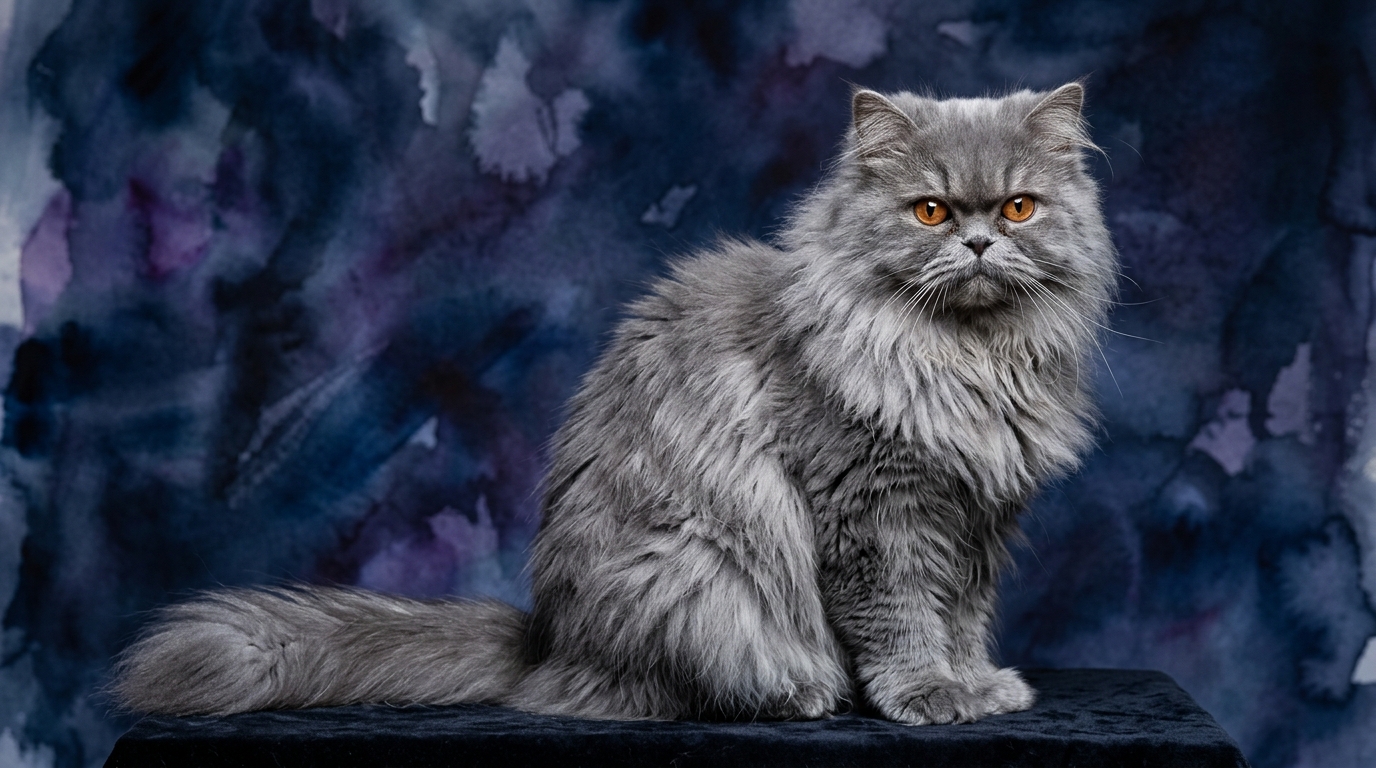
The Deliberate Thinker: Decoding Persian Intelligence
Forget the myth of the empty-headed beauty; the Persian cat possesses a distinct cognitive style we call 'deliberate intelligence.' Unlike breeds that might pounce on new information with immediate enthusiasm, Persians prefer a methodical approach, processing their surroundings with meticulous care. This doesn't mean they're slow; it means they are thorough, often taking their time to observe, analyze, and store information with remarkable precision.
Their intelligence profile reveals interesting nuances: a moderate capacity for problem-solving (2/5) and training speed (2/5), suggesting they aren't quick to pick up complex commands. However, their social intelligence rates a respectable 3/5, indicating they understand human cues and social structures effectively, even if they express it subtly. Where they truly shine is in memory (3/5), as they rarely make the same mistake twice and remember routines, people, and places with impressive accuracy. Their instinctive drive (2/5) is less pronounced than in more active breeds, reflecting their preference for a calm, predictable environment.
This methodical intelligence means that while a Persian might not learn a trick on the first try, once they understand a concept, it's deeply ingrained. They are masters of their immediate environment, mapping every nook and cranny, and remembering where you hide the treats or the subtle sounds indicating your arrival. Their learning is a quiet, continuous process of observation and internal compilation, leading to a profound understanding of their world.
A Face That Tells a Story (Differently)
One of the most defining physical characteristics of the Persian cat is their distinctive flat face, a trait known scientifically as a brachycephalic skull. This unique facial structure, while contributing to their iconic look, affects more than just aesthetics; it also influences their breathing and tear ducts, requiring specific care. More surprisingly for cognitive scientists, it significantly alters their facial expressiveness. Unlike many other breeds whose faces can convey a range of emotions through subtle muscle movements, the Persian's facial anatomy limits this visual communication.
Because their facial expressions are less overt, Persians have evolved alternative, sophisticated methods for communicating their emotional states and intentions. They rely primarily on body posture, tail movements, and ear positions to convey how they feel. A relaxed slump, a slowly twitching tail, or flattened ears can speak volumes to an attentive owner. This unique communicative style requires owners to be more attuned to their cat's physical language, fostering a deeper, more observational bond. Understanding this physical communication is key to truly connecting with a Persian's inner world, as vocalizations are less frequent than with many other breeds, often reserved for specific demands or greetings.
More Than Just a Pretty Face: Debunking the Myth
It's a persistent, unfair stereotype: "Persians are beautiful but completely stupid – they can barely function independently." This myth often arises because their serene, sometimes aloof demeanor is misinterpreted as a lack of engagement or intelligence. Their preference for quiet observation over boisterous activity can lead some to believe they are merely decorative, lacking inner life or problem-solving skills.
The truth is far more nuanced and impressive. Persians are far from stupid; they are profoundly capable of independent function and demonstrate a deliberate, precise form of intelligence. Their strong memory means they navigate their home environment with masterful recall, knowing exactly where their resources are and how to get them. While they may not be the fastest learners for parlor tricks, their ability to map environments with precision and rarely repeat a mistake speaks volumes about their cognitive capabilities, making them incredibly self-sufficient in their carefully observed world. This measured approach to life is a sign of thoughtful engagement, not a deficit.
A Glimpse into the Past: Origins and Evolution
The Persian cat's story is as ancient and captivating as their lineage, tracing back to the heart of Persia, modern-day Iran. These felines have been companions to royalty and admired for their luxurious coats for centuries, making them one of the oldest and most established natural breeds. Their long history of domesticity has likely shaped their calm, companionable temperament and their particular brand of deliberate intelligence, favoring observation and memory over impulsive action. This long-standing relationship with humans means they are deeply ingrained in our history, having evolved alongside us to become the refined and thoughtful companions they are today. Understanding their ancient roots helps us appreciate the depth of their character and their enduring appeal across civilizations.
Comparing Minds: Persians Among Their Peers
When we look at other popular cat breeds, the Persian's unique intelligence profile becomes even clearer. While Ragdolls are known for their placid, "floppy" docility and eagerness for human interaction, the Persian often exhibits a more independent, observant form of social engagement, preferring to map their environment and people from a comfortable distance before interacting. Compared to the British Shorthair's generally calm yet often playful and adaptable demeanor, the Persian tends to display a more reserved intelligence, meticulously processing new information rather than impulsively exploring. As a close cousin, the Himalayan shares the Persian's signature brachycephalic features and often their calm disposition, but can sometimes exhibit a slightly more vocal and interactive personality, blending Persian serenity with a touch of Siamese curiosity. Each breed offers a fascinating glimpse into the diverse ways feline intelligence manifests.
3 At-Home Tests to Measure Your Persian's IQ
These tests are adapted from peer-reviewed ethology research. No equipment is needed beyond items you have at home. Run each test 5–10 times for reliable results.
The Myth: "Persians are beautiful but completely stupid — they can barely function independently."
✅ Persian cats are anything but stupid; they possess a deliberate, methodical intelligence that allows them to function very independently within their familiar environments. Their exceptional memory ensures they rarely make the same mistake twice, demonstrating a profound understanding of their surroundings and daily routines. While not overtly flashy, their consistent problem-solving and navigation skills are clear evidence of their capable minds.
Persian vs. Similar Breeds
🧠 What's Your Cat's IQ Score?
Our full Pet IQ Lab assessment includes 12+ tests across 5 cognitive dimensions, calibrated for Persians specifically.
Take the Full IQ Test →Frequently Asked Questions
Are Persian cats good at learning tricks?
Persians can learn tricks, but they typically require more patience and repetition due to their deliberate learning style. They excel more at routines and understanding boundaries than performing complex, acrobatic feats on command. Positive reinforcement and short, consistent training sessions work best to engage their thoughtful minds.
Do Persian cats get along with other pets?
Persian cats generally possess a calm and adaptable temperament, often getting along well with other gentle pets, including other cats and docile dogs. Their social intelligence allows them to understand social dynamics, though they prefer peaceful coexistence over boisterous play. Introductions should always be slow and supervised to ensure a harmonious environment for all.
How can I stimulate my Persian cat's mind?
To stimulate a Persian cat's deliberate intelligence, focus on enrichment that engages their observational skills and memory. Puzzle feeders that require slow manipulation, regular rotations of new toys to map, and consistent interactive play with you using laser pointers or wand toys can keep their minds sharp and content. Providing predictable routines also helps them thrive intellectually.
The Persian cat is a testament to the diverse ways intelligence manifests in the animal kingdom, proving that beauty and brains are not mutually exclusive. Their deliberate, methodical minds offer a unique and rewarding companionship for those who appreciate the quiet brilliance of a truly thoughtful feline.