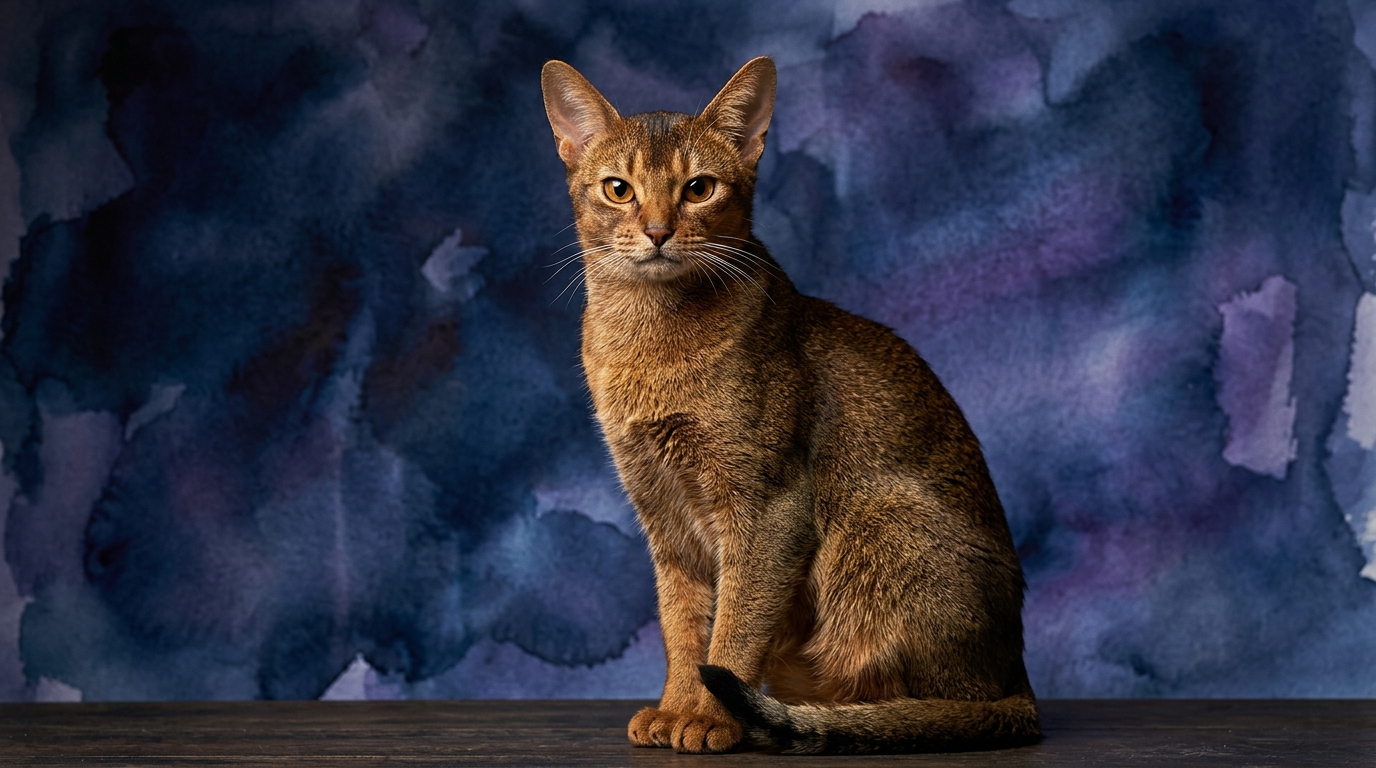
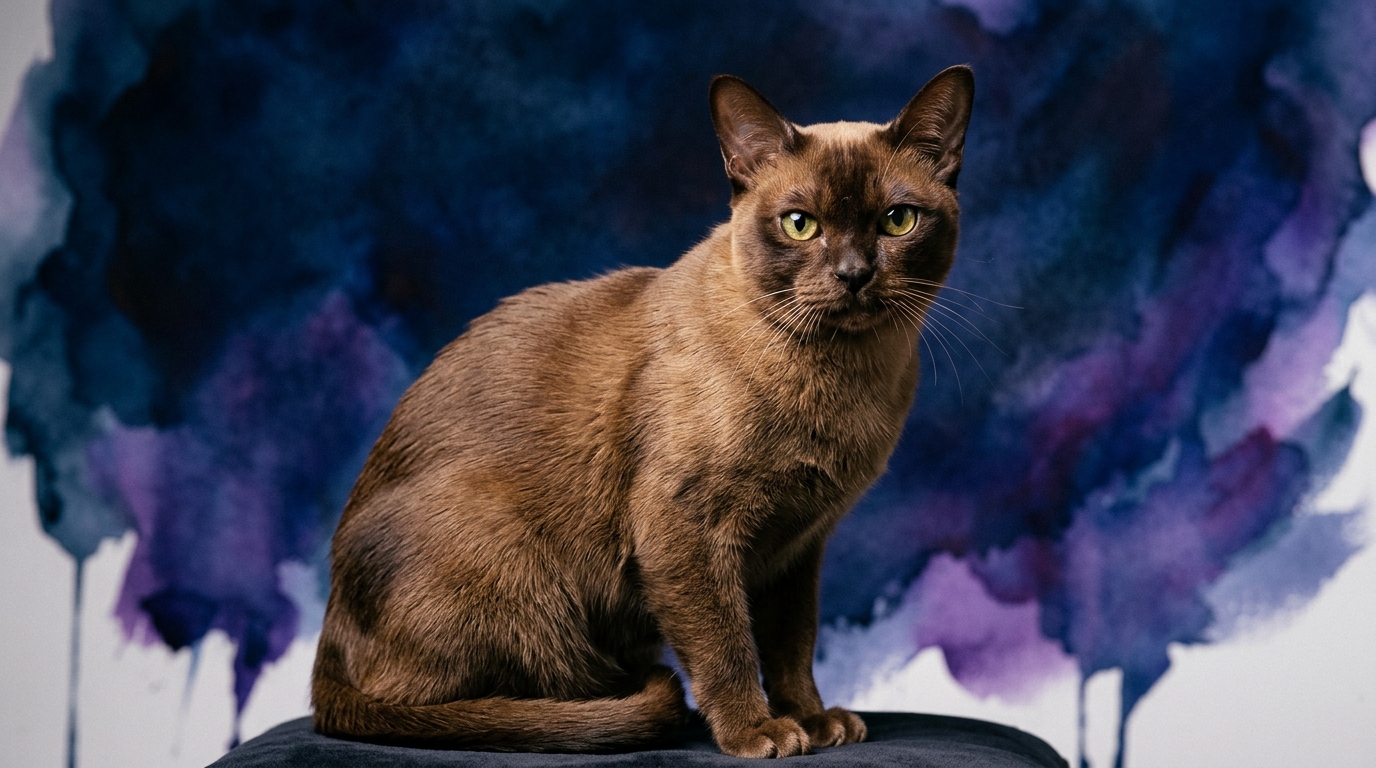
Side-by-Side IQ Profile: Abyssinian vs. Burmese
**Problem Solving:** The Abyssinian scores a perfect 5/5, indicating a cat that actively seeks solutions to environmental challenges, whether opening cupboards or manipulating puzzle toys. Their innate curiosity drives deep interaction with their surroundings. The Burmese, at 4/5, is adept at navigating complex situations, but might approach them with slightly less independent initiative or require more context than an Abyssinian. They are capable problem-solvers, though perhaps with a different persistence level.
**Training Speed:** Both breeds achieve an impressive 5/5, reflecting their remarkable capacity for rapid learning. For the Abyssinian, this speed is fueled by their exploratory nature and desire for mental engagement, making them eager for tricks or agility. The Burmese often excels due to their strong social drive, finding motivation in pleasing their human companions and the positive reinforcement from successful learning.
**Social Intelligence:** A key divergence: Abyssinian 4/5, Burmese 5/5. Abyssinians show solid social awareness, enjoying interaction but often maintaining some independence. They appreciate companionship without constant physical presence. The Burmese, with 5/5, exhibits exceptional capacity to read human emotions and proactively seeks deep, constant interaction, forming strong bonds and thriving as an integral family member.
**Instinctive Drive:** The Abyssinian commands a 5/5, signifying a powerful inherent urge to hunt, explore, and use predatory skills. This translates into a perpetually curious cat, requiring significant mental and physical stimulation. The Burmese, at 3/5, has a considerably lower drive for hunting or extensive exploration. They are generally more content indoors, less compelled by primal urges, and less prone to destructive behaviors from unfulfilled predatory needs.
**Memory:** Abyssinian excels with a 5/5, indicating an outstanding ability to recall complex routines, specific hidden object locations, and learned behaviors over time, contributing to their problem-solving. The Burmese scores a strong 4/5, demonstrating good memory for routines, faces, and commands, but perhaps with less intricate recall of highly complex sequences or environmental details compared to the Abyssinian.
Where the Abyssinian Wins Cognitively
The Abyssinian truly shines in areas demanding independent thought, sustained focus, and a deep engagement with their physical environment. Their perfect 5/5 in both Problem Solving and Memory means they are natural strategists, capable of dissecting complex situations and retaining the successful steps to overcome them. An Abyssinian is the cat likely to figure out how to open a child-proof cabinet, navigate a multi-stage puzzle feeder, or even learn a complex retrieve game, remembering where you hid their favorite toy weeks later. This cognitive strength, combined with their 5/5 Instinctive Drive, creates a cat that is not just curious, but driven to act on that curiosity, constantly exploring and manipulating their world. They possess an exceptional ability to learn by doing, adapting quickly to new stimuli and remembering the outcomes, making them formidable little explorers and brilliant at learning intricate sequences of actions.
Where the Burmese Wins Cognitively
Conversely, the Burmese cat's cognitive triumphs are rooted deeply in their extraordinary social aptitude. Their perfect 5/5 in Social Intelligence means they possess an unparalleled ability to understand and respond to human emotions and cues, often seeming to anticipate their owner's needs or moods. This isn't just about affection; it's a sophisticated form of communication and empathy that allows them to integrate seamlessly into a human family structure. While their problem-solving and memory scores are slightly lower than the Abyssinian, their training speed remains 5/5, which, in their case, is largely fueled by their desire for interaction and approval. A Burmese often learns quickly because they are motivated by the positive social feedback and the strengthening of their bond with their human, making them highly receptive to cooperative tasks and conversational interactions. Their cognitive strength lies in relationship-building and sophisticated social understanding.
Which is Easier to Train and Why
Both the Abyssinian and Burmese share an impressive 5/5 rating for training speed, yet their motivations for rapid learning differ, influencing optimal training approaches. The Abyssinian's high problem-solving and instinctive drive make them excellent candidates for trick training, agility, or complex routines, tapping into their curiosity and desire to master their environment. They view training as an engaging puzzle, responding well to challenge and novelty, with consistency and positive reinforcement being key. The Burmese, conversely, excels in training due to their exceptional social intelligence and strong desire for companionship. They are eager to please and highly motivated by human attention and praise, making them particularly receptive to learning commands that foster interaction, such as coming when called or leash training. Training a Burmese often feels more like a cooperative dialogue, where their willingness to engage and bond accelerates the learning process. Thus, while both learn quickly, the Abyssinian might be easier for independent, task-oriented feats, while the Burmese shines in training that strengthens the human-feline bond and involves direct cooperation.
Which Suits Active Owners vs. Relaxed Owners
The distinct cognitive profiles of these breeds lead them to thrive in different household environments. An Abyssinian, with its 5/5 Problem Solving, 5/5 Instinctive Drive, and 5/5 Memory, is ideally suited for active owners who relish engaging with their pet in stimulating ways. These cats require ample opportunities for mental enrichment, such as puzzle feeders, interactive toys, and structured play sessions challenging their intellect. Owners who enjoy teaching complex tricks, leash walks, or providing a dynamic environment will find an Abyssinian incredibly rewarding, as they are not content to simply observe. Conversely, the Burmese, with its 5/5 Social Intelligence and lower 3/5 Instinctive Drive, is perfect for owners seeking a more relaxed yet deeply interactive companion. While they enjoy play, their primary need is for constant human connection and affection. They thrive in homes offering abundant attention, cuddles, and conversation, often becoming a "velcro cat." Owners desiring a pet that is always present, highly communicative, and deeply empathetic will find the Burmese an exceptional, devoted family member, requiring less elaborate environmental enrichment and more direct social engagement.
The Verdict
Choose an Abyssinian if you seek a highly active, curious, and independent feline companion who thrives on mental challenges, intricate play, and exploring every corner of their world. This breed will keep you on your toes with their problem-solving prowess and insatiable drive for discovery.
Opt for a Burmese if your ideal companion is a deeply social, empathetic, and communicative cat who forms strong emotional bonds and constantly seeks human interaction. This breed will become your shadow, offering unwavering affection and a warm, present companionship that values connection above all else.
🧠 Find Your Pet's IQ Score
Our Pet IQ Lab assessment covers 25+ tests across 5 cognitive dimensions — personalized to your breed.
Take the Full IQ Test →Frequently Asked Questions
Are Abyssinians difficult to live with due to their high instinctive drive?
Not difficult, but they require significant mental and physical stimulation to channel their 5/5 instinctive drive constructively. Providing puzzle toys, interactive play, and opportunities for exploration helps prevent boredom and potential mischief.
Do Burmese cats need less attention because of their lower instinctive drive?
No, Burmese cats require substantial attention due to their 5/5 social intelligence. While their hunting drive is lower, their need for human interaction, cuddles, and conversation is very high; they thrive on being deeply involved with their family.
Can a Burmese cat learn tricks as well as an Abyssinian?
Absolutely, both breeds score 5/5 in training speed. While an Abyssinian might be motivated by the puzzle, a Burmese's strong desire to please and interact with their owner makes them equally quick to pick up new commands and perform tricks.