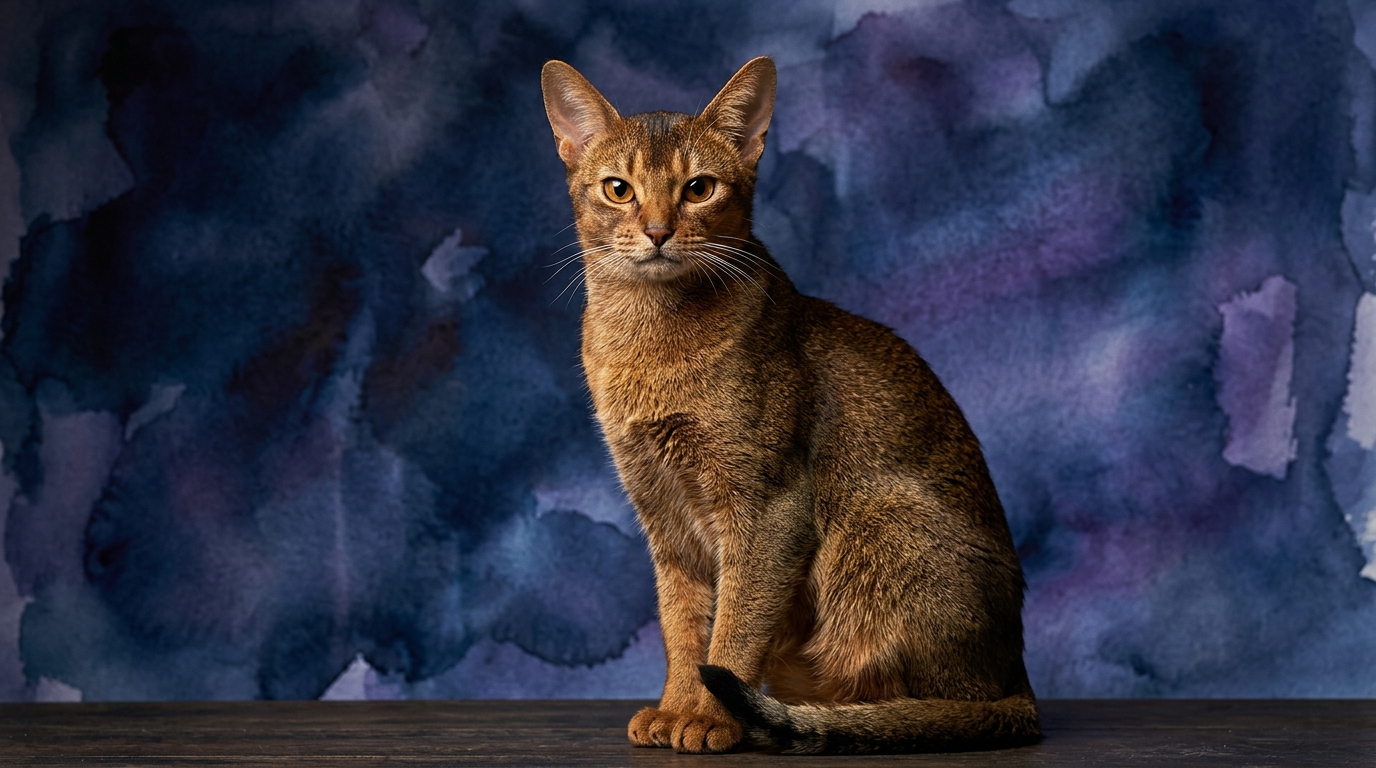
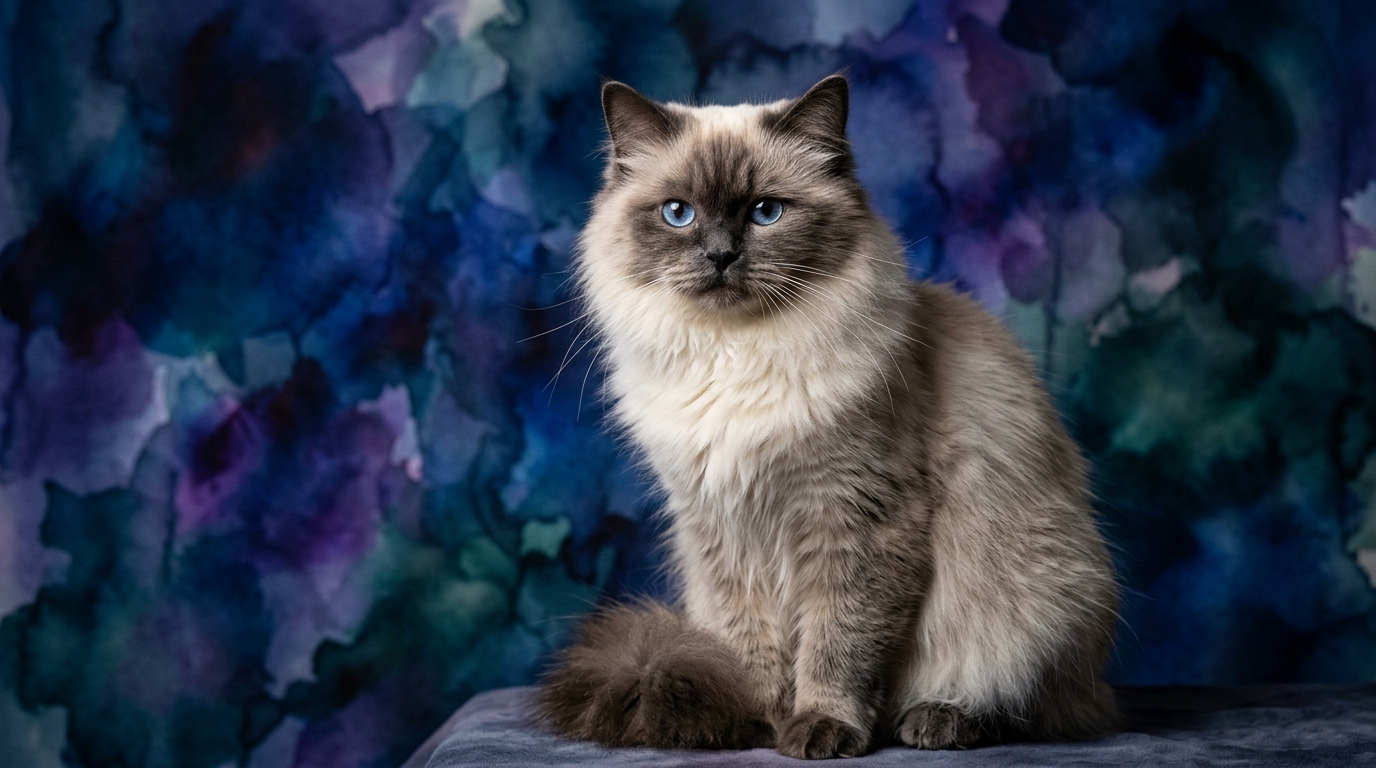
Abyssinian vs. Himalayan: A Side-by-Side Cognitive Profile
The Pet IQ Lab provides a unique framework to understand the cognitive strengths of different breeds, moving beyond general observations to specific metrics. For the Abyssinian, we see a profile geared towards active engagement and rapid learning, while the Himalayan presents a more relaxed, steady intellectual approach.
Abyssinian (Cat): This breed consistently scores at the top of the scale across most cognitive dimensions. Their Problem Solving is rated 5/5, indicating an exceptional capacity to navigate complex situations, figure out mechanisms, and devise strategies to achieve goals. Training Speed, also at 5/5, means they grasp new commands and routines with remarkable quickness, often requiring minimal repetition. Their Social Intelligence is a strong 4/5, suggesting a deep understanding of human cues and a desire for interactive companionship, though perhaps with a touch of independent thought. An Instinctive Drive of 5/5 highlights their profound connection to their predatory heritage, manifesting in intense play and exploration. Finally, their Memory, at 5/5, signifies an outstanding ability to recall learned behaviors, routines, and even the location of hidden objects over extended periods.
Himalayan (Cat): In contrast, the Himalayan's cognitive profile leans towards a more placid and less intensely driven nature. Their Problem Solving score of 3/5 suggests they can navigate straightforward challenges but may not be as inclined to tackle intricate puzzles or seek out complex solutions independently. Training Speed, also 3/5, indicates they are capable of learning, but typically require more consistent repetition and patience from their trainers. Their Social Intelligence at 3/5 points to an affectionate and devoted nature, often forming deep bonds with their chosen humans, though they might be less overtly expressive in social interactions or less driven to read subtle human cues. An Instinctive Drive of 3/5 means they possess natural feline urges, but these are generally expressed with less intensity than in more active breeds, often preferring comfort over constant hunting simulation. Their Memory, rated 3/5, allows them to remember routines and familiar faces reliably, but perhaps without the intricate detail or long-term retention seen in breeds with higher scores.
Where the Abyssinian Exhibits Cognitive Strengths
The Abyssinian's cognitive profile paints a picture of a feline perpetually engaged with its surroundings, a true 'feline engineer.' Their 5/5 Problem Solving isn't just about figuring out a treat puzzle; it extends to opening child-proof cabinets, manipulating door handles, or devising multi-step plans to reach a high shelf. They don't just react to their environment; they actively seek to understand and master it. This drive, coupled with their 5/5 Instinctive Drive, means they approach playtime with a strategic intensity, often 'hunting' toys with a calculated approach rather than mere impulsive pounces. Owners might observe them planning ambushes, figuring out the trajectory of a thrown toy, or even 'outsmarting' automated feeders. Their 5/5 Memory further solidifies these strengths, allowing them to recall the intricacies of past successes and failures, refining their approach to new challenges. An Abyssinian remembers not just *that* the treats are in the cupboard, but *how* they managed to open it last time, leading to persistent, intelligent attempts.
The Himalayan's Unique Cognitive Contributions
While the Himalayan's scores are lower than the Abyssinian's, their cognitive profile contributes to a different, yet equally cherished, set of qualities. Their 3/5 in Social Intelligence, for example, translates into a quiet devotion rather than a demanding interactive presence. They excel in providing calm companionship, often content to observe and be near their humans, offering a comforting and predictable presence without the constant need for engagement. This lower intensity in social interaction can be a strength for owners seeking a serene home environment. Similarly, their 3/5 Problem Solving and Instinctive Drive mean they are less likely to engage in destructive 'problem-solving' born from boredom or an overabundance of energy. They might not scale curtains or dismantle household items to explore, preferring instead to find comfort in familiar spaces and routines. This results in a cat that is often less prone to mischief driven by cognitive curiosity, contributing to a more tranquil household atmosphere. Their memory, while not photographic, reliably anchors them to their established routines and beloved people, fostering a sense of security and loyalty.
Ease of Training: Abyssinian's Agility vs. Himalayan's Patience
When it comes to training, the Abyssinian's 5/5 Training Speed makes them exceptionally receptive. They thrive on challenge and positive reinforcement, quickly linking actions to rewards. This means they can pick up complex sequences, like agility courses or multi-step tricks, with remarkable efficiency. Their high problem-solving and memory scores mean they don't just mimic; they understand the 'why' behind the command, making them enthusiastic participants in clicker training, leash walking, and even learning to fetch. They require consistent mental engagement, and training provides an excellent outlet for their cognitive drive, preventing boredom-induced behaviors. For an Abyssinian, training is a partnership in problem-solving and a delightful mental exercise.
The Himalayan, with a 3/5 Training Speed, can certainly be trained, but the approach requires more patience and consistency. Simple commands like 'sit,' 'stay,' or coming when called are achievable, but they will likely require more repetitions and a gentler, more relaxed demeanor from the trainer. Complex tricks or advanced obedience might be a slower, more deliberate process, as their motivation may not be as intensely driven by the challenge itself. Their lower instinctive drive means they might respond better to comfort-based rewards or food treats rather than play-based motivation. Training a Himalayan is about building a steady routine and fostering a sense of trust and comfort, making progress gradually rather than expecting rapid mastery.
Matching Feline Minds to Lifestyles
For active owners who relish interactive play, enjoy teaching new skills, and can provide a consistently stimulating environment, the Abyssinian is an ideal match. Their high scores across problem-solving, training speed, and instinctive drive mean they require substantial mental and physical engagement to prevent boredom. These cats thrive on puzzle toys, regular training sessions, and opportunities to explore safely. An owner who understands and caters to this need for engagement will find a deeply rewarding and interactive companion.
Conversely, relaxed owners seeking a calm, affectionate lap cat who appreciates a predictable routine and less demanding playtime will find the Himalayan a perfect fit. Their contentment with a quieter existence and lower cognitive drive for constant challenges makes them suitable for households that prefer a more serene companion. They are superb at providing a comforting presence and enjoying gentle attention, without the energetic demands of their Abyssinian counterparts. They are perfectly content to be a warm, furry shadow, offering steadfast companionship without the need for constant intellectual engagement.
The Verdict
For individuals seeking a highly interactive, quick-witted feline companion eager to engage in complex play and learn new skills, the Abyssinian is an exceptional choice. They thrive in environments that offer constant mental stimulation and opportunities for exploration.
If your ideal companion is a serene, devoted cat content with a more relaxed pace and affectionate cuddles, the Himalayan will beautifully complement your home. They offer a tranquil presence and strong, yet undemanding, companionship.
🧠 Find Your Pet's IQ Score
Our Pet IQ Lab assessment covers 25+ tests across 5 cognitive dimensions — personalized to your breed.
Take the Full IQ Test →Frequently Asked Questions
Do Abyssinians need more mental stimulation than Himalayans?
Yes, Abyssinians, with their 5/5 scores in problem-solving and instinctive drive, require significant mental engagement to remain content. Himalayan cats, with 3/5 scores, are typically less demanding in this regard and often prefer a quieter routine.
Can a Himalayan cat learn tricks?
Absolutely, Himalayan cats can learn tricks, though their training speed is rated 3/5, meaning it might require more patience and repetition than with a 5/5 training speed cat. Positive reinforcement and consistency are key to their success.
Which cat breed is better for a first-time cat owner looking for an affectionate pet?
For a first-time owner prioritizing calm affection, the Himalayan might be a more straightforward choice due to their more relaxed demeanor and 3/5 social intelligence score, which indicates a steady, devoted bond. Abyssinians, while social at 4/5, demand more interactive engagement, which might be a lot for a novice owner.