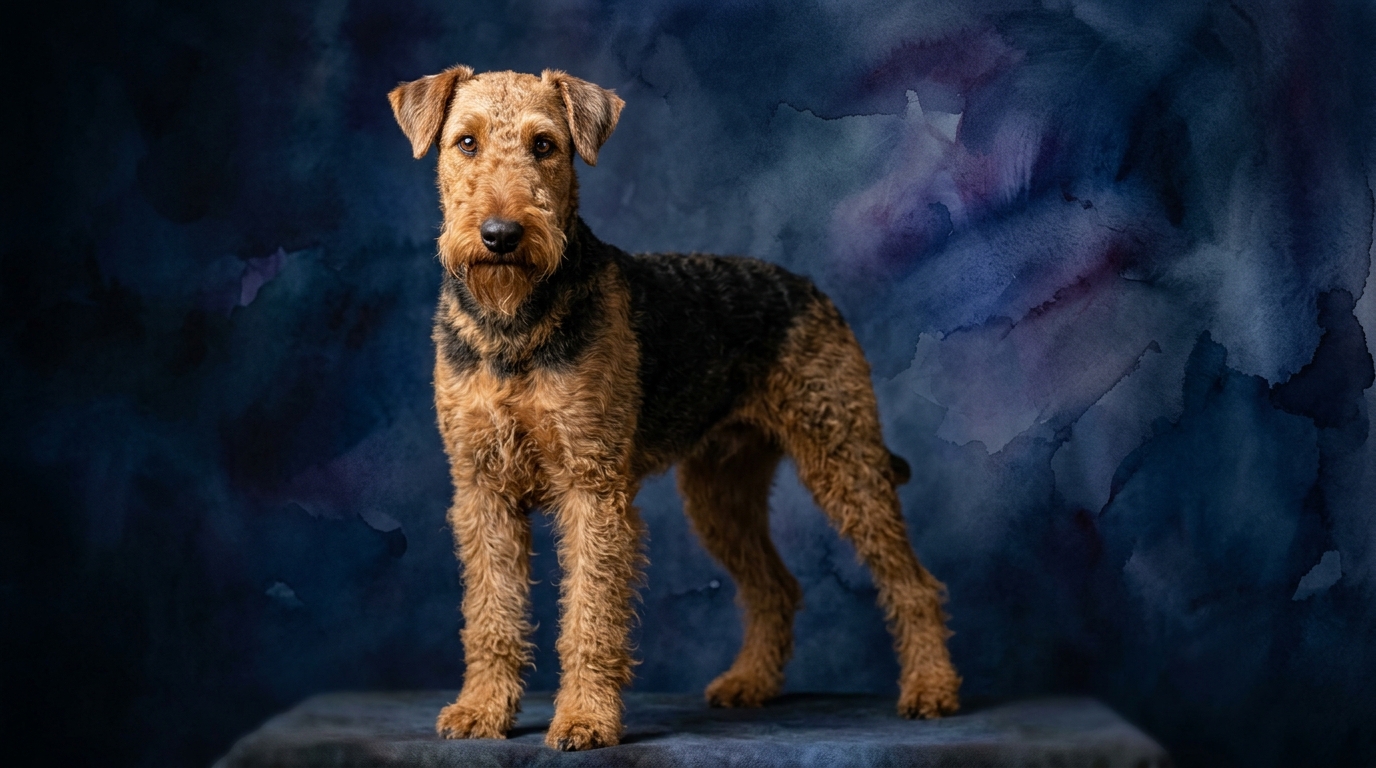

Side-by-Side IQ Profile
The Airedale Terrier, a formidable member of the terrier group, registers a Coren rank of #29, placing them among breeds proficient in working and obedience tasks. Our Cosmic Pet Pet IQ Lab assessment reveals a compelling cognitive blueprint for the Airedale: Problem Solving at 4/5, Training Speed at 4/5, Social Intelligence at 3/5, Instinctive Drive at 3/5, and Memory at 4/5. This profile suggests a breed adept at complex thought and rapid learning, often reflecting their heritage as versatile hunters and guardians.
In contrast, the Brussels Griffon, a delightful toy breed, does not appear on Coren's ranking, which typically focuses on breeds with strong working aptitudes. Their IQ Lab results paint a picture of a devoted companion: Problem Solving at 3/5, Training Speed at 3/5, Social Intelligence at 3/5, Instinctive Drive at 3/5, and Memory at 3/5. These scores indicate a solid, balanced cognitive ability well-suited to their role as an attentive and engaging household member, with a focus on connection rather than complex tasks.
Where Airedale Terrier Wins Cognitively
The Airedale Terrier's cognitive advantages are evident in their superior Problem Solving score of 4/5, significantly outpacing the Brussels Griffon's 3/5. This translates into a breed that can more readily navigate multi-step puzzles, figure out how to open secured enclosures, or strategize effectively during scent work or retrieve games. Their capacity to analyze situations and independently devise solutions stems from their terrier legacy, where they needed to think on their feet while pursuing quarry.
Furthermore, the Airedale's Training Speed (4/5) and Memory (4/5) collectively provide a substantial cognitive edge. They typically grasp new commands and multi-part routines with greater alacrity, consolidating information efficiently for long-term retention. This means an Airedale can often master a complex sequence of behaviors, like those required in advanced obedience or protection sports, in fewer repetitions and recall them reliably over time, making them a rewarding partner for dedicated trainers.
Where Brussels Griffon Wins Cognitively
While the Brussels Griffon's individual scores don't numerically exceed the Airedale's, their cognitive strengths shine within the context of their intended purpose: companionship. Their Social Intelligence, rated 3/5, matches the Airedale's, but for a toy breed, this often manifests as a profound attunement to human emotions and household dynamics. They demonstrate a remarkable ability to read subtle cues from their owners, anticipating needs and offering comfort, which is a powerful 'win' for those seeking an emotionally resonant canine partner.
The Brussels Griffon's balanced cognitive profile, with all scores at 3/5, means they possess precisely the right level of problem-solving and memory for navigating a home environment and engaging in typical companion activities without becoming overstimulated or bored by a lack of intense intellectual challenge. Their Instinctive Drive, also 3/5, is typically channeled into playful interaction and attention-seeking behaviors rather than strong prey drive or territorial instincts, making them generally easier to integrate into a relaxed family setting without extensive management of working drives. Their 'win' lies in their efficient and focused application of their cognitive resources towards fostering deep human bonds.
Which is Easier to Train and Why
Assessing 'easier to train' depends heavily on the owner's goals and experience. The Airedale Terrier, with its 4/5 Training Speed, generally picks up new commands and complex sequences more quickly than the Brussels Griffon. However, this speed is often coupled with a terrier's independent streak and problem-solving acumen. An Airedale might learn a command rapidly but then choose whether to execute it based on perceived value or opportunity for independent action, requiring a trainer who is consistent, engaging, and capable of providing sufficient mental stimulation to prevent boredom or wilfulness.
The Brussels Griffon, with a 3/5 Training Speed, learns at a steady, moderate pace. They can be sensitive to harsh corrections, responding best to positive reinforcement, patience, and a strong, trusting bond established through their 3/5 Social Intelligence. While they might take more repetitions to solidify a command compared to an Airedale, their desire to please their primary human can be a powerful motivator. Challenges often arise not from a lack of capacity, but from their smaller size and potentially shorter attention spans, making house-training, for example, a matter of diligent routine rather than a cognitive hurdle.
Which Suits Active Owners vs Relaxed Owners
Active owners seeking a canine partner for demanding activities will find the Airedale Terrier an excellent match. Their 4/5 Problem Solving and Training Speed, combined with a robust physical constitution, make them ideal candidates for advanced obedience, agility, tracking, or even protection work. They thrive on consistent mental and physical challenges, requiring owners who are prepared to dedicate significant time to training sessions, long walks, and engaging games that tap into their independent thinking and working drive. An Airedale without sufficient engagement can quickly become bored, potentially channeling their considerable intellect into less desirable behaviors.
For owners who prefer a more relaxed pace of life, the Brussels Griffon is often a more suitable companion. Their moderate scores across all cognitive dimensions mean they are content with regular, but not extreme, exercise, such as daily walks and indoor play. Their 3/5 Social Intelligence means they flourish when integrated closely into family life, often preferring to be near their humans, whether on a lap or following from room to room. While they still benefit from consistent, positive training and mental enrichment, they do not demand the same intensity of engagement as the Airedale, making them a delightful presence for those who prioritize companionship and a calm home environment.
The Verdict
Opt for the Airedale Terrier if you are an experienced owner seeking a sharp, capable, and independently thinking partner for advanced training, dog sports, or a working role, prepared to provide consistent mental and physical engagement.
Select the Brussels Griffon if you desire a devoted, charming, and emotionally attuned companion dog who thrives on social interaction and a more relaxed pace of life, yet still appreciates thoughtful, positive engagement.
🧠 Find Your Pet's IQ Score
Our Pet IQ Lab assessment covers 25+ tests across 5 cognitive dimensions — personalized to your breed.
Take the Full IQ Test →Frequently Asked Questions
Are Airedale Terriers good for first-time dog owners?
Airedale Terriers can be a rewarding choice for a dedicated first-time owner who is committed to consistent training, socialization, and providing ample mental and physical stimulation. Their intelligence and independence mean they need clear guidance and engagement to prevent them from developing their own 'rules'.
Do Brussels Griffons need a lot of exercise?
Brussels Griffons have moderate exercise needs, typically satisfied with daily walks, indoor play sessions, and opportunities for social interaction. While they aren't extreme athletes, regular activity is important for their physical and mental well-being, keeping them happy and engaged without requiring extensive outdoor adventures.
How do these breeds compare in terms of adaptability to apartment living?
The Brussels Griffon generally adapts very well to apartment living due to their smaller size and moderate exercise requirements, provided they receive regular walks and plenty of human companionship. The Airedale Terrier, while adaptable, requires significantly more space and consistent opportunities for vigorous exercise and mental stimulation outside the apartment to thrive, making a house with a yard or very active owners more suitable.