Side-by-Side IQ Profile: Airedale Terrier vs Ibizan Hound
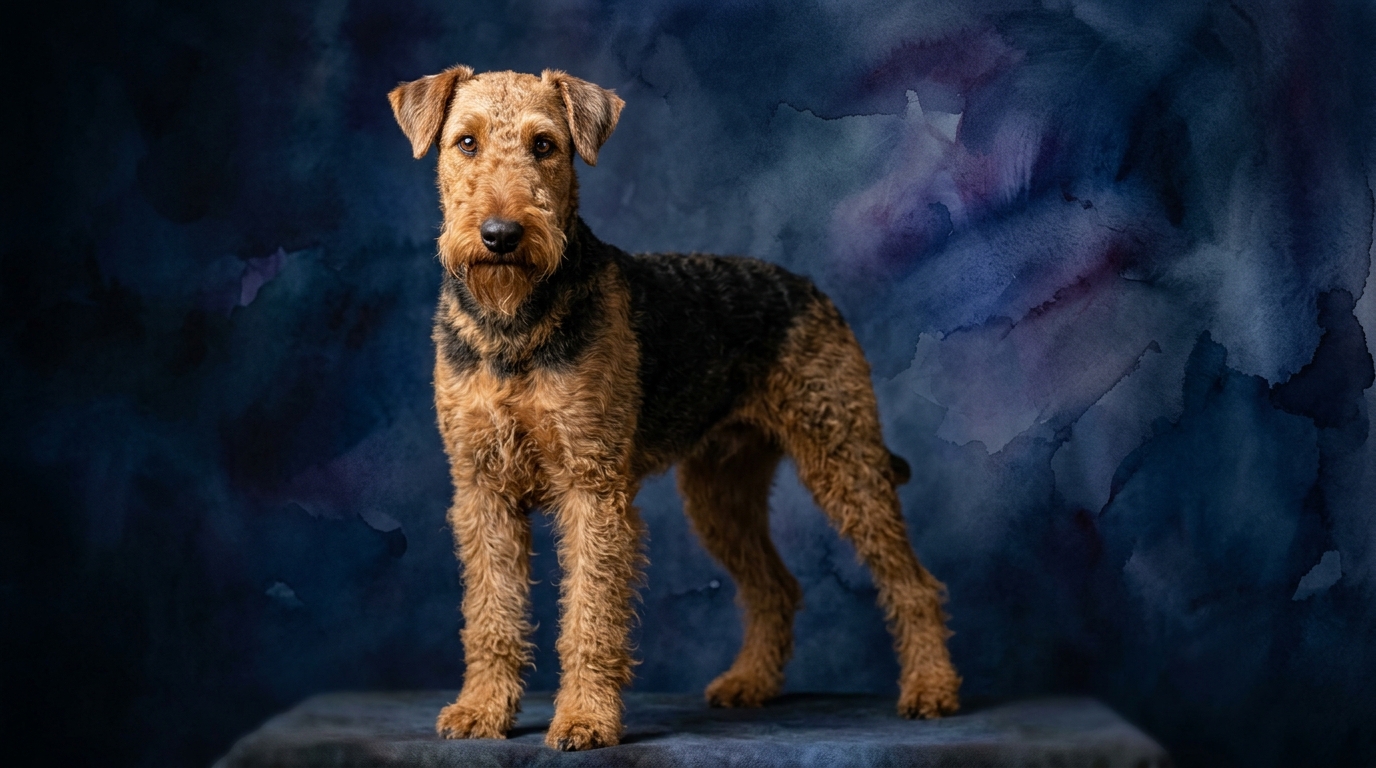
The Airedale Terrier, ranked #29 by Coren, demonstrates a robust cognitive profile, particularly in problem-solving and memory, both scoring 4/5. This suggests a dog capable of independent thought, adept at navigating complex scenarios, and retaining learned information over long periods. Their training speed also sits at a strong 4/5, indicating a quick grasp of new commands, though their moderate social intelligence (3/5) and instinctive drive (3/5) hint at an independent streak that can influence their compliance.
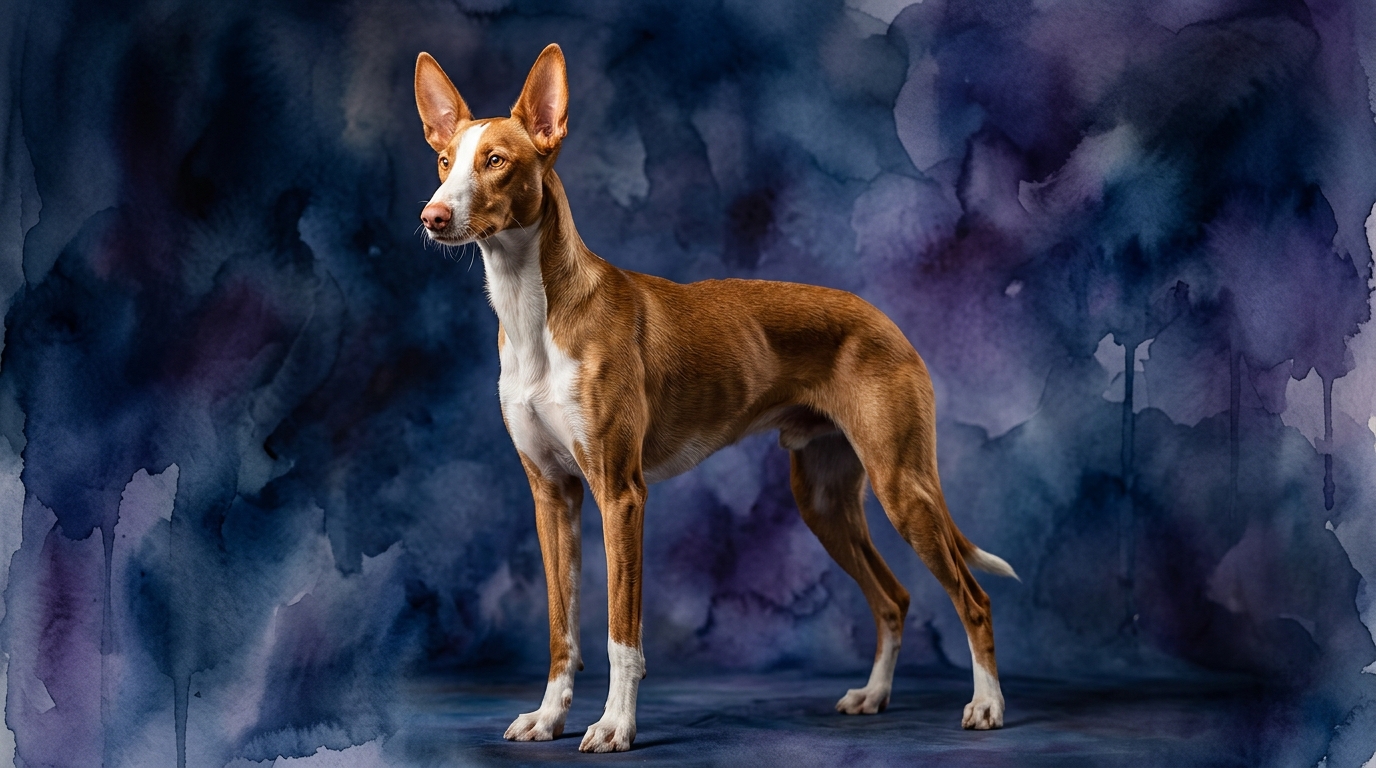
The Ibizan Hound, with a Coren rank of #53, presents a more balanced, yet specialized, cognitive makeup, scoring 3/5 across all five dimensions: problem-solving, training speed, social intelligence, instinctive drive, and memory. This profile suggests a capable learner, but one who might require more consistent reinforcement and whose problem-solving is often tied to their primary sighthound instincts. Their moderate social intelligence reflects a capacity for bonding, yet often accompanied by a reserved independence.
While both breeds share a similar social intelligence and instinctive drive score, the Airedale edges out the Ibizan in areas demanding more abstract thought and recall, such as problem-solving, training speed, and memory. The Ibizan's cognitive strengths, though not always reflected in higher numerical scores in these general categories, are finely tuned for their ancestral role, emphasizing visual acuity and swift, independent decision-making in pursuit.
Where the Airedale Terrier Wins Cognitively
The Airedale Terrier's 4/5 problem-solving score signifies a breed that actively engages with its environment, often devising clever solutions to challenges. This might manifest as figuring out how to open latches, retrieve a hidden toy, or navigate a complex obstacle course with minimal human guidance, showcasing their capacity for strategic thinking rather than simple trial-and-error. Their cognitive agility allows them to adapt quickly to novel situations and even anticipate outcomes, making them formidable partners in puzzle-based activities.
With a 4/5 score in both training speed and memory, the Airedale Terrier demonstrates a superior capacity for learning new commands and retaining them over time. This means fewer repetitions are needed during training sessions, and once a skill is mastered, it’s likely to stick. Their strong memory also aids in understanding complex routines and remembering specific cues or boundaries, allowing for a broader repertoire of learned behaviors and greater consistency in performance.
Where the Ibizan Hound Wins Cognitively
While the Ibizan Hound scores 3/5 across the board, their cognitive strengths are uniquely honed for their sighthound heritage. Their instinctive drive, though rated 3/5, is specifically geared towards visually tracking and pursuing fast-moving objects, requiring exceptional spatial awareness, rapid processing of visual stimuli, and split-second decision-making in dynamic environments. This specialized problem-solving, focused on the hunt, allows them to excel in activities like lure coursing, where their ability to anticipate and react to prey movement is paramount.
The Ibizan Hound's cognitive profile, including its 3/5 problem-solving and instinctive drive, translates into an independent intelligence highly effective in open, expansive settings. They are adept at making quick, autonomous decisions based on visual cues without constant human intervention, a trait crucial for a sighthound needing to cover vast distances to locate and pursue game. This means they are less likely to seek human direction in a field situation and more inclined to trust their own rapid assessment of the visual landscape, a valuable cognitive asset in their natural role.
Which is Easier to Train and Why
The Airedale Terrier generally presents an easier training journey due to its higher scores in training speed (4/5) and memory (4/5). They quickly grasp new concepts and commands, often showing a keen interest in learning and engaging with their handler. However, their moderate social intelligence (3/5) and innate terrier independence mean that while they understand, they might occasionally choose to prioritize their own agenda or an interesting distraction over immediate compliance, requiring consistent, engaging, and positive reinforcement-based methods to maintain focus and motivation.
The Ibizan Hound, with a 3/5 training speed, requires a patient and consistent approach. Their sighthound heritage makes them independent and highly responsive to visual stimuli, presenting challenges in distracting outdoor environments. While capable, their moderate memory necessitates more repetition, and a strong instinctive drive for pursuit means fleeting movements can override commands. Owners must understand their intrinsic motivations and use high-value rewards in controlled settings.
Which Suits Active Owners vs. Relaxed Owners
Neither the Airedale Terrier nor the Ibizan Hound are suitable for truly relaxed, sedentary owners. Both breeds possess significant energy levels and require consistent physical and mental stimulation to thrive and prevent behavioral challenges. An owner seeking a low-maintenance companion would find either breed overwhelming, as their cognitive and physical needs necessitate daily engagement.
For active owners, the choice hinges on the preferred type of engagement. The Airedale Terrier suits those who enjoy diverse activities like advanced obedience, agility, hiking, or puzzle games, appreciating a dog that actively participates in problem-solving. The Ibizan Hound thrives with owners who can provide ample opportunities for high-speed running in securely fenced areas, lure coursing, or long, leashed walks, valuing a dog whose activity is often tied to its profound visual and pursuit instincts, even if structured obedience is less their forte.
The Verdict
For owners seeking a cognitively agile companion who enjoys complex problem-solving, learns new skills quickly, and thrives on varied mental and physical challenges, the Airedale Terrier is an excellent fit, ready to channel a terrier's cleverness and independent spirit into a strong working partnership.
For owners who appreciate an elegant, independent sighthound and can provide ample opportunities for high-speed running in secure environments, valuing a dog whose cognitive strengths lie in visual processing and pursuit rather than intricate obedience, the Ibizan Hound is an ideal choice, suiting those who understand and respect its unique, often reserved, drive.
🧠 Find Your Pet's IQ Score
Our Pet IQ Lab assessment covers 25+ tests across 5 cognitive dimensions — personalized to your breed.
Take the Full IQ Test →Frequently Asked Questions
Are Airedale Terriers good first-time dogs?
Airedale Terriers can be suitable for first-time owners who are committed to consistent training, socialization, and providing ample mental and physical stimulation. Their cleverness and independent streak mean they require an owner willing to invest time in understanding and channeling their terrier nature.
Do Ibizan Hounds need a lot of exercise?
Yes, Ibizan Hounds require a significant amount of exercise, particularly opportunities for high-speed running in a securely fenced area. As sighthounds, they are built for bursts of speed and need to stretch their legs daily to maintain physical and mental well-being.
How do their instinctive drives manifest differently?
The Airedale Terrier's instinctive drive often manifests as a strong prey drive for small animals and a tendency to dig, typical of terriers, requiring management. The Ibizan Hound's drive is primarily focused on visually tracking and chasing fast-moving objects, making secure containment and leash discipline paramount in unfenced areas.