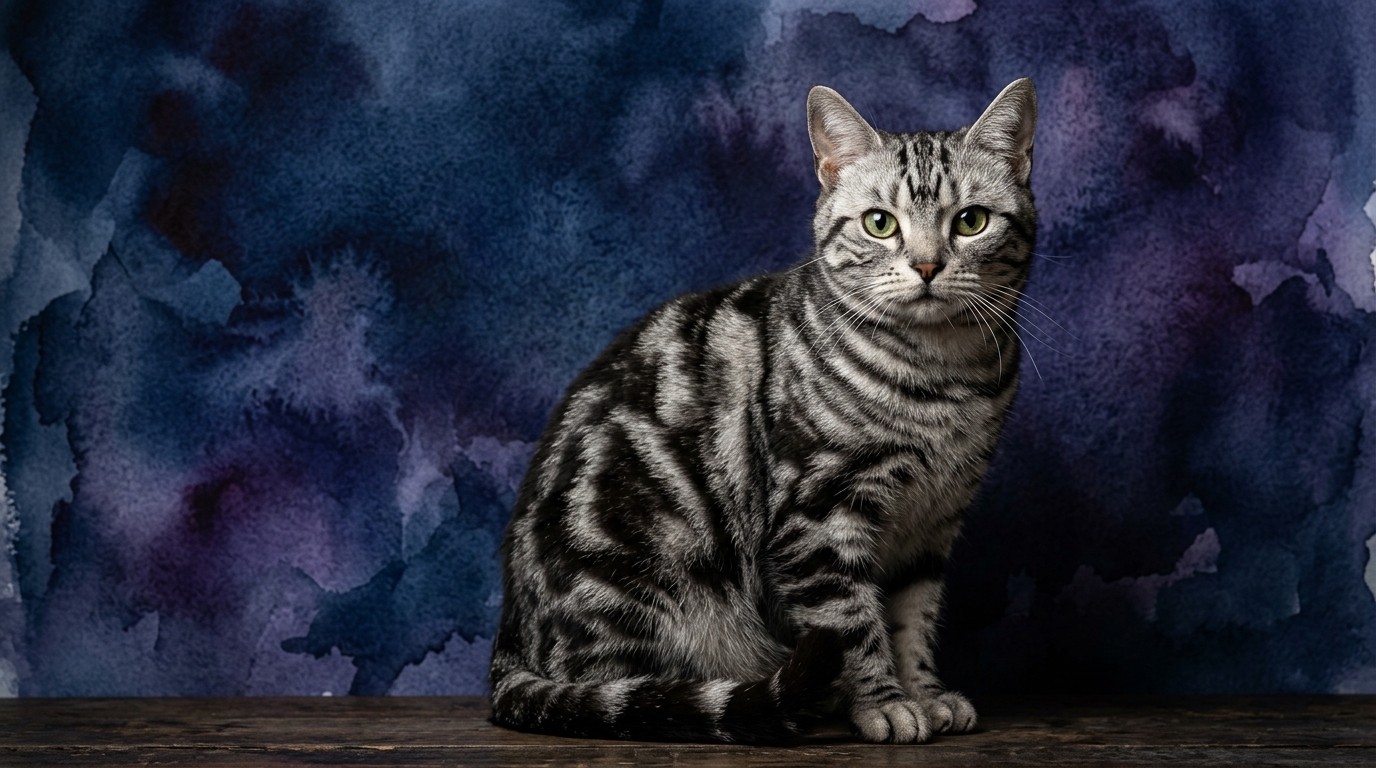
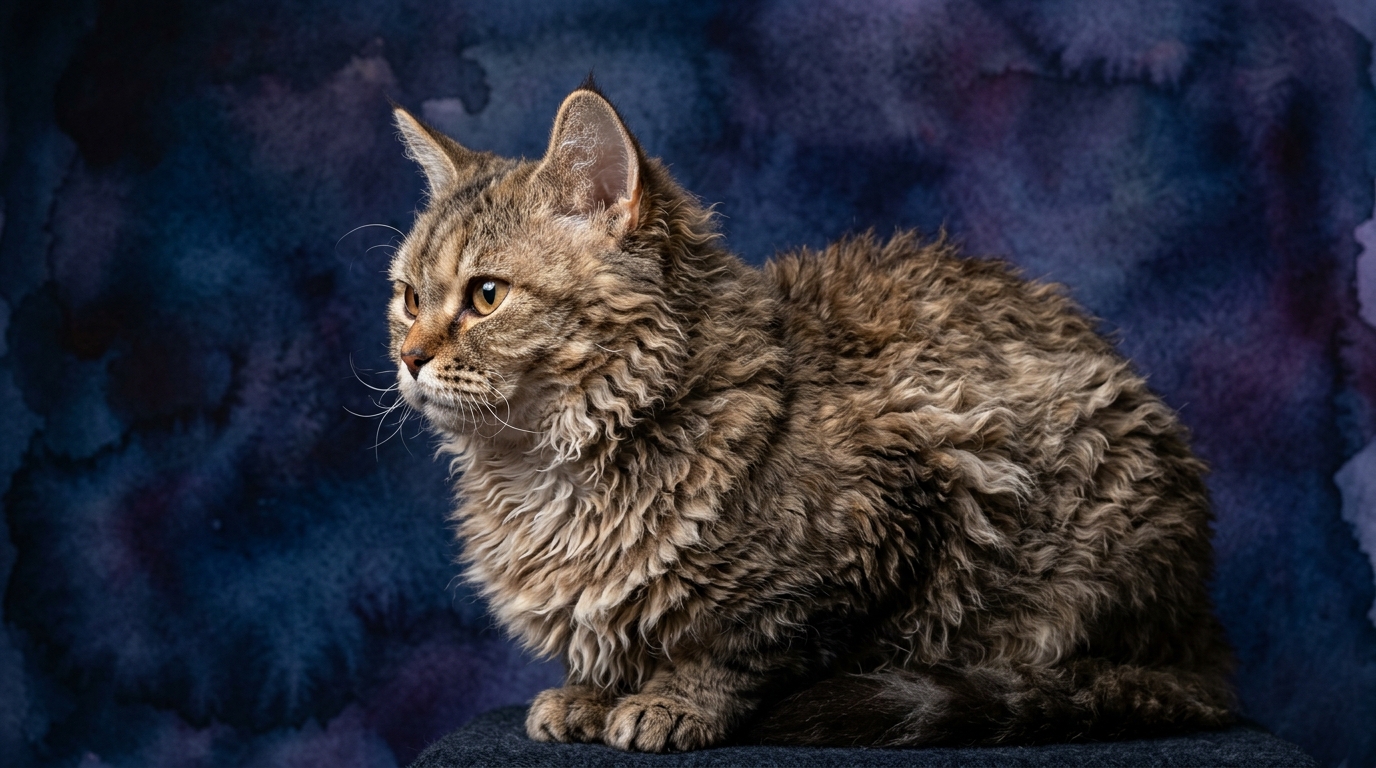
Side-by-Side IQ Profile: Delving into 3/5 Scores
When two breeds share identical scores across the board, it becomes crucial to understand the qualitative differences that underpin these quantitative ratings. For both American Shorthair and Selkirk Rex, a 3/5 indicates a moderate, capable level of cognitive function, neither exceptionally low nor remarkably high, but expressed through their distinctive breed personalities.
**Problem Solving (3/5):** The American Shorthair, known for its adaptable and curious nature, typically approaches problem-solving with a practical, exploratory mindset. A 3/5 for them means they are capable of figuring out how to access preferred perching spots, navigate complex household layouts, or even manipulate simple puzzle toys to retrieve treats. Their persistence often stems from a quiet determination and a desire to understand their environment. In contrast, the Selkirk Rex, with its generally more laid-back and companion-oriented disposition, often directs its 3/5 problem-solving abilities towards social outcomes. They might figure out the most effective way to gain human attention, whether by a gentle nudge, a specific meow, or by positioning themselves strategically for a cuddle. Their problem-solving is often motivated by comfort and connection rather than pure environmental mastery.
**Training Speed (3/5):** For the American Shorthair, a 3/5 in training speed reflects their ability to grasp basic commands and routines with consistent, positive reinforcement, but without lightning-fast acquisition. They are responsive to clicker training for simple tricks like 'sit' or 'come' and readily adapt to litter box training or leash walking, provided patience and repetition are employed. Their independence means they might not always be driven by an eagerness to please, requiring more engaging sessions. The Selkirk Rex's 3/5 training speed is often bolstered by their affectionate and 'dog-like' temperament. While not necessarily faster learners in terms of raw processing, their strong desire for human interaction and approval can make them more cooperative and attentive during training sessions. They are likely to respond well to rewards that involve praise and petting, potentially making the training process feel smoother due to their compliant nature.
**Social Intelligence (3/5):** An American Shorthair's 3/5 social intelligence manifests as a balanced approach to interaction. They are friendly and enjoy companionship but are rarely overly demanding. They can read human moods adequately, understanding when to approach for affection and when to give space. They integrate well into multi-pet households, maintaining a respectful distance while still enjoying the presence of others. The Selkirk Rex, while also scoring 3/5, often exhibits a more overt and expressive social intelligence. Their deep affection and tolerance mean they are highly attuned to their human companions, often seeking out physical closeness and actively participating in family life. They tend to be more demonstrative in their affection and more sensitive to changes in household dynamics, leaning into their social connections as a primary driver for their daily activities.
**Instinctive Drive (3/5):** The American Shorthair, with its heritage as a working cat, displays a 3/5 instinctive drive that includes a well-developed prey drive. They enjoy stalking and pouncing on toys, are adept at observing birds and squirrels, and may exhibit behaviors reminiscent of their hunting ancestors. This drive fuels their play and keeps them engaged with their environment. Their instincts are practical and grounded. The Selkirk Rex's 3/5 instinctive drive is generally more playful than predatory. While they enjoy chasing wand toys and batting at small objects, their play often feels more like a shared activity with their human. Their drive is often channeled into interactive games that strengthen their bond, rather than intense, solitary 'hunting' expeditions. They are more likely to bring a toy for you to throw than to silently stalk unseen prey.
**Memory (3/5):** Both breeds, at 3/5, possess a functional and reliable memory. The American Shorthair remembers routines, the location of favorite napping spots, and the individuals who provide food and affection. They recall training cues and house rules with consistency over time, contributing to their reputation as an easy-to-live-with companion. The Selkirk Rex also remembers routines, faces, and experiences, but their memory is often heavily weighted towards social interactions. They will recall specific people, the routines associated with cuddles, and the positive reinforcement from training sessions with remarkable clarity, often associating pleasant memories with their human companions. Their memory helps them reinforce their preferred social structures within the home.
Where American Shorthair Wins Cognitively
Despite identical scores, the American Shorthair often demonstrates a cognitive 'win' in areas requiring independent environmental engagement and practical application of instincts. Their 3/5 problem-solving, coupled with a healthy 3/5 instinctive drive, makes them adept at navigating and mastering their physical surroundings. They excel at figuring out how to access high shelves or explore new spaces, driven by an innate curiosity rather than solely by human prompting. This self-reliant problem-solving allows them to thrive in varied home environments, adapting quickly to changes and finding their own sources of enrichment. Their memory (3/5) supports this by helping them recall successful strategies for exploration and resource acquisition, making them efficient and self-sufficient members of the household.
Where Selkirk Rex Wins Cognitively
The Selkirk Rex, while sharing identical scores, truly shines in the realm of social cognition and cooperative learning. Their 3/5 social intelligence, though numerically equivalent, is often more outwardly expressed and deeply intertwined with their daily motivations. They exhibit a nuanced understanding of human emotions and intentions, often using their problem-solving (3/5) to devise strategies for closer interaction and comfort. This social acumen makes them particularly responsive in training contexts (3/5 training speed), as their desire to please and engage with their human companions often overrides any independent inclinations. Their memory (3/5) is particularly strong for social cues and positive reinforcement, making them excellent candidates for interactive games and routines that foster bonding.
Which is Easier to Train and Why
While both breeds score 3/5 in training speed, the Selkirk Rex generally presents as the 'easier' cat to train for most owners, primarily due to their distinct behavioral drivers. The Selkirk Rex's profound affection and eagerness for human companionship mean they are often highly motivated by praise, petting, and interactive play during training sessions. Their 'dog-like' temperament translates into a cooperative spirit, making them more inclined to pay attention and work alongside their human to achieve a desired outcome. They thrive on positive reinforcement that strengthens their bond, making them more receptive to learning basic commands, leash training, or even simple tricks.
The American Shorthair, conversely, while perfectly trainable with their 3/5 training speed, often requires a more patient and engaging approach. Their independence and more moderate social drive mean they might not always see the immediate benefit in performing a trick for human approval alone. Training an American Shorthair often hinges on making the activity inherently interesting to them, perhaps by tapping into their instinctive drive with chase toys as rewards, or by integrating training into their regular exploration. They will learn, and remember (3/5 memory), but the process may feel less like a collaborative effort and more like a carefully constructed game designed to capture their attention and independent spirit.
Which Suits Active Owners vs. Relaxed Owners
For owners who appreciate a moderately active cat that enjoys independent exploration and occasional interactive play, the American Shorthair is an excellent fit. Their 3/5 instinctive drive means they will enjoy engaging with puzzle toys, chasing laser pointers, and exploring their environment without constant human intervention. They are adaptable companions for owners with varying schedules, content to entertain themselves while also appreciating affection and attention when offered. An active owner might find their problem-solving (3/5) skills gratifying to observe as they navigate their world, and their balanced social intelligence (3/5) means they won't demand constant interaction.
Conversely, the Selkirk Rex is ideally suited for more relaxed owners who desire a constant, affectionate presence. Their highly social nature, even at a 3/5, means they thrive on close companionship and often seek out physical closeness. These cats are content to lounge nearby, participate in gentle play, and offer comforting purrs. Their problem-solving (3/5) often revolves around gaining attention or comfort, making them delightful companions for someone who enjoys a cat deeply integrated into their daily life. A relaxed owner will appreciate their patient, tolerant disposition and their eagerness to be involved in quiet, shared moments, making them perfect lap cats and constant companions.
The Verdict: When to Choose Each
The Verdict
Choose an American Shorthair if you appreciate a capable, adaptable companion who balances independence with affection and engages with their environment through curious exploration and a practical application of their instincts.
Opt for a Selkirk Rex if you seek a highly affectionate, patient, and people-oriented cat that thrives on close companionship and cooperative interaction, making them a devoted and often 'dog-like' member of the family.
🧠 Find Your Pet's IQ Score
Our Pet IQ Lab assessment covers 25+ tests across 5 cognitive dimensions — personalized to your breed.
Take the Full IQ Test →Frequently Asked Questions
Do identical IQ scores mean these breeds are exactly the same cognitively?
No, identical 3/5 scores indicate a similar *level* of cognitive capability, but the *expression* of these capabilities differs significantly due to each breed's unique temperament and motivations. For instance, problem-solving in an American Shorthair might be driven by exploration, while in a Selkirk Rex it might be driven by social interaction.
Which breed is better for a multi-pet household?
Both breeds, with their 3/5 social intelligence, can adapt well to multi-pet households. The American Shorthair's balanced independence allows them to coexist peacefully, while the Selkirk Rex's tolerant and affectionate nature often makes them a gentle addition, particularly with other animals who appreciate a calm companion.
How can I best engage each breed's cognitive abilities?
For an American Shorthair, provide puzzle feeders, climbing structures, and interactive toys that tap into their instinctive drive and curiosity. For a Selkirk Rex, focus on interactive play, training sessions that involve praise and physical affection, and ample lap time to satisfy their strong social needs and cooperative nature.