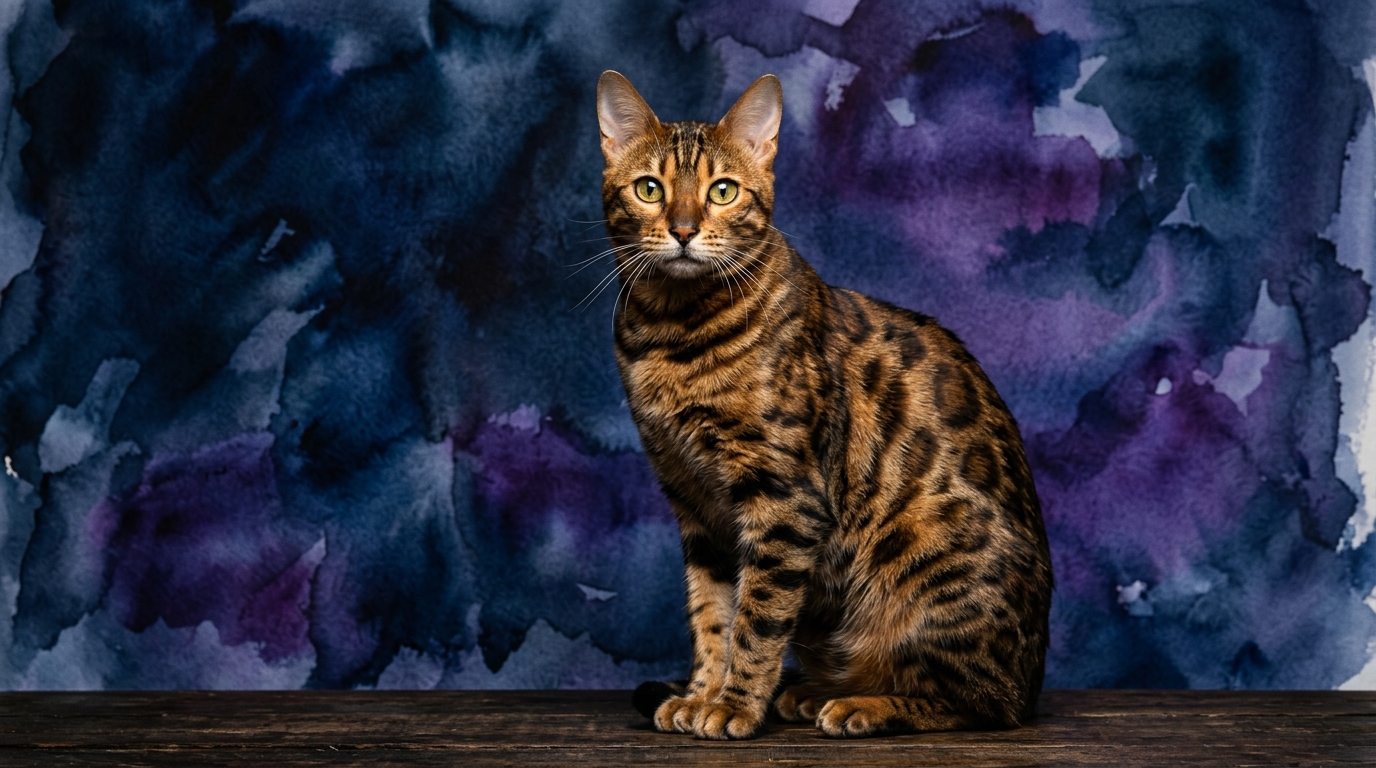
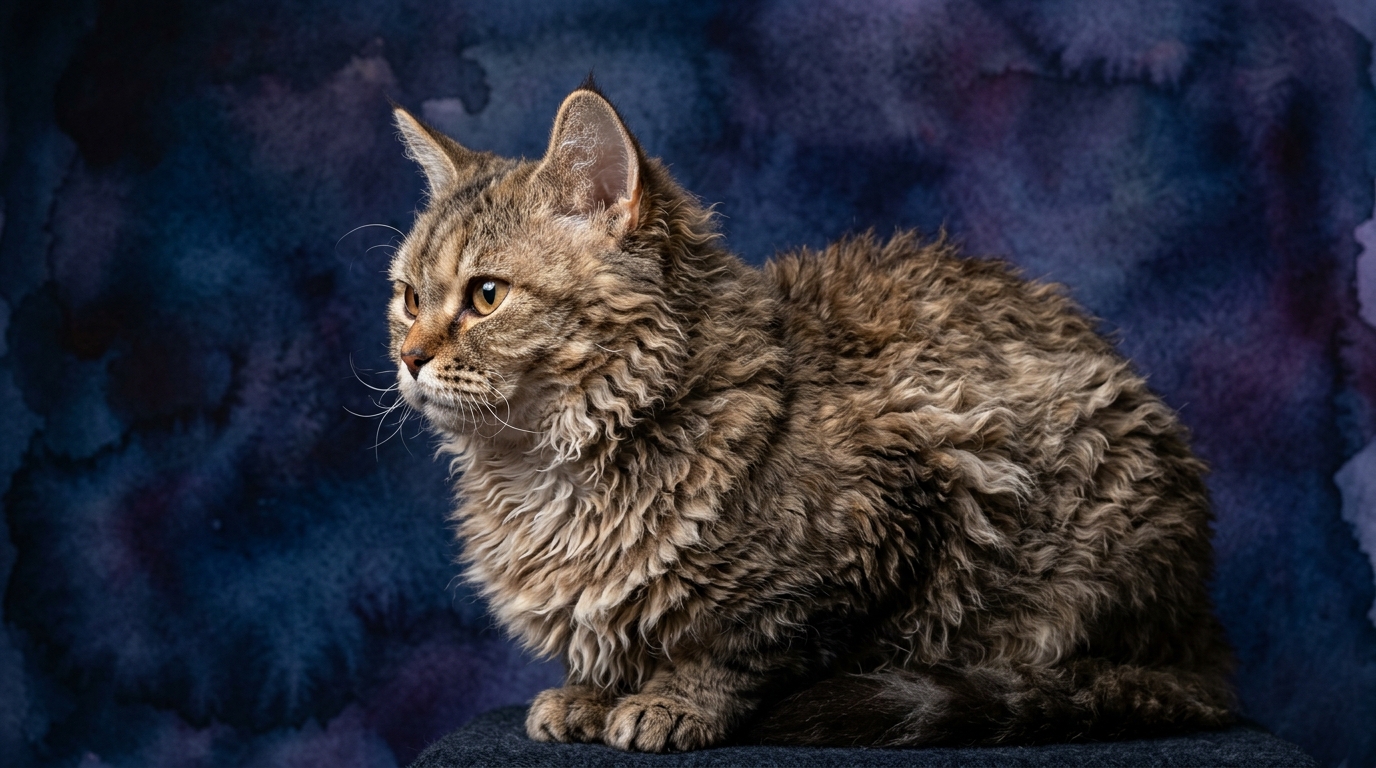
Side-by-Side IQ Profile: Bengal vs. Selkirk Rex
**Bengal:**
**Problem Solving (5/5):** Bengals display exceptional ingenuity, adept at decoding complex puzzles, manipulating objects, and strategizing to achieve goals, constantly seeking mental challenges.
**Training Speed (4/5):** These cats learn rapidly, quickly absorbing commands and tricks with minimal repetition, making them highly responsive to clicker training and agility.
**Social Intelligence (4/5):** Bengals possess a sophisticated understanding of social cues, forming deep, interactive bonds, and effectively communicating their needs, sometimes with persuasive charm.
**Instinctive Drive (5/5):** Driven by wild ancestry, Bengals exhibit a powerful prey drive, intense curiosity for exploration, and a strong inclination for climbing and hunting behaviors.
**Memory (5/5):** Their outstanding memory allows them to recall complex sequences, routines, and individuals over long periods, contributing to their adaptability in intricate environments.
**Selkirk Rex:**
**Problem Solving (3/5):** Selkirk Rex cats approach challenges with straightforward curiosity, preferring direct solutions over elaborate strategies and showing less inclination for complex puzzle mastery.
**Training Speed (3/5):** Trainable with patience, they learn at a moderate pace, responding best to consistent positive reinforcement for basic commands rather than extensive trick repertoires.
**Social Intelligence (3/5):** Known for their amiable nature, Selkirk Rex cats engage in relaxed, uncomplicated social interactions, desiring companionship without demanding intensity.
**Instinctive Drive (3/5):** Their moderate instinctive drives result in a calm demeanor, with a less intense prey drive and exploratory urges typically satisfied within their immediate home.
**Memory (3/5):** Functional memory supports daily routines, recognizing family, and recalling favorite spots, but is not typically applied to intricate multi-step processes or complex environmental details.
Where Bengal Wins Cognitively
The Bengal excels in cognitive agility and dynamic engagement, leveraging its superior problem-solving to quickly adapt, decipher complex tasks, and understand cause-and-effect relationships. This breed thrives on continuous mental stimulation, relishing challenges that would overwhelm other cats. Their exceptional memory allows them to build on past experiences, applying learned knowledge to novel situations, making them highly responsive and interactive companions for advanced play and training.
Where Selkirk Rex Wins Cognitively
The Selkirk Rex's more moderate cognitive profile offers distinct advantages, particularly for owners seeking a less demanding companion. Their lower instinctive drive generally translates to reduced destructive curiosity and a more peaceful household. Less intense problem-solving means they are less inclined to outsmart their environment or create elaborate mischief. The Selkirk Rex "wins" by fostering a calm, predictable, and genuinely affectionate presence, content with simpler stimuli and a less mentally intense lifestyle, which many owners deeply appreciate.
Which is Easier to Train and Why
The Bengal is demonstrably easier to train for a wide range of behaviors, from basic commands to complex tricks and agility, owing to its high training speed and problem-solving scores. Their innate curiosity and desire for interaction make them eager participants in training, quickly associating actions with rewards. They thrive on mental challenges, responding well to clicker training. In contrast, the Selkirk Rex, with its moderate training speed, requires more patience and repetition, responding best to short, fun sessions focused on basic manners and affection-based rewards, less inclined towards elaborate performances.
Which Suits Active Owners vs. Relaxed Owners
Active owners who enjoy dynamic interaction and providing constant mental enrichment will find the Bengal an ideal match. Their robust instinctive drive and high problem-solving skills demand an environment rich with puzzle toys, interactive play, and vertical climbing spaces to prevent boredom and potential mischief. Relaxed owners, conversely, will appreciate the Selkirk Rex's more placid and less demanding nature. Their moderate instinctive drive and social intelligence mean they are content with regular cuddles and gentle play, without the constant need for novel stimulation or complex mental tasks.
The Verdict
Opt for a Bengal if you desire a cognitively vibrant, highly interactive feline companion eager to learn, explore, and continuously challenge its environment.
Select a Selkirk Rex if you seek a calm, affectionate, and less mentally demanding cat that brings a gentle, predictable presence to your home.
🧠 Find Your Pet's IQ Score
Our Pet IQ Lab assessment covers 25+ tests across 5 cognitive dimensions — personalized to your breed.
Take the Full IQ Test →Frequently Asked Questions
Can a Selkirk Rex be taught tricks?
Yes, a Selkirk Rex can learn basic tricks with consistent, patient positive reinforcement, though their learning pace is moderate. Short, enjoyable sessions focused on treats and praise make it a pleasant bonding experience, allowing them to master simple commands.
Are Bengals prone to destructive behavior due to their high cognitive needs?
Bengals can exhibit destructive behaviors if their significant cognitive and physical needs are unmet; their high problem-solving and instinctive drive lead them to seek stimulation. Providing ample enrichment like puzzle toys and climbing structures is crucial to channeling their energy constructively, preventing self-invented mischief.
How do the social needs of these two breeds differ?
Bengals often have intense social needs, forming deep bonds and actively seeking interaction, sometimes vocally or persistently. Selkirk Rex cats are generally more laid-back, enjoying companionship and affection without the same demanding intensity, offering a gentler, less insistent social dynamic.